
Contents
Introduction
Establishing a consistent daily reading habit in early childhood requires a strategic synergy between physical children's literature and assistive audio technology such as optical reading pens. According to guidelines from Reading Rockets and the American Academy of Pediatrics (AAP), structured daily routines significantly enhance vocabulary acquisition, phonological awareness, and emotional bonding during formative developmental years [1] [2]. For B2B distributors, educational publishers, and brand owners seeking to supply high-quality interactive learning tools, understanding the pedagogical integration of talking pens and picture books is essential. This comprehensive guide examines how multi-sensory reading environments foster sustained engagement, details the verifiable manufacturing and quality control standards required for OEM/ODM procurement, and outlines critical safety and compliance protocols aligned with consumer safety authorities such as the U.S. Consumer Product Safety Commission (CPSC) [3].
1. The Pedagogical Foundation of Multi-Sensory Reading Routines
Integrating Auditory Feedback with Visual Print Awareness
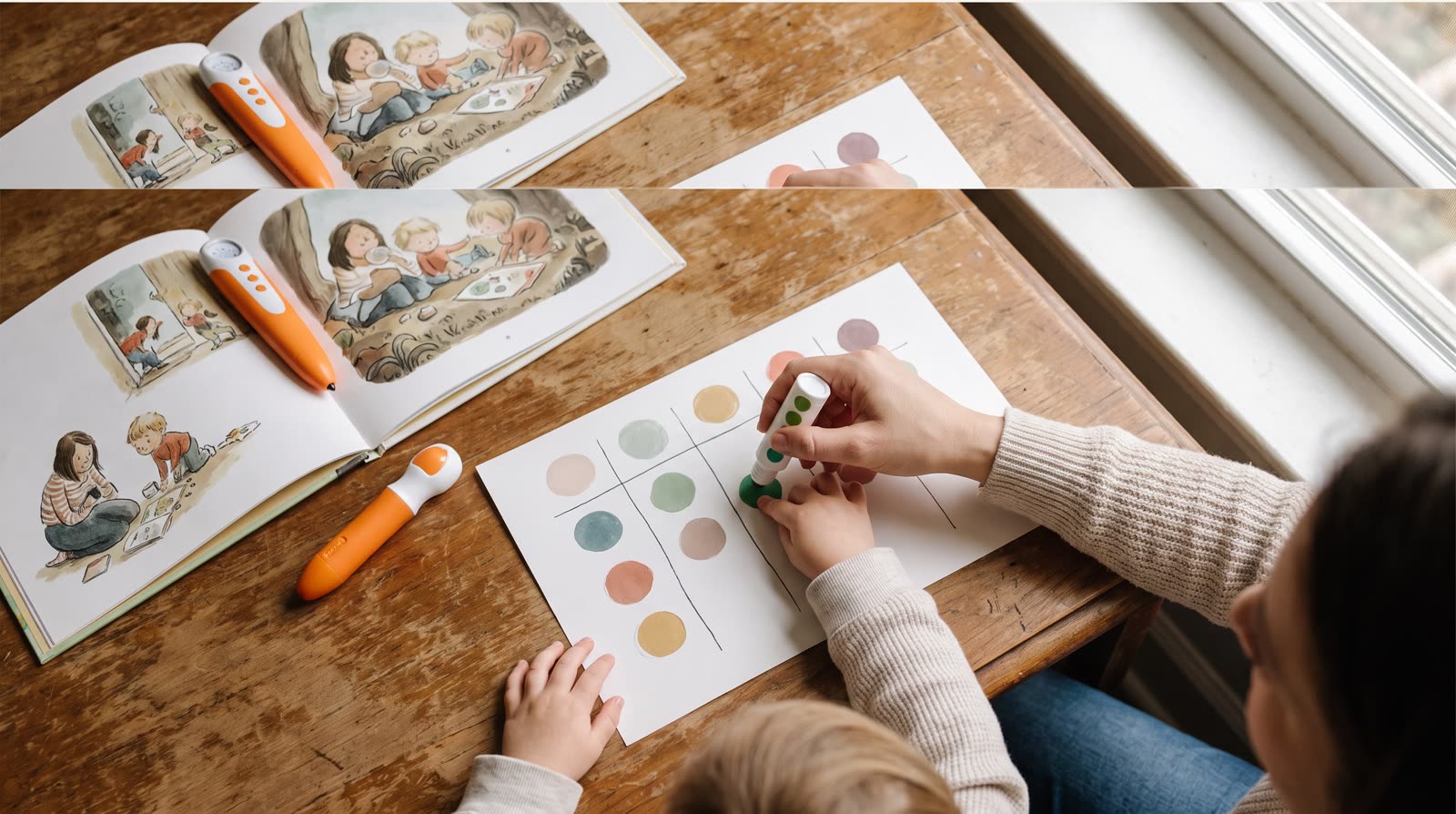
When young children interact with picture books paired with optical reading pens, they engage in multi-sensory learning that reinforces print awareness and phoneme-grapheme correspondence. As highlighted by the International Dyslexia Association (IDA), simultaneous visual tracking and auditory reinforcement help bridge the gap between spoken language and written symbols [4]. The optical sensor embedded in the reading pen scans invisible OID (Optical Identification) dot codes printed beneath the ink layer, instantly triggering pre-compiled audio files corresponding to specific words, character dialogue, or background soundscapes. For educational publishers and B2B buyers, ensuring precise OID decoding accuracy is paramount during the sample review and specification confirmation phases. When adult caregivers participate actively alongside the child—guiding the pen and discussing narrative arcs rather than relying solely on passive listening—the cognitive retention of vocabulary increases substantially. Educational research synthesized by the Centers for Disease Control and Prevention (CDC) underscores that consistent shared reading routines foster positive socio-emotional development and lay a robust foundation for independent literacy [5]. Furthermore, multi-sensory interactions engage both visual and auditory pathways simultaneously, which neurological studies indicate can improve memory consolidation and attention span in developing learners. By embedding interactive audio directly into physical pages, publishers create an immersive environment where children become active participants in their own literacy journey rather than passive observers. This active engagement encourages sustained attention, allowing children to explore complex sentence structures and unfamiliar vocabulary with immediate auditory support that reinforces pronunciation and phonetic understanding.
Structuring Consistent 10-Minute Daily Reading Windows
Consistency in habit formation relies on manageable, predictable routines rather than exhaustive study sessions. Child development specialists recommend implementing short, focused daily reading windows, such as a 10-minute session following a consistent daily cue like post-dinner relaxation or bedtime storytelling. During these sessions, children use optical reading pens to explore interactive picture books independently or with adult facilitation. B2B procurement partners specifying electronic reading pen systems must evaluate device ergonomics, battery life, and speaker sound pressure levels (SPL) to ensure comfortable use during these daily sessions. Manufacturers must adhere to strict acoustic standards, limiting maximum output volume to protect sensitive pediatric hearing while maintaining audio clarity across diverse linguistic tracks and high-frequency phonemes. Furthermore, curriculum developers collaborating with hardware suppliers must design picture books with well-spaced OID dot matrices that prevent misreads and ensure seamless interactive responsiveness across all illustrated pages. Establishing a predictable routine reduces cognitive friction, making daily reading an anticipated, enjoyable ritual rather than a burdensome chore for families. Regular daily exposure also helps establish neural pathways associated with language comprehension, ensuring long-term retention and positive reading attitudes that persist into formal schooling years.
2. B2B Quality Control and Manufacturing Verification Processes
Sample Review and Optical Code Verification
Procuring optical reading pens and interactive picture books for international distribution requires rigorous adherence to verifiable manufacturing and quality control protocols. B2B buyers must implement a systematic four-stage verification process: sample review, specification confirmation, function check, and pre-shipment document check. During the sample review stage, procurement teams evaluate the optical sensor's tracking speed, decoding error rate under varying ambient lighting conditions, and the mechanical durability of the pen tip casing. The invisible OID dot codes printed on picture book pages must undergo high-magnification optical inspection to verify dot density, contrast against background four-color process (CMYK) printing, and ink bleed resistance. Publishers and manufacturers must ensure that book paper stock possesses appropriate opacity and matte finish to minimize light reflection, which can interfere with the optical sensor's CMOS camera module during scanning. In addition, software engineers must verify that audio compilation binaries match the OID index tables perfectly to eliminate latency or incorrect audio playback triggers during child use. Rigorous sample review also involves drop-testing sample books and pens to verify that binding integrity and internal circuitry remain unaffected by normal childhood handling.
Function Checks and Pre-Shipment Document Verification
Following sample approval, mass production batches must undergo comprehensive functional checks, including multi-language audio file playback testing, internal memory integrity verification, USB data transfer speed assessments, and drop-resistance durability testing. Quality assurance teams must inspect batch samples against established Acceptable Quality Limit (AQL) standards, ensuring zero critical defects related to electrical safety or audio distortion. In addition to hardware and print verification, pre-shipment document checks are critical for regulatory compliance and smooth customs clearance. Importers must verify that all shipments include complete technical dossiers, bill of materials (BOM), conformity certificates for restricted substances (such as RoHS, REACH, and EN71), and safety test reports from accredited third-party laboratories. Establishing transparent, verifiable supplier relationships ensures that educational toys meet stringent international safety and performance benchmarks without relying on unverified marketing claims or exaggerated learning outcome guarantees. Comprehensive pre-shipment checks safeguard supply chain continuity and protect brand reputation in competitive global markets.
ReadGlo project support
Request B2B Sample Kit
Explore our certified range of optical reading pens and interactive picture books. Contact our engineering team for sample evaluations and custom OEM/ODM specifications.
3. Special Learning Support and Inclusive Educational Frameworks
Supporting Diverse Learners Through Guided Multi-Sensory Engagement
Interactive reading systems and talking pens provide valuable support for children with diverse learning needs, including English Language Learners (ELL) and children requiring additional literacy intervention. However, B2B suppliers, educators, and brand marketers must exercise strict caution to avoid medicalizing educational tools or making unsubstantiated claims regarding diagnostic or therapeutic results. Educational reading pens are supplementary learning aids and do not diagnose, treat, or cure reading disabilities or developmental conditions. When marketing or deploying these tools in special learning environments, emphasis must be placed on adult participation, structured educator guidance, and collaboration with qualified clinical or educational professionals. Citing authoritative frameworks from organizations such as Reading Rockets and the International Dyslexia Association ensures that product positioning remains grounded in evidence-based literacy practices rather than speculative pedagogical promises [1] [4]. Inclusive design elements, such as adjustable speech rates, high-contrast visual layouts, and tactile bookmarking features, empower children of varying abilities to engage meaningfully with literature. Multi-sensory support helps bridge decoding gaps, enabling children to access rich narrative content regardless of initial reading proficiency.
Collaborative Adult-Child Interaction Models
The effectiveness of reading pens in special support contexts depends heavily on scaffolded adult-child interaction. When adults use reading pens alongside children, they can pause to ask open-ended questions, connect book narratives to real-world experiences, and reinforce phonemic concepts at an individualized pace. B2B manufacturers designing companion picture books for inclusive learning must incorporate high-contrast typography, clear visual layouts, and intuitive audio navigation icons that accommodate varying motor and visual abilities. Instructional guides included with hardware packages should explicitly advise parents and educators on how to balance independent pen exploration with interactive dialogic reading, ensuring a balanced, supportive literacy ecosystem. Collaborative reading builds emotional security and encourages children to express curiosity, ask questions, and explore complex narrative themes with adult reassurance. This shared discovery process transforms reading time into a powerful vehicle for social-emotional bonding and cognitive development.
4. Consumer Safety, Handling Protocols, and Regulatory Compliance
Adhering to CPSC Guidelines for Electronic Toys
Safety compliance is a foundational requirement for any electronic educational device intended for pediatric use. Regulatory bodies such as the U.S. Consumer Product Safety Commission (CPSC) mandate strict electrical, mechanical, and chemical safety standards for children's electronic products [3]. B2B buyers must ensure that optical reading pens and accompanying charging accessories comply with standards such as ASTM F963, EN 71, and UL 62368-1. Manufacturing specifications must prohibit toxic heavy metals in plastics and paints, utilize secure battery compartment designs with tamper-resistant mechanical fasteners, and implement robust short-circuit and over-temperature protection circuitry within the rechargeable lithium-ion battery management system. Furthermore, charging ports must be robustly soldered to prevent internal disconnection under repeated mechanical stress from young users plugging and unplugging cables. Rigorous third-party testing ensures that all components remain inert, non-toxic, and electrically insulated even under severe stress conditions.
Care, Maintenance, and Safe Operating Procedures
To maintain product safety and longevity throughout the device lifecycle, parents and caregivers must adhere to prescribed handling and maintenance protocols. Users should perform low-risk external inspections regularly, checking the pen casing, USB port, and optical tip for wear, dirt accumulation, or structural cracks. Users are strictly prohibited from attempting unauthorized teardowns, component modifications, or battery replacements. In accordance with CPSC safety advisories, if a device exhibits signs of moisture ingress, physical damage, abnormal heating, battery bulging, chemical leakage, or smoke emission, the user must immediately discontinue use, disconnect charging cables, and contact the manufacturer or an authorized service channel. Furthermore, commercial purchasers must verify exact seller credentials, model numbers, suitable age grading, book code compatibility, and written warranty terms before completing commercial or retail transactions. Proper maintenance protocols ensure user safety and extend operational lifespan across all educational deployments.
Frequently Asked Questions
How do optical reading pens interact with picture books to build reading habits?
Optical reading pens feature a built-in CMOS camera sensor that scans invisible OID (Optical Identification) dot codes printed beneath the book's ink layer. This instantly triggers pre-loaded audio files, providing multi-sensory auditory feedback that reinforces visual print awareness, vocabulary acquisition, and phonetic decoding during daily reading sessions.
What B2B quality control steps are necessary for sourcing reading pens and books?
B2B procurement partners should execute a rigorous four-stage verification workflow: sample review (evaluating sensor tracking and OID print contrast), specification confirmation (verifying battery safety and acoustic limits), function check (testing audio playback, memory integrity, and durability), and pre-shipment document check (reviewing BOM, compliance certificates, and safety test reports).
Can reading pens diagnose or treat reading disabilities?
No. Reading pens and interactive picture books are supplementary educational tools designed to support literacy exploration. They do not diagnose, treat, or cure medical conditions or learning disabilities. Special learning support should always involve qualified educators, clinical professionals, and active adult participation, adhering to guidelines from organizations like Reading Rockets and the IDA.
What safety precautions should parents and buyers observe regarding electronic reading pens?
Users must conduct low-risk external inspections and avoid unauthorized teardowns. If a device shows signs of moisture damage, physical cracking, abnormal heat, battery bulging, or smoke, users must immediately stop using it, avoid charging, and contact the manufacturer or authorized service channels, following CPSC safety recommendations.
Conclusion
Building a sustainable daily reading habit using optical reading pens and interactive picture books offers a powerful, multi-sensory approach to early childhood literacy. By combining evidence-based pedagogical frameworks from authorities such as Reading Rockets, the AAP, and the IDA with rigorous B2B manufacturing standards and CPSC-aligned safety protocols, educational publishers and brand distributors can deliver exceptional learning experiences [1] [2] [3] [4]. Ensuring meticulous sample reviews, specification confirmations, functional checks, and pre-shipment document verifications guarantees long-term product reliability and market success in the competitive global EdTech landscape.
Continue your research
Related reading pen buyer guides
Use these related guides to compare the next product, content, sourcing or channel decision in your project.
- Early LearningHow can parents make parent-child reading more interactive using a reading pen and picture books togetherRead this guide
- Early LearningHow to Build a Daily Reading Habit Using a Reading ScheduleRead this guide
- Early LearningHow Can Parents Reduce Screen Time Using a Reading Pen and Picture Books Together?Read this guide
Sources used for further reading
- Reading Rockets - Establishing Reading Routines for Young Children
- American Academy of Pediatrics (AAP) - Literacy and Reading Guidelines
- International Dyslexia Association (IDA) - Structured Literacy Principles
- Centers for Disease Control and Prevention (CDC) - Child Development and Early Learning
- U.S. Consumer Product Safety Commission (CPSC) - Electronic Toy Safety Guidelines
Continue with ReadGlo
See a DOT-code picture-book set designed for guided early-learning programs.
ReadGlo project support
Partner with ReadGlo
Ready to scale your children's publishing or EdTech brand with premium talking pen technology? Connect with our manufacturing specialists today to review catalog specifications and compliance documentation.