Contents
Introduction
Storing talking picture books properly after daily use is an essential operational practice for maintaining both physical book integrity and optical dot-code readability across educational institutions, retail showrooms, libraries, and family homes. In modern early childhood education, interactive audio books combine traditional publishing materials with embedded OID (Optical Identification) dot patterns that interface seamlessly with reading pens. Improper storage—such as tight horizontal stacking, exposure to high humidity, or direct sunlight—can warp pages, degrade paper fibers, and damage the microscopic dot matrix required for reliable audio playback. This comprehensive guide outlines professional practices for storing, organizing, and maintaining talking picture books to maximize product lifecycle, ensure hygiene, and preserve interactive functionality. Designed for B2B distributors, school procurement officers, retail buyers, and educational publishers, these practical frameworks offer actionable steps without relying on unverified claims or manufacturer-specific guarantees.
Understanding the Anatomy of Talking Picture Books and Storage Demands
Optical Dot-Code (OID) Integrity and Surface Protection
Talking picture books rely on specialized printing technologies where invisible OID dot patterns are overlaid across illustrations and text. The reading pen's optical sensor reads these coordinates to trigger corresponding audio files. Consequently, surface protection is paramount during daily storage. Scratches, heavy creasing, moisture spills, or adhesive residue can obstruct the sensor's view of the dot matrix, resulting in reading errors or audio failure. Proper storage procedures must prioritize keeping page surfaces clean, flat, and free from abrasive friction. Furthermore, when handling books after interactive learning sessions, educators and parents should ensure that pages are not forced closed with foreign objects trapped inside, which can dent the cardboard or paper substrate and corrupt local dot coordinates. In institutional settings such as kindergarten classrooms and public libraries, implementing structured book handling protocols prevents premature wear and ensures that every interactive touch point remains fully functional across multiple cohorts of young learners. Additionally, understanding how optical sensors interact with page surfaces helps educators train young users to treat books with care, balancing independent exploration with mindful material stewardship.
Binding Types and Structural Longevity in Storage
Interactive book sets utilize various binding methods, including heavy-board bindings for toddlers, case-bound hardcover bindings for pre-school readers, and reinforced saddle-stitch or spiral bindings for activity workbooks. Each binding style responds differently to storage pressure. Hardcover books handle vertical shelving exceptionally well, whereas heavy board books stored under excessive lateral pressure can warp their cardboard cores. Understanding binding mechanics allows educators and retail buyers to establish appropriate shelving and stacking parameters, ensuring that the spine structure remains uncompromised over hundreds of retrieval cycles. When evaluating binding quality during wholesale procurement, buyers must inspect spine reinforcement and stitching tightness, as weak bindings fail rapidly under standard classroom storage and retrieval pressures. Proper binding support during storage prevents spine leaning, page separation, and premature wear along hinge joints.
Optimal Environmental Conditions for Book Preservation
Humidity and Temperature Control in Institutional and Home Settings
Paper-based educational materials are highly sensitive to ambient humidity and temperature fluctuations. Excess moisture in storage environments encourages mold growth, paper swelling, and warping of cardboard pages, which interferes with both binding alignment and optical scanning. Conversely, overly dry conditions make paper brittle and prone to cracking along the spine. Maintaining a stable environment with relative humidity between 45% and 55% and moderate room temperature ensures long-term material stability for talking book libraries. In commercial warehouses, school storage rooms, and retail distribution centers, dehumidifiers, air filtration units, and climate-control systems are vital tools for preventing environmental degradation. Facility managers must monitor indoor climate parameters continuously to protect sensitive paper stock and electronic accessory bundles against seasonal weather shifts.
Shielding Against Direct Sunlight and UV Degradation
Ultraviolet (UV) radiation from direct sunlight accelerates paper yellowing, fades vibrant illustrated inks, and can degrade surface coatings and laminations. When displaying or storing talking picture books in classrooms, retail showrooms, or home study areas, units should be positioned away from unshielded windows. Using opaque storage boxes, closed-back shelving units, or UV-filtering glass display cases safeguards visual aesthetics and preserves the color contrast necessary for optical reading pen accuracy. Preventing prolonged exposure to direct solar rays guarantees that ink pigments remain stable and legible for optical sensors. For retail displays, utilizing LED lighting with low UV emission rather than halogen spotlights further mitigates thermal and photochemical damage to inventory, ensuring that books retain their vibrant shelf appeal.
Proper Positioning: Vertical Shelving vs. Horizontal Stacking
Preventing Spine Warping and Page Sticking
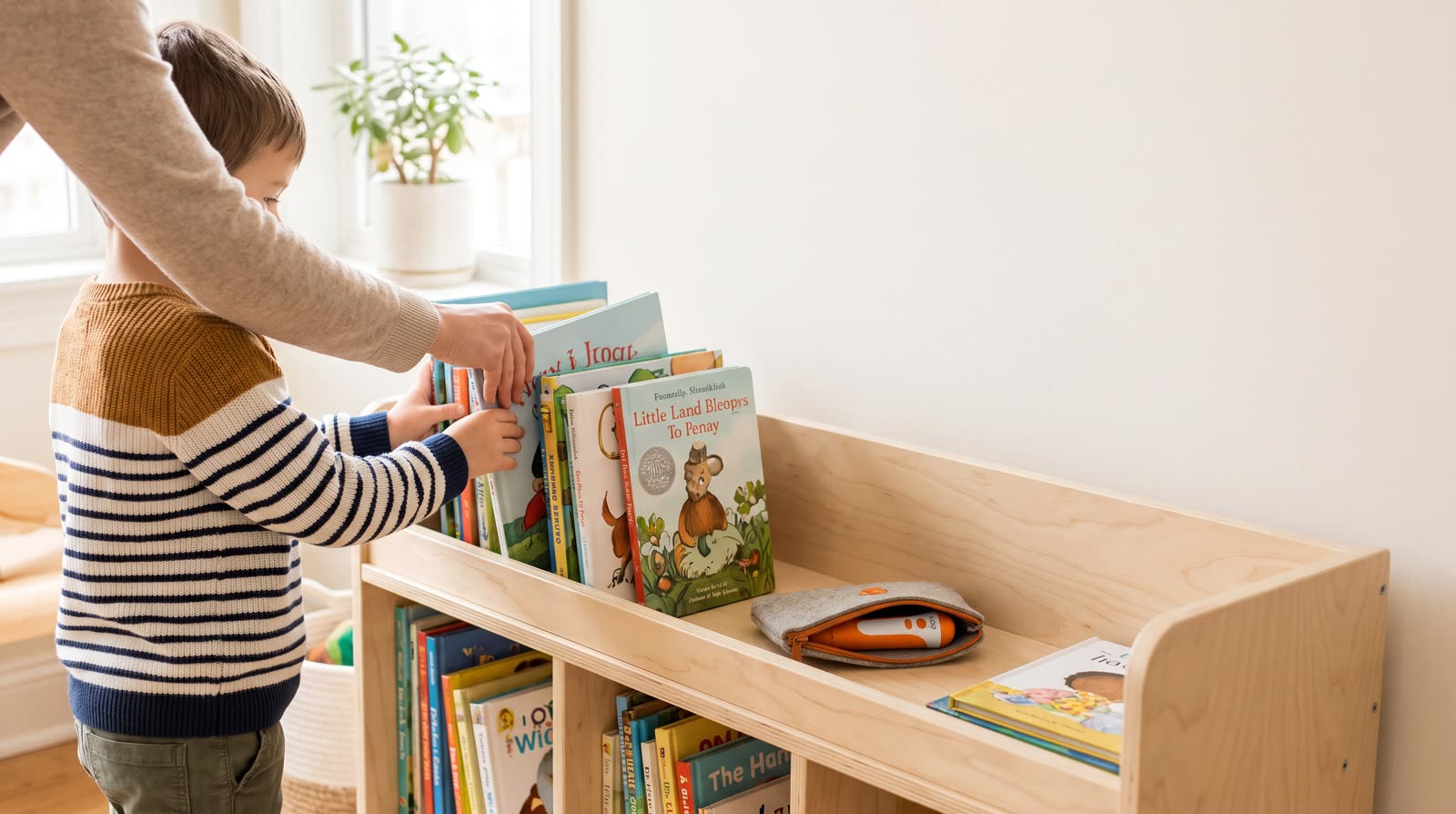
The debate between vertical shelving and horizontal stacking depends primarily on book weight and binding rigidity. For hardcover talking books, vertical shelving with adequate bookends prevents spine distortion and relieves pressure off individual pages. However, oversized softcover workbooks or heavy board books can warp under their own weight when shelved vertically without sufficient support. If horizontal stacking is necessary for heavy board books, stacks should be kept low (not exceeding 5 to 6 units) to prevent bottom-page compression and potential sticking caused by residual coatings. Ensuring proper air circulation between shelved volumes is also critical for mitigating moisture retention. Bookcase shelves should be deep enough to support the entire width of the book without letting covers overhang and bend under gravity. Using dividers within shelving units helps keep books upright and prevents leaning stress on end volumes.
Organizing by Age, Topic, or Series for Efficient Retrieval
Efficient storage systems improve operational workflow in schools, libraries, and retail environments. Categorizing talking picture books by developmental stage, thematic topic (e.g., science, social-emotional learning, early math), or series set ensures that children and educators can access materials without rough handling or pulling books out forcefully. Using clear labeled bins, compartmentalized cubbies, or dedicated spine labels streamlines daily storage routines and minimizes accidental tearing. When children can easily locate and return books independently, overall book handling improves significantly. Clear visual organization also aids inventory audits for B2B distributors managing large multi-title product lines across educational catalogs. Establishing structured return stations further encourages children to participate in post-reading cleanup.
ReadGlo project support
Request Bulk Catalog
Looking for durable talking picture books and reading pen sets for your distribution network or school district? Explore ReadGlo's complete OEM/ODM product catalog.
Daily Maintenance Workflows for Schools, Libraries, and Retailers
Routine Inspection and Cleaning Protocols
After daily reading sessions, books should undergo a quick visual and tactile check before being returned to storage. Educators or parents should inspect for torn pages, sticky residue, or moisture exposure. Cleaning should be performed using a dry, soft microfiber cloth to gently wipe away dust and surface debris. Avoid liquid chemical sprays, harsh solvents, or excessive moisture, which can penetrate paper edges and dissolve binding adhesives or obscure optical dot codes. Establishing a systematic end-of-day cleanup routine prevents dirt accumulation and extends book lifespan. For shared institutional copies, establishing scheduled sanitation checks ensures a hygienic learning environment without compromising paper integrity. Regular dusting of open storage shelves also prevents particulate buildup from settling onto book covers and page edges.
Sorting Damaged or Worn Books for Repair or Replacement
Proactive inventory management involves separating books showing signs of wear from active circulation. Minor page tears can be reinforced using acid-free archival repair tape that remains transparent to optical sensors. Books with extensive water damage, mold, or severe binding failure should be retired or replaced to maintain high educational standards and prevent contamination across shared learning environments. Establishing a clear quarantine bin for damaged materials ensures organized maintenance workflows and signals when reorders are necessary for institutional collections. Retailers and distributors can also use these inspection insights to provide constructive feedback to manufacturing partners regarding packaging and material durability. Documenting common wear patterns helps educators and administrators optimize future purchasing decisions.
B2B Procurement and Quality Assurance Considerations for Storage Durability
Evaluating Cover Lamination and Paper GSM During Sample Review
For B2B buyers, distributors, and educational publishers, ensuring long-term product durability begins at the sourcing and sample review stage. Procurement officers should evaluate paper weight (GSM), matte versus gloss lamination finishes, and edge-sealing quality. Matte anti-glare lamination is particularly valuable for talking books because it reduces light reflection that can interfere with optical reading pen sensors while providing robust scratch and moisture resistance during daily use and storage. Testing physical samples under simulated storage conditions helps verify binding strength and lamination resilience prior to large-scale bulk orders. Ensuring robust outer packaging and shrink-wrapping further protects inventory during international transit and warehouse storage. Detailed technical spec sheets enable buyers to verify that paper stock and binding specifications meet institutional demands.
Partnering with Reliable Manufacturers for Sustainable Educational Products
Sourcing talking picture books from established manufacturing partners ensures adherence to rigorous international safety and quality standards. B2B buyers should verify that production partners utilize non-toxic vegetable-based inks, durable binding glues, and certified child-safe materials that withstand repeated handling and storage cycles. Collaborative supplier relationships enable custom packaging solutions, such as protective slipcases, magnetic closure boxes, or sturdy storage folders, which further enhance product longevity in institutional markets and build end-user trust. Working closely with reliable OEM/ODM suppliers ensures consistent batch quality and long-term commercial success. Establishing clear quality benchmarks during contract negotiations protects brand reputation and guarantees end-user satisfaction across global markets.
Frequently Asked Questions
Can talking picture books be stored horizontally in large stacks?
It is generally recommended to avoid high horizontal stacks, especially for heavy board books or softcover editions. Stacking more than 5 to 6 books places excessive weight on the bottom items, leading to spine distortion, cover bending, and potential page sticking. Vertical shelving with appropriate bookends or shallow compartmentalized bins is preferred.
Does direct sunlight affect the optical dot-codes in talking books?
Yes. Prolonged exposure to direct sunlight and ultraviolet (UV) radiation can fade illustrated inks and degrade paper coatings. Faded color contrast or yellowed paper can interfere with the optical reading pen's sensor ability to accurately read the invisible OID dot matrix, causing playback errors.
What is the best way to clean talking books before putting them away?
Books should be cleaned using a dry, soft microfiber cloth to remove dust and fingerprints. Avoid using water, damp sponges, or chemical cleaning sprays, as moisture can warp paper fibers, dissolve binding adhesives, and damage the optical dot-code surface.
How should schools and libraries organize talking book sets for daily use?
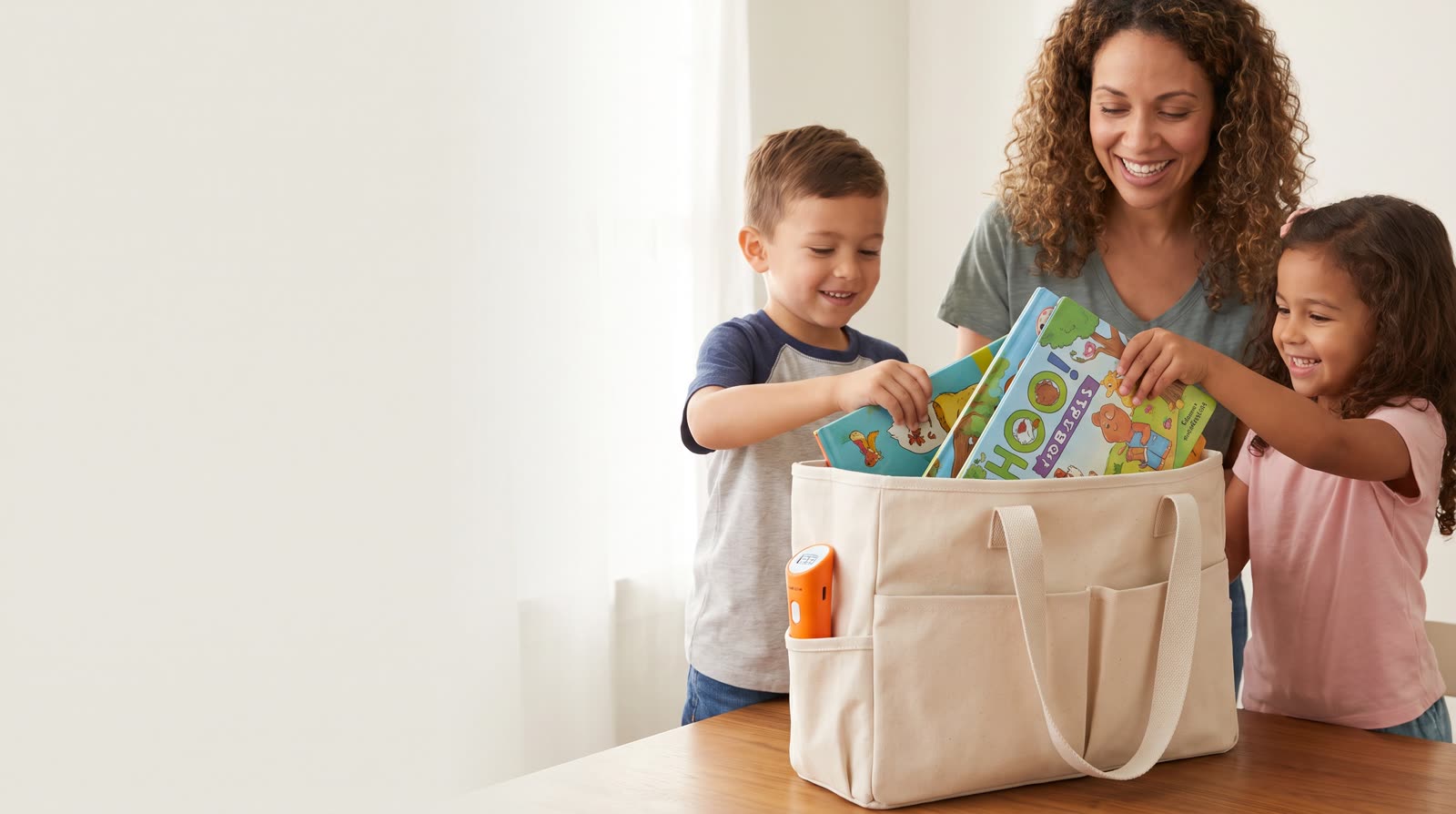
Schools and libraries should organize talking books in dedicated, low-height cubbies or labeled storage bins sorted by series, age group, or topic. This allows children and teachers to retrieve and return items easily without tugging or pulling, reducing accidental tearing and binding wear.
What B2B quality checks matter most for talking book storage durability?
B2B buyers should prioritize paper weight (GSM), matte anti-glare lamination quality, spine binding reinforcement, and sturdy outer packaging or slipcases during sample reviews. These factors directly influence how well books withstand daily retrieval, stacking, and environmental humidity in school or retail settings.
How can educational institutions prevent page warping in humid climates?
In high-humidity climates, educational institutions and libraries should utilize climate-controlled storage rooms equipped with dehumidifiers and air conditioning. Storing books in enclosed cabinets with silica gel packets or breathable storage containers also helps absorb excess moisture and prevent paper swelling.
Conclusion
Proper storage and maintenance of talking picture books after daily use bridges the gap between high-quality manufacturing and long-term educational value. By implementing controlled environmental conditions, vertical shelving practices, careful handling, and structured daily cleaning routines, schools, retailers, and families can significantly extend product lifecycles while preserving optical reading pen accuracy. For B2B distributors and educational publishers, emphasizing durable lamination, robust bindings, and thoughtful packaging during procurement ensures customer satisfaction and sustainable market growth.
Continue your research
Related reading pen buyer guides
Use these related guides to compare the next product, content, sourcing or channel decision in your project.
- Product SupportB2B Operational Guide: Long-Term Storage and Safety Protocols for Children's Interactive Reading PensRead this guide
- Product SupportHow Do I Transport a Book Set Shared by Multiple Children? Practical Logistics and Care Guidelines for B2B Buyers and EducatorsRead this guide
- Product SupportComprehensive B2B Guide: How to Protect Children's Reading Pens During Long-Term StorageRead this guide
Continue with ReadGlo
See product specifications and request model-specific documentation.
ReadGlo project support
Send Your Requirements
Partner with ReadGlo for high-quality interactive children's books and audio pen solutions tailored to your market. Contact our B2B team today to discuss your project requirements and sample requests.