Contents
Introduction
Transporting talking picture books after daily classroom, library, or multi-site institutional use requires a structured approach that balances material preservation with operational efficiency. Unlike standard stationery or traditional textbooks, interactive audio-visual books incorporate sensitive optical invisible dot codes (OID technology) embedded across paper surfaces, alongside specialized coatings designed for frequent stylus interaction. Daily circulation exposes these educational assets to mechanical stress, humidity fluctuations, surface wear, and transit-induced abrasion. For early childhood program directors, institutional librarians, school administrators, and wholesale distributors managing bulk interactive learning resources, establishing rigorous post-use transport protocols is essential for maximizing asset lifecycle and maintaining acoustic-optical readability. This guide outlines comprehensive, human-centered procedures for collecting, inspecting, packaging, and transporting talking picture books safely between learning environments, adhering to established child product safety frameworks and educational logistics best practices.
Understanding the Physical and Digital Integrity of Talking Picture Books in Transit
Preserving Optical Invisible Dot (OID) Code Surfaces
Talking picture books rely on micro-dot patterns printed on every page, which are optically scanned by accompanying audio reading pens to trigger synchronized audio playback. During transport, friction between stacked pages, abrasion from dust particles, and exposure to moisture can degrade these microscopic patterns. Institutional handlers must ensure that pages are completely clean and dry before stacking. Friction-reducing interleaving sheets or protective glassine paper can be utilized for high-value or archival book sets during inter-facility transit to prevent surface scratching and micro-abrasions that impair optical sensor recognition.
Binding and Spine Stress Management
Interactive picture books frequently feature heavy-duty library bindings, reinforced stitched signatures, or spiral spines to withstand frequent opening by young learners. However, improper stacking pressure and shifting during vehicle or trolley transport can warp spines, crack hinge joints, or weaken page attachment points. Books must never be transported in overstuffed bags or stacked vertically in unstable vertical columns without rigid lateral support. Keeping books flat in modular transport crates or standing upright with bookends ensures uniform weight distribution and prevents permanent spine distortion.
Cover and Page Lamination Considerations
Most institutional talking books utilize matte or gloss lamination to resist spills, oils, and frequent handling. While lamination enhances durability, it also increases surface reflection and vulnerability to thermal warping when exposed to direct sunlight or extreme temperature shifts inside delivery vehicles. Transport containers should maintain stable interior climates, avoiding prolonged storage in unventilated vehicle trunks where heat buildup can soften adhesives and compromise lamination bonding.
Establishing Daily Collection and Sorting Protocols Prior to Transport
Inspection for Surface Contaminants and Moisture
Before packing talking picture books into transit bins, educators or logistics staff must perform a rapid visual and tactile inspection. Books exposed to moisture, food residue, or craft materials during daily activities must be thoroughly dried and cleaned according to manufacturer guidelines before enclosure. Trapped moisture inside sealed transit containers creates a high-humidity microclimate that accelerates paper warping, mold growth, and delamination. Any book exhibiting dampness should be isolated and air-dried in a well-ventilated area prior to packing.
Organizing Books by Format and Weight Distribution
Institutional libraries often house diverse talking book dimensions, ranging from oversized board books to standard softcover storybooks and spiral-bound teacher guides. When packing transport crates, heavier board books should always be placed at the bottom of the stack, with lighter softcover volumes layered on top. This hierarchical arrangement prevents heavy covers from crushing delicate page corners and reduces shearing forces on binding spines during transit over uneven terrain or stairwells.
Securing Stacks to Prevent Sliding and Creasing
In-transit movement can cause unsecured book stacks to slide, collide against container walls, and suffer dog-eared pages or bruised covers. Transport bins should be precisely sized to hold book stacks snugly, or utilize non-slip dividers and archival foam cushioning to immobilize contents. If boxes are only partially filled, clean void-fill materials should be inserted to eliminate shifting space without exerting excessive compressive pressure on the book bindings.
Selecting Appropriate Transit Enclosures and Protective Packaging
Rigid Tote Boxes and Moisture-Resistant Bins
For bulk movement between classrooms, resource centers, or community outreach sites, heavy-duty polypropylene plastic tote boxes with secure, latching lids provide superior protection compared to flexible cardboard cartons. Plastic bins shield talking books from unexpected liquid spills, rain during loading and unloading, and crushing loads when stacked in storage rooms or delivery vans. Selecting opaque or UV-blocking bins further protects printed covers from solar fading during prolonged transport.
Padded Canvas Bags vs. Hard-Shell Cases for Mobile Libraries
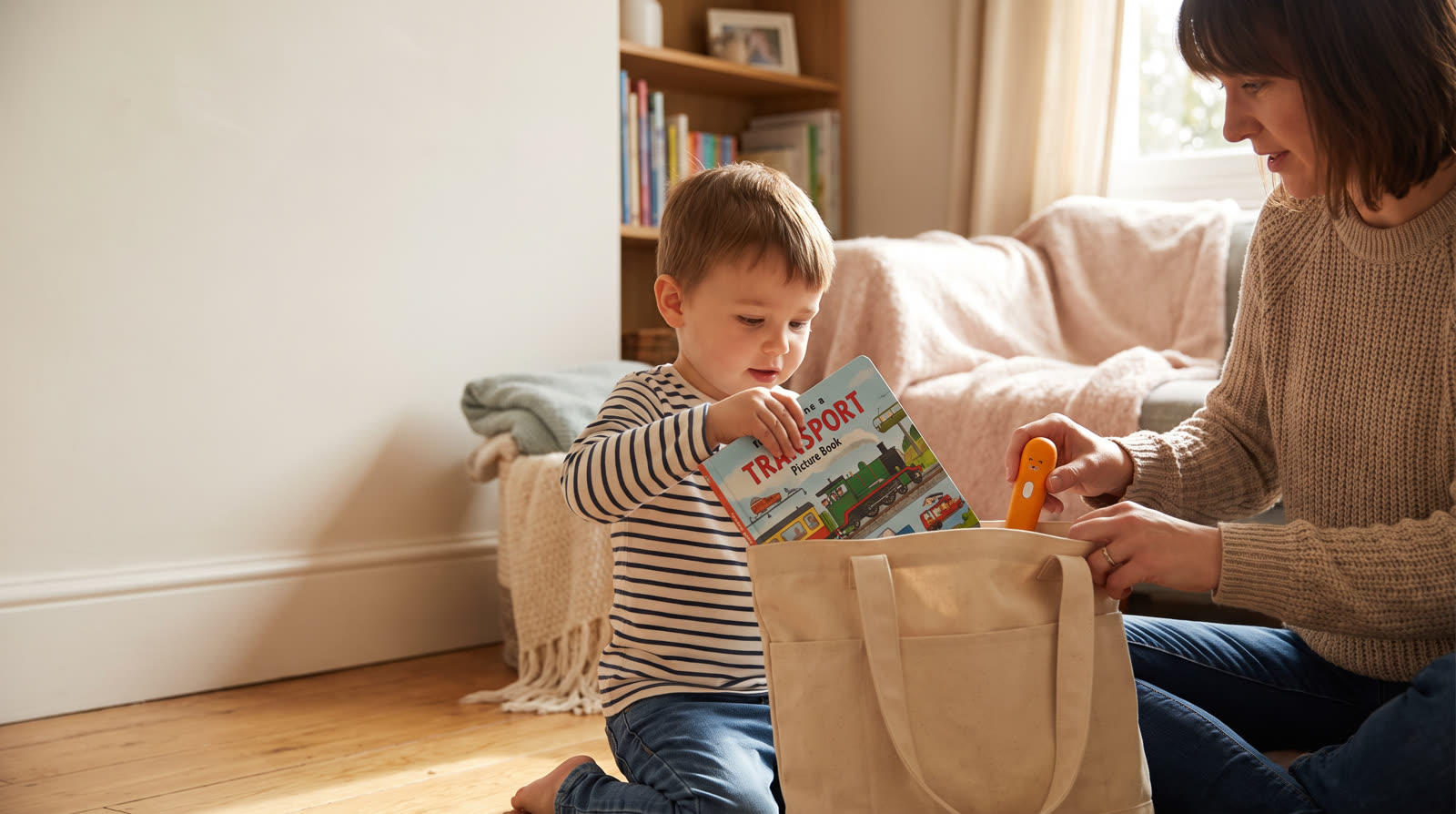
Mobile library programs and itinerant educators frequently utilize transport bags. Canvas totes should feature reinforced bottom boards, heavy-duty stitching, and internal padding to absorb mechanical shock. For valuable multi-volume sets accompanied by audio pens and charging docks, custom foam-lined hard-shell cases offer optimal impact resistance. Staff must ensure that charging pens are stored in dedicated compartmentalized slots to prevent them from shifting and striking book covers during transit.
Cushioning Materials and Shock Absorption
Transit vibration transmitted through vehicle suspensions can induce micro-wear on paper edges and bindings. Lining transport crates with shock-absorbing closed-cell polyethylene foam or corrugated fluting provides a dampening buffer against mechanical shock. Bubble wrap should be used strictly for perimeter buffering rather than direct contact with book surfaces, as prolonged pressure from bubbles can imprint textured patterns onto laminated book covers.
ReadGlo project support
Request Institutional Catalog
Explore ReadGlo's complete range of durable talking picture books and interactive audio learning solutions engineered for schools and distributors.
Managing Environmental Variables During Transit (Temperature, Humidity, and Pressure)
Mitigating Humidity and Condensation Risks
Rapid temperature transitions—such as moving book crates from an air-conditioned school facility into a hot, humid delivery van—can trigger moisture condensation inside sealed packaging. To mitigate this risk, transit bins should be packed with food-grade silica gel desiccant packets when transporting materials through humid climates or seasonal rainy periods. Staff should also allow transit containers to acclimatize to ambient room temperature before opening them in high-humidity environments.
Thermal Regulation in Vehicle Transport
Automotive interiors can experience extreme thermal spikes, often exceeding 50°C (122°F) in enclosed trunks during warm weather. High heat degrades book adhesives, warps laminated cores, and damages internal electronic components of any accompanying audio accessories. Talking picture books and associated media must be transported in climate-controlled passenger cabins or insulated transport compartments whenever ambient temperatures fall outside comfortable human operating ranges (15°C to 25°C).
Protecting Against Dust and Particulate Accumulation
Dust, dirt, and airborne particulates inside transport vehicles or storage facilities can settle on open book edges or contaminate optical reader areas. Enclosing book bundles in clean polyethylene dust covers or sealing transit bins with tight-fitting gasketed lids ensures that learning materials arrive at their destination clean, hygienic, and immediately ready for student use without requiring secondary dusting.
Institutional Deployment Scenarios: Multi-Classroom Transfers and Lending Library Rotations
Managing School-to-Home Lending Circulation
Many early childhood programs operate home-lending libraries where talking book sets circulate between school and family homes. Transporting books in individual weather-resistant zip pouches or durable protective sleeves prevents accidental damage during family transit. Programs should include standardized care instruction inserts within each pouch, guiding parents on proper home handling, moisture avoidance, and safe storage away from pets and toddlers.
Inter-Branch Library Distribution Protocols
For multi-campus school districts or regional library networks, scheduled courier transport requires standardized manifest documentation and barcode tracking. Books must be consolidated into uniform transit crates labeled with clear destination codes, fragile notices, and handling instructions. Logistics coordinators should verify that transit manifests match physical counts before departure to prevent loss or misplacement of specialized interactive learning sets.
Inventory Tracking and Barcode Verification Before Transport
Prior to dispatching talking book collections, staff should conduct a rapid barcode or RFID scan against institutional inventory databases. This ensures complete set integrity—verifying that all companion volumes, audio pens, and charging cables are accounted for before transit. Reconciling inventory at both departure and arrival points minimizes loss rates and maintains accountability across distributed educational networks.
Safety, Maintenance, and Quality Control Guidance (CPSC and Educational Standards)
Adhering to Child Safety and Material Guidelines
Educational institutions and B2B buyers must ensure that all transported materials comply with recognized safety standards such as those established by the Consumer Product Safety Commission (CPSC) regarding non-toxic inks, child-safe binding adhesives, and secure physical components. Transport methods must not compromise these safety parameters—for instance, avoiding packaging materials containing harmful plasticizers or sharp metal fasteners that could lacerate children's fingers during subsequent classroom unpacking.
When to Retire Damaged Interactive Books from Circulation
Routine transport and daily handling eventually induce cumulative wear. Institutional staff must establish clear criteria for retiring damaged talking picture books from active circulation. Books exhibiting deep page tears intersecting OID dot clusters, severe water damage causing ink bleeding or page distortion, or broken spines that expose sharp edges should be removed from service to maintain optical readability and prevent child injury.
Safe Storage Practices for Long-Term Non-Use
When talking picture books are stored between academic terms or seasonal breaks, transport bins should be transitioned to climate-controlled, pest-free, and dark storage environments. Stacks should be stored flat on elevated shelving units at least 15 centimeters off the floor to protect against potential plumbing leaks or floor moisture, ensuring long-term preservation of the interactive print media.
Frequently Asked Questions
Can talking picture books be transported in standard cardboard boxes?
While lightweight cardboard boxes can be used for short, climate-controlled indoor transport, they offer poor protection against moisture, crushing loads, and rough handling. For institutional and B2B transit, heavy-duty polypropylene plastic bins with secure lids are strongly recommended to protect OID dot codes and binding integrity.
How do temperature extremes affect talking picture books during vehicle transport?
Excessive heat in vehicle trunks can soften book adhesives, warp laminated covers, and degrade paper fibers. It is best to transport talking books in climate-controlled passenger areas and avoid leaving materials in unventilated vehicles exposed to direct sunlight.
What should I do if talking picture books get damp during transport in rainy weather?
Immediately remove damp or wet books from the transit bin. Separate the pages gently using interleaving paper or absorbent tissue and allow them to air-dry naturally in a cool, well-ventilated space away from direct heat sources. Do not stack damp books, as this leads to permanent warping and mold growth.
How can we protect optical OID dot codes from scratching during frequent classroom transfers?
Ensure books are packed snugly without excessive sliding friction. Using smooth interleaving sheets between heavy volumes and maintaining clean transit containers free of abrasive grit protects the micro-dot patterns necessary for optical reading pen functionality.
What safety standards should institutional buyers reference for children's educational materials?
Institutional buyers should consult safety frameworks such as those provided by the Consumer Product Safety Commission (CPSC) at https://www.cpsc.gov/Business--Manufacturing/Business-Education/Childrens-Products and educational guidelines from organizations like Reading Rockets (https://www.readingrockets.org) to ensure material safety and literacy best practices.
Conclusion
Transporting talking picture books after daily use is a critical operational workflow that directly impacts the longevity, reliability, and optical performance of interactive educational assets. By implementing structured collection protocols, utilizing rigid moisture-resistant transit enclosures, managing environmental factors such as temperature and humidity, and adhering to established child safety and maintenance standards, institutional administrators, librarians, and distributors can protect their investments. Properly maintained talking book collections ensure seamless, engaging interactive learning experiences for children across schools, libraries, and home-lending programs.
Continue your research
Related reading pen buyer guides
Use these related guides to compare the next product, content, sourcing or channel decision in your project.
- Product SupportB2B Operational Guide: Long-Term Storage and Safety Protocols for Children's Interactive Reading PensRead this guide
- Product SupportHow Do I Update a Book Set Shared by Multiple Children? A Comprehensive B2B Operational and Maintenance GuideRead this guide
- Product SupportComprehensive B2B Guide: How to Protect Children's Reading Pens During Long-Term StorageRead this guide
Continue with ReadGlo
See product specifications and request model-specific documentation.
ReadGlo project support
Contact Our B2B Team
Ready to equip your classrooms or library network with premium interactive reading systems? Send your requirements to our institutional specialists today.