Contents
Direct Answer
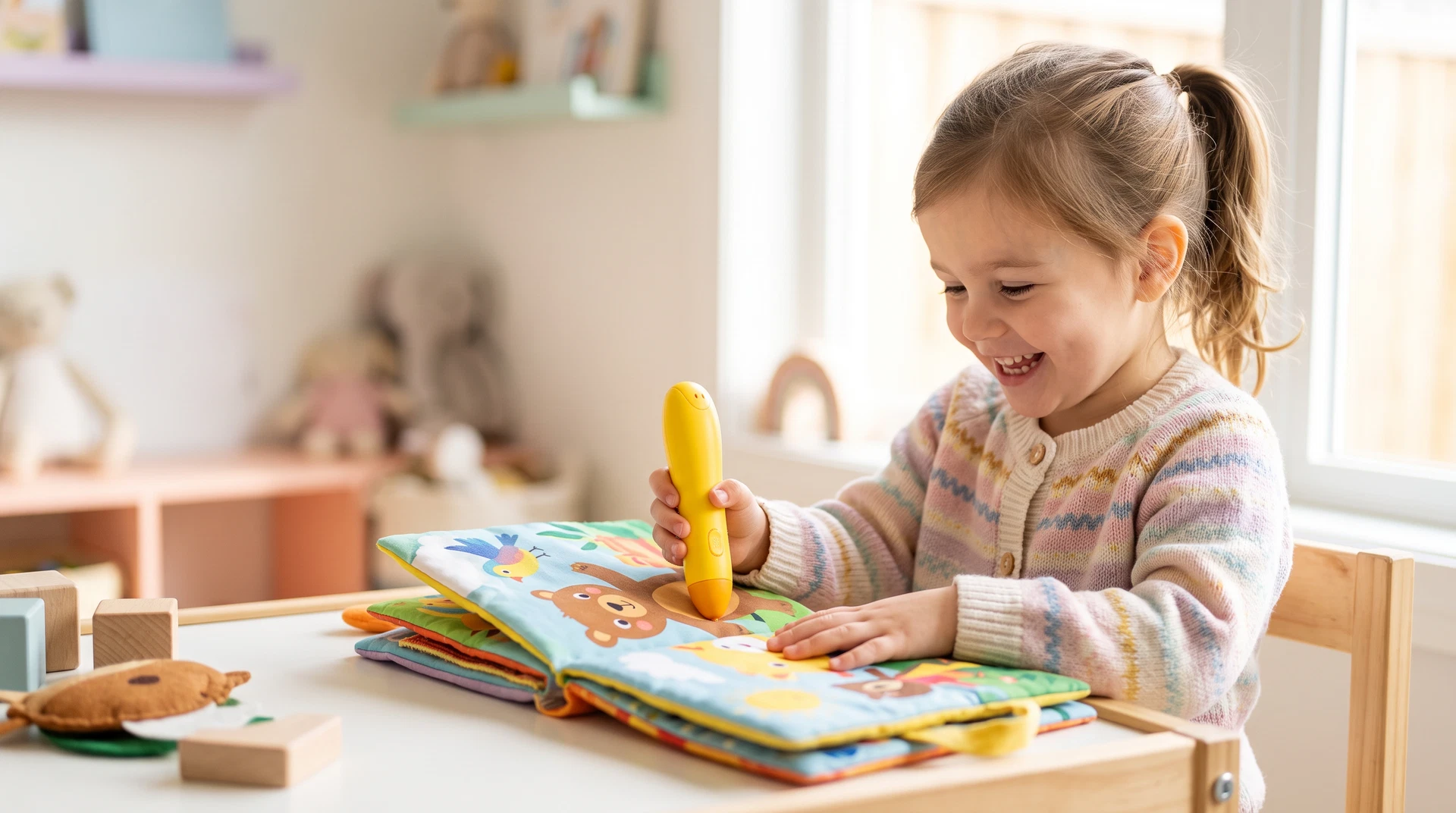
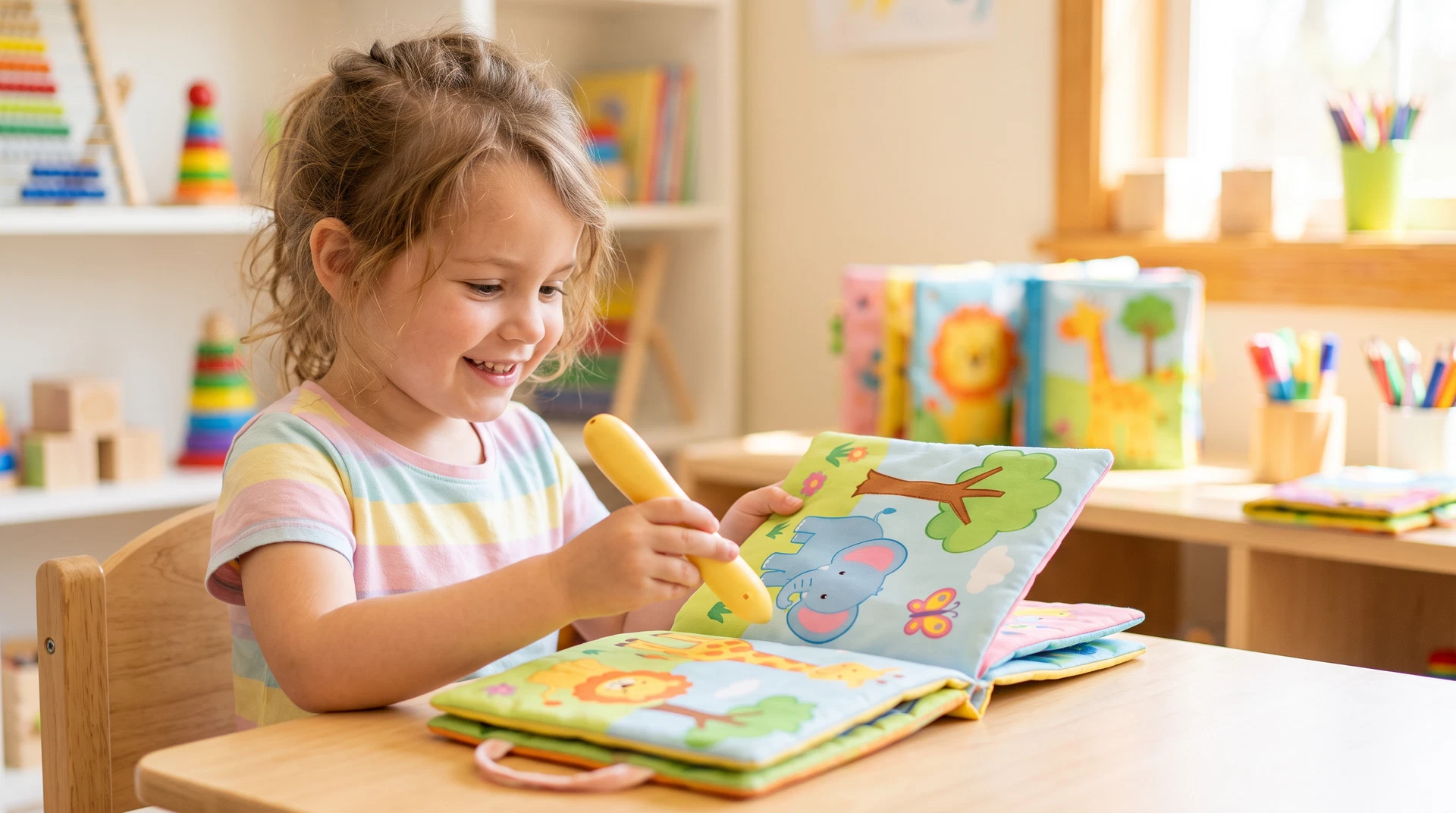
The intersection of tactile sensory play and interactive educational technology has birthed a unique product category: the OID-enabled cloth book. For importers, educational publishers, and B2B distributors, the challenge is not just finding a factory that makes cloth books, but finding one that masters the precision of Optical Identification (OID) printing on non-paper substrates. This article provides a comprehensive framework for sourcing, verifying, and managing the production of interactive soft books.
Direct Answer: Is OID Printing on Fabric Feasible?
Yes, applying OID codes to fabric or soft cloth books is technically feasible and currently available in the high-end educational toy market. However, unlike traditional paper printing where offset machines achieve high precision with ease, fabric printing involves significant technical hurdles related to surface texture, ink absorption, and dot gain. A responsible supplier should be able to demonstrate their ability to maintain dot integrity across various textile surfaces through specialized digital or flexographic printing processes. For buyers, the key is to shift from general sourcing to a technical procurement model that prioritizes material science and recognition reliability.
---
The Technical Evolution of Interactive Soft Books
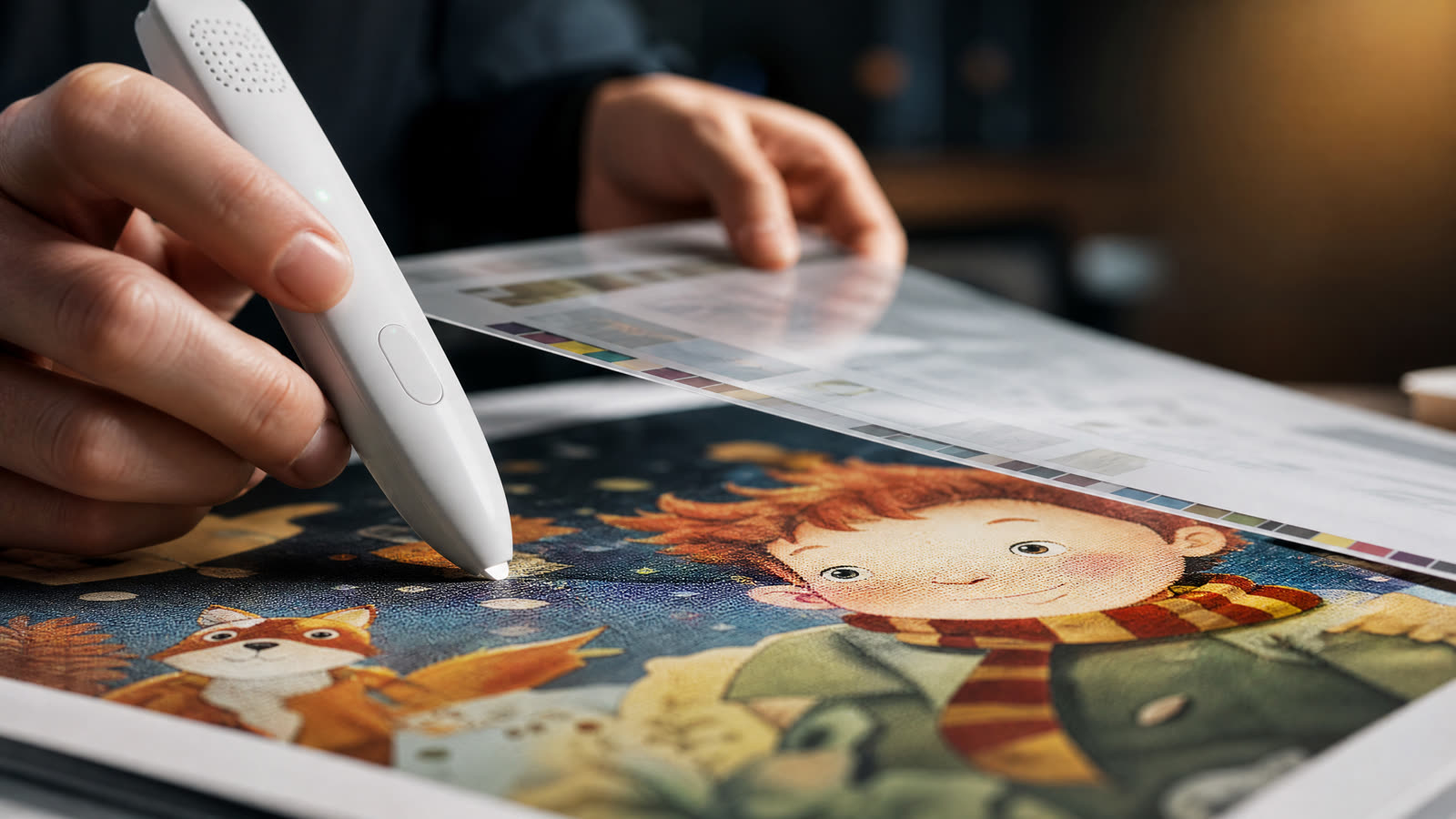
The demand for "talking" cloth books has grown as parents and educators seek durable, washable, and interactive tools for early childhood development. Traditional talking pens, which use an infrared (IR) sensor to read microscopic dot patterns (OID codes), were originally designed for the smooth, flat surfaces of coated paper.
Why Fabric Presents a Challenge for OID 1. Surface Porosity: Fabric fibers are uneven. When ink is applied, it tends to "bleed" or spread, a phenomenon known as dot gain. For OID technology to work, the dots (often as small as 0.04mm) must remain distinct and accurately positioned. 2. Texture and Reflectivity: The IR sensor in a reading pen requires a relatively consistent reflection. Highly textured fabrics like fleece or terry cloth can scatter the IR light, leading to "recognition failure." 3. Durability and Washability**: Cloth books are meant to be handled, chewed, and washed. OID codes printed on fabric must withstand mechanical friction and detergents without losing the carbon-based signature that the pen detects.
---
Material Selection: The Foundation of Recognition Accuracy
| Fabric Type | Recognition Reliability | Durability | Tactile Softness | Recommended Use |
|---|---|---|---|---|
| **Peach Skin** | Excellent | High | High | Premium Interactive Books |
| **T/C Blend** | Good (with coating) | Medium | Very High | Sensory/Activity Books |
| **Coated Polyester** | High | High | Medium | Educational Flashcards |
| **Cotton Canvas** | Moderate | High | High | Durable Storybooks |
Choosing the right fabric is the first step in a successful B2B procurement project for interactive cloth books. Buyers should request technical data sheets for the following materials commonly used in OID applications:
**1. Peach Skin (Polyester Microfiber) This is the gold standard for OID cloth books. It has a very tight weave and a smooth, slightly fuzzy surface that mimics the texture of a peach. Its low porosity minimizes dot gain, allowing for high-resolution OID 3.0 or 4.0 printing.
**2. T/C Cloth (Polyester-Cotton Blend) A blend of polyester and cotton provides a more "natural" feel while maintaining the structural integrity needed for printing. However, it often requires a specialized primer or coating to ensure the OID dots do not sink too deep into the fibers.
**3. Coated Non-Woven Fabrics For lower-cost applications, some factories use non-woven materials with a laminated or coated finish. While these provide excellent recognition rates, they may lack the "softness" expected in a premium baby book.
- --
The Manufacturing Process: How OID is Applied to Textiles
A factory capable of this task typically employs one of two primary printing technologies. Buyers should clarify which method a potential supplier uses during the initial inquiry phase.
**High-Resolution Digital Inkjet Printing Modern digital textile printers can achieve the DPI (Dots Per Inch) required for OID codes. This process involves applying a liquid coating to the fabric to "freeze" the ink droplets on the surface, followed by layered printing where the colorful artwork is printed using CMY (Carbon-free) inks, and a precision layer of K (Carbon-based) ink for the OID dots.
**Flexographic or Specialized Screen Printing For high-volume orders, some factories use modified flexographic presses. This requires highly specialized plates and consistent ink viscosity control. While cost-effective at scale, the setup costs for OID-enabled plates are significantly higher than for paper.
---
Verification Framework: How to Vet a Factory
When a factory claims to be "capable of applying OID codes to fabric," B2B buyers must move beyond verbal assurances. Use the following verification framework to perform due diligence.
**1. Request a "Dot Recognition Rate" Report A professional OID supplier should use a specialized testing device to measure the recognition rate across different areas of the fabric. Aim for a recognition rate of 98% or higher.
**2. Mandate a "Wash and Read" Test The primary advantage of a cloth book is washability. Buyers should request that the factory provides samples that have undergone at least 5 to 10 standard wash cycles. After washing, the OID pen should still be able to trigger the correct audio files without delay.
**3. Verify Carbon-Free Ink Usage If the colorful background art contains carbon, it will interfere with the IR sensor's ability to "see" the OID dots. A responsible supplier must provide written confirmation that all non-OID inks are carbon-free (CMY only).
**4. Inspect the IR Sensor Compatibility Not all OID pens are created equal. Some have higher-sensitivity CMOS sensors that can read through slightly more texture. Buyers should send their specific pen hardware to the factory for compatibility testing before mass production.
---
Strategic Content Design: Maximizing the Interactive Experience
Beyond the technical printing of dots, the success of an OID cloth book depends on how the interactive content is structured. In a cloth book, the "interactive zones" are often larger than in paper books to account for the slight movement of the fabric. A responsible supplier should suggest a "buffer zone" around each interactive icon. If an icon is 2cm wide, the OID code should ideally cover a 2.5cm area to ensure that even if the fabric shifts slightly during assembly, the pen still triggers the correct sound.
Top-tier interactive soft books often combine OID technology with other sensory elements like crinkle paper, embedded squeakers, or flaps and pockets. OID codes can be printed on both the top and bottom of a fabric flap, allowing the pen to recognize if the flap is "open" or "closed" based on the audio response.
---
ReadGlo project support
Send Your Requirements
Share your target market, product scope, expected quantity and launch timing. Our team can prepare a relevant product, content or quality-control discussion.
OID Technology Generations: Which is Right for Fabric?
| OID Generation | Technical Characteristics | Suitability for Fabric | Cost Impact |
|---|---|---|---|
| **OID 2.0** | Larger dots, lower density. | Moderate. Dots are easier to print. | Lowest |
| **OID 3.0** | Standard for most pens. | **High.** Optimized for modern IR sensors. | Standard |
| **OID 4.0** | Ultra-high density. | Low. Requires extreme printing precision. | Highest |
When discussing requirements with a factory, you will often hear terms like OID 2.0, 3.0, or 4.0. Choosing the right generation is a balance between cost and performance. For most B2B projects, OID 3.0 is the recommended standard. It offers a robust balance of recognition speed and printing feasibility on textiles.
- --
The Procurement Lifecycle: From RFQ to Final Shipment
Navigating the procurement of a technically complex product like an OID cloth book requires a structured approach.
**Step 1: Crafting a Technical RFQ Your RFQ should specify the base material (e.g., Peach Skin), the OID generation (e.g., OID 3.0), and the ink requirements (CMY background, Carbon K dots).
**Step 2: The Prototyping Phase Never skip the prototyping phase. Request a "Digital Sample" first to check color, followed by a "Technical Sample" to test OID recognition.
**Step 3: Third-Party Inspection (TPI) Before the final payment, hire a TPI agency. Their checklist should include a functional test with an OID pen, a safety test for stitching strength, and a check for humidity control in packaging.
---
Pre-Press and Artwork Preparation: The Buyer's Responsibility
A common friction point in B2B manufacturing is the "hand-off" of digital assets. For OID cloth books, the artwork must be prepared with technical precision. Buyers should provide the factory with a layered PDF/X file where the visual layer uses CMY colors only and the OID layer uses 100% K ink set to overprint.
Because fabric expands the ink, the digital file often needs "dot gain compensation." If the target dot size on fabric is 0.05mm, the digital dot in the file might need to be 0.035mm. A factory with experience in textiles will have a compensation profile for their specific machines and fabrics.
---
Safety, Compliance, and Regulatory Standards
When manufacturing children's products, compliance is non-negotiable. Buyers must consult with certified testing laboratories and legal professionals to ensure compliance with the specific laws of their target market.
Disclaimer: The following information is for general guidance. Buyers must consult with certified testing laboratories (such as SGS, Intertek, or BV) and legal professionals to ensure compliance with the specific laws of their target market.
**Key Standards to Consider:
- EN71 (Europe): Covering mechanical properties, flammability, and migration of elements.
- ASTM F963 (USA): The standard consumer safety specification for toy safety.
- REACH/RoHS: Ensuring the inks and electronic components are free from hazardous substances.
A responsible supplier should be willing to provide existing test reports for similar products, but buyers should always commission an independent test for their specific production run.
---
FAQ: Sourcing OID Cloth Books
Q: Can any OID pen work with fabric books? A: Most modern OID 3.0 pens can work if the printing quality is high. However, because fabric is less reflective than paper, pens with higher-quality optical sensors generally perform better. Always conduct a compatibility test with your specific hardware.
Q: Does printing OID on fabric increase the cost significantly? A: Yes. Due to the need for specialized fabrics like Peach Skin, pre-treatment coatings, and high-precision digital printing, the cost per page is typically 30% to 50% higher than a standard non-interactive cloth book.
Q: Are OID cloth books truly washable? A: Yes, if printed correctly with high-quality textile inks and properly heat-set. However, it is generally recommended to use gentle cycles or hand washing to preserve the longevity of the OID dots over time.
Q: What is the minimum order quantity (MOQ) for custom OID cloth books? A: MOQs vary by factory but typically range from 1,000 to 3,000 units due to the setup requirements for digital textile printing and the specialized material sourcing involved.
Q: Can we use OID on organic cotton? A: Organic cotton is highly porous. While possible, it usually requires a heavy pre-treatment layer that may change the "organic" feel of the fabric. Most high-performance OID books use synthetic or blended fibers for better dot precision.
---
Conclusion: Bridging the Gap Between Soft Play and Smart Tech
Sourcing a factory for OID-enabled cloth books requires a shift from "general sourcing" to "technical procurement." By focusing on material science, printing precision, and a rigorous verification framework, B2B buyers can successfully launch innovative products that stand out in the competitive educational toy market. Investing in a factory that understands the nuances of OID on fabric is not just a manufacturing decision; it is a brand-protection strategy that ensures long-term customer satisfaction.
For technical consultations on OID integration, artwork preparation for textiles, or to discuss your specific sourcing requirements for interactive educational tools, please contact our specialist team.
Contact for Technical Inquiries: [info@readglo.com](mailto:info@readglo.com)
---
Continue your research
Related reading pen buyer guides
Use these related guides to compare the next product, content, sourcing or channel decision in your project.
- Application SolutionsCan Custom Sound Books Improve Corporate Training Retention with Integrated Quizzes?Read this guide
- OEM GuideWhere Can I Find a Reliable Supplier for OID Coding Service for Children’s Book Publishers?Read this guide
- Application SolutionsCan Waterproof Talking Pens Revolutionize Interactive Culinary Education for Children?Read this guide
Continue with ReadGlo
See product specifications and request model-specific documentation.
ReadGlo project support
Get a Project Quote
Request product specifications, sample guidance or a tailored proposal for your reading pen, interactive book or distributor program.