Contents
Direct Answer
An interactive book reprint audio revision check should compare a named approved pairing with the proposed edition, print run, touch-code map, audio package and device build. Record each changed reference separately, then agree which pages, touch zones and playback behaviors need checking on identified proofs and samples. An unchanged ISBN or approved recording is not compatibility evidence. For a new title using existing pens, create a separate pairing request and confirm authorized technical access. Preserve observations, untested scope and unresolved issues. This edition-change file supports a buyer's next decision; a sample review does not automatically authorize production.
Which edition, print run, audio package and device build are being compared?
Separate bibliographic identity from the technical pairing
Start the talking pen book edition and print run register with separate columns for title/reference, ISBN if available, edition, language and print run/date. Add artwork revision, touch-code-map revision, audio master, loaded content package, device model, hardware revision and firmware/build. Firmware is the device software; a content package is the audio and associated data loaded for the proposed use. Do not combine their identifiers.
The International ISBN Agency's assignment guidance says a reprint retains the original ISBN when the publisher remains the same and text and binding are unchanged. Different language editions require separate ISBNs. These bibliographic rules do not verify printed interaction codes, recordings or device software. Keep edition and print-run fields distinct even when the ISBN remains unchanged.
Give the approved baseline and proposed pairing different record IDs
Use the following fictional buyer-owned worksheet example, not a customer or test record: B-01 references Edition A, Print P-01, Audio A-01 and Build F-01; C-01 proposes Edition A, Print P-02, Audio A-02 and Build F-01. The edition and build labels match, while print-run and audio labels differ. That comparison identifies questions; it does not establish compatibility.
Attach B-01's actual baseline evidence ID and its scope before calling it approved in a real project. Leave C-01 Not assessed. Both rows also need independent artwork, map, package and hardware references. Enter To be confirmed for missing information, with an owner responsible for locating it. Preserve the old row when versions change. A shared filename, product name or SKU should not replace evidence that identifies the reviewed configuration.
What changed, and which dependencies might need another check?
| Change scenario | Baseline pairing ID / old references | Candidate pairing ID / new references | Changed pages or zone IDs | Potential linked dependencies | Checks to agree with the responsible owner | Evidence and untested scope to retain | Proposed owner / next decision |
|---|---|---|---|---|---|---|---|
| Unchanged reprint claimed | B-01: Edition A / P-01 / A-01 / F-01 | C-01: Edition A / P-02; other references to confirm | None claimed; verify delta list | Print conditions; artwork and map identity | Confirm unchanged files; agree representative proof review | File comparison; proof ID; unreviewed print conditions | Prepress owner / define coverage |
| Artwork moved, resized or reordered | B-01: old artwork/map references | C-01: proposed artwork/map references | Proposed spread S-04 / zone Z-04A | Geometry; code alignment; adjacent zones | Agree changed-zone, boundary and control-zone playback checks | Old/new layout; proof ID; observations Not tested | Technical and prepress owners / agree checks |
| Narration replaced; print unchanged | B-01: Audio A-01 / P-01 | C-01: Audio A-02 / P-01 | Zones mapped to replacement tracks; identify IDs | Track IDs; language; package/map; permissions | Confirm expected audio and affected playback behaviors | Audio comparison; permission status; retest result Not tested | Audio and technical owners / confirm scope |
| Firmware/build changed; audio unchanged | B-01: F-01 / A-01 | C-01: proposed build / A-01 | Behavior-dependent selection; to confirm | Playback; package interpretation; permitted loading route | Ask authorized owner which build-specific checks apply | Build evidence; relevant behavior plan; untested builds | System owner / resolve access and coverage |
| New title on existing channel pens | B-01: existing title and device-group references | C-01: proposed title/edition; each device group separately | Proposed title zones; references to confirm | System access; title mapping; actual hardware/build | Settle authorized feasibility scope before sample planning | Device-group evidence; access limits; pairing Not assessed | Publisher and system owners / define next request |
Illustrative buyer worksheet, not customer/test data. Each row is an alternative scenario; proposed pairings are Not assessed and observations/retest results are Not tested.
Swipe horizontally to view all columns.
Compare print and touch-map changes with audio-only changes
Describe the delta against old and new references before choosing checks. An illustration moved within a spread may affect zone boundaries even if its caption is unchanged. Reordered pages may require reviewing page-to-track references. Replacement narration may leave the printed book untouched while changing track identifiers, language or playback expectations. Ask the technical, prepress and audio owners which dependencies actually apply.
A supplier's OID production overview lists design source files, a coding coordinate list and a matched audio database as separate handover elements. That terminology illustrates the linked records; it does not establish ReadGlo formats or printing tolerances.
Use the decision table below to connect each change to a proposed review. Its rows are alternative fictional scenarios, not simultaneous versions of C-01. Replace the placeholders with your own references, affected zone IDs and decision owners.
Keep firmware changes distinct from content-package changes
Record a firmware/build change even when the audio master is identical. Ask the authorized system owner which playback or loading behaviors need review for that build. Conversely, a new audio package does not prove that firmware changed. Unknown software identity is an unresolved field, not permission to assume equivalence.
Document why unchanged control zones are included or excluded. The dependency review should justify coverage rather than automatically requiring every page or checking only edited artwork. Confirm authorization for changed text and recordings separately. Any product, battery, acoustic, privacy or transport implications need their own final-SKU, target-market and route review; this technical table does not settle them.
Can a new title be assessed against pens already held by the channel?
Identify the actual channel devices and authorized system owner
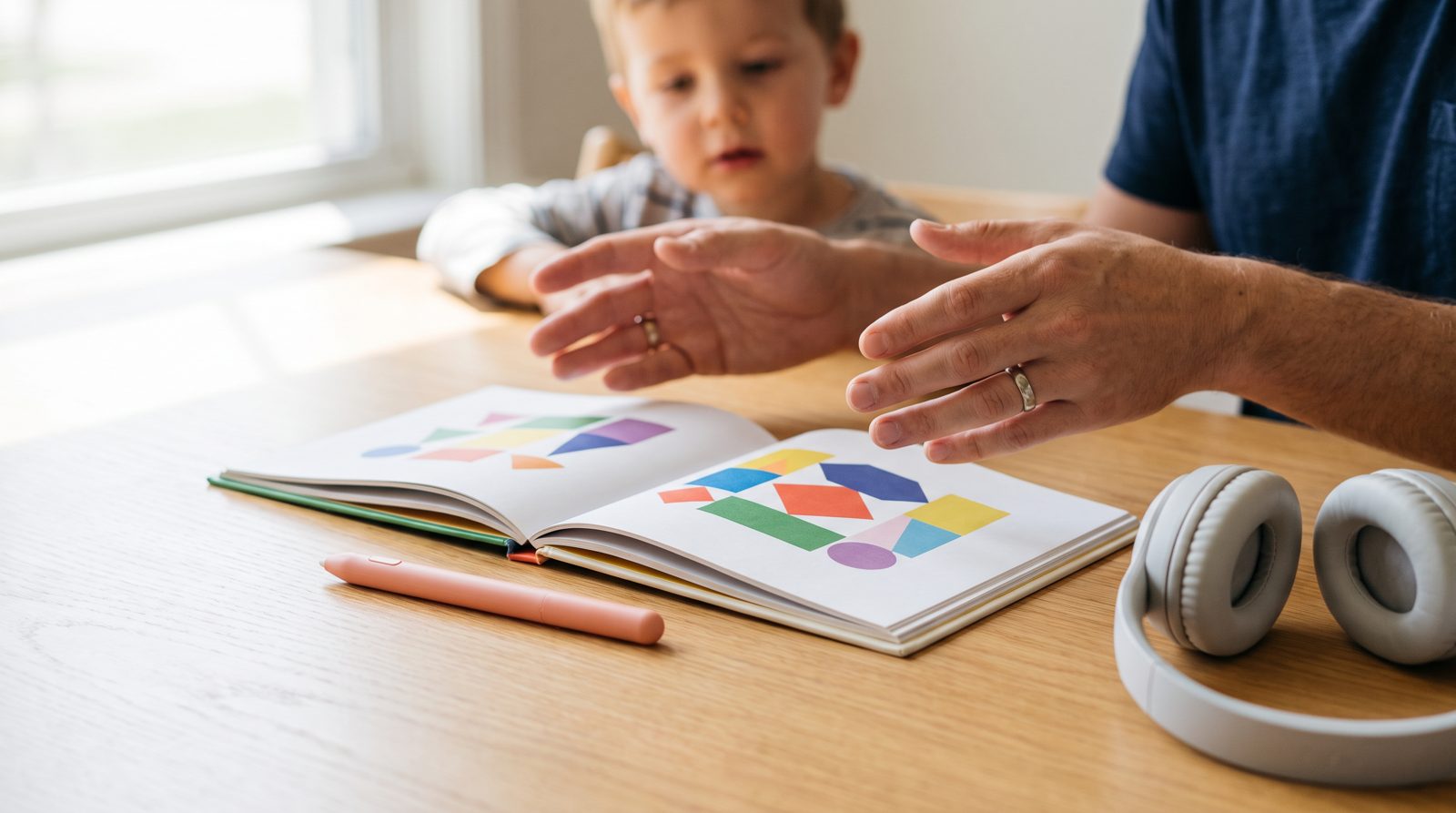
Ask channel partners to group devices by model, hardware revision, firmware/build and known loaded package. Record whether each identifier came from a label, an authorized device-information record or an assumption. A familiar casing does not establish an identical build. Where a group contains unknown versions, retain that uncertainty instead of treating one representative pen as evidence for the entire inventory.
Identify who can provide authorized system documentation and answer questions about the proposed pairing. Owning a pen does not necessarily grant access to firmware, code tables or integration tools. If access is unavailable, record the limitation and ask what bounded assessment is possible. Do not request circumvention or reverse-engineering as a procurement shortcut.
Define a new pairing request without assuming interoperability
A reading pen new title compatibility assessment needs a new row linked to the relevant device group. Include proposed title, edition and language; shareable spread or zone references; intended response; existing pairing evidence; documentation provider; authorized contact; and unresolved access conditions. Define whether the next question concerns feasibility only or separately agreed proof/sample work.
Tessloff's BOOKii FAQs describe specific BOOKii-compatible titles and title loading through its own file manager. This illustrates a named system's catalogue and content-management boundaries, not ReadGlo interoperability with BOOKii or other third-party pens. An ordinary printed book or another series' successful demonstration cannot establish the proposed title's compatibility.
Organize the register before using the book-and-pen compatibility project route. Mark unknown fields To be confirmed and proposed rows Not assessed. Share a non-confidential summary, not proprietary firmware or complete book and audio assets.
What should the touch-zone and print-proof sample plan contain?
Specify changed zones, adjacent boundaries and unchanged controls
An interactive picture book touch zone specification should give each proposed check a page/spread reference, zone ID and boundary reference from the controlled layout. State the intended action, expected track and language, expected adjacent-zone behavior and responsible reviewer. Obtain dimensions, code-print requirements and tolerances from the selected system and prepress owners; this guide supplies no universal thresholds.
For the fictional C-01 example, a buyer could identify spread S-04 and moved illustration zone Z-04A. Ask whether its new boundary changes the neighboring zone and which unchanged control zone would help distinguish a local layout concern from a broader mapping concern. The plan should state why each point was selected. Selection alone establishes no test coverage or result.
Compare expected audio with observations on the named proof and build
The picture book print proof audio playback test log needs proof and sample IDs, print-process/stock/finish references where relevant, device/hardware/build, loaded package, preparation conditions, steps, expected response, observation, evidence reference and review date. Agree which physical proof represents the proposed print conditions. A screen PDF can support layout comparison but is not a playback observation on that physical proof.
Write a step such as: apply the agreed preparation, point at the specified position in Z-04A, compare the response with the named expected track, then check the agreed neighboring boundary. Keep Observation and Retest result as Not tested until work occurs. Avoid importing an old demonstration result into a new proof row.
Use the companion guide, How Can a Publisher Keep OID Print Codes Aligned Across Talking Pen Book Reprints?, to review OID print-code alignment for a reprint. Link its prepress records to this pairing ID instead of duplicating the coding handover.
ReadGlo project support
Build Your Pairing Register
Organize title, edition, print run, device/build, audio/map references and open questions. Mark unknowns To be confirmed and proposed pairings Not assessed before requesting a bounded review.
Which sample findings, exclusions and retests belong in the decision record?
Keep wrong-track and no-response findings with correction evidence
Agree acceptance criteria with the buyer's reviewers before sample work. The issue log should include issue ID, pairing ID, page/zone, expected and observed behavior, conditions, severity under the agreed brief, correction owner, replacement reference, retest scope/evidence, open status and decision owner/date. At planning stage, observations remain Not tested and the pairing remains Not assessed.
If a later review identifies a wrong track or no response, preserve the original observation. Do not overwrite it with a corrected file name. Link the proposed correction and subsequent retest to the issue ID so the reviewer can compare the versions and conditions. An audio editor's master approval is a different record from playback review on the identified device.
List untested titles, pages, languages and device builds explicitly
The talking pen book sample acceptance exclusions should identify unreviewed titles, pages/zones, languages, device builds, print conditions and unknown versions. Where loading or recovery behavior is relevant and included in the agreed scope, name any untested behavior too. A successful demonstration in one zone does not cover the whole book, and one build's review does not cover every channel-held pen.
Use a named disposition: Hold, Revise, Request wider review or Scope-limited next step. The buyer's decision owner selects it against evidence and open issues; the worksheet does not calculate approval. A scope-limited next step should specify the activity it permits, its exclusions and the condition for another review. To close an unknown-build issue, identify its owner, obtain authorized version evidence and reconcile the pairing row; repeating a successful demonstration on a different known build leaves that original uncertainty unresolved.
What should be handed over before the reprint or new pairing moves forward?
Reconcile the candidate references and archive superseded files
Compile a Revision-to-Pairing Review Pack as a fictional buyer-owned worksheet/template, not ReadGlo test data. Replace or delete the B-01/C-01 examples before using it for your project. Link four sheets by pairing ID:
- Baseline & Candidate Pairings: title, edition, print run, artwork/map, audio/package, hardware/build and unknown-field owner.
- Change Impact: old/new references, delta, affected zones, linked dependencies and proposed checks.
- Proof & Sample Log: proof/device IDs, steps, expected response, observations, evidence and correction/retest links.
- Decision & Exclusions: untested scope, open issues, authorization status, decision owner and next step.
Reconcile final candidate references with the sample records. Mark superseded assets for archive, record the effective print-run boundary and name the channel-notice owner. Preserve earlier evidence with its original scope. Do not infer that a firmware update or rollback route exists.
Send a bounded compatibility brief with named decision owners
Before requesting the next commitment, confirm asset authorization by rightsholder, territory, medium/use, language, term, attribution and written permission. Buyer-supplied files are not automatically licensed. Name separate technical, editorial/audio and commercial release owners. Feasibility discussion, separately agreed sample work and production authorization are different decisions.
You may use the bilingual picture-book series as a catalogue reference when describing the proposed title or language direction. Its product listing is not evidence for a particular reprint, recording permission or retained-device pairing.
Send the non-confidential summary, target market, baseline/candidate IDs, devices to retain, changed zones, proposed coverage and unresolved questions through the compatibility scope-review route. Retain the talking pen book sample acceptance exclusions in the handover. Exchange proprietary materials only through separately confirmed authorized arrangements; feasibility, samples, fees and timing remain to be agreed.
Frequently Asked Questions
1. Can an unchanged ISBN be used as proof that a new print run matches the approved talking-pen configuration?
No. The ISBN Agency's reprint rule concerns bibliographic identity under stated publisher, text and binding conditions. Keep edition and print run in separate columns, then reference the new proof, artwork/map, audio/package and actual device build. Matching ISBNs do not establish that those technical assets match the approved pairing.
2. How should a publisher assess a new title against pens already held by its channel partners?
Group the actual devices by model, hardware and firmware/build. Open a separate pairing row for the proposed title, edition and language. A reading pen new title compatibility assessment should identify authorized documentation, expected zone behavior and unresolved access limits. Request a bounded feasibility scope first; agree representative proof and sample coverage separately if assessment work is possible.
3. Which artwork changes should trigger a reprint compatibility review?
Record page reordering, moved illustrations, resizing/scaling and changed touch-zone or printed-code positions as impact-review requests. Compare old/new artwork and map references and identify affected zone IDs. The technical and prepress owners should decide changed-zone, adjacent-boundary and justified unchanged-control checks. Do not assume every small edit causes incompatibility or that a fixed sample selection is sufficient.
4. What must be retested when an approved narration is replaced but the printed book stays the same?
Start with old/new track IDs, language, content-package and mapping references. Agree which affected zones and linked playback behaviors require checking against the revised expected audio. Preserve permission status, actual observations, corrections and retest evidence. Unchanged print and audio-master approval do not replace playback review on the named device; dependency findings and agreed acceptance criteria determine the scope.
Conclusion
Move forward only with a pairing record that identifies the candidate assets, explains the proposed change and connects agreed checks to a named next-decision owner. Preserve unresolved questions and sample exclusions instead of turning a limited demonstration into production approval. The useful output is the Revision-to-Pairing Review Pack, not a general claim that existing pens accept a reprint or new title.
Prepare your non-confidential brief for the ReadGlo book-and-pen compatibility project route. If you need a general inquiry route instead, use Contact ReadGlo; the Buyer FAQ provides further procurement questions without replacing configuration-specific review.
Sources and Further Reading
International ISBN Agency: ISBN assignment — official edition, language-edition and reprint rules, not technical compatibility evidence.
Tessloff: BOOKii FAQs — one named system's title and file-management context, not a ReadGlo interoperability claim.
OID Reading Pen for Children's Books — supplier-described print, coordinate-map and audio handover terminology only; not ReadGlo specifications or performance evidence.
Continue your research
Related reading pen buyer guides
Use these related guides to compare the next product, content, sourcing or channel decision in your project.
- Publisher SolutionsHow can buyers tell whether an interactive children’s book content package is production-ready?Read this guide
- Product SupportHow Do I Fix a Reading Pen That not recognize a book after a child dropped it?Read this guide
- Publisher SolutionsHow Should a Buyer Choose the Source Language for a Multilingual Children’s Learning Product?Read this guide
Continue with ReadGlo
See product specifications and request model-specific documentation.
ReadGlo project support
Request a Compatibility Scope Review
Share a non-confidential project summary, target market, baseline/candidate IDs, retained devices, changed zones and proposed sample coverage. Feasibility, authorized materials, sample work, fees and timing require separate confirmation.