Contents
Direct Answer
A school reading pen needs assessment should turn a supervised activity into a testable purchasing brief: identify the learners’ context, select proposed matched materials, record separate device and book quantities, specify languages and operating conditions, and define what staff will observe. Send the same brief to suppliers, with unresolved questions clearly marked. This establishes a basis for comparable quotes, not a promise of educational benefit or approval for classroom use.
Ask what staff and learners should be able to do with the proposed materials. A literacy coordinator may describe the activity, while a school business manager identifies the purchasing decision. Neither should infer the other’s requirements from a catalogue picture.
The examples and worksheet below are a buyer planning framework, not an established ReadGlo school programme or reports from actual classrooms. This guide covers the work before an RFQ, or request for quotation. Detailed allocation belongs in the classroom kit quantity-planning guide; a later rollout decision needs a separate evaluation plan.
Which supervised activity is being requested?

Write one activity statement for each materially different setting. Identify the purpose, proposed materials, adult role and interaction to be reviewed. “Reading pen for students” is too broad to determine whether a quotation should include shared picture books, additional title copies or separately requested staff materials.
Small-group tapping and discussion
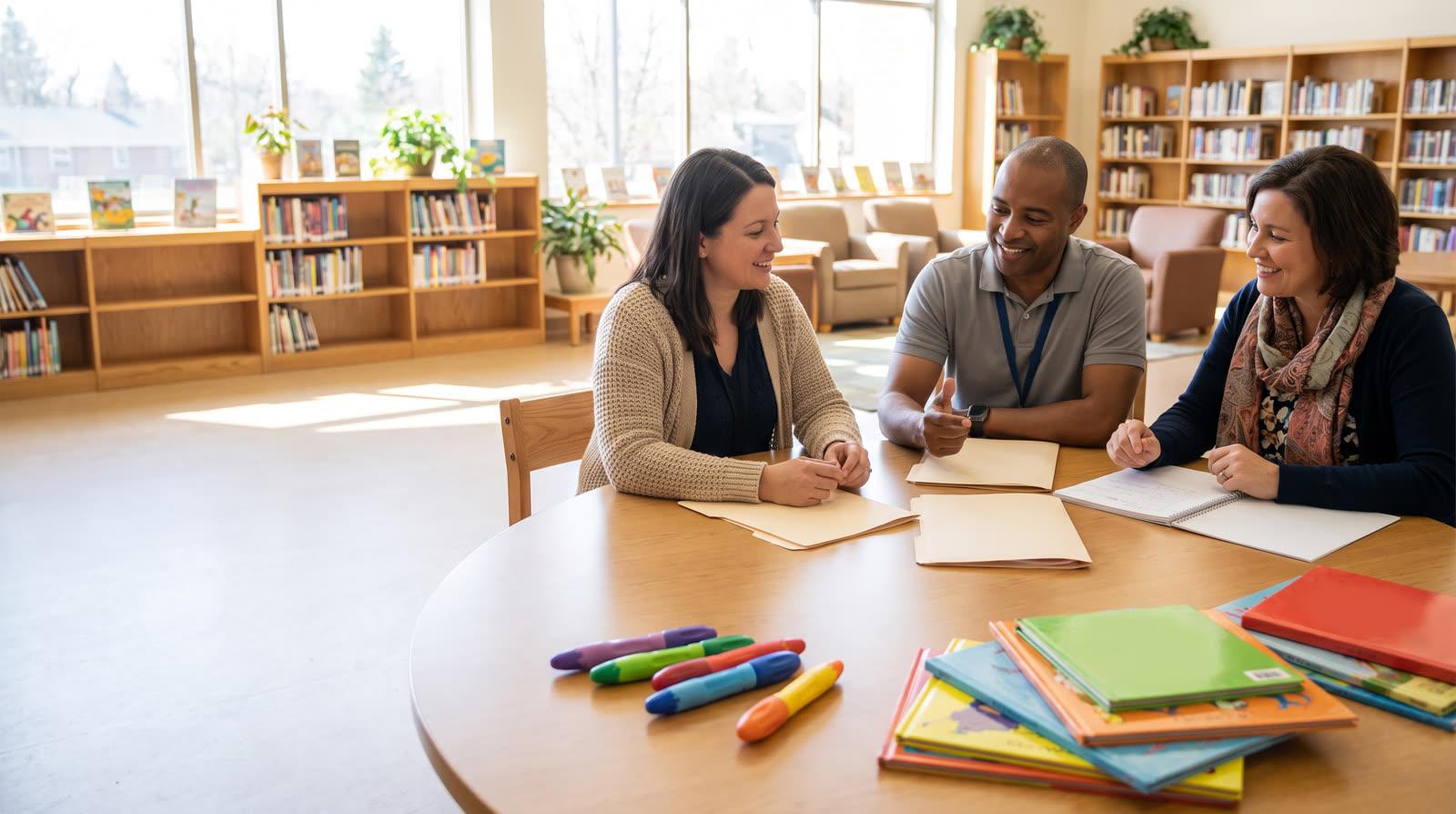
A buyer might propose that a teacher opens a named picture-book spread, models a selected touch response and invites learners to take turns. The teacher then leads a discussion about the picture. Record who controls the pen, whether learners share a view of the page and how replay is expected to work.
Translate that plan into a request: identify the proposed edition, selected regions and expected prepared recordings, then ask which device and content version could support them. Staff could observe whether the intended audio is triggered and whether the page remains accessible during turn-taking. These are practical questions, not evidence that the activity improves comprehension.
Listening to words while looking at pictures
Another planning example is a supervised station where learners look at a selected picture while listening to a prepared word recording. State whether the teacher selects the region or learners do so with assistance. Describe whether the task requires a word response, a longer phrase or both; do not let “interactive” stand in for the requested behavior.
Check the proposed material’s vocabulary and layout before requesting equipment. Staff may find that the intended prompt is absent or that the page requires more adult explanation than the plan allows. Record that as a content-selection question rather than assuming another device will solve it.
Shared library or resource-room borrowing
A shared collection creates a different requirement. Describe where materials are issued, who checks the pairing and whether use stays on site. Take-home borrowing, if requested, needs its own approval and written arrangements; it is not an included service.
For this assessment, identify the borrowing setting and its implications for pack contents, instructions and staff time. Do not design an entire lending programme here. The separate school library shared-collection guide addresses that later operational task.
What does the proposed classroom system include?
Treat “reading pen systems for the classroom” as a scope question, not the name of a guaranteed all-in-one package. Describe the physical and content components first. Then ask which are included, separately quoted, buyer-supplied, excluded or pending confirmation.
For the device, request an identifiable reference and build where available. For printed materials, list titles, language editions and print revisions. For audio, identify the requested recordings or content-package reference and their relationship to the proposed touch regions. A similar-looking book or another pen is not a substitute for a reviewed pairing.
For the coded-book route discussed on ReadGlo’s book–device compatibility page, selected coded regions are associated with prepared audio in a named configuration. The procurement task is to confirm that configuration. Do not specify arbitrary textbook scanning or automatic translation as though these were the same category.
List accessories separately, including any requested storage or power-related items. Ask for instructions applicable to the selected configuration rather than assuming connectors, charging equipment or cleaning methods from photographs. Record what the school intends to provide itself.
Teacher materials also need explicit lines. If the school requests activity notes, instructions in another language, editable resources, staff training or ongoing support, name the requested deliverable and recipient. Format, permissions, availability, fees and responsibilities remain to be confirmed. A request for reading pens for schools does not establish a curriculum package or deployment service.
Use the Complete Learning Kit only as an existing catalogue reference for discussion. Require a written contents list before treating any displayed bundle as equivalent to the school’s brief.
How should quantities and language editions be recorded?
The needs assessment explains why quantities are needed; it should not prescribe a universal device-to-child ratio. Record total participating classes, simultaneous activity locations, sharing schedules and the school’s proposed allocation. Distinguish a small possible evaluation from a later purchasing scenario.
Count devices separately from printed copies. A shared pen requirement does not determine how many copies of each title learners need to see or handle. Likewise, a bundle quantity is not meaningful until its contents are defined. Keep quantities provisional when the activity timetable or material selection is unresolved.
If existing stock is proposed for reuse, list it separately with its edition and device references. Do not subtract it from the purchasing requirement until its availability and pairing have been checked. Avoid counting the same movable kit as available in two rooms at the same time.
For languages, separate print, audio and staff instructions. “Bilingual” leaves important questions unanswered: which written versions, which spoken varieties, which recordings and what requested language-selection behavior? Identify a staff reviewer who can assess whether the proposed language content matches the activity.
An English–Chinese book project, for example, should name the requested written Chinese version and spoken audio variety rather than treating “Chinese” as one complete specification. Availability and pairing remain pending. Prepared recordings in two languages are not live translation, and a website’s interface language does not establish device content.
Where new or adapted content is requested, record who will arrange confirmation of the rightsholder, territory, medium, language, term, attribution and written permission for the relevant assets. This is an evidence request, not a statement that ReadGlo holds those permissions.
Which school conditions could change the request?
Record conditions that affect the activity, rather than compiling an unrelated technology wish list. A shared classroom might require a specific audio arrangement, an adult-managed start and stop routine, and somewhere to store paired books and devices between sessions. Each requested arrangement needs confirmation for the selected configuration.
Describe functional access needs without sending pupil records. For example, staff can request review of page visibility, ease of selecting the intended region and the assistance needed to operate controls. Such observations do not establish medical suitability, examination permission or an approved accessibility function.
If an activity must work without internet, apps or learner accounts, state that as a requirement and ask what setup and ongoing use would involve. Do not assume offline operation from the absence of a screen. If a connected element is proposed, assign it a separate school review owner.
Finally, name the staff role responsible for storage, charging arrangements, issue checks and reporting problems. If that responsibility is unassigned, the operational requirement remains open even when the equipment list looks complete.
What should the buyer decision table record?
| Task | Materials | Quantities | Conditions | Observable check | Evidence needed | Owner | Open item |
|---|---|---|---|---|---|---|---|
| Small-group picture discussion | Named spread, edition and proposed pen/audio pairing | Devices and title copies separately; provisional | Adult model, turn-taking and page access | Selected region triggers the expected recording in the agreed review | Pairing references and expected-audio list | Literacy lead | Response scope and staff materials |
| Supervised word-listening station | Selected picture/word regions and language version | Concurrent stations and proposed copies | Agreed audio arrangement and assistance | Staff can identify the intended response and note help needed | Content preview and later bounded observation record | Teaching lead | Vocabulary fit and audio arrangement |
| Shared resource-room collection | Named paired pack and instructions | Proposed loan packs; contents unresolved | Issue, return and storage routine | Staff can reconcile the returned components | Written pack list and proposed check sheet | Library lead | On-site or take-home scope |
| Additional language edition | Print, recording and device/map references | Copies by edition, not one combined total | Named language reviewer | Requested print/audio correspondence can be reviewed | Version references and permission status | Language lead | Availability and authorization |
School-owned needs-assessment planning prompts, not completed classroom observations
Swipe horizontally to view all columns.
Use one row per activity or material-version combination. The table below contains planning prompts, not completed school observations. Replace placeholders with the school’s choices and retain unknowns as “to be confirmed.” Assign staff by role, not pupil identity.
Classify requirements as essential, desirable or alternatives. Explain which activity depends on each essential item. Keep requested evidence beside the requirement so suppliers can distinguish clarification questions from requested deliverables.
Ready to turn the table into a scoped inquiry? Use the existing form on ReadGlo’s school procurement page. Its optional allocation worksheet carries your own assumptions into the brief; it does not recommend a ratio. Send the activity and next decision, with quantities and unknowns marked. Submission is not evaluation approval or an order.
Prepare your institution's reading-pen procurement brief
Record the learning setting, classes, requested materials and provisional allocation. Sample evaluation and institutional arrangements require separate agreement.
ReadGlo project support
Send a school needs-assessment inquiry
Share the activity, proposed matched materials, separate provisional quantities and open questions through the school procurement page. The optional allocation worksheet carries your assumptions; submission is not evaluation approval or an order.
Open the related procurement routeWhat should be agreed before a possible evaluation?

A needs assessment may identify a question that cannot be closed through descriptions alone. Request a possible evaluation only after the parties agree what it would examine and under which terms. Do not assume a free trial, available loan stock or a standard review period.
Before any materials are sent, clarify availability, sample charges, freight, dates, ownership or return conditions, responsibility for loss or damage and the expected feedback. Specify who supervises use and who decides whether the school may proceed. Any staff preparation or support must be separately described and confirmed.
Keep the review question narrow. For a proposed small-group activity, staff might examine selected touch responses, page access and assistance needed under stated conditions. Identify the actual device, book edition, audio/map version and accessories. Record expected behavior separately from what was observed, including unreviewed regions and unresolved differences.
A useful observation states the context and limitation. “The designated reviewer heard the expected recording at the selected region” would describe a bounded functional observation if an evaluation actually took place. It would not establish whole-book coverage, reliable operation across every device or improved literacy. No such result is reported in this guide.
Separate the procurement decision from educational-effectiveness research. A practical review can inform whether the proposed materials and workflow merit further consideration; it cannot by itself establish learning gains or clinical benefit. The school retains its teaching decisions and any separate research responsibilities.
The later school pilot and wider-rollout guide addresses planning a rollout decision. Here, the output is the question and agreed evaluation scope, not a scale/no-scale result.
How does the assessment become a consistent RFQ?
Create a dated, non-confidential brief containing the activity statements, proposed configuration, table and next decision. Give each requirement a stable reference so supplier answers remain attached to the same request. Ask respondents to identify included items, exclusions, alternatives and unresolved feasibility questions explicitly.
Keep the possible evaluation and any later purchase on separate response lines. For each quotation unit, request the contents and version basis. Ask suppliers to separate equipment, printed materials, content work and any requested services rather than hiding different scopes inside one total.
Resolve conflicts before comparing responses. If staff request different language editions, retain separate options until the school selects one. If the proposed schedule relies on unavailable shared materials, revise the activity or allocation instead of silently increasing a bundle total.
The comparable supplier RFQ guide covers the quotation document itself. This assessment supplies its school-specific inputs. Product safety, labeling, battery and transport review remain separate questions tied to the final SKU, destination and route; the activity table does not close them.
What official context is relevant?
The UK Department for Education’s specification guidance advises consulting the intended users and purchase approvers, and describing what is needed, the amount, quality and timing. It also asks buyers to distinguish essential from desirable requirements.[1] That supports the structure of this brief; schools must separately determine their applicable purchasing process.
If a proposed configuration includes an online service or app, the U.S. Department of Education’s education-technology privacy resources provide questions for reviewing such services. Its Model Terms of Service resource addresses how a service collects, uses or transmits information.[2] Assign that question to the school’s responsible reviewer rather than assuming connectivity or privacy approval.
These sources are context for the relevant buyer questions, not SKU approvals or evidence of ReadGlo product capabilities. Recheck applicable guidance when moving from a draft brief to a purchasing decision.
Frequently Asked Questions
1. What should teachers specify for a small-group reading-pen activity? Name the activity, proposed spread or title, learner age context, language and adult role. Describe the selected response and how learners will share the page and device. Ask for confirmation of the matching configuration and any requested teacher materials. Do not describe the plan as a tested lesson or guaranteed literacy intervention.
2. How can a school count devices and books without assuming one pen per pupil? Start with simultaneous activities and the sharing schedule. Record the proposed device allocation separately from each title’s printed-copy requirement and any accessory quantities. Keep bundle counts provisional until their contents are confirmed. Use the existing quantity-planning guide for detailed allocation rather than applying a fixed child-to-pen ratio.
3. Can the set use existing ordinary textbooks? Do not assume so. Identify the actual textbook edition and proposed device, then use the compatibility-review route. Ordinary printed text is not automatically a coded audio interface. Prepared bilingual content is also different from reading and translating arbitrary text. Existing book ownership alone should not be treated as pairing or content-permission evidence.
4. What does a classroom observation establish, and what does it not prove? It can document the specified interaction and staff assistance under recorded conditions for the reviewed configuration. Its conclusions are limited by coverage and method. A demonstration does not establish improved reading, suitability for every learner, whole-book compatibility or approval for a different device, edition or deployment.
5. Are a free trial, staff training or take-home support included? Not assumed. Request each separately and confirm availability, deliverables, fees and responsibilities in writing. A possible evaluation also needs agreed freight, dates and return or retention conditions. Take-home use requires its own scope; a classroom inquiry does not create a lending programme or support entitlement.
6. What can procurement share without disclosing pupil records? Share institution details, staff roles, destination, activity, broad age context, proposed languages, configuration references and quantity assumptions. Describe operational needs without names, diagnoses, individual assessments or identifiable examples. Keep the supplier inquiry focused on the purchasing question; this needs-assessment framework does not require student records.
Conclusion: define the activity before comparing the offer
A useful needs assessment connects a real school task to proposed materials, quantities, languages and observable checks. It also shows which decisions belong to teachers, operations staff and procurement, and which supplier answers remain outstanding. That makes a quotation easier to interpret without treating a catalogue bundle as a complete classroom solution.
Send the non-confidential brief and open-item summary through ReadGlo’s school procurement page, or email info@readglo.com. Identify the activity, proposed pairing, provisional quantities and next decision. Quotations, sample arrangements, services and final purchasing release require separate written confirmation.
Sources and Further Reading
[1] UK Department for Education — Writing a specification
[2] U.S. Department of Education — Privacy and Education Technology
ReadGlo — Reading pens for schools
ReadGlo — Reading pen book compatibility
These links provide procurement context and existing ReadGlo inquiry or category references. They do not approve a SKU, confirm content permissions or establish an educational result. The source records supplied with the draft were checked on 19 November 2026; recheck applicable guidance before a purchasing decision.
Continue your research
Related reading pen buyer guides
Use these related guides to compare the next product, content, sourcing or channel decision in your project.
- Buyer GuideHow Should a Public-Private Literacy Partnership Govern a Shared Talking-Pen Book Collection?Read this guide
- Buyer GuideWhat Should Schools Test Before Buying Reading Pens for Kids?Read this guide
- Buyer GuideCan a Children’s Reading Pen and Interactive-Book Bundle Be Sourced for South Korea Without Guessing Its Safety Category, Korean Content Rights or Import Route?Read this guide
Continue with ReadGlo
See product specifications and request model-specific documentation.
ReadGlo project support
Discuss your non-confidential school brief
Send the activity, proposed pairing, provisional quantities and next decision through the school procurement page, or email info@readglo.com. Quotes, sample arrangements, services and final purchasing release need separate written confirmation.
Open the related procurement route