Contents
Quick Answer
For international publishers and toy brands partnering on children’s talking pens, technical after-sales support encompasses structured firmware diagnostic protocols, optical sensor calibration guidelines, component replacement pathways, and technical documentation assistance. ReadGlo operates as a specialized OEM/ODM manufacturer providing technical infrastructure and engineering guidance. However, ReadGlo does not promise in public articles fixed warranty periods, defect rates, discounts, exclusivity qualifications, Amazon authorization, service level agreements (SLAs), spare parts inventory, or product roadmaps. All commercial commitments and technical service levels depend entirely on specific product specifications, order volumes, target markets, project schedules, regulatory compliance requirements, and bilateral written agreements negotiated between the parties.
Core Technical After-Sales Support Framework for Talking Pens
Children's talking pens combine optical recognition sensors, embedded microcontrollers, audio decoding modules, and specialized OID (Optical Identification) code-printed books. Consequently, technical after-sales support requires a multidisciplinary engineering framework rather than generic consumer electronics troubleshooting. Global brand owners and educational distributors must evaluate how manufacturers handle firmware updates, audio file compilation errors, optical sensor misalignment, and battery management system queries. In accordance with established industry practices highlighted by organizations such as ASQ regarding supplier quality management, transparent technical communication channels between OEM partners and client quality assurance teams are vital for sustainable product lifecycles [1]. Establishing a rigorous technical support structure ensures that localized software incompatibilities or audio synchronization glitches can be systematically analyzed and resolved during mass deployment.
Diagnostic and Firmware Maintenance Processes
| Support Tier | Primary Technical Focus | Associated Engineering Deliverable |
|---|---|---|
| Tier 1: Client Consultation | Initial inquiry triage, audio book compilation format verification, and basic user guide alignment. | Technical FAQ documentation and audio packaging guidelines. |
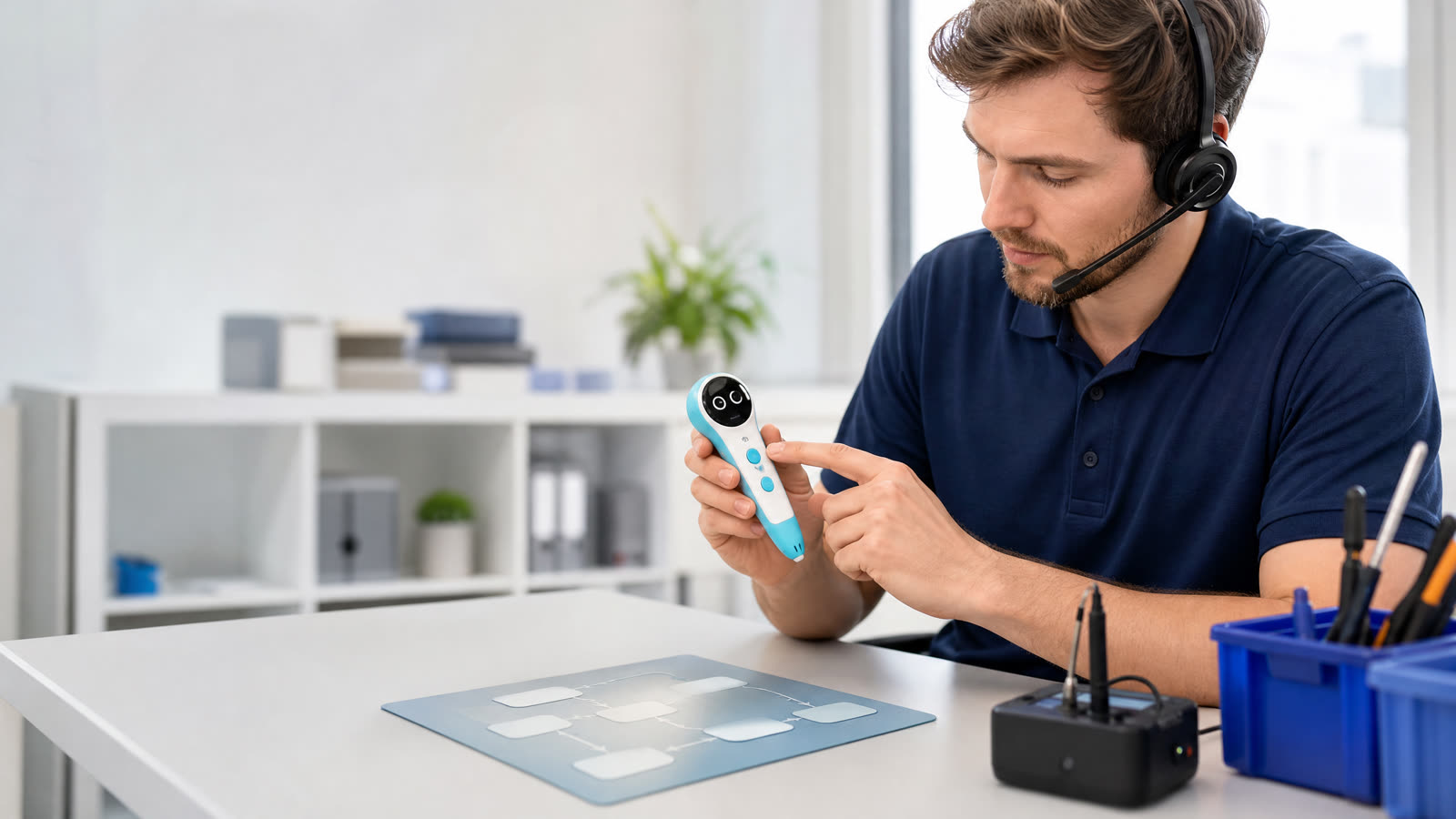
| Tier 2: Firmware & Sensor Analysis | Optical sensor performance evaluation, OID code compatibility testing, and firmware patch deployment. | Diagnostic software logs, test firmware builds, and calibration notes. |
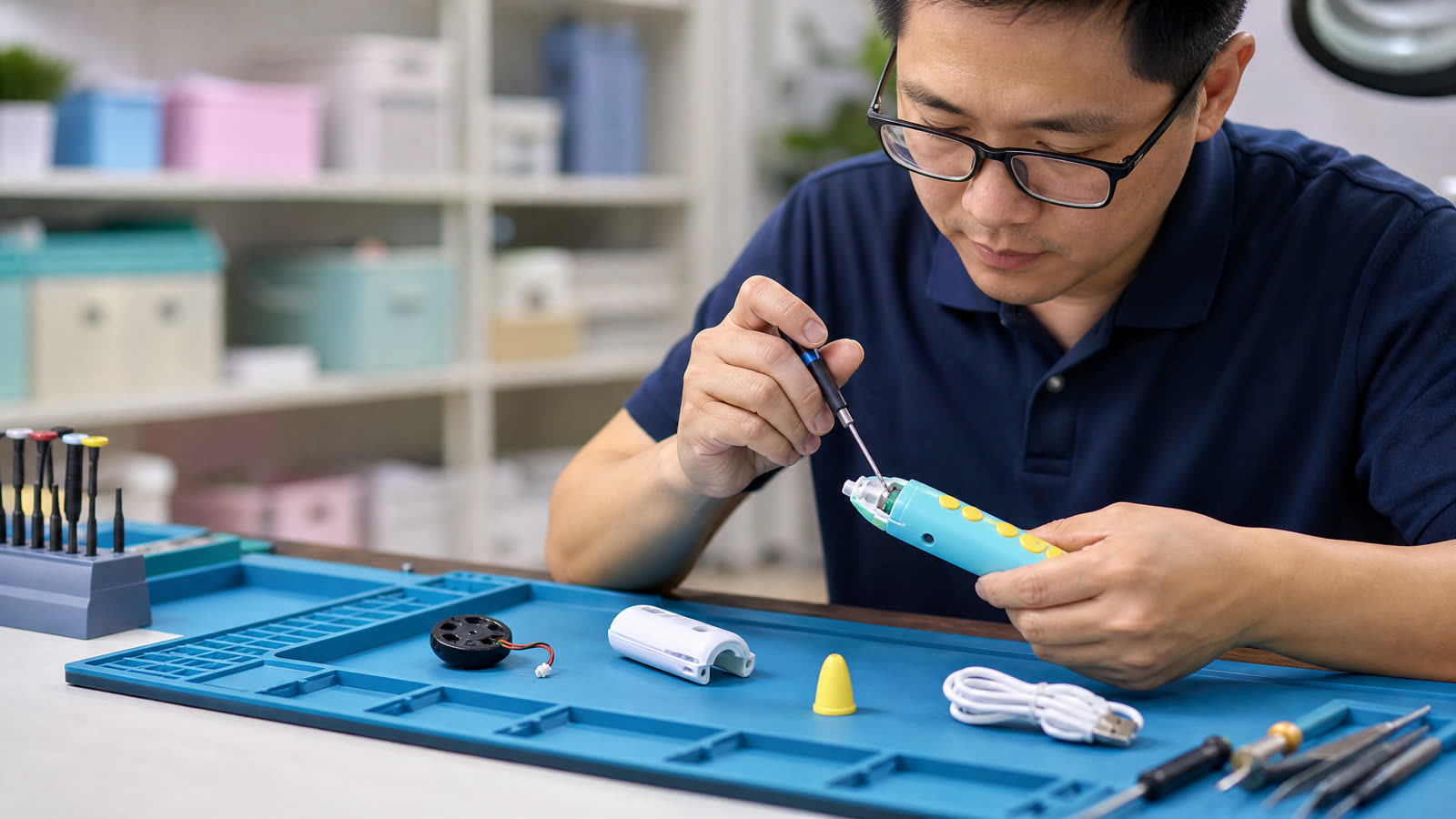
| Tier 3: Hardware Root Cause Analysis | Component-level inspection of microcontrollers, PCB assemblies, and battery charging circuits. | Engineering failure analysis report and corrective action recommendations. |
Table 1: Technical Support Tiers and Diagnostic Workflows for Talking Pen Projects
Maintaining high product reliability across international markets requires methodical diagnostic workflows and structured firmware version control. When educational publishers deploy interactive books paired with custom audio pens, firmware stability dictates user experience. Below is an overview of standard technical support tiers and diagnostic procedures utilized in professional OEM manufacturing environments.
Written Confirmation Checklist and Service Boundary Definitions
To eliminate ambiguity in international trade and OEM contracts, brand owners must establish comprehensive written confirmation checklists before initiating production runs. These checklists define the exact boundaries of technical support, escalation paths, and documentation requirements. It must be noted that ReadGlo does not promise in public articles fixed warranty periods, defect rates, discounts, exclusivity qualifications, Amazon authorization, service level agreements (SLAs), spare parts inventory, or product roadmaps. Each of these parameters is governed strictly by bilateral written contracts tailored to specific project volumes and regulatory jurisdictions. Furthermore, regarding marketplace compliance and brand protection, authorization roles on platforms such as Amazon are managed exclusively by brand rights owners and designated administrators under official platform guidelines, rather than by the manufacturer [2]. This ensures full alignment with intellectual property standards outlined by bodies like WIPO [3]. This is commercial information, not legal advice; have a qualified lawyer review any agreement before signing.
Partner Collaboration and Direct Engagement
Navigating the technical requirements of interactive educational hardware demands a collaborative approach between publishing houses, toy brands, and manufacturing engineering teams. Because every project involves unique microcontroller architectures, custom audio compression formats, and distinct regional safety certifications (such as EU toy safety directives [4] or CPSC children's product certificates [5]), generalized solutions are insufficient. To discuss specific technical support frameworks, firmware customization protocols, or OEM/ODM project timelines for talking pens, international partners are invited to contact the engineering team directly at info@readglo.com.
References
1. American Society for Quality (ASQ). Supplier Quality Resources and Guidelines.
2. Amazon. Amazon Brand Registry and Role Management Overview.
3. World Intellectual Property Organization (WIPO). Publishing and Creative Industries Documentation.
4. European Commission. Toy Safety Regulations and Harmonized Standards.
5. Consumer Product Safety Commission (CPSC). Children's Product Certificate (CPC) Guidance.
Continue your research
Related reading pen buyer guides
Use these related guides to compare the next product, content, sourcing or channel decision in your project.
- OEM GuideWhat Long-Term Support Options Are Available for Children’s Talking Pen Replacement Parts and Repair?Read this guide
- Quality ControlHow Should Buyers Write a Third-Party Inspection Brief for Defect Classification?Read this guide
- OEM GuideWhat Long-Term Support Options Are Available for Talking Pen Amazon Brand Registry Authorization?Read this guide
Continue with ReadGlo
See product specifications and request model-specific documentation.