Contents
Direct Answer
The intersection of early childhood education and daily routines has birthed a new category of interactive products: bath-time educational tools. Among these, the integration of Optical Identification (OID) technology—commonly known as talking pens—with soft, waterproof bath books represents a significant leap in sensory learning. However, for B2B importers, distributors, and educational publishers, sourcing reliable water-resistant talking pen manufacturers involves navigating complex technical specifications and stringent safety regulations. Unlike standard educational electronics, products intended for use near water require specialized engineering to ensure both functionality and child safety.
The global educational toy market is witnessing a shift towards "edutainment"—products that combine play with structured learning outcomes. Bath time, traditionally a period for hygiene and basic play, is now recognized by developmental psychologists as a prime window for language acquisition and sensory stimulation. As children are relaxed and engaged, the introduction of audio-visual stimuli through talking pens can significantly enhance vocabulary retention. For a B2B buyer, this represents a high-growth niche, but it also brings a heightened responsibility for product integrity. A failure in a standard talking pen is an inconvenience; a failure in a bath-time electronic device could be a safety hazard. Therefore, the selection of a manufacturing partner must be grounded in technical competence and a verifiable commitment to international safety standards.
This guide provides a comprehensive framework for professional buyers to evaluate manufacturers capable of producing IPX4-rated talking pens. We will explore the technical nuances of water resistance, the regulatory landscape for electronic bath toys, and the critical due diligence steps required to verify a supplier's claims. By understanding these factors, procurement teams can mitigate risks related to product failure, safety recalls, and brand reputation.
Understanding IPX4 Water Resistance in the Context of Talking Pens
When sourcing electronic toys for bath-time environments, the Ingress Protection (IP) rating is the primary technical benchmark. The IP code, defined by the International Electrotechnical Commission (IEC) under standard 60529, classifies the degree of protection provided against the intrusion of solid objects and liquids [1].
**What Does IPX4 Mean for Bath-Time Use?
An IPX4 rating signifies that the device is protected against water splashes from any direction. In the context of a talking pen used with bath books, this means the device should withstand accidental splashes from a child playing in the tub or damp hands handling the pen. It is crucial for buyers to distinguish between "water-resistant" and "waterproof" (submersible).
* IPX4 (Splashing): The pen is designed to resist water splashes. It is suitable for use *near* water but is not intended to be dropped into the bathtub or held underwater. * IPX7/IPX8 (Immersion): These ratings indicate that a device can be submerged in water for specific durations and depths. While ideal for bath toys, achieving IPX7 for a device with an optical sensor (the OID camera) and a speaker is technically challenging and significantly increases production costs.
A responsible supplier should clearly define the limits of their product's water resistance. Buyers can request technical data sheets that specify how the internal components, such as the OID sensor and the speaker diaphragm, are protected from moisture ingress.
**Technical Challenges in Waterproofing OID Technology
Manufacturing a water-resistant talking pen is more complex than waterproofing a standard toy. The OID technology relies on an optical sensor at the tip of the pen to read microscopic codes printed on the book's surface. Any moisture or condensation on the lens can interfere with the sensor's ability to read these codes.
Furthermore, talking pens require a speaker to provide audio feedback. Traditional speakers use paper or thin plastic diaphragms that are easily damaged by water. Manufacturers must utilize specialized waterproof speaker meshes or Mylar diaphragms that allow sound to pass through while blocking liquid water. The assembly process must also include high-precision ultrasonic welding or specialized gaskets to seal the plastic housing effectively.
**The Role of Ultrasonic Welding and Gasket Selection
One of the most effective methods for achieving an IPX4 rating in small electronics is ultrasonic welding. This process uses high-frequency ultrasonic acoustic vibrations to create a solid-state weld between two plastic components. Unlike traditional gluing or mechanical fastening, ultrasonic welding creates a hermetic seal that is virtually impossible for water to penetrate. A professional manufacturer should have the capability to design and build custom welding horns (sonotrodes) for the talking pen's specific geometry.
In areas where ultrasonic welding is not feasible—such as the battery compartment or the charging port—the use of gaskets is essential. For bath-time electronics, silicone (VMQ) or ethylene propylene diene monomer (EPDM) gaskets are preferred due to their excellent water resistance and durability. Buyers should ask manufacturers about the "compression set" of their gaskets. A high-quality gasket should maintain its shape and sealing pressure even after repeated opening and closing of the battery door.
Safety Compliance for Electronic Bath Toys: A B2B Buyer's Checklist
Safety is the most critical consideration for any children's product, especially those involving electronics and water. B2B buyers must ensure that their chosen manufacturers comply with the relevant standards in their target markets.
**ASTM F963 and EN 71 Standards
In the United States, the ASTM F963 standard covers a wide range of safety requirements, including mechanical properties, flammability, and chemical toxicity [2]. For electronic toys, specific sections address battery safety and circuit protection. In the European Union, the EN 71 series of standards serves a similar purpose, with EN 71-1 focusing on physical properties and EN 71-3 on the migration of certain elements [3].
When evaluating water-resistant talking pen manufacturers, buyers should prioritize those who can provide third-party test reports from accredited laboratories (such as SGS, Intertek, or TÜV Rheinland). These reports should specifically cover: 1. Water Ingress Testing: Verification of the IPX4 rating through standardized splash tests. 2. Battery Safety: Ensuring the battery compartment is securely sealed and that the battery itself is protected from short-circuiting due to moisture. 3. Material Toxicity: Confirming that the outer shell and any soft-touch coatings are free from phthalates, lead, and other harmful substances, as defined by REACH or CPSIA.
**Deep Dive into Battery and Mechanical Safety
For bath-time electronics, the battery compartment is a high-risk area. A responsible supplier should design the compartment with a high-quality silicone gasket and a screw-secured lid to prevent water entry and unauthorized access. Key standards include:
* ASTM F963-23, Section 4.25: Mandates that batteries must be inaccessible without a tool and must not leak or overheat during abuse testing. * EN 71-1, Clause 4.22: Ensures the pen tip and caps are not choking hazards. * IEC 62115: Specifically addresses electrical safety, including moisture resistance and mechanical strength.
Buyers should not rely solely on "CE" marks. The real proof lies in the underlying laboratory test reports. A responsible supplier should be willing to share full reports, allowing buyers to verify the specific test results for their product.
Sourcing Framework: How to Evaluate Talking Pen Manufacturers
Selecting the right manufacturing partner requires a structured approach to due diligence. Importers should move beyond marketing claims and focus on verifiable evidence of manufacturing capability. In the specialized field of water-resistant educational electronics, the difference between a "trading company" and a "true manufacturer" is critical. A true manufacturer will have direct control over the R&D, tooling, and QC processes.
**Verifying Waterproofing Claims Through Lab Reports
It is common for suppliers to claim "waterproof" status without providing supporting evidence. A professional buyer should request a copy of the IPX4 Test Report. This document should include the test methodology, the equipment used, and the pass/fail criteria. If a manufacturer cannot provide a recent, authentic report from a recognized third-party lab, the buyer should consider this a significant red flag.
Furthermore, buyers can request a Declaration of Conformity (DoC), which is a formal statement by the manufacturer that the product meets all applicable regulatory requirements. The DoC should list the specific standards (e.g., EN 71, IEC 60529) that the product has been tested against.
**Factory Audit Focus: Assembly Line Waterproofing Procedures
A factory audit is crucial for verifying manufacturing capabilities. Key areas to inspect include: * Sealing Equipment: Look for ultrasonic welding machines or automated gasket dispensing systems. Manual sealing is prone to error. * In-Line Testing: Verify if the manufacturer performs 100% air-leak or vacuum testing on assembled housings. * Clean Room Environment: The OID sensor assembly should ideally occur in a dust-free environment to prevent optical interference.
ReadGlo project support
Send Your Requirements
Share your target market, product scope, expected quantity and launch timing. Our team can prepare a relevant product, content or quality-control discussion.
Integrating OID Technology with Soft Bath Books
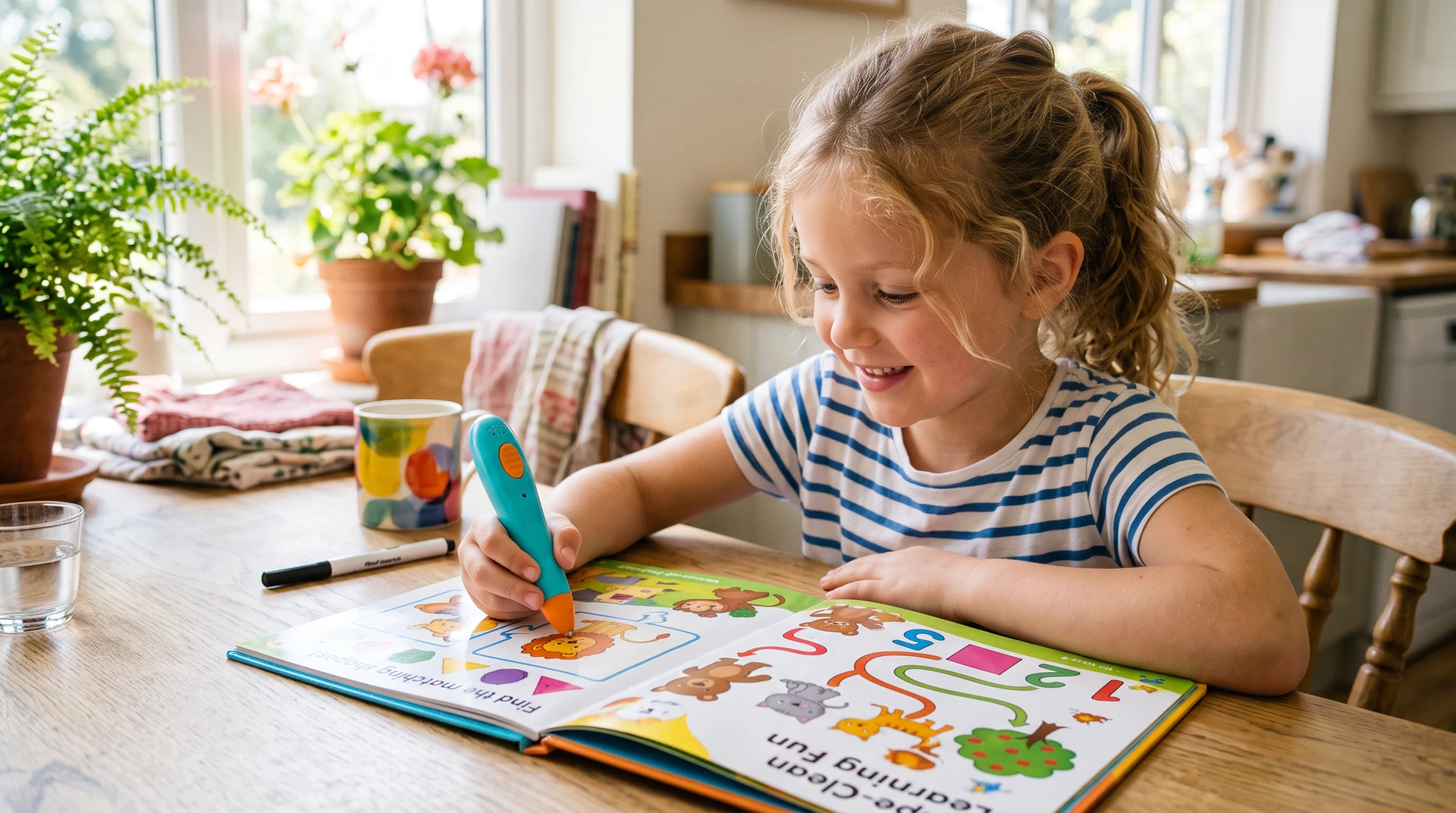
The talking pen is only one half of the product; the other half is the interactive soft book. The success of the product depends on how well these two components work together in a wet environment.
**Material Selection: EVA, PEVA, and Waterproof Paper
Soft bath books are typically made from Ethylene-vinyl acetate (EVA) or Polyethylene-vinyl acetate (PEVA). These materials are soft, durable, and naturally waterproof. However, printing OID codes on these surfaces presents a unique challenge. OID codes are composed of tiny dots that must be printed with high precision using carbon-based ink.
Manufacturers must use specialized printing techniques to ensure the codes remain readable even when the surface is wet or soapy. Some suppliers use a laminated "waterproof paper" insert inside the EVA pages, while others print directly onto the PEVA film. Each method has its pros and cons in terms of durability, cost, and tactile feel. Buyers should request samples of the books to test the OID reading accuracy under various conditions.
**OID Code Printing on Non-Standard Surfaces
Standard OID printing is optimized for matte or glossy paper. Bath books often have a slightly textured or matte finish to prevent the pages from sticking together when wet. This texture can sometimes distort the OID dots, leading to "miss-reads" or delayed audio response. A responsible supplier should have an in-house R&D team capable of optimizing the OID code layout and ink density for the specific materials used in the bath books.
Quality Control and Testing Procedures for B2B Importers
| Feature | IPX4 (Splashing) | IPX7 (Immersion) | Sourcing Consideration |
|---|---|---|---|
| **Water Protection** | Splashes from any angle | Submersion up to 1m for 30 min | IPX4 is the minimum for bath-time use. |
| **OID Sensor** | Requires protective lens | Requires hermetic sealing | Higher IP ratings increase sensor cost. |
| **Speaker Type** | Water-resistant mesh | Fully waterproof diaphragm | Sound quality may vary with sealing. |
| **Manufacturing** | Ultrasonic welding/Gaskets | Specialized vacuum sealing | IPX7 requires more rigorous QC. |
| **Cost Impact** | Moderate increase | Significant increase | Balance functionality with target price. |
Once a manufacturer has been selected and production begins, the buyer must implement a robust quality control plan. This plan should include both pre-shipment inspections and laboratory testing of production samples.
**Standardized Splashing Tests and Drop Testing
The IPX4 test involves spraying the device with water from an oscillating tube or a spray nozzle for at least 10 minutes [1]. While this is a laboratory test, buyers can request their third-party inspection team to perform a simplified version of this test on-site during the Final Random Inspection (FRI).
Bath toys are frequently dropped onto hard surfaces, such as tile floors or the edge of the tub. The talking pen's housing must be robust enough to withstand these impacts without cracking or compromising the waterproof seals. A standard drop test should be part of the QC checklist.
**Battery Life and Charging Safety
Many modern talking pens use rechargeable lithium batteries. In a bath-time context, the charging port must be protected by a secure silicone plug. The QC process should include checking the fit and durability of these plugs. Furthermore, the battery's charging and discharging cycles should be tested to ensure they meet the manufacturer's specifications.
Conclusion
Sourcing water-resistant talking pen manufacturers for bath-time soft books requires a blend of technical knowledge and rigorous due diligence. While the IPX4 rating provides a baseline for protection against splashes, B2B buyers must go further by verifying safety compliance, auditing factory processes, and testing the integration of OID technology with waterproof materials.
A responsible supplier will not only provide the necessary certifications but also demonstrate a deep understanding of the unique challenges posed by the bath-time environment. By prioritizing transparency, third-party verification, and robust quality control, importers can deliver high-quality, safe, and engaging educational tools that meet the demands of modern parents and educators.
For more information on sourcing high-quality educational electronics or to request a consultation on your next B2B project, please contact our team at [info@readglo.com](mailto:info@readglo.com).
Frequently Asked Questions
**1. Can an IPX4 talking pen be fully submerged in water? No, an IPX4 rating only protects against splashing water. If the pen is submerged, water may enter the housing and damage the internal electronics or the battery. For products intended for full immersion, an IPX7 or higher rating is required.
**2. How can I verify if a manufacturer's IPX4 claim is legitimate? Buyers should request a formal test report from an accredited third-party laboratory (e.g., SGS, Intertek). The report should clearly state the test parameters and the specific model of the pen that was tested. You can also verify the authenticity of the report by contacting the issuing laboratory.
**3. Are there specific safety standards for electronic bath toys? Yes, in addition to general toy safety standards like ASTM F963 and EN 71, electronic bath toys must comply with standards for battery safety and electromagnetic compatibility (EMC). Always ensure the manufacturer has tested the product for chemical migration (e.g., REACH, CPSIA) to ensure the materials are safe for children.
**4. What materials are best for bath books used with talking pens? EVA and PEVA are the most common materials due to their waterproof properties and safety profile. However, the key is the printing quality of the OID codes. Ensure the manufacturer uses specialized inks and printing techniques that remain stable when exposed to water and soap.
**5. What is the typical MOQ for custom water-resistant talking pens? Minimum Order Quantities (MOQ) vary significantly between manufacturers. Generally, custom electronics have higher MOQs (often 1,000 to 3,000 units) due to the costs associated with specialized tooling and assembly lines. Buyers should discuss their specific requirements and volume forecasts with potential suppliers.
For professional inquiries and detailed product specifications, please reach out to us at [info@readglo.com](mailto:info@readglo.com).
References
[1] International Electrotechnical Commission (IEC). "IEC 60529: Degrees of protection provided by enclosures (IP Code)." https://www.iec.ch/ip-ratings
[2] ASTM International. "ASTM F963-23: Standard Consumer Safety Specification for Toy Safety." https://www.astm.org/f0963-23.html
[3] European Committee for Standardization (CEN). "EN 71: Safety of Toys." https://www.en-standard.eu/en-71-series/
[4] U.S. Consumer Product Safety Commission (CPSC). "Toy Safety Business Guidance." https://www.cpsc.gov/Business--Manufacturing/Business-Education/Toy-Safety
Continue your research
Related reading pen buyer guides
Use these related guides to compare the next product, content, sourcing or channel decision in your project.
- Product DevelopmentCan Chinese Manufacturers Custom Build Reading Pens with Type-C Charging and 1000mAh Batteries?Read this guide
- Application SolutionsCan Waterproof Talking Pens Revolutionize Interactive Culinary Education for Children?Read this guide
- Product DevelopmentHow Can B2B Buyers Navigate ODM Custom Mold Design for IP-Themed Reading Pens?Read this guide
Continue with ReadGlo
See product specifications and request model-specific documentation.
ReadGlo project support
Get a Project Quote
Request product specifications, sample guidance or a tailored proposal for your reading pen, interactive book or distributor program.