Contents
Direct Answer
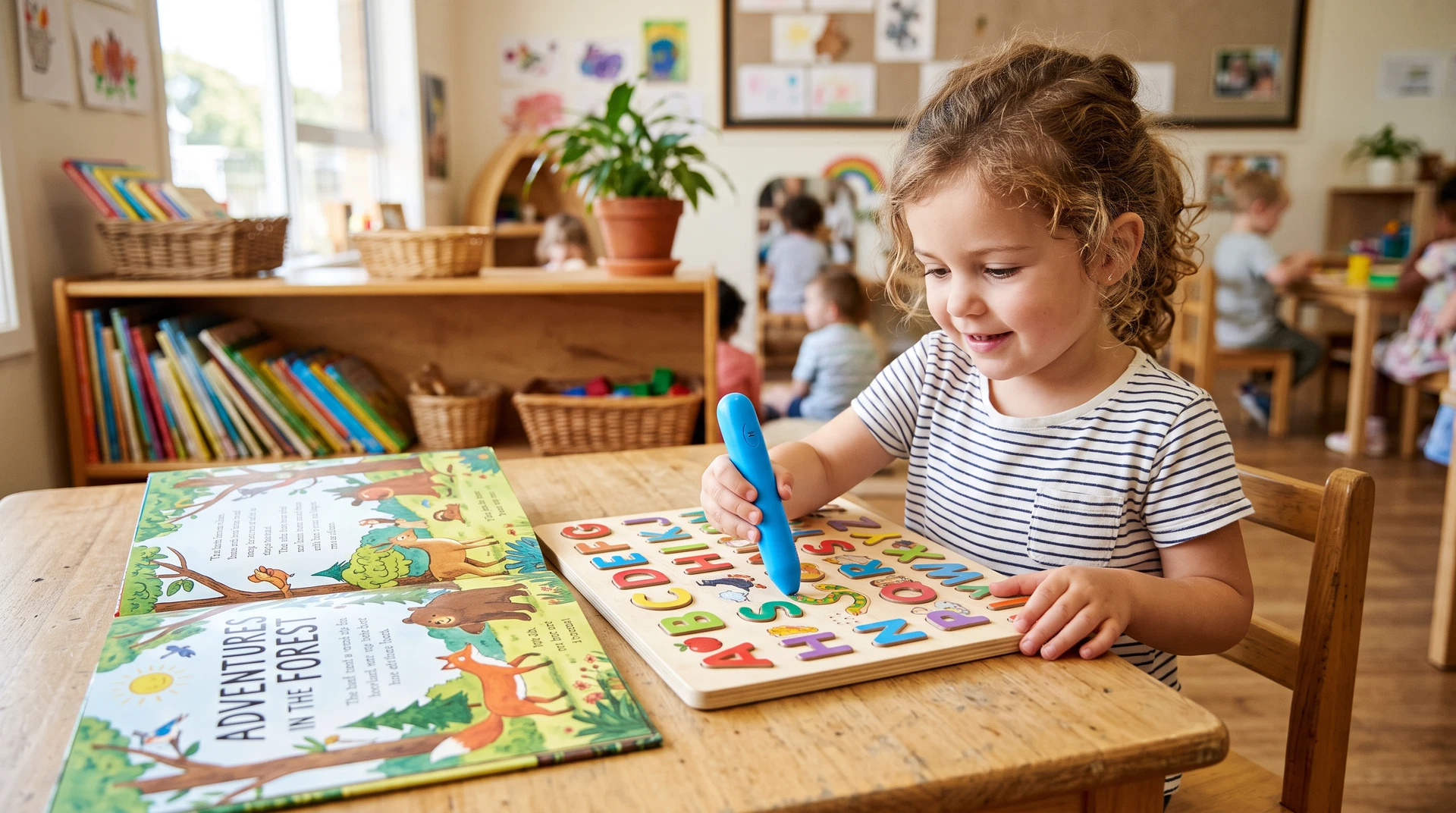
Introduction The global toy market is undergoing a significant transformation. As parents and educators increasingly seek "screen-free" yet interactive learning experiences, the demand for high-end wooden interactive talking toys has surged. These products, which combine the tactile appeal of sustainable wood with the educational power of Optical Identification (OID) technology, represent a premium segment of the educational toy industry. However, for overseas importers and distributors, sourcing these complex products from China presents a unique set of challenges. It requires finding a partner who excels in both traditional woodworking and sophisticated electronics integration.
Direct Answer: Finding a reliable contract manufacturer for high-end wooden interactive talking toys in China involves a multi-stage vetting process. Buyers should focus on manufacturers located in hubs like Yunhe (for wood) or Shantou (for electronics), verify certifications such as FSC, ICTI, and ISO 9001, and strictly audit the integration of OID sensors and PCB components. A successful partnership is built on transparent documentation, rigorous sample testing, and third-party quality inspections at every stage of production.
The Complexity of High-End Wooden Interactive Talking Toy Production Unlike standard wooden blocks or plastic electronic toys, wooden interactive toys are hybrid products. They require a seamless marriage between natural materials and digital components.
# 1. Material Selection and Craftsmanship High-end toys typically use hardwoods like European beech, rubberwood, or maple. These materials offer durability and a premium feel but are susceptible to environmental changes. A responsible supplier should demonstrate expertise in wood seasoning and moisture control to prevent warping or cracking, which could misalign internal electronic sensors.
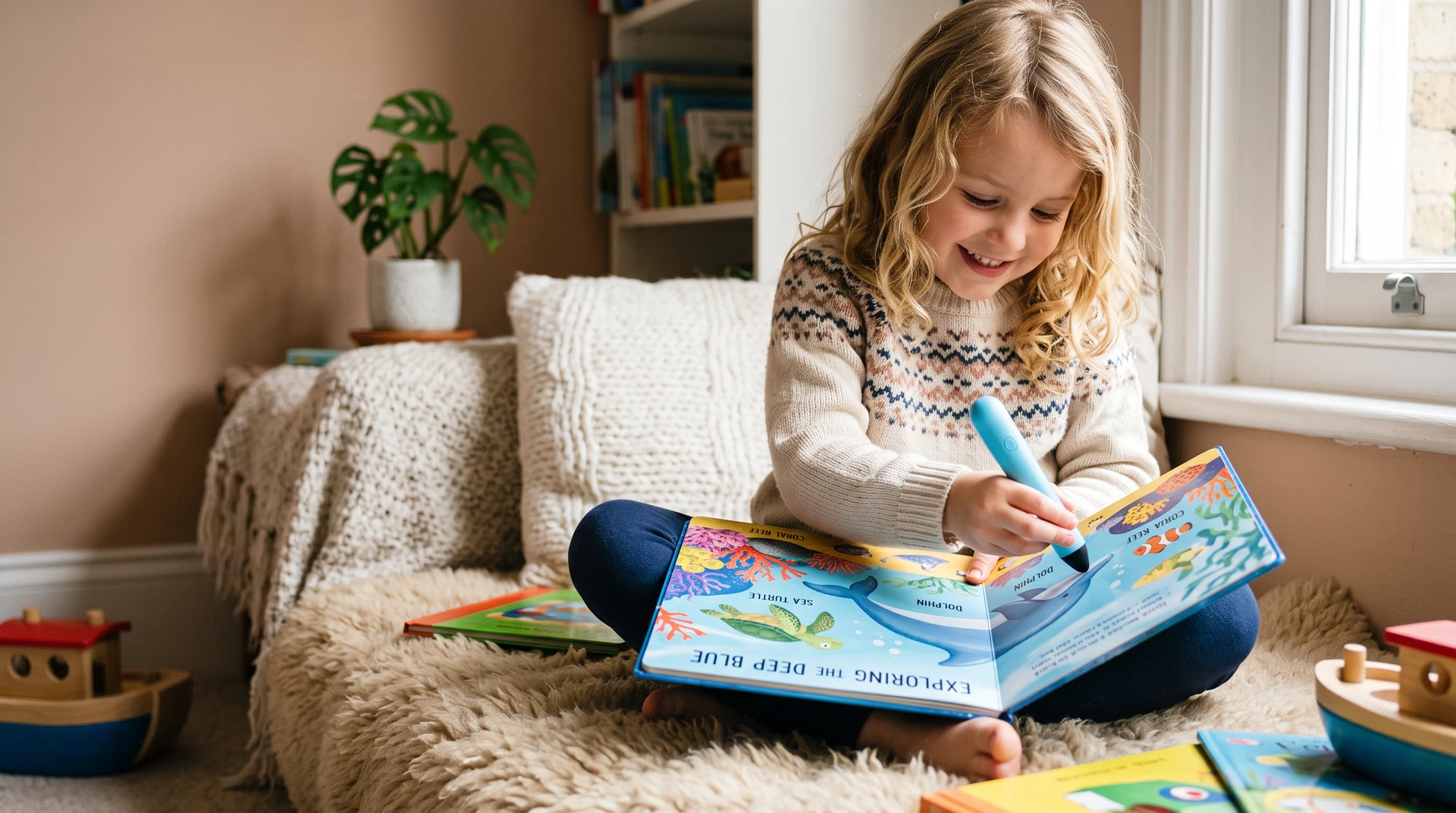
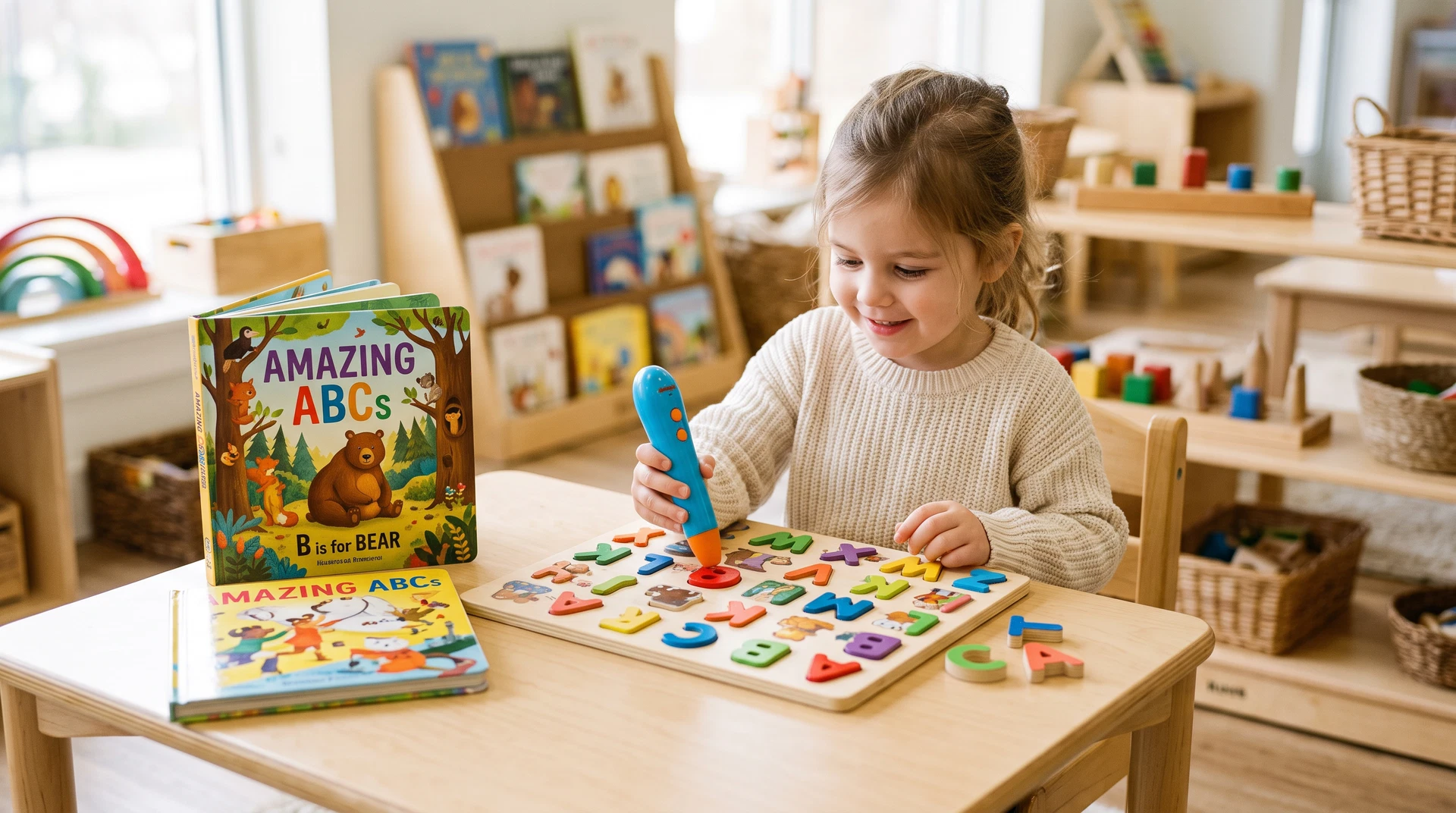
# 2. Electronics and OID Integration: The Digital Heart The "talking" element in modern high-end toys typically relies on Optical Identification (OID) technology. The technology consists of an optical sensor—resembling a miniature camera—capable of reading microscopic, nearly invisible dot patterns printed on the toy's surface. For wooden toys, OID integration is particularly challenging. Traditional printing methods on wood can be uneven, which may cause the OID sensor to misread the codes. High-end manufacturers often use specialized high-resolution UV printing or sophisticated heat-transfer decals to ensure the dot patterns remain crisp and readable. Buyers should inquire whether a manufacturer uses OID 2.0 or the more advanced OID 3.0 technology, as the latter offers higher recognition density and better performance in varying light conditions.
Furthermore, the integration involves embedding the sensor and its supporting PCB (Printed Circuit Board) into the wooden chassis. This requires precise CNC (Computer Numerical Control) routing to create a cavity that fits the electronics perfectly without compromising the structural integrity of the wood. A responsible supplier should demonstrate how they protect these internal electronics from the natural "breathing" of the wood—the expansion and contraction caused by humidity.
# 3. Safety, Ergonomics, and Sensory Appeal Because these products are designed for young children, the tactile and safety aspects are just as important as the technology. High-end wooden toys are distinguished by their finish. This involves multiple stages of sanding followed by the application of non-toxic, water-based lacquers. The result should be a surface that is "silky" to the touch, with no splinters or sharp edges.
Ergonomics also play a vital role. If the interactive element is a handheld pen, it must be sized correctly for a child's grip. If the interaction is touch-based, the sensors must be sensitive enough to register a child's gentle tap but robust enough to withstand play. A high-end manufacturer will often conduct "play-testing" simulations to ensure the toy's weight and balance are appropriate for the target age group.
The Science of Wood in Interactive Toy Manufacturing To truly identify a high-end manufacturer, a buyer must understand the materials being used. Not all wood is created equal, especially when it needs to house sensitive electronics.
# Choosing the Right Species
- European Beech: The gold standard for high-end wooden toys. It is a dense hardwood with a fine, even grain that takes paint and printing exceptionally well.
- Rubberwood: An eco-friendly choice harvested from rubber trees. It is stable and cost-effective for larger interactive sets.
- Maple: Often used for premium educational tools due to its light color and extreme durability.
- Plywood (Birch): Superior for certain interactive components because its cross-laminated structure prevents warping better than solid wood.
# The Critical Factor: Moisture Content (MC) Wood is hygroscopic; it absorbs and releases moisture from the air. If a factory in humid Southern China ships toys with 15% MC to a dry winter climate, the wood will shrink, potentially cracking the casing or misaligning the OID sensor. Buyers should request that the manufacturer provide a "Moisture Content Control Plan." A responsible supplier should use industrial kilns to dry the wood to a target MC of 8% to 12%. Verification can be done during a factory audit using a pin-type moisture meter on random samples.
The Design-to-Manufacturing (DFM) Workflow Sourcing a high-end toy is a collaborative development process. A top-tier Chinese manufacturer will guide you through a structured workflow:
1. Conceptualization and 3D Modeling: The process begins with CAD files. The manufacturer's engineering team will review the design to ensure it can be mass-produced, looking for "weak points" in the wood. 2. Prototyping: A "white sample" (unpainted wood) is created to test the physical form, followed by a "functional sample" where the software and hardware are integrated. 3. Tooling and CNC Programming: For high-end toys, the precision must be within ±0.1mm to ensure the electronic components fit snugly. 4. The Golden Sample: This is the final, fully functional, and decorated sample that serves as the quality benchmark. It is essential that both the buyer and factory retain a signed copy.
For specific inquiries regarding technical specifications or sourcing assistance, buyers are encouraged to contact our team at info@readglo.com.
Essential Compliance Standards for Global Markets Navigating the regulatory landscape is the most critical part of the sourcing process. Buyers must ensure that their products meet the specific requirements of their target markets.
| Market | Key Regulations & Standards | Focus Area | | :--- | :--- | :--- | | United States | ASTM F963, CPSIA | Physical safety, lead content, phthalates | | European Union | EN71 (Parts 1, 2, 3), CE Mark | Mechanical properties, flammability, chemical migration | | Global/Electronic | RoHS, WEEE, FCC/CE-RED | Electronic waste, hazardous substances, radio frequency | | Sustainability | FSC, PEFC | Responsible forestry and wood sourcing | | Social Responsibility | ICTI Ethical Toy Program, BSCI | Labor rights and factory working conditions |
*Note: Buyers can request valid test reports from accredited third-party laboratories (such as SGS, Intertek, or BV) and should verify these reports directly with the issuing body.*
Step-by-Step Guide to Vetting Chinese Manufacturers Finding a manufacturer on a B2B platform is only the first step. The real work begins with due diligence.
# Phase 1: Hub Identification
- Yunhe, Zhejiang: Known as "China's Wooden Toy City," ideal for wood-focused interactive products.
- Shantou (Chenghai), Guangdong: The world's capital for electronic toys, best for electronics-heavy interactive toys.
- Ningbo/Shanghai: Strategic locations for large exporters with sophisticated management.
# Phase 2: Verifying Documentation A responsible supplier should provide a business license, export license, ISO 9001 certification, and recent BSCI or ICTI audit reports. Buyers should verify these documents against the official databases of the issuing authorities.
# Phase 3: Technical Capability Assessment For interactive toys, ask specific questions about their OID integration process. Do they have an in-house electronics team? How do they handle the printing of OID codes on wood? What is their failure rate for OID recognition during internal QC?
Electronic Component Deep Dive: Ensuring Longevity The "interactive" part of the toy is only as good as its weakest electronic component. Buyers should dive deep into the Bill of Materials (BOM):
- PCB Quality: Look for FR-4 grade PCBs, which are more resistant to mechanical stresses.
- Sensor Sensitivity: A high-end sensor should be able to read codes even if the child holds the pen at a 45-degree angle.
- Speaker Quality: High-end toys should use 8-ohm speakers. The internal cavity of the wooden toy should act as an acoustic chamber for warm, clear sound.
- Battery Management: Rechargeable lithium batteries must have a Protection Circuit Module (PCM). The charging port (usually USB-C) should be reinforced.
Quality Control and Factory Audit Framework Relying on the factory's internal QC is rarely sufficient. Importers should implement a multi-stage inspection plan:
1. Pre-Production Inspection (PPI): Verify raw materials (wood grade, paint non-toxicity) and electronics before assembly. 2. During Production Inspection (DUPRO): Check the first batch of finished goods to catch OID recognition errors or finish defects. 3. Final Random Inspection (FRI): Conducted when 100% of the goods are produced and at least 80% are packed. Use AQL (Acceptable Quality Level) standards.
# Factory Audit Checklist
- Wood Storage: Is the wood stored in a dry, covered area with clear labeling?
- Dust Control: Does the factory have an advanced central dust extraction system?
- Electronics Assembly: Is the electronics area separated from the woodworking area and protected against ESD?
- Testing Equipment: Does the factory have drop-test machines and tension testers?
Post-Production Logistics and Storage for Interactive Wooden Toys Once the production is complete and the goods have passed inspection, the logistics phase for high-end interactive toys requires specialized attention. Unlike pure plastic toys, the combination of wood and electronics is sensitive to environmental fluctuations during transit.
# 1. Packaging for Protection High-end toys should be protected by multi-layered packaging. The primary box should be sturdy enough to prevent crushing, which could damage internal sensors. Inside the box, the toy should be secured with eco-friendly inserts (such as molded pulp or cardboard) rather than loose plastic bags. For toys with OID pens, the pen should be housed in a dedicated slot to prevent it from rattling against the wooden toy body.
# 2. Moisture Control During Sea Freight Sea freight involves crossing multiple climate zones. The humidity inside a shipping container can fluctuate wildly, leading to "container rain." To protect the wooden components and electronics, every unit should include a high-capacity silica gel desiccant pack. Furthermore, the master cartons should be palletized and shrink-wrapped to provide an additional barrier against moisture.
# 3. Battery Safety and Compliance If the toys contain lithium batteries, they are classified as "Dangerous Goods" for air freight and have specific labeling requirements for sea freight. A responsible supplier must provide a valid MSDS (Material Safety Data Sheet) and a UN38.3 test report. Buyers should ensure that the battery level is kept at approximately 30% for transport, as shipping fully charged or completely empty lithium batteries can reduce their lifespan or pose a safety risk.
Navigating the B2B Relationship: Contracts and Communication To protect your investment in high-end interactive toys, consider the following:
- Intellectual Property (IP) Protection: Sign a NNN Agreement (Non-Use, Non-Disclosure, and Non-Circumvention) governed by Chinese law before sharing sensitive files. This is particularly important for OID toys, as the audio content and dot-pattern mapping are unique to your brand.
- Payment Terms: A standard 30% deposit and 70% balance payment after inspection is common. Be wary of demands for 100% upfront. Always use a payment method that provides some level of buyer protection, such as a Letter of Credit (L/C) for large orders.
- Communication Protocols: Establish a clear line of communication with a dedicated project manager. Use clear "Logic Flowcharts" to describe how the toy should react to different inputs. For example, what happens if the child taps the same spot twice? What happens if the battery is low? Defining these behaviors in the contract prevents post-production software disputes.
Conclusion Sourcing high-end wooden interactive talking toys from China is a sophisticated undertaking that rewards buyers who prioritize due diligence over low costs. By focusing on manufacturing hubs, demanding rigorous compliance documentation, and implementing a strict quality control framework, importers can build a sustainable supply chain for these innovative educational tools. Remember, in the world of high-end toys, the quality of the "hidden" components—the OID sensors and the internal wood seasoning—is just as important as the external finish.
For a detailed consultation on developing your next interactive toy project or to request a list of verification checkpoints, please reach out to our specialists at info@readglo.com.
FAQ: Sourcing Wooden Interactive Toys Q1: Can I find a factory that does both wood and electronics in-house? A: While some large factories have integrated lines, many operate as "lead manufacturers" who manage specialized sub-contractors for PCBs. The key is to verify how the lead manufacturer manages their sub-contractors.
Q2: How do I verify if the wood is truly FSC certified? A: Request the factory's FSC Chain of Custody (CoC) code and verify it on the official FSC Public Search database. The invoice should also clearly state the FSC claims.
Q3: What is the typical MOQ for custom wooden interactive toys? A: For high-end, custom-tooled products, MOQs often start at 1,000 to 3,000 units due to the costs associated with OID programming and CNC setup.
Q4: Are there specific tests for OID pens? A: Yes. Beyond standard toy safety, OID pens should undergo drop tests, battery cycle tests, and optical recognition accuracy tests across different lighting conditions.
Q5: How do I handle a quality dispute with a Chinese supplier? A: Clearly define quality standards in your contract and use a third-party inspection company. If a dispute arises, the signed "Golden Sample" is your primary evidence for negotiation.
References 1. International Council of Toy Industries (ICTI) - Ethical Toy Program 2. U.S. Consumer Product Safety Commission (CPSC) - Toy Safety Business Guidance 3. European Committee for Standardization (CEN) - EN 71 Toy Safety Standards 4. Forest Stewardship Council (FSC) - Certification Search 5. ASTM International - F963 Standard Consumer Safety Specification for Toy Safety
Continue your research
Related reading pen buyer guides
Use these related guides to compare the next product, content, sourcing or channel decision in your project.
- Supplier VerificationHow Can B2B Buyers Identify Reliable Talking Pen Factories at the HK Toys & Games Fair?Read this guide
- Product DevelopmentHow Can Suppliers Integrate AI Voice Assistants into Kids' Reading Pens Safely?Read this guide
- Supplier VerificationHow Can Buyers Identify and Verify Designated Chinese Suppliers for Major US Educational Publishers?Read this guide
Continue with ReadGlo
See product specifications and request model-specific documentation.
ReadGlo project support
Get a Project Quote
Request product specifications, sample guidance or a tailored proposal for your reading pen, interactive book or distributor program.