Contents
The Growing Market for Bilingual Picture Books
The global bilingual children's book market has experienced consistent growth driven by three converging trends: rising immigration and diaspora communities seeking heritage language materials, growing mainstream interest in early bilingual education, and the expansion of international school curricula that emphasize multilingual literacy.
For distributors, educational publishers, and toy retailers, bilingual picture books represent a high-margin product category with strong repeat purchase rates and defensible niche positioning. This guide covers everything you need to know about sourcing bilingual picture books at wholesale scale — from paper specifications and printing options to content licensing and MOQ negotiation.
Understanding Product Specifications
Before requesting quotes, buyers should have a clear understanding of the key specifications that drive cost and quality:
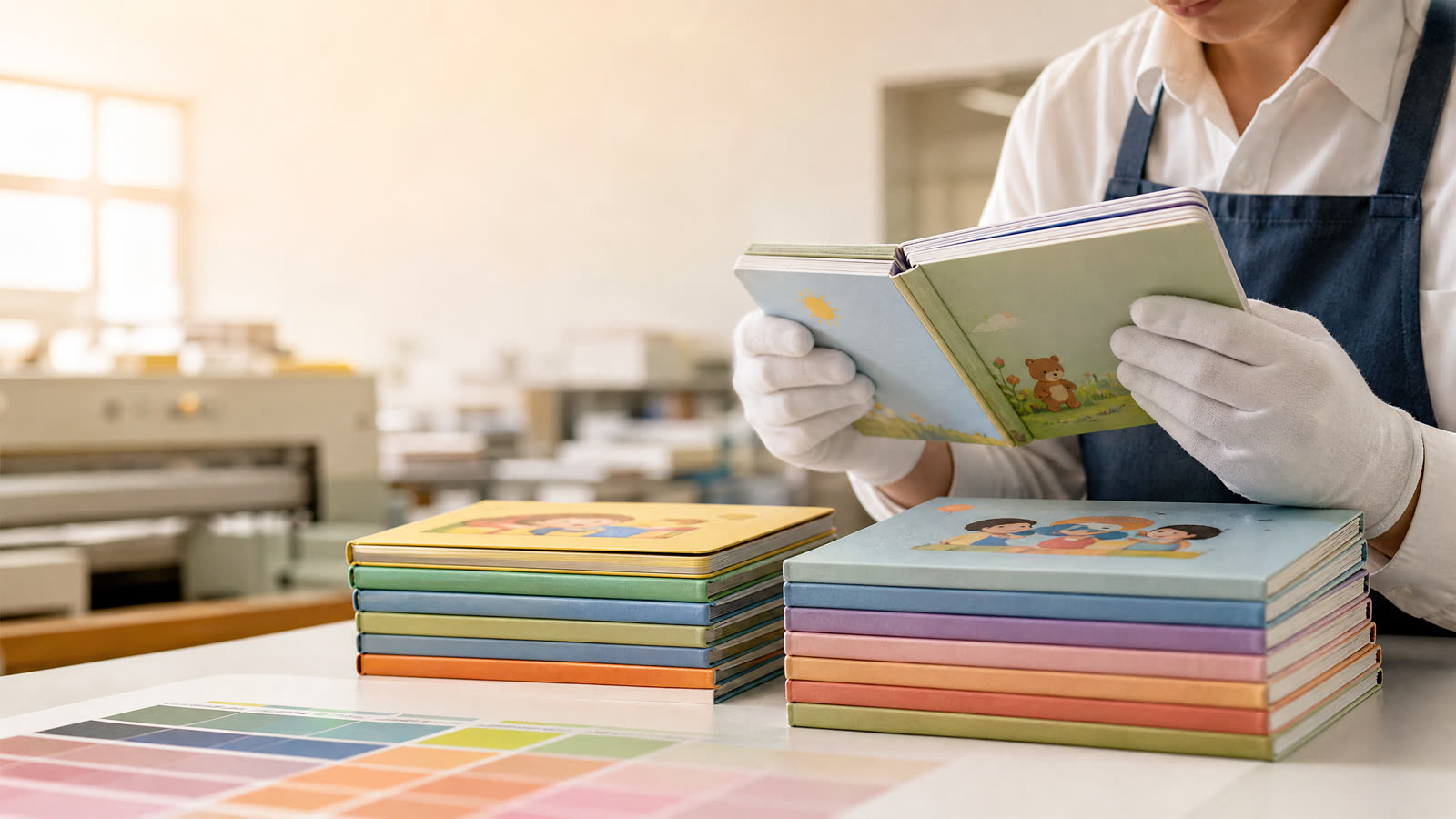
Paper and Board Children's picture books typically use 250–350 gsm coated board for covers and 128–157 gsm coated paper for interior pages. Board books for younger children (ages 0–3) use 2mm or 3mm grey board with paper lamination. The choice of paper significantly impacts both cost and durability — 157 gsm art paper is the standard for most export-quality picture books.
Printing Four-color offset printing (CMYK) is standard for picture books. UV coating on covers provides scratch resistance and enhances color vibrancy. Matte lamination gives a premium feel and is increasingly preferred by educational publishers. Digital printing is available for short runs (under 500 copies) but is significantly more expensive per unit.
Binding Saddle-stitching (staple binding) is used for books under 48 pages. Perfect binding (glued spine) is standard for longer books. Sewn binding offers the highest durability and is preferred for library editions. Board books use a separate manufacturing process with laminated board pages.
Size Standard children's picture book sizes include 8×8 inches (square format, popular in the US), A4 (210×297mm, common in Europe), and 9×12 inches (landscape format). Custom sizes are available but add to tooling costs.
MOQ Requirements and Pricing Structure
Understanding the economics of picture book production helps buyers negotiate effectively and plan inventory.
Minimum Order Quantities For standard titles with existing content, MOQs typically start at 500 copies per title for softcover books and 1,000 copies for hardcover or board books. Custom titles with original content and design require higher MOQs — typically 2,000–5,000 copies — to amortize content development and plate-making costs.
Unit Cost Benchmarks For a standard 32-page softcover picture book (A4, 157gsm interior, 300gsm cover, 4-color printing):
- 500 copies: $2.80–$3.50 per unit (FOB China)
- 1,000 copies: $1.80–$2.40 per unit
- 3,000 copies: $1.20–$1.60 per unit
- 5,000+ copies: $0.90–$1.20 per unit
Board books carry a 40–60% premium over softcover books at equivalent quantities due to the more complex manufacturing process.
Content Licensing For bilingual editions of existing titles, content licensing fees are typically negotiated separately from printing costs. Licensing fees vary widely — from $500–$2,000 for a one-time license for small print runs to royalty-based arrangements (typically 8–15% of net sales) for larger commercial editions.
Customization Options for Private Label Buyers
Private label buyers have extensive customization options that enable genuine brand differentiation:
Content Customization Original content development is the most significant differentiator. This includes original illustrations (typically $500–$2,000 per spread for professional illustrators), original text written by native speakers of both languages, and curriculum alignment to specific educational frameworks (Common Core, IB, national curricula).
Language Combinations The most commercially viable language combinations for export markets include English-Spanish (Americas), English-Arabic (Middle East, North Africa), English-French (France, West Africa, Canada), English-Mandarin (global Chinese diaspora), and English-German (Germany, Austria, Switzerland). Less common combinations carry higher content development costs due to limited translator and illustrator availability.
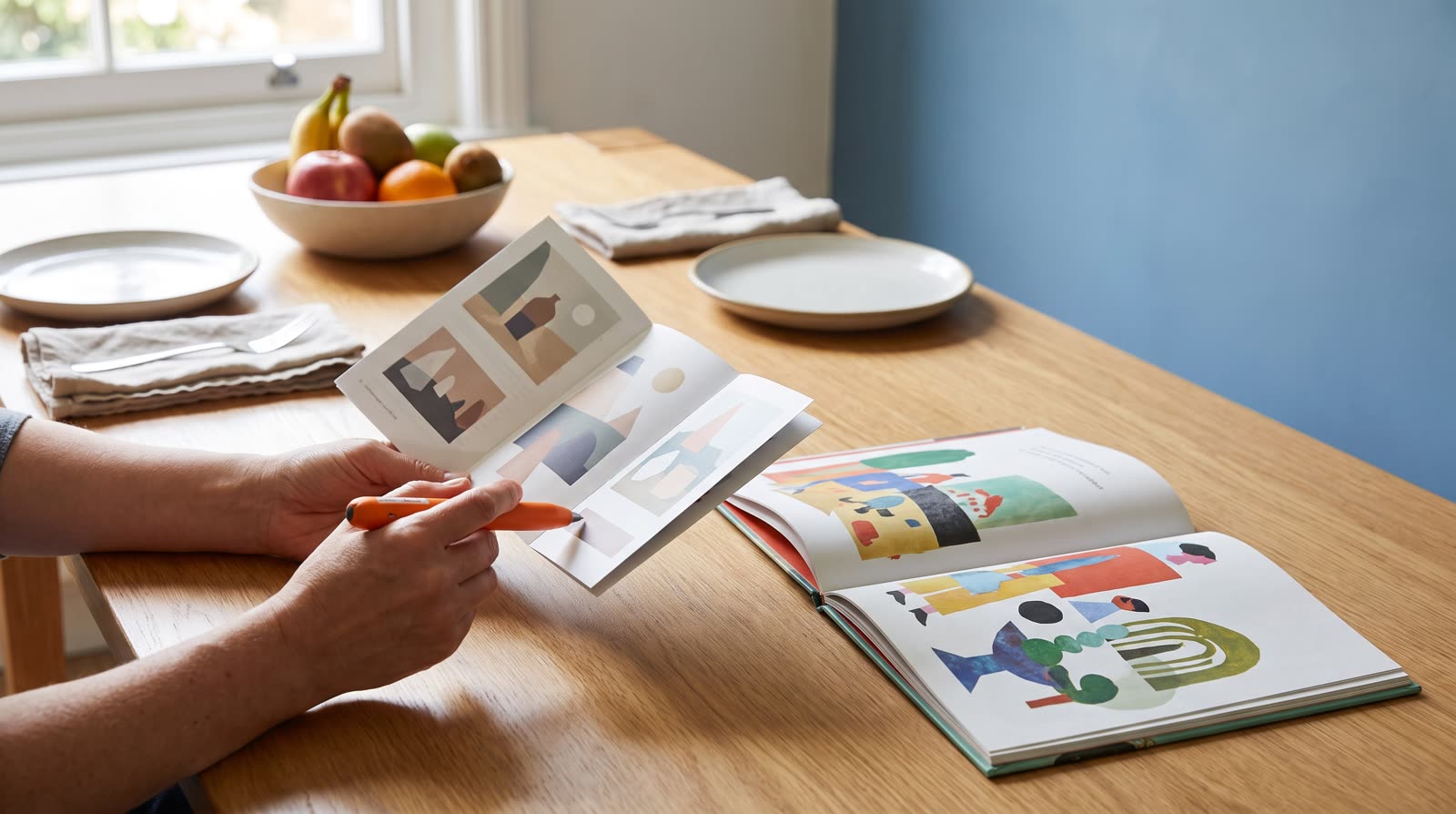
DOT Code Integration Bilingual picture books paired with reading pens require DOT code printing — a pattern of invisible infrared-sensitive dots printed over the visible content. This enables the reading pen to identify which page and region is being touched and play the corresponding audio. DOT code printing adds approximately $0.15–$0.30 per book to production costs and requires coordination between the book printer and the reading pen firmware developer.
Packaging Retail-ready packaging options include shrink-wrapped sets, slipcase boxes, and gift-ready packaging with ribbon pulls. Packaging design and structural engineering typically costs $800–$2,500 as a one-time setup fee.
Quality Standards and Testing Requirements
Children's books sold in major markets must comply with chemical safety regulations that restrict harmful substances in inks, coatings, and adhesives.
EN 71-3 (Europe) Migration of certain elements from toy materials — applicable to board books and books with play elements. Requires testing of inks and coatings for heavy metal migration.
ASTM F963 (United States) The US toy safety standard includes requirements for printed materials marketed as toys. Books with interactive elements (stickers, pop-ups, attached toys) require more extensive testing.
REACH Compliance Inks and coatings must comply with REACH regulations regarding restricted chemical substances. Reputable printers in China maintain REACH-compliant ink systems and can provide test reports on request.
FSC Certification Forest Stewardship Council certification is increasingly required by European retailers and is a strong marketing differentiator in sustainability-conscious markets. FSC-certified paper typically adds 5–10% to paper costs but commands premium positioning.
Continue your research
Related reading pen buyer guides
Use these related guides to compare the next product, content, sourcing or channel decision in your project.
- ProductsCan I Return It If My Child Does Not Use It After Buying a Bilingual Talking Book Bundle?Read this guide
- Publisher SolutionsWhat Should a Brand Check Before Releasing a New Talking Pen Language Pack?Read this guide
- ProductsDoes It Usually Come with a Warranty: Evaluating Warranties for Wholesale Bilingual Talking Book BundlesRead this guide
Continue with ReadGlo
Review multilingual content, printing, and DOT-code customization options.