Contents
Introduction
Maintaining hygiene and structural durability across shared interactive picture book sets and optical talking pens in kindergartens, libraries, daycare facilities, and multi-child family settings requires a delicate balance of careful surface sanitation and moisture protection. Because interactive books incorporate hidden Optical Identification (OID) dot codes printed on paper substrates and talking pens rely on delicate optical sensors, improper cleaning methods can compromise optical scannability, warp paper bindings, or damage electronic internal components. Educators, librarians, and B2B procurement managers must establish structured, low-risk maintenance protocols that protect equipment longevity while meeting institutional health standards. In accordance with Google helpful content standards and safety guidelines established by the U.S. Consumer Product Safety Commission (CPSC) and early literacy insights from the American Academy of Pediatrics (AAP), this guide outlines step-by-step cleaning protocols, storage best practices, and procurement specifications for shared learning materials.
3. Sanitizing and Maintaining Talking Pens in Multi-User Environments
3.1 Disinfecting Pen Casings Without Liquid Ingress
Talking pens are high-touch electronic devices shared among numerous children throughout the day, making routine disinfection vital for maintaining institutional hygiene. However, because electronic housings feature speaker grills, microphone ports, power buttons, and USB charging slots, careless liquid application can easily result in internal moisture damage. The proper protocol for disinfecting talking pen casings involves using pre-moistened disinfectant wipes containing 70% isopropyl alcohol or applying a modest amount of alcohol-based sanitizing solution to a microfiber cloth—never directly spraying liquid onto the device. Staff should methodically wipe down the entire outer plastic shell, grip area, and tip housing, paying special attention to crevices around buttons and seams where oils and microbes accumulate. After wiping, the device should be allowed to air-dry completely for several minutes in an open, well-ventilated space before power-up or placement in charging cradles. At no point should talking pens be immersed in liquids, cleaned in ultrasonic baths, or subjected to steam sterilization, as extreme temperatures and liquid ingress will permanently destroy internal electronic circuits.
3.2 Battery Safety, Charging Port Care, and CPSC Compliance
Rechargeable talking pens incorporate internal lithium-ion battery packs that require careful operational monitoring and maintenance to ensure user safety in group environments. Educational facilities and daycare centers must adhere strictly to established product safety guidelines, referencing standards published by regulatory bodies such as the U.S. Consumer Product Safety Commission (CPSC) regarding children's electronic products and battery management. Staff must inspect charging cables, adapters, and pen charging ports regularly for signs of wear, dust accumulation, bent pins, or mechanical damage. Charging stations should be located in supervised, well-ventilated areas away from flammable materials and moisture sources. If any talking pen exhibits signs of abnormal heating during charging, unusual odor, plastic discoloration, battery swelling, or fluid leakage, staff must immediately disconnect the device from power, place it on a non-flammable surface, and discontinue use permanently. Attempting to disassemble, repair, or force-charge damaged lithium-ion batteries creates severe fire and safety hazards; such units must be retired and disposed of in accordance with local electronic waste recycling regulations.
3.3 Troubleshooting Optical Lens Smudges and Code Reading Issues
A common operational challenge in multi-user talking pen deployments is intermittent audio failure or incorrect audio playback, which frequently stems from smudges, dust, or microscopic debris obstructing the optical sensor lens located inside the pen tip. When children handle books and pens with fingers carrying natural oils, food residue, or lotion, a fine film can easily coat the transparent optical window of the pen. To maintain optimal reading performance, facility staff should conduct weekly optical lens checks. If scanning errors occur, the optical lens window should be inspected using a magnifying glass or bright task light. Cleaning should be performed using a specialized optical cleaning swab or a clean, dry microfiber tip designed for camera lenses. If stubborn smudges persist, a tiny drop of pure optical-grade isopropyl alcohol applied to the swab can dissolve grease residues, followed immediately by polishing with a dry portion of the swab. Staff should educate children and supervisors to avoid pressing pen tips aggressively against rough surfaces or touching the optical aperture with bare fingers, thereby minimizing lens contamination and ensuring reliable interactive performance.
ReadGlo project support
Request Institutional Sample Kit
Equip your school, library, or distribution network with durable, child-safe interactive book sets engineered for intensive group sharing.
4. Establishing Institutional Maintenance Schedules and Quality Control Checklists
4.1 Daily Inspection and Quick-Check Routines for Educators
Sustaining high standards of cleanliness and operational readiness in shared learning environments requires structured, low-burden daily routines embedded into daily schedules. Educators, classroom assistants, and librarians should perform rapid 5-minute visual and tactile checks at the beginning or end of each reading session. This daily quick-check involves verifying that all talking pens are powered, properly charged, and stored in designated charging racks; inspecting books for acute liquid spills, torn pages, or detached covers; and ensuring that sanitizing wipe stations are fully stocked with approved alcohol-free surface wipes and microfiber cloths. By catching minor issues—such as a slightly torn page corner or a smudged pen tip—before they escalate into major damage, institutions can prevent premature product retirement and maintain a seamless, engaging learning experience for all children.
4.2 Weekly Deep-Cleaning and Rotation Protocols for Libraries and Daycares
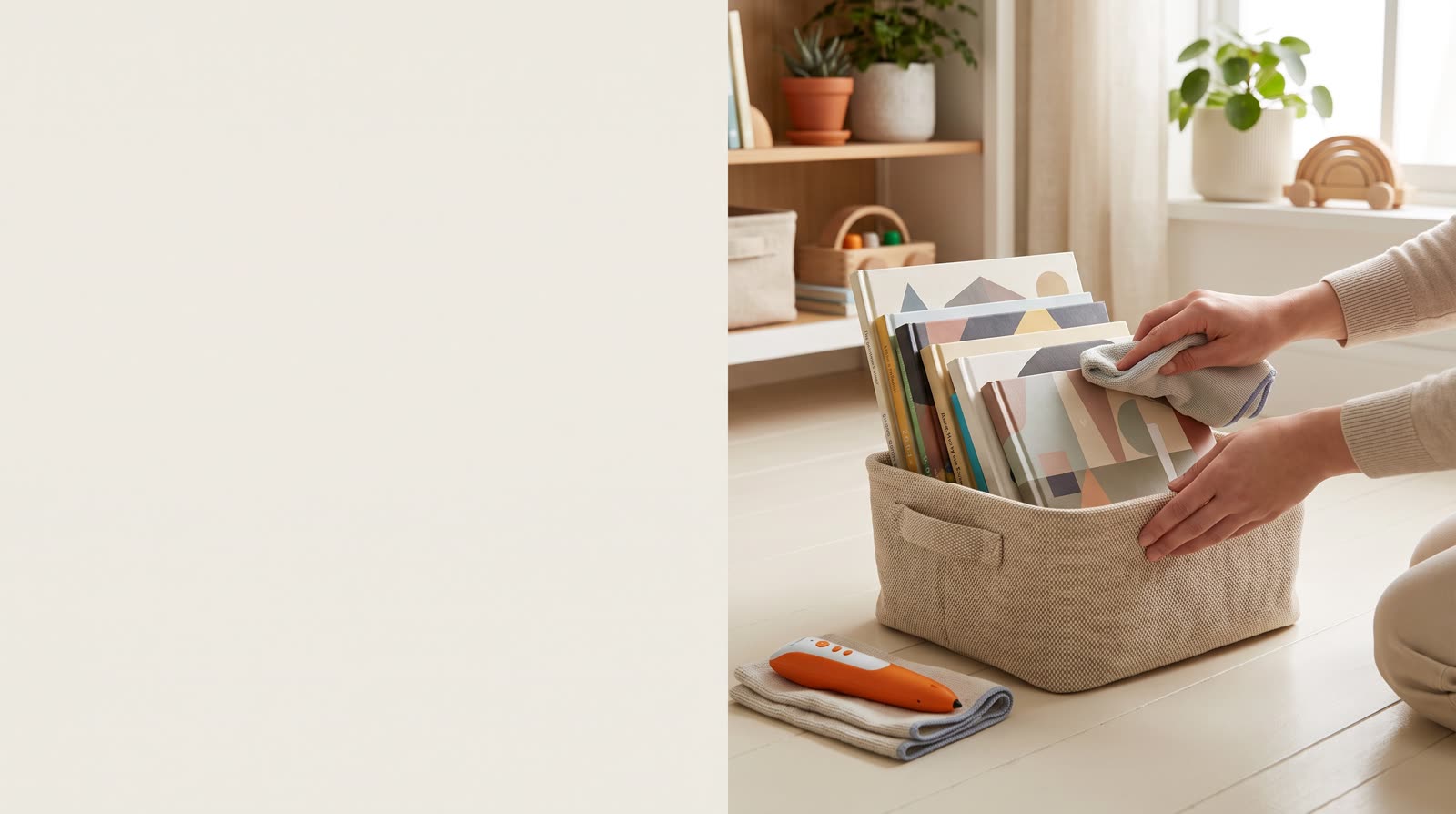
In addition to daily spot checks, institutional facilities should implement a structured weekly deep-cleaning and inventory rotation protocol. Designated maintenance staff or senior librarians should systematically audit complete book sets and accessory talking pens, sorting items by condition and rotating book inventory between classrooms or reading stations to balance wear and tear. During deep-cleaning sessions, all book covers and page edges should receive a comprehensive wipe-down with mild cleaning solutions, talking pen casings should undergo thorough disinfection, and charging contact points should be cleaned of dust. Facilities should maintain a written maintenance log or digital checklist documenting cleaning dates, inspected inventory counts, and any items quarantined for repair or retirement. This systematic approach ensures accountability, extends asset lifecycles, and provides transparent record-keeping for administrative reviews and budget planning.
4.3 When to Escalate to Manufacturers or Qualified Service Channels
While routine cleaning, surface wiping, and basic troubleshooting can be managed effectively by internal institutional staff, certain technical issues require immediate escalation to equipment manufacturers, authorized distributors, or qualified electronics service channels. Facility managers and procurement officers must establish clear threshold criteria for escalation. Issues requiring professional manufacturer support include internal electronic failures, persistent firmware freezing, broken micro-USB/USB-C charging ports, degraded battery life that fails to hold a charge after troubleshooting, or widespread optical sensor defects across multiple devices. Institutional staff should never attempt to open, solder, or mechanically disassemble talking pen casings, as unauthorized modifications void warranties and compromise electrical safety certifications. When contacting manufacturers or suppliers, staff should provide detailed documentation including batch numbers, purchase order references, environmental conditions, and specific failure descriptions to facilitate rapid warranty evaluation, technical support, or replacement part provisioning.
Frequently Asked Questions
Can interactive picture book pages be sprayed directly with liquid disinfectants?
Direct spraying is not recommended because excessive liquid can seep into paper bindings or warp pages, potentially damaging the printed OID dot codes. Instead, apply a small amount of mild, alcohol-free cleaning solution to a microfiber cloth, wring it thoroughly, and gently wipe the laminated surfaces.
How do you clean optical reading pens used by multiple children daily?
Talking pen exteriors should be wiped daily using a slightly damp microfiber cloth with 70% isopropyl alcohol or mild soap water, ensuring no liquid enters the USB port or speaker grille. Never submerge the pen in water or use harsh chemical solvents.
What should educators do if a talking pen shows signs of battery swelling or overheating?
Immediately stop using and charging the device, place it on a non-flammable surface, and contact the manufacturer or authorized service channel. Refer to CPSC guidelines regarding lithium-ion battery safety and child product handling.
How can libraries and kindergartens ensure OID dot codes remain readable over long-term shared use?
Choose book sets featuring heavy-duty matte lamination that resists glare, fingerprints, and scratch wear. Regularly inspect pages for heavy scuffs or adhesive residue that could obscure the optical scanner's view of the dot matrix.
Are there standardized cleaning guidelines for B2B buyers evaluating educational publishing supplies?
B2B buyers should request detailed manufacturer care manuals, sample material swatches, and compliance documentation (such as CPSC or EN71 standards) during the sample evaluation phase to ensure cleaning protocols match institutional hygiene requirements.
Conclusion
Properly cleaning and maintaining shared children's talking book sets and optical reading pens in institutional environments is essential for safeguarding child health, preserving equipment longevity, and maintaining uninterrupted learning engagement. By avoiding liquid immersion, utilizing gentle alcohol-free surface wiping techniques, and adhering strictly to battery safety and storage best practices outlined by regulatory bodies such as the CPSC, educators and facility managers can protect their investments. Furthermore, prioritizing durable paper weights, matte lamination, and scannable OID printing during the procurement stage ensures that interactive book sets withstand the rigorous demands of multi-user group settings. ReadGlo remains committed to supporting educational publishers, schools, and global distributors with robust, child-safe interactive reading solutions designed for long-term institutional success.
Continue your research
Related reading pen buyer guides
Use these related guides to compare the next product, content, sourcing or channel decision in your project.
- Product SupportB2B Operational Guide: Long-Term Storage and Safety Protocols for Children's Interactive Reading PensRead this guide
- Product SupportProfessional Guide to Cleaning and Maintaining Interactive Reading Pens After Accidental SpillsRead this guide
- Product SupportComprehensive B2B Guide: How to Protect Children's Reading Pens During Long-Term StorageRead this guide
Continue with ReadGlo
See product specifications and request model-specific documentation.
ReadGlo project support
Get a B2B Product Catalog & Quote
Contact ReadGlo today to explore our customizable talking pen and interactive picture book collections for educational institutions and global distributors.