Contents
Introduction
In the B2B educational toy and hardware supply chain, ensuring product longevity and reliability across extended inventory holding periods is paramount for distributors, school suppliers, and retail brands. When children's interactive reading pens—core components of modern talking book ecosystems such as those designed by ReadGlo—are placed into long-term storage, seasonal warehousing, or extended transit hold, proper cleaning and maintenance protocols are essential. Inappropriate storage or neglecting pre-storage hygiene can lead to optical lens degradation, battery degradation, connector oxidation, and residue buildup. This comprehensive technical guide provides educators, brand owners, warehouse managers, and quality assurance professionals with rigorous, step-by-step procedures for cleaning and preserving reading pens prior to long-term storage, adhering to established safety standards and product stewardship principles.
Pre-Storage Inspection and Safety Protocols
Assessing Exterior Integrity and Optical Window Safety
Before initiating any cleaning or storage workflow, quality assurance personnel and warehouse operators must conduct a thorough visual and tactile inspection of the reading pen exterior. The optical sensor window—located at the tip of the pen, responsible for decoding micro-dot codes on interactive picture books—requires meticulous examination for scratches, hairline cracks, or accumulated particulate debris. Any physical compromise to the optical filter or lens housing can allow dust ingress during extended storage, permanently impairing code-reading accuracy. Furthermore, operators must check the physical casing for structural stress, seam gaps, or button responsiveness. If any device exhibits structural failure, casing cracks, or internal rattling, it must be segregated immediately rather than prepared for storage. Under no circumstances should operators attempt to dismantle the device casing, as internal electronic components, high-density printed circuit boards (PCBs), and soldered battery terminals are sensitive to electrostatic discharge (ESD) and mechanical damage. Adhering to non-destructive maintenance policies protects internal integrity and ensures compliance with global safety standards established by organizations such as the Consumer Product Safety Commission (CPSC) regarding children's electronic products.
Battery Health and Chemical Safety Precautions
Battery management is the most critical variable when preparing electronic learning tools for long-term storage. Modern reading pens predominantly utilize rechargeable lithium-ion battery cells or, in select legacy or specialized entry-level configurations, replaceable alkaline or NiMH cells. Prior to storage, every unit must be inspected for signs of chemical instability, including electrolyte leakage, crystalline salt deposits around battery terminals, casing bulging, or abnormal thermal discharge. Devices exhibiting any of these hazardous indicators must be decommissioned immediately in accordance with hazardous waste and electronic recycling protocols. According to consumer safety guidelines outlined by the U.S. Consumer Product Safety Commission (CPSC) at CPSC Children's Products Safety Education, maintaining strict oversight over battery-operated child products prevents thermal runaway and chemical burns. For rechargeable lithium-ion cells, storing a battery at 100% capacity accelerates chemical aging and electrolyte decomposition, while storing a completely depleted battery can induce deep discharge sleep states from which the cell cannot recover. Therefore, establishing a standardized pre-storage charging protocol is vital for preserving battery lifespan across inventory batches.
Step-by-Step External Cleaning Procedures for Reading Pens
Optical Lens and IR Sensor Maintenance
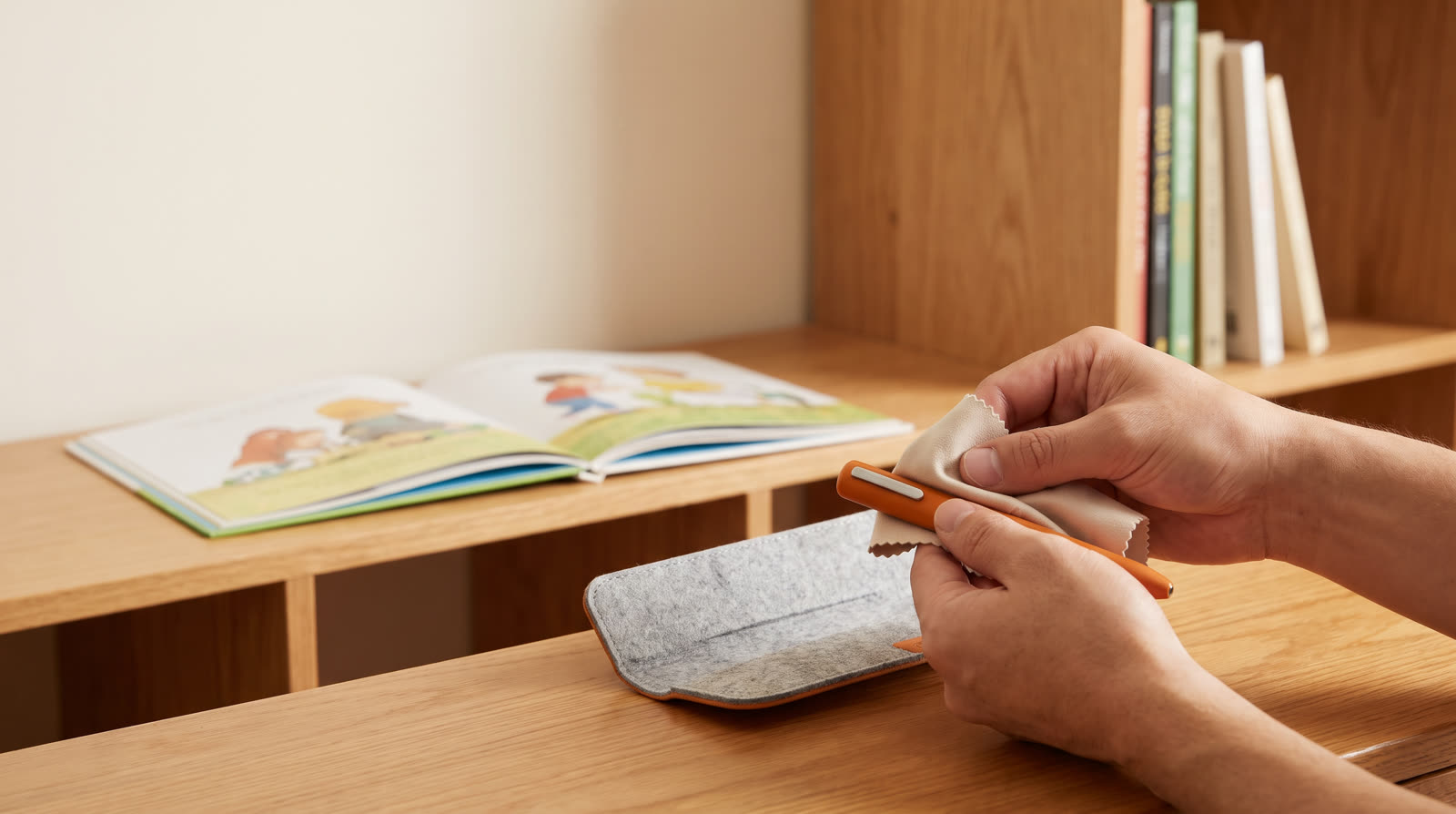
The optical sensor lens at the tip of the reading pen is the precision interface that interacts with interactive picture book print surfaces. Over operational use, natural skin oils, airborne particulate matter, micro-fibers from paper stocks, and dust settle on the lens surface. If left uncleaned prior to long-term storage, these organic residues can oxidize, harden, or attract moisture, creating an opaque film that hinders optical recognition when the device is eventually reactivated. Cleaning the optical lens requires specialized, non-abrasive materials. Operators should use a dry, lint-free microfiber cloth specifically manufactured for optical glass and camera lenses. If stubborn smudge marks persist, the cloth may be slightly dampened with an isopropyl alcohol solution (concentration of 70% or higher, applied sparingly to the cloth rather than directly sprayed onto the pen tip). Gentle, circular wiping motions should be employed to remove residue without scratching the optical grade resin window. Compressed air can also be utilized at low pressure to clear dust from recessed sensor housings, ensuring that no particulate matter remains trapped around the optical bezel before sealing the unit in protective packaging.
Casing Sanitization and Port Debris Removal
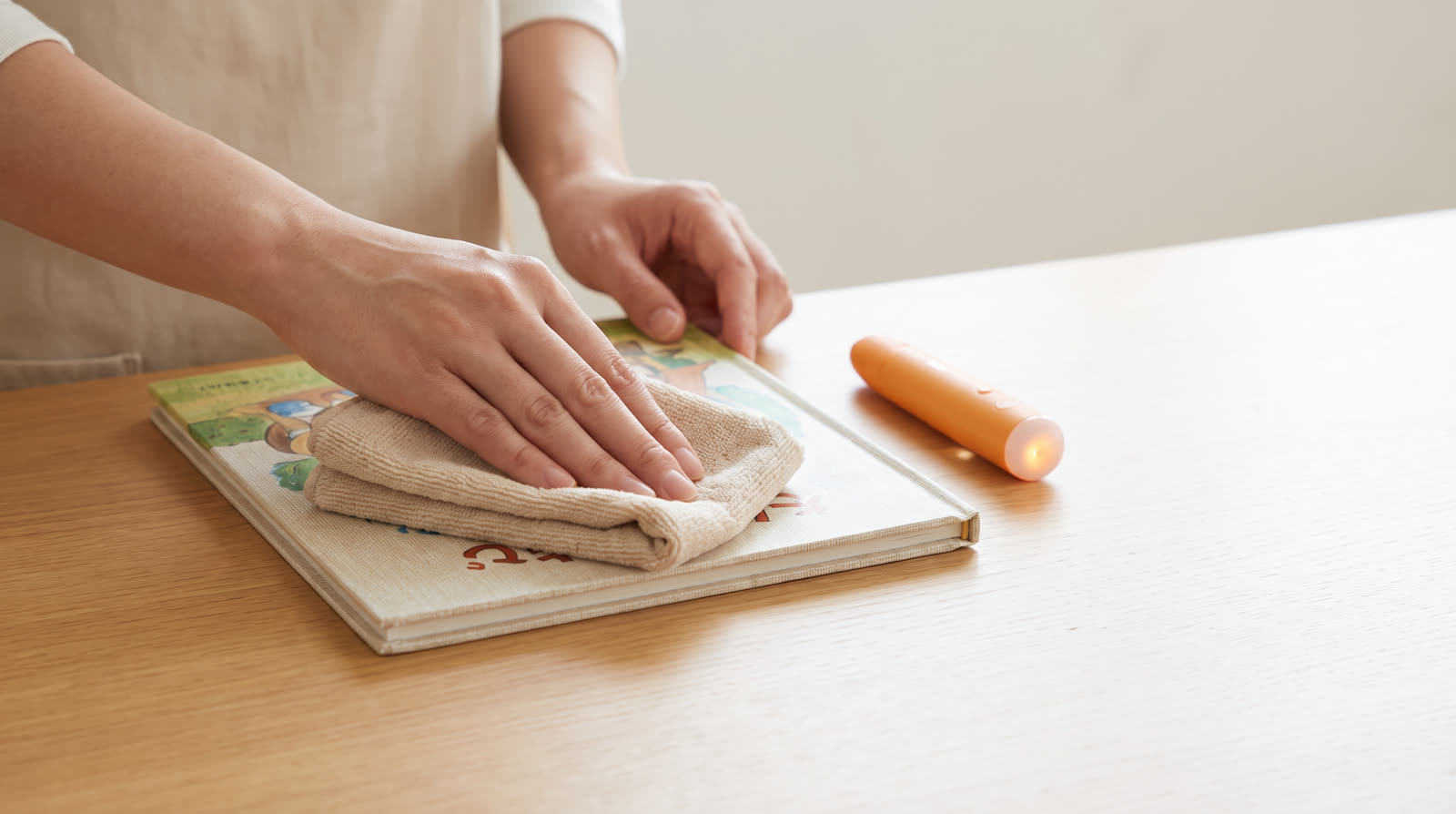
Beyond the optical tip, the outer casing, speaker grilles, power buttons, and external interface ports (such as USB-C charging ports or headphone jacks) accumulate organic handling residue and dust over their operational lifecycle. During long-term storage, organic residues can promote bacterial growth or degrade thermoplastic elastomer (TPE) or ABS plastic finishes. To sanitize and clean the casing, operators should wipe all exterior surfaces using a microfiber cloth moistened with a mild, neutral detergent solution or 70% isopropyl alcohol wipe. Harsh industrial solvents, acetone, or abrasive scouring pads must be strictly avoided, as they will chemically degrade the child-safe anti-microbial coating and matte plastic texture of the pen. Particular attention should be given to the USB port recess. Dust and lint accumulation inside the charging port can cause short circuits or corrosion when power is reintroduced. Using a clean, dry, non-conductive anti-static brush or wooden toothpick, operators should carefully sweep out any particulate debris from the port cavity. The device must be allowed to air-dry completely in a well-ventilated ambient environment for at least two hours before proceeding to battery conditioning and packaging.
Battery Management and Power Preservation During Storage
Lithium-Ion Battery State of Charge Guidelines
For reading pens equipped with internal, non-removable lithium-ion rechargeable batteries, state-of-charge (SoC) management is essential to prevent permanent capacity loss during extended warehousing. Lithium-ion chemistry is chemically unstable when stored at extreme states. If stored at 100% charge in elevated warehouse temperatures, the positive electrode experiences accelerated structural degradation and electrolyte oxidation, resulting in diminished battery runtime upon future deployment. Conversely, storing a battery at 0% charge triggers internal protective circuit tripping and potential copper shunt formation, rendering the battery permanently dead. Warehouse best practices dictate that lithium-ion reading pens must be charged or discharged to an optimal storage state of approximately 40% to 60% capacity prior to boxing. Furthermore, for inventory stored exceeding six months, quality control protocols should mandate a periodic audit cycle where sample units are retrieved, recharged to 50%, and returned to storage to counteract natural self-discharge.
Handling Non-Rechargeable or Removable Battery Compartments
For reading pen models designed with removable alkaline or NiMH battery compartments (such as standard AAA or AA configurations), leaving batteries installed during long-term storage introduces severe chemical leakage risks. Over extended periods, alkaline batteries undergo electrochemical self-discharge and casing corrosion, leaking potassium hydroxide—a caustic substance that corrodes battery spring contacts, PCB traces, and internal wiring. Therefore, the primary, mandatory rule for removable-battery reading pens entering long-term storage is complete battery extraction. Operators must unscrew or unlatch the battery compartment cover, remove all cells, and inspect the internal metal contacts for any pre-existing corrosion or white powdery residue. If minor oxidation is observed, contacts can be cleaned using a cotton swab dipped in anhydrous isopropyl alcohol. Once cleaned and thoroughly dried, the battery door should be resecured, and the extracted batteries should be disposed of or stored separately in dedicated, climate-controlled battery containment lockers according to environmental safety standards.
ReadGlo project support
Send Your Requirements
Partner with ReadGlo for high-performance children's interactive reading pens and customized talking book manufacturing solutions tailored to your global educational market.
Environmental Control and Packaging for Warehouse Storage
Temperature and Humidity Standards
The physical environment in which reading pens are housed during long-term storage dictates the chemical and mechanical stability of both the hardware components and the accompanying interactive book inventory. Fluctuating temperatures and high relative humidity (RH) are the primary drivers of internal component oxidation, solder joint fatigue, mold growth on paper book components, and battery degradation. Industrial warehousing standards for consumer electronics recommend maintaining a controlled storage environment with ambient temperatures between 15°C and 25°C (59°F to 77°F) and relative humidity levels maintained strictly below 60% non-condensing. Rapid thermal cycling—such as moving stock between uninsulated shipping containers and heated warehouses—causes moisture condensation inside the sealed pen casing, which can bridge circuit traces and cause intermittent electronic failures. Facilities must utilize HVAC climate control systems, dehumidifiers, and continuous environmental data loggers to monitor storage conditions throughout the inventory holding period.
Anti-Static Packaging and Desiccant Utilization
Effective packaging shields reading pens from environmental hazards, electrostatic discharge (ESD), and mechanical vibration during prolonged warehouse stacking. Each cleaned and battery-conditioned reading pen should be individually inserted into an anti-static polyethylene bag or shielding pouch to protect internal microcontrollers and optical sensors from electrostatic charges generated by friction or movement. Within the master carton or storage bin, food-grade or industrial silica gel desiccant packets (minimum 10g to 30g depending on container volume) must be included to absorb any residual ambient moisture trapped inside the packaging. Master cartons should be constructed from high-strength double-walled corrugated cardboard, sealed securely with moisture-resistant tape, and elevated on wooden or plastic pallets at least 10 centimeters off the floor to prevent groundwater absorption or capillary moisture transfer. Pallets should be shrink-wrapped with breathable stretch film, avoiding airtight wrapping that traps humidity in fluctuating thermal conditions.
Post-Storage Quality Check and Reactivation Protocols
Pre-Activation Inspection Checklist for Distributors and Retailers
When retrieving reading pens from long-term storage for distribution, retail deployment, or educational evaluation, quality assurance teams must execute a systematic reactivation inspection before releasing units into the supply chain. The initial step involves unpacking sample batches and inspecting them for any storage-induced anomalies, such as condensation moisture within the packaging, musty odors indicating high humidity exposure, or packaging deformation. Technicians must verify that the optical lens remains clean and dust-free, and that external rubberized buttons retain their tactile elasticity without sticking. For units with removable battery compartments, inspect contacts for any post-storage oxidation before inserting fresh cells. For lithium-ion rechargeable models, inspect the chassis for any signs of thermal swelling or pressure buildup. If any unit shows structural or chemical anomalies, it must be quarantined for technical evaluation, ensuring that only pristine, fully operational merchandise reaches educational institutions, retail shelves, or end-user families.
Initial Charging and Firmware Verification Procedures
Following exterior inspection, rechargeable reading pens must undergo a controlled initial charging cycle and functional diagnostic test. Connect the storage units to certified, standard-compliant USB charging hubs supplying stable 5V DC power. Monitor the charging indicator LED to ensure normal operation; units stored for extended periods may require up to 30 minutes of trickle charging before power indicators illuminate. Once operational, technicians must conduct a functional verification checklist: test the optical sensor against a sample interactive book page to confirm accurate audio decoding and response latency; test audio output clarity across varying volume levels using the built-in speaker and headphone jack; and verify internal firmware integrity. If the device firmware requires updating due to prolonged disconnection from update servers, deploy the latest stable firmware package via authorized management utilities. This rigorous reactivation protocol guarantees that B2B partners deliver flawless, high-performance reading pen systems to global markets.
Frequently Asked Questions
Can I use household cleaning sprays or wet wipes to clean a reading pen before storage?
No. Household cleaning sprays, glass cleaners, and overly wet disinfecting wipes often contain ammonia, abrasive detergents, or excessive moisture that can seep into the pen's speaker grilles, charging ports, or optical lens housing. This can cause internal short circuits, corrode printed circuit boards, or degrade the child-safe exterior finish. Always use a dry or slightly dampened lint-free microfiber cloth with 70% isopropyl alcohol.
Should I leave rechargeable lithium-ion batteries fully charged during long-term storage?
No. Storing lithium-ion batteries at 100% state of charge accelerates chemical degradation and permanent capacity loss, especially in warm warehouse environments. Industry best practices recommend maintaining a 40% to 60% charge state prior to extended warehousing and performing periodic recharge audits every 6 months.
What should I do if I notice a sticky residue or ink mark on the reading pen tip?
Sticky residues or ink marks around the optical sensor tip should be cleaned gently using a microfiber cloth lightly moistened with 70% isopropyl alcohol. Avoid using sharp metal objects, pins, or abrasive sandpaper to scrape the lens bezel, as scratching the optical grade window will permanently disrupt the pen's ability to read micro-dot codes on interactive picture books.
Is it safe to leave alkaline batteries inside reading pens if storage is expected to last only a few weeks?
While short-term storage (under 30 days) with alkaline batteries installed is generally acceptable if the device is completely powered off, extended storage exceeding several weeks carries a high risk of battery leakage and electrolyte corrosion. To prevent permanent damage to battery spring contacts and internal circuitry, it is always recommended to remove alkaline batteries whenever storage exceeds 30 days.
Where can B2B partners find official safety guidelines regarding children's electronic learning devices?
B2B manufacturers, distributors, and educational suppliers can consult official regulatory resources such as the U.S. Consumer Product Safety Commission (CPSC) at https://www.cpsc.gov/Business--Manufacturing/Business-Education/Childrens-Products for comprehensive compliance, safety, and manufacturing education standards.
Conclusion
Proper cleaning, maintenance, and storage of children's interactive reading pens are critical responsibilities within the B2B educational publishing and hardware supply chain. By implementing rigorous pre-storage inspections, adhering to safe optical and exterior cleaning protocols with 70% isopropyl alcohol, managing lithium-ion and alkaline battery states effectively, and maintaining climate-controlled warehousing environments, distributors and brand owners can safeguard product quality, extend operational lifecycles, and ensure seamless deployment. For B2B partners seeking customized talking pen hardware, interactive book publishing solutions, or comprehensive quality assurance advisory services, collaborating with experienced manufacturers like ReadGlo ensures uncompromised excellence across every stage of the product lifecycle.
Continue your research
Related reading pen buyer guides
Use these related guides to compare the next product, content, sourcing or channel decision in your project.
- Product SupportB2B Operational Guide: Long-Term Storage and Safety Protocols for Children's Interactive Reading PensRead this guide
- Product SupportHow Do I Clean Talking Picture Books After Daily Use?Read this guide
- Product SupportComprehensive B2B Guide: How to Protect Children's Reading Pens During Long-Term StorageRead this guide
Continue with ReadGlo
See product specifications and request model-specific documentation.
ReadGlo project support
Ask for Product Catalog
Explore our complete range of OEM/ODM talking pen hardware, audio book production services, and quality assurance guides. Contact our B2B team today to request your comprehensive product catalog.