
Contents
Introduction
In the landscape of modern assistive educational technology, interactive reading pens equipped with audio playback capabilities have emerged as vital tools for early literacy development. Among various hardware specifications, the slow repeat playback function stands out as a critical feature for supporting children experiencing dyslexia or early reading difficulties. When evaluating assistive learning devices from a business-to-business (B2B) perspective—whether as an educational publisher, toy distributor, or institutional buyer—understanding the pedagogical mechanisms, hardware requirements, and appropriate boundaries of slow repeat playback is essential. It is important to establish at the outset that interactive reading pens and specialized audio playback features are assistive learning aids rather than clinical treatments or diagnostic instruments. They do not cure or remediate learning disabilities independently; rather, they provide multi-sensory reinforcement, auditory pacing, and phonological scaffolding that complement structured literacy instruction delivered by qualified educators, speech-language pathologists, and reading specialists. According to the International Dyslexia Association and the American Academy of Pediatrics (AAP), early literacy interventions must prioritize multisensory engagement, patient scaffolding, and consistent adult support. This comprehensive guide examines how slow repeat playback functions technically, how educational publishers can align content with this hardware capability, and how B2B partners can assess, specify, and deploy these tools effectively in diverse global markets.
Understanding Dyslexia and Auditory Processing in Early Literacy Development
The Role of Multi-Sensory Phonics Support in Learning Environments
Dyslexia is a neurobiological learning difference primarily characterized by difficulties with accurate and fluent word recognition, poor spelling, and phonetic decoding abilities. These challenges stem from deficits in phonological processing—the ability to recognize, isolate, and manipulate the individual speech sounds (phonemes) within spoken words. Traditional reading instruction relies heavily on visual-orthographic processing, which can create significant barriers for children with dyslexia. To bridge this gap, modern educational methodologies emphasize multi-sensory teaching approaches that simultaneously engage visual, auditory, and kinesthetic pathways across all learning exercises.
Interactive reading pens integrate seamlessly into multi-sensory learning frameworks by linking written graphemes on paper books with synchronized auditory output from a built-in speaker or headphone jack. When a child touches an optical code printed beneath a word or sentence, the device instantly emits the corresponding human-voice recording. For children struggling with decoding, hearing the correct pronunciation simultaneously while viewing the printed text reinforces the connection between visual symbols and auditory sounds. This simultaneous activation of auditory and visual cortexes reduces cognitive overload, helping learners bridge the gap between abstract orthography and concrete phonemic structures. Furthermore, multi-sensory engagement encourages emotional resilience by reducing the frustration often associated with independent reading tasks, fostering a positive attitude toward literacy acquisition in both classroom and home settings.
Auditory Pacing and Phonological Awareness for Struggling Readers
A core obstacle in early reading acquisition is processing speed. Children with dyslexia or general reading difficulties often require more time to process rapid acoustic transitions in continuous speech. Standard audio narration delivered at normal conversational speeds can overwhelm working memory, causing the child to lose track of word boundaries, syllable stresses, and phonetic nuances. When auditory input outpaces cognitive processing capacity, working memory becomes saturated, leading to comprehension breakdown and reading fatigue.
Slow repeat playback addresses this auditory processing bottleneck by allowing learners to control the temporal delivery of spoken language. By reducing playback speed without altering vocal pitch or introducing distortion, the reading pen enables children to hear distinct phonetic segments clearly. When combined with repeat functions—allowing a word, phrase, or sentence to be re-played multiple times with a single tap—the learner gains the necessary repetition and pacing to analyze phoneme structures independently. This self-paced auditory reinforcement fosters phonological awareness, enabling children to build confidence, reduce reading anxiety, and engage more deeply with narrative content. In structured educational environments, this granular control supports phonics-based curricula by allowing struggling readers to practice decoding at their own neurological pace.
How Slow Repeat Playback Functions in Modern Interactive Reading Pens
Technical Mechanisms of Audio Buffering and Variable Speed Playback
From an engineering and manufacturing standpoint, implementing slow repeat playback requires sophisticated firmware integration and adequate hardware resources within the optical reading pen. Modern talking pens utilize high-speed optical CMOS sensors that read invisible OID (Optical Identification) dot codes printed alongside traditional ink on paper. When an OID code is captured, the pen's internal microcontroller unit (MCU) translates the coordinate data into an audio file index stored on internal flash memory or a removable TF card.
To achieve slow repeat playback without pitch shifting (the undesirable 'chipmunk' or 'deep voice' distortion effect), advanced digital signal processing (DSP) algorithms—such as Time-Scale Modification (TSM) or Phase Vocoder techniques—are embedded within the firmware. As a B2B specification consideration, hardware manufacturers must ensure that the MCU has sufficient processing cycles and RAM buffering to handle real-time audio stretching. Furthermore, maintaining high audio sampling rates (e.g., 16kHz to 22.05kHz, 16-bit mono) during slow playback ensures that sibilants and plosives remain crisp and intelligible, which is vital for phonics instruction. Hardware suppliers must also optimize power consumption to prevent excessive heat generation or rapid battery depletion during intensive audio processing.
Tactile Engagement and Independent Audio Navigation
Usability is paramount when designing assistive technology for children with special learning needs. Complex multi-button interfaces or deep software menu structures can frustrate young learners and disrupt the reading flow. Consequently, ergonomic talking pen design prioritizes intuitive, physical controls dedicated to playback manipulation. Children with motor skill variances or attention challenges benefit significantly from tactile buttons that provide clear physical feedback upon actuation.
Typical hardware implementations include a dedicated mode-switching button or a secondary tap-zone on the printed book page that triggers slow playback mode. When active, every touch on designated vocabulary words or sentence blocks automatically renders speech at a decelerated rate (e.g., 75% or 50% of normal speed). Additionally, physical repeat buttons allow the child to loop the last spoken segment infinitely until they feel comfortable proceeding. This tangible control empowers children with a sense of agency and autonomy, transforming passive listening into an active, self-regulated reading experience that supports sustained attention and task persistence.
Evaluating Educational Utility for B2B Buyers: Publishers and Distributors
Curriculum Integration and Publisher Content Alignment
For educational publishers and curriculum developers, incorporating slow repeat playback into book series requires intentional instructional design. Books cannot simply be converted from standard print; they must be structured with granular OID coding maps that support micro-segmentation. Publishers should collaborate closely with hardware manufacturers during the pre-press stage to ensure that interactive audio files are recorded and indexed specifically for variable speed playback, maintaining natural articulation even when decelerated.
Content best practices for dyslexia-friendly talking book series include controlled vocabulary lists, generous line spacing, clear sans-serif typography, and distinct audio markers for syllables, phonemes, and full sentences. When children can tap an individual syllable to hear it slowly repeated before listening to the blended word, the educational efficacy of the book multiplies. Publishers offering these specialized book-and-pen ecosystems position themselves strongly in institutional markets, special education channels, and inclusive home-learning segments, meeting growing global demand for accessible educational materials.
Designing Accessible Interactive Books for Special Education and Retail
B2B distributors and toy importers evaluating talking pen product lines must analyze how hardware features align with target retail and institutional channels. In school and special education settings, durability, hygiene, and ease of multi-user management are critical operational requirements. Pens must feature robust ABS plastic casing, scratch-resistant optical lens coatings, and rechargeable lithium-ion batteries with intelligent power management to withstand daily classroom use.
From a merchandising perspective, packaging and marketing collateral should clearly communicate assistive features—such as 'Variable Speed Auditory Scaffolding' or 'Slow Repeat Phonics Support'—while avoiding exaggerated medical or therapeutic claims that violate regulatory guidelines. Distributors should work with manufacturers to provide comprehensive sample kits, teacher guides, and demo displays that allow retail buyers and school administrators to evaluate the tactile and auditory response quality firsthand before placing bulk orders, ensuring alignment with local educational standards.
ReadGlo project support
Request B2B Product Catalog
Discover ReadGlo's customizable interactive talking pens and multi-sensory books engineered for diverse learners. Request our wholesale catalog today.
Practical Implementation and Adult Guidance in Home and Classroom Settings
Structuring Scaffolded Reading Sessions with Caregiver Support
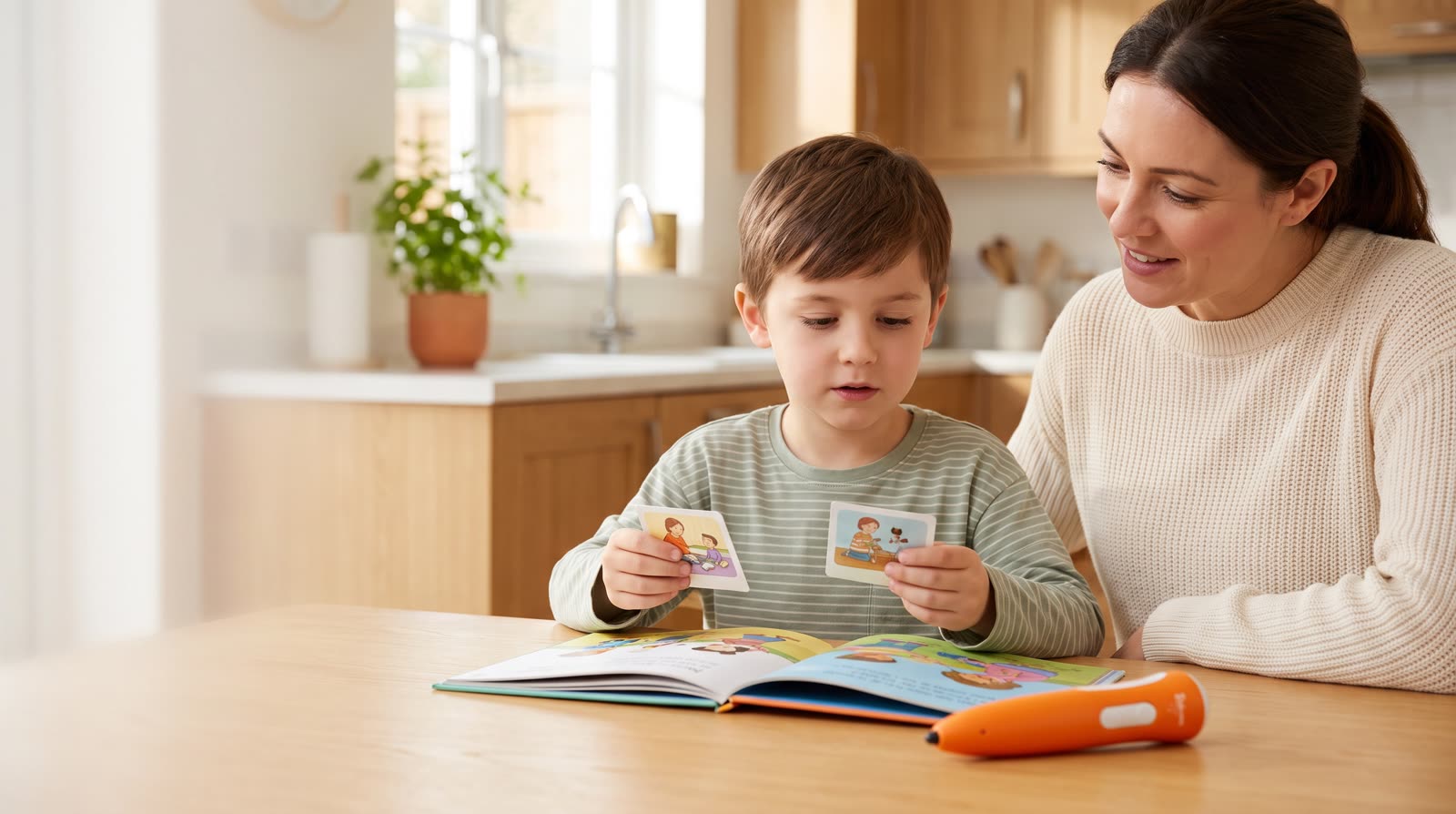
While interactive reading pens with slow repeat playback provide invaluable technological scaffolding, technology alone cannot replace human mentorship. Educators and child development experts emphasize that assistive tools yield the greatest positive impact when integrated into structured, adult-guided routines. Caregivers and teachers should participate actively in reading sessions, modeling how to use the slow repeat function when encountering unfamiliar or phonetically complex words, and discussing narrative meanings together.
Structured reading sessions should follow a gradual release of responsibility model: initially, the adult demonstrates how to tap for slow playback and discuss the sound structure; subsequently, the child takes the lead, using the pen independently while the adult provides positive reinforcement and emotional support. Establishing a calm, distraction-free reading environment further helps children with reading difficulties concentrate on auditory cues without sensory fatigue, ensuring that reading time remains a rewarding, low-stress experience.
When and How to Consult Qualified Educational Professionals
It is vital for parents, educators, and commercial distributors to recognize the boundaries of consumer educational hardware. A talking pen with slow repeat playback is an invaluable supplementary resource, but it is not a diagnostic tool and cannot replace professional clinical evaluation or specialized educational intervention.
If a child exhibits persistent reading avoidance, severe difficulty recognizing letter-sound correspondences, or ongoing frustration despite consistent multi-sensory support, parents and teachers should consult qualified educational psychologists, reading specialists, or certified speech-language pathologists. Professional diagnostic assessments can identify specific learning profiles, allowing educators to design individualized educational plans (IEPs) that incorporate assistive tools like talking pens as part of a comprehensive, multi-tiered system of supports (MTSS).
Safety, Quality Control, and Manufacturing Standards for Assistive Learning Devices
Low-Risk External Inspection and Physical Usability Standards
Ensuring product safety and physical reliability is a primary responsibility for B2B importers, distributors, and school purchasers. Children's electronic learning devices must adhere to rigorous physical safety standards to prevent choking hazards, sharp edges, or electrical malfunctions. Regular low-risk external inspections should be conducted by facility managers or parents to verify device integrity before and after use.
Routine checks should include inspecting the outer casing for structural cracks, ensuring the optical lens window is free of dust or obstructive debris, and verifying that rubberized or tactile buttons remain securely affixed. Users must never attempt to open, disassemble, or modify the device casing, as internal components—particularly lithium-ion battery cells—pose electrical and chemical risks if breached. Maintaining clear user guidelines regarding external cleaning with dry or slightly damp microfiber cloths helps preserve device longevity.
Regulatory Compliance and Consumer Safety Protocols
Global distribution of children's electronic products requires strict adherence to international safety standards, such as ASTM F963 and EN71 for toy safety, FCC and CE for electromagnetic compatibility, and RoHS for hazardous substance restriction. In accordance with guidelines from the U.S. Consumer Product Safety Commission (CPSC), manufacturers and importers must maintain comprehensive documentation and testing certificates verifying compliance across all electrical and mechanical components.
In the event that a device exhibits abnormal behavior—such as unexpected overheating, strange odors, battery swelling, smoke, or fluid leakage—users must immediately cease operation, disconnect any charging cables, and refrain from recharging the unit. The defective device should be set aside in a safe, non-combustible location, and the manufacturer or authorized B2B service channel should be contacted immediately for replacement or warranty support in accordance with established supply chain RMA protocols.
Frequently Asked Questions
Does a slow repeat playback feature cure or treat dyslexia in children?
No. A slow repeat playback feature in a reading pen is an assistive educational tool designed to provide auditory pacing, phonological reinforcement, and multi-sensory engagement. It does not cure, treat, or medically diagnose dyslexia or any other learning disability. Children with dyslexia benefit most from comprehensive, structured literacy instruction delivered by qualified educators and reading specialists.
How do educational publishers integrate audio markers for slow playback features?
Educational publishers collaborate with hardware manufacturers during the book pre-press stage to embed OID (Optical Identification) dot codes beneath printed text and illustrations. These codes link to indexed audio files stored on the pen's memory. Firmware algorithms then process these audio files to enable variable speed playback without altering vocal pitch or causing distortion.
What safety precautions should distributors and educators communicate regarding electronic reading pens?
Distributors and educators should advise users to perform low-risk external inspections (checking for casing cracks or debris on the optical lens). Users must never attempt to disassemble the device. If a device exhibits overheating, swelling, leakage, or smoke, users must immediately stop using it, avoid charging, and contact the manufacturer or authorized service channel, following CPSC safety guidelines.
How can educators assess whether a talking pen with slow playback fits their specific curriculum?
Educators should request sample evaluation kits from manufacturers or publishers to test the audio clarity at decelerated speeds, tactile button responsiveness, and ergonomic comfort for young hands. Curriculum alignment is best verified by checking whether the accompanying books support systematic phonics progression and granular OID coding for syllables and phrases.
What authoritative guidelines support the use of multi-sensory tools in early literacy?
Organizations such as the American Academy of Pediatrics (AAP) and the International Dyslexia Association emphasize that early literacy development relies on multi-sensory engagement, guided practice, and supportive adult-child interactions. Official resources like Reading Rockets and the CPSC provide further guidance on supporting struggling readers and maintaining product safety.
Conclusion
In summary, interactive reading pens equipped with slow repeat playback represent a powerful, multi-sensory technological aid for children experiencing dyslexia or early reading difficulties. By offering controllable auditory pacing, phonological reinforcement, and independent navigation, these devices bridge the gap between visual text and spoken phonemes. For B2B buyers—including educational publishers, toy distributors, and institutional purchasers—partnering with experienced manufacturers like ReadGlo ensures access to high-quality hardware, robust firmware algorithms, and rigorously tested interactive book ecosystems. While talking pens serve as invaluable supplementary aids rather than clinical treatments, their thoughtful integration into structured literacy programs empowers young learners, supports educators, and enhances inclusive educational publishing portfolios worldwide.
Continue your research
Related reading pen buyer guides
Use these related guides to compare the next product, content, sourcing or channel decision in your project.
- Learning SupportEvaluating Human-Voice Narration Reading Pens for Children with ADHD: A Comprehensive B2B GuideRead this guide
- Product DevelopmentHow Should Brands Plan Talking-Pen Content for Letters, Numbers, Colours, Shapes and Everyday Vocabulary?Read this guide
- Learning SupportEvaluating Short Interactive Activities in Reading Pens for Children with ADHD: A B2B Evaluation and Design FrameworkRead this guide
Sources used for further reading
Continue with ReadGlo
See a DOT-code picture-book set designed for guided early-learning programs.
ReadGlo project support
Connect with Our Engineering Team
Partner with ReadGlo to integrate advanced audio features like slow repeat playback into your educational publishing portfolio. Contact our B2B specialists now.