
Contents
Introduction
In the landscape of modern educational technology, interactive reading tools such as talking pens and smart picture books have transformed how young learners engage with text. For children with Attention Deficit Hyperactivity Disorder (ADHD), maintaining sustained focus during reading tasks can present distinct challenges. Educators, parents, and B2B buyers frequently ask whether reading pens featuring human-voice narration are suitable for supporting children with ADHD. Directly stated, high-quality reading pens with authentic human-voice narration can serve as effective multi-sensory assistive learning aids when integrated thoughtfully within structured, adult-guided environments. However, they are not standalone treatments or diagnostic interventions. Their primary value lies in reducing cognitive decoding friction, providing immediate auditory reinforcement, and engaging tactile-kinesthetic pathways that help sustain attention. This comprehensive guide examines the pedagogical rationale, audio design principles, safety standards, and evaluation criteria for B2B buyers, educational publishers, and distributors seeking to source neuro-inclusive reading pen solutions from ReadGlo.
Understanding Attention, Auditory Processing, and ADHD in Early Literacy
The Role of Sensory Engagement in Sustaining Focus
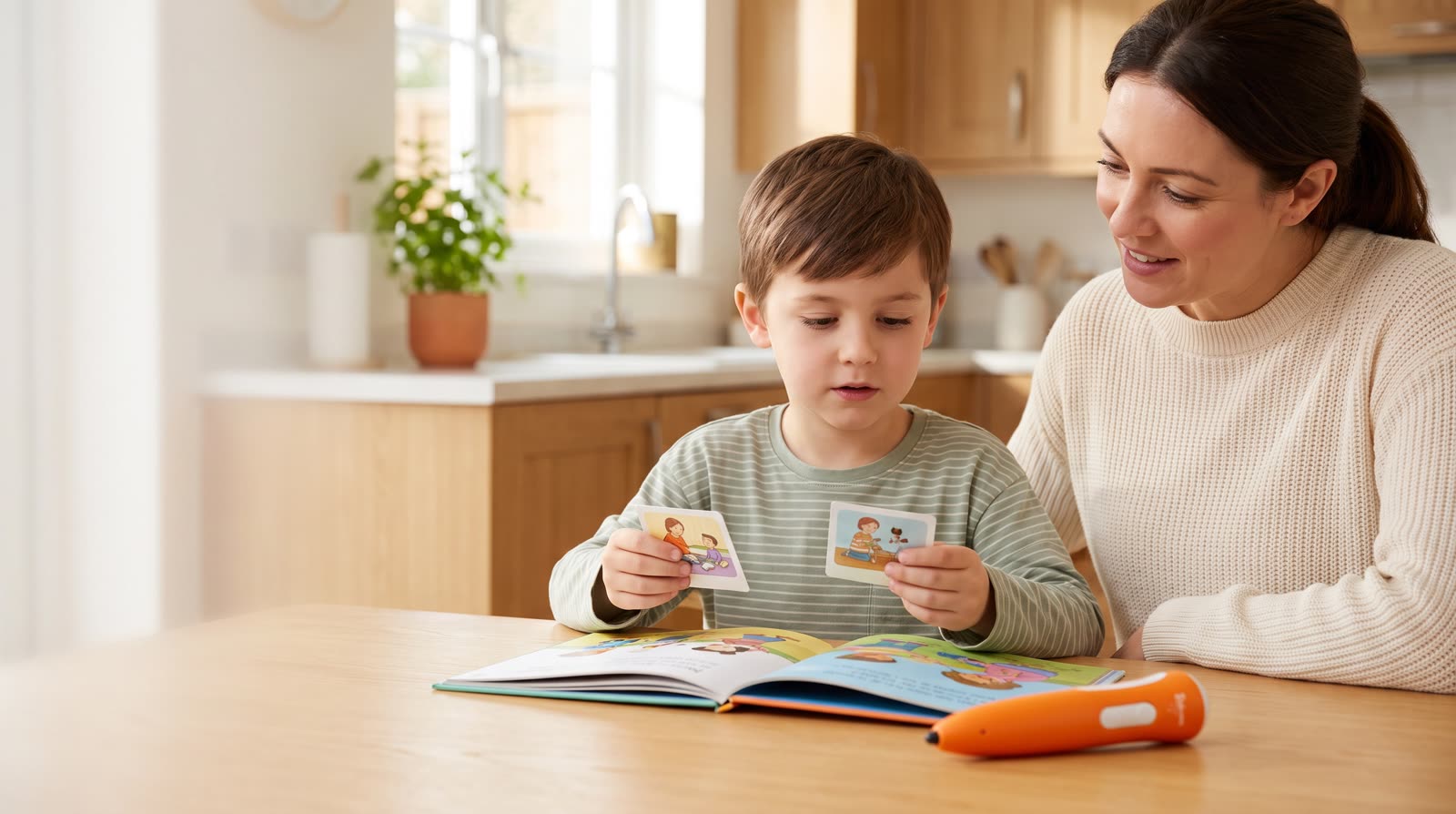
Children diagnosed with ADHD often experience difficulties with sustained attention, working memory, and self-regulation. According to guidelines from the Centers for Disease Control and Prevention (CDC) and the American Academy of Pediatrics (AAP), developmental support for children with attention differences benefits significantly from structured routines, multi-sensory engagement, and minimizing unnecessary distractions. Traditional reading materials can sometimes overwhelm young learners who struggle with visual tracking and decoding symbols on a static page. Interactive reading pens introduce a kinetic element—pointing a sensor tip directly at text or illustrations—which bridges the gap between physical movement and cognitive processing. This tactile interaction helps anchor the child's attention to the specific point of learning, reducing off-task behaviors during independent or guided reading sessions.
Auditory Processing and Cognitive Load Reduction
Auditory working memory is another critical dimension in early literacy acquisition. When children encounter complex vocabulary or dense sentence structures, the cognitive load required to decode letters into sounds can exhaust limited attention spans. By pairing visual text with simultaneous auditory output, reading pens alleviate decoding bottlenecks. The child hears the correct pronunciation instantly upon touching the page, allowing them to focus on semantic comprehension and narrative flow. Nevertheless, educators and child development specialists emphasize that audio tools should complement, rather than replace, interactive shared reading with adults. Adult mediation ensures that the child can process the narrative at a manageable pace and connect the audio output to real-world context.
Pedagogical Advantages of Human-Voice Narration vs. Synthetic Speech
Emotional Resonance and Authentic Prosody
When evaluating hardware and software specifications for children's educational devices, the quality of the audio narration is paramount. Synthetic text-to-speech (TTS) engines have advanced considerably, but they often lack the nuanced prosody, emotional inflection, and natural pacing required to engage young minds. Human-voice narration—recorded by professional voice actors in acoustically controlled studio environments—delivers authentic warmth, rhythmic cadence, and expressive storytelling. For children with ADHD, who are acutely sensitive to monotony and auditory fatigue, flat robotic voices can quickly trigger disengagement. Authentic narration captures interest, models expressive reading habits, and fosters a deeper emotional connection to the story.
Pacing, Pronunciation, and Linguistic Modeling
Professional human narration provides precise linguistic modeling, ensuring correct phonetic articulation, appropriate pauses between clauses, and natural intonation patterns. This is particularly beneficial for emergent readers and children navigating language processing differences. When a child taps an interactive picture book icon or sentence block, hearing a clear, professionally voiced human recording reinforces phonemic awareness without causing cognitive confusion. B2B buyers and educational publishers must prioritize high-bitrate audio compression formats (such as high-sample-rate MP3 or WAV embedded in optical code chips) to ensure that human-voice recordings remain crisp, distortion-free, and natural across repeated playback cycles.
B2B Product Evaluation Framework for Importers and Publishers
Optical Sensor Precision and Tactile Ergonomics
For B2B importers, distributors, and school suppliers sourcing talking pen systems from manufacturers like ReadGlo, evaluating hardware reliability is essential. Children with ADHD may exhibit impulsive motor movements, frequent tapping, or vigorous handling during reading sessions. Consequently, the optical OID (Optical Identification) sensor tip must demonstrate high durability, scratch resistance, and immediate response latency. Furthermore, pen ergonomics—including grip diameter, weight distribution, and tactile button placement—must accommodate small hands comfortably without inducing physical fatigue. Specifications should be vetted through rigorous sample testing, focusing on button tactility, volume control limits, and secure battery compartment locking mechanisms.
Book-Pen Synchronization and Content Architecture
The synergy between the physical picture book and the optical code embedded in the paper is the cornerstone of an effective reading pen ecosystem. Publishers must ensure that OID invisible dot patterns are printed with high precision using specialized carbon or infrared-absorbing inks. Any misalignment between printed codes and audio files can lead to reading errors, causing frustration for children with attention challenges. Sourcing partners should review sample book layouts, verify multi-language audio file structures, and confirm that firmware supports easy updates or content expansion packs without complex user intervention.
ReadGlo project support
Get a Quote
Ready to source neuro-inclusive talking pen systems and interactive picture books for your market? Contact ReadGlo's B2B team for sample kits and wholesale pricing.
Designing Neuro-Inclusive Interactive Picture Books
Minimizing Visual Clutter and Managing Cognitive Overload
Designing picture books for children with attention and learning differences requires careful attention to visual layout. Overly crowded pages with competing illustrations, bright background patterns, and dense text blocks can easily overwhelm a child with ADHD, leading to sensory overload and abandonment of the task. Neuro-inclusive book design prioritizes clean white space, high-contrast typography, clearly delineated touch hotspots, and sequential storytelling flows. Interactive hotspots should be intuitive—such as distinct character icons or highlighted sentence borders—so that the child can easily navigate the page without confusion.
Scaffolded Multisensory Activities and Engagement Loops
Effective interactive books incorporate scaffolded activities that move from simple word recognition to comprehension questions and sound-effect exploration. By allowing children to trigger sound effects, character dialogues, and musical cues by touching different parts of the illustration, the reading experience becomes an active exploration loop. This multi-modal engagement helps maintain interest and reinforces memory retention. However, publishers must balance audio interactivity with quiet reading moments, ensuring that sound effects do not overshadow the core literacy objective.
Safety, Durability, and Regulatory Compliance for Educational Hardware
Mechanical Safety and Material Compliance
Children's electronic learning products must adhere to stringent international safety and compliance standards. Importers and brand owners must verify that products comply with regulations such as ASTM F963, EN71, FCC, CE, and RoHS. Particular attention should be paid to non-toxic ABS plastic casings, rounded edges, and secure assembly to prevent small parts from detaching. In accordance with guidelines from the U.S. Consumer Product Safety Commission (CPSC), products intended for children must undergo comprehensive third-party laboratory testing for heavy metals, phthalates, and mechanical drop resistance.
Battery Safety and Operational Guidelines
Reading pens typically utilize rechargeable lithium-ion batteries or standard replaceable alkaline cells. Ensuring robust battery management systems (BMS) with overcharge, short-circuit, and thermal protection is critical. Users and caregivers should be instructed to perform low-risk external inspections before use. Devices should never be disassembled by non-qualified personnel. If a device exhibits signs of moisture damage, physical cracking, abnormal heating, battery swelling, fluid leakage, or smoke emission, operation and charging must be ceased immediately, and the manufacturer or authorized service channel should be contacted for professional guidance.
Best Practices for Adult Guidance and Structured Implementation
Establishing Predictable Reading Routines
Even the most advanced assistive technology cannot replace the supportive scaffolding provided by parents, educators, and therapists. Experts from organizations such as the International Dyslexia Association and Reading Rockets highlight that assistive tools yield the best outcomes when embedded within predictable, structured daily routines. Adults should introduce the reading pen in a calm environment, setting clear time boundaries (e.g., 15-minute focused reading sessions) to prevent sensory fatigue. Joint engagement—where the adult sits alongside the child, models positive reading behaviors, and discusses the story—reinforces social-emotional connection and comprehension.
Knowing When to Consult Educational Professionals
When children exhibit persistent difficulties with attention, reading acquisition, or processing spoken language, standardized tools alone may not suffice. Educators and specialists should be consulted to conduct comprehensive evaluations and design individualized educational plans (IEPs) or tailored learning strategies. Reading pens should be viewed as collaborative instruments within a broader support ecosystem that may include specialized tutoring, occupational therapy, and adaptive classroom accommodations.
Frequently Asked Questions
Can a reading pen cure or treat ADHD in children?
No. Reading pens are assistive educational tools designed to support engagement, decoding, and multi-sensory interaction. They are not medical treatments, therapeutic devices, or diagnostic instruments for ADHD.
Why is human-voice narration preferred over synthetic text-to-speech for children with ADHD?
Human-voice narration provides authentic prosody, emotional warmth, and natural pacing recorded by professional voice actors. This helps maintain attention and prevents the auditory fatigue often associated with flat synthetic voices.
How should parents and educators introduce a reading pen to a child with attention difficulties?
Introduce the pen in a quiet, distraction-free environment during scheduled reading sessions. Adults should participate alongside the child, model how to use the touch tip, and discuss the story to build comprehension and shared enjoyment.
What safety precautions should be observed regarding reading pen batteries and hardware?
Perform low-risk external inspections before use. Never attempt to disassemble the device. If there is any sign of moisture, damage, abnormal heat, swelling, or smoke, stop using and charging immediately, and contact the manufacturer or authorized service channel.
What authoritative resources are recommended for understanding early literacy and child development?
Valuable resources include the Centers for Disease Control and Prevention (CDC) for child development insights, the American Academy of Pediatrics (AAP) for early literacy guidance, and Reading Rockets for evidence-based reading strategies.
Conclusion
In summary, reading pens equipped with high-quality human-voice narration offer substantial benefits for children with ADHD when utilized as part of a thoughtful, multi-sensory literacy strategy. By bridging tactile interaction with clear, expressive audio reinforcement, these tools reduce decoding friction and sustain engagement. For B2B buyers, distributors, and educational publishers partnering with ReadGlo, ensuring rigorous optical precision, robust safety compliance, and neuro-inclusive book design is key to delivering impactful products. Educational tools achieve their highest value when paired with supportive adult guidance and professional expertise.
Continue your research
Related reading pen buyer guides
Use these related guides to compare the next product, content, sourcing or channel decision in your project.
- Learning SupportEvaluating Short Interactive Activities in Reading Pens for Children with ADHD: A B2B Evaluation and Design FrameworkRead this guide
- Learning SupportIs a Reading Pen with Human-Voice Narration Suitable for Children with Bilingual Language Exposure?Read this guide
- Learning SupportEvaluating Simple Touch Control Reading Pens for Children with Dyslexia and Early Reading Difficulties: A B2B Procurement and Pedagogical GuideRead this guide
Sources used for further reading
- Google Search Central: Creating Helpful, Reliable, People-First Content
- American Academy of Pediatrics: Early Childhood Health, Development, and Early Literacy
- U.S. Consumer Product Safety Commission: Children's Products Business Education
- Centers for Disease Control and Prevention: ADHD Data and Statistics
Continue with ReadGlo
See a DOT-code picture-book set designed for guided early-learning programs.
ReadGlo project support
Send Your Requirements
Partner with ReadGlo to develop customized educational audio products tailored to your educational publishing and distribution needs. Submit your specifications today.