
Contents
Introduction
When a child's favorite interactive reading pen stops working or gets misplaced, parents, educators, and institutional procurement buyers frequently face an urgent decision: should they source a brand-new factory-certified replacement, or is it worth purchasing a used replacement reading pen from secondary marketplaces, online thrift stores, or peer-to-peer resale platforms? From an initial economic perspective, secondhand electronic learning devices appear to offer short-term cost savings. However, for interactive reading pens—which rely on precise optical sensors, proprietary OID (Optical Identification) dot codes, firmware mapping, and stable rechargeable power sources—buying used introduces complex technical, hygienic, and operational variables. This comprehensive guide evaluates whether investing in a used replacement reading pen is advisable for families, educational institutions, and B2B distributors. We examine the underlying optical and firmware technologies, safety compliance standards outlined by regulatory bodies such as the Consumer Product Safety Commission (CPSC), and why professional educational publishers recommend certified new hardware for seamless literacy development and long-term durability.
Understanding the Core Technology: How Reading Pens and OID Book Codes Interact
The Mechanics of Optical Identification (OID) Technology
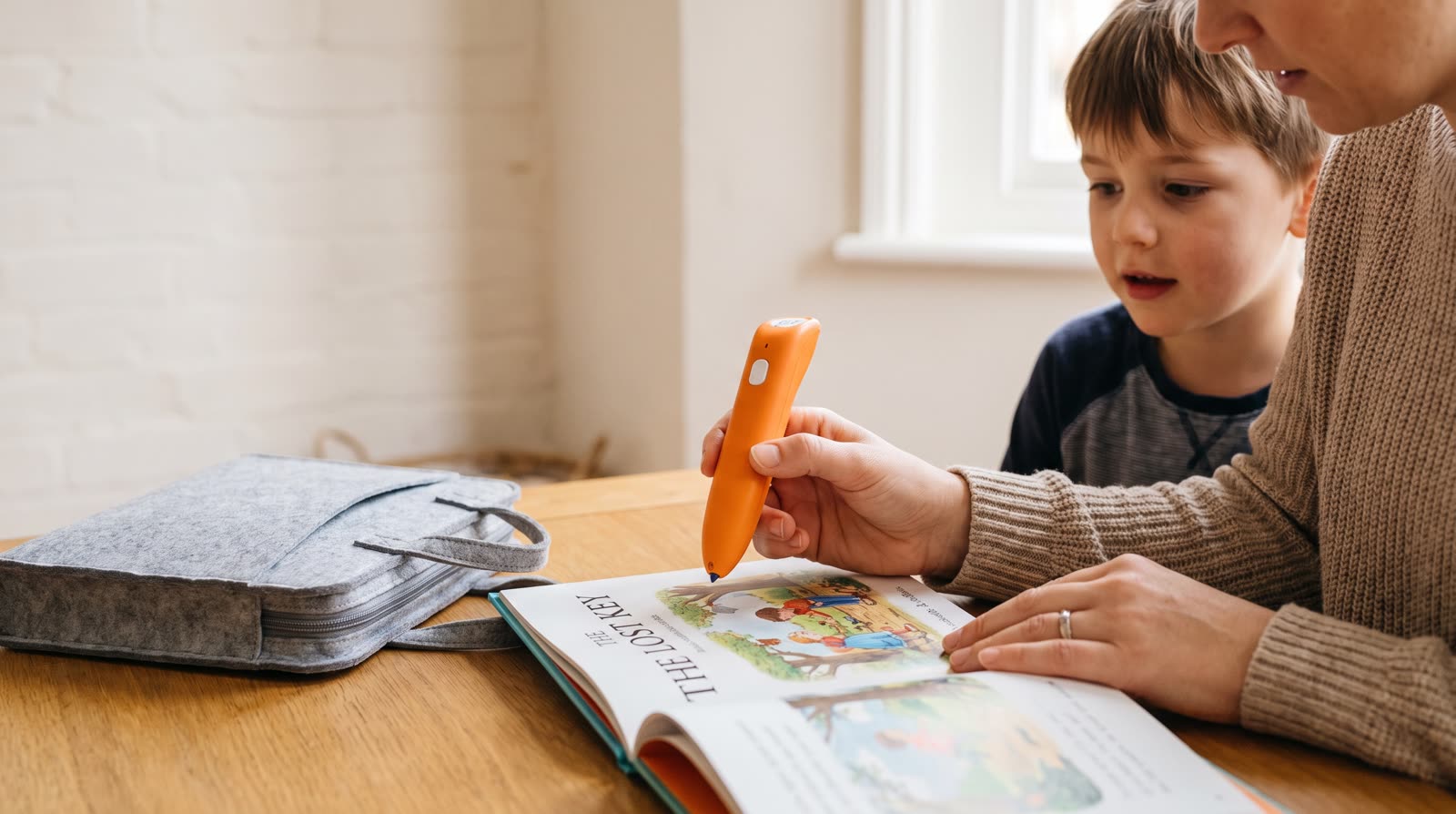
Modern children's reading pens are sophisticated optical scanning instruments rather than standalone audio speakers. Integrated into the tip of each pen is a miniature CMOS camera sensor paired with an infrared illumination source. As a child sweeps the pen across a page, this sensor captures invisible microscopic dot patterns—known as OID codes—embedded alongside printed text and illustrations. The pen's internal microprocessors instantaneously translate these dot coordinates into specific audio files stored within internal memory or expandable TF cards. If a replacement pen does not match the precise OID generation, code matrix, or firmware protocol of the companion book series, the optical reader will fail to decode the coordinates, resulting in silence or erratic audio playback. This fundamental technological dependency makes generic or mismatched secondhand replacement pens a high-risk investment.
Proprietary Firmware, Audio Packs, and Version Synchronization
Educational publishers and toy manufacturers frequently release iterative hardware revisions and regional firmware updates for their reading pens and book sets. A used replacement pen acquired online may look outwardly identical to an older model yet operate on a completely different firmware architecture or audio compilation map. Unlike universal computer peripherals, children's interactive reading pens lack standardized cross-brand interoperability. When procuring replacement units for a school library, kindergarten classroom, or commercial retail distribution line, verifying exact model numbers, firmware release cycles, and book library compatibility is essential to prevent operational failure and learner frustration.
The Importance of Software Updates and Audio File Management
Interactive reading pens often require periodic firmware updates and custom audio file downloads (such as .pack or .cfg files) from official manufacturer portals when new book titles are introduced into a curriculum. Secondhand devices may lack access to original manufacturer accounts, proprietary desktop management software, or customer support portals. Without the ability to update firmware or sync newly released book audio packages, a used replacement pen quickly becomes obsolete as educational requirements evolve, limiting its long-term utility in structured learning environments.
B2B Procurement and Institutional Sourcing Perspectives
Why Schools and Wholesale Distributors Avoid Secondhand Electronics
For B2B procurement managers, educational institutions, library networks, and wholesale distributors, sourcing used replacement inventory introduces unacceptable quality control, liability, and compliance risks. Institutional buyers require batch consistency, reliable warranty backing, and strict adherence to international child safety standards, including CE, RoHS, ASTM F963, and EN71. Introducing unverified secondhand devices into a classroom setting or retail product bundle violates strict quality assurance protocols and creates significant customer dissatisfaction. Professional educational procurement mandates direct factory sourcing, strict incoming quality control (IQC) inspections, and authorized distributor channels to guarantee hardware reliability and hygiene.
Evaluating Total Cost of Ownership (TCO): New vs. Used Hardware
While a used replacement pen may feature an upfront purchase price that appears significantly lower than a new retail unit, a thorough Total Cost of Ownership (TCO) analysis overwhelmingly favors factory-fresh hardware. Used devices exhibit exponentially higher failure rates, shorter remaining operational lifespans, and zero manufacturer support when firmware troubleshooting is required. When factoring in the administrative overhead of screening secondhand sellers, handling premature hardware failures, and replacing defective units mid-term, investing in certified new replacement inventory represents a far more cost-effective and dependable strategy.
Supply Chain Traceability, Quality Assurance, and Sustainability
Sourcing replacement units through official B2B channels ensures complete supply chain transparency and regulatory compliance. Factory-certified manufacturers provide detailed specification sheets, pre-shipment inspection (PSI) reports, compliance documentation, and dedicated technical support. Furthermore, while reusing electronics is often championed for sustainability, low-durability items like educational reading pens that fail prematurely generate e-waste. Investing in high-durability, repairable, and recyclable new hardware aligns with modern environmental standards without compromising safety or educational efficacy.
ReadGlo project support
Request Wholesale Catalog
Looking for reliable, certified talking pens and interactive book bundles for your distribution network? Explore our OEM/ODM catalog and request product samples today.
Step-by-Step Evaluation: When to Replace, Repair, or Upgrade
Step 1: Systematic Diagnostic Assessment of the Existing Device
Before deciding to discard or replace a malfunctioning reading pen, educators, parents, or IT coordinators should perform a structured diagnostic assessment. Verify whether the malfunction stems from a completely depleted battery, a corrupted audio file directory on the internal storage, or surface obstruction on the optical tip. Often, executing a factory reset, formatting the storage volume, or re-downloading official audio compilation packs from the manufacturer's portal restores full functionality without requiring any new purchases.
Step 2: Documenting Technical Specifications and Library Compatibility
If physical replacement is determined to be necessary, document the exact model number, hardware revision code, firmware version, and compatible book series associated with the original equipment. Cross-reference these parameters with the manufacturer's active product catalog to identify exact-match hardware. Ensuring complete OID code matrix compatibility prevents frustrating mismatches between the pen and existing book collections.
Step 3: Engaging Authorized Manufacturers and Educational Suppliers
Instead of turning to unverified secondary marketplaces for secondhand items, procurement officers and educators should contact authorized manufacturers or institutional suppliers directly. Request official sample evaluations, bulk replacement pricing tiers, and warranty terms. Establishing a direct supply relationship guarantees access to compliant, high-performance replacement hardware backed by professional customer service.
Safety Compliance, Product Care, and Proper Handling Standards
Safe Handling and External Inspection Guidelines
To maximize the operational lifespan of interactive reading pens and minimize the necessity for frequent replacements, users and institutional supervisors must adhere to strict handling protocols. Perform exclusively low-risk external visual and tactile inspections. Never attempt to open, disassemble, or modify the internal electronic circuitry, battery compartment, or optical housing of a reading pen. If a device exhibits physical cracking, water ingress, abnormal operating heat, battery swelling, fluid leakage, or smoke, immediately cease operation, disconnect any charging cables, and store the unit in a secure, non-flammable area in strict accordance with safety guidelines published by the U.S. Consumer Product Safety Commission (CPSC).
Hygiene, Cleaning, and Maintenance in Shared Environments
In kindergarten classrooms, libraries, and multi-child households, reading pens are handled repeatedly throughout the day. Maintain rigorous hygiene by cleaning the exterior plastic housing with a dry or lightly dampened microfiber cloth. Avoid spraying liquid cleaning agents directly into the optical sensor aperture, USB connection port, or speaker openings, as moisture ingress can permanently damage internal electronics. Regular, gentle maintenance prevents dust accumulation and preserves the mechanical integrity of shared learning tools.
Proper Storage and Environmental Control
Proper storage significantly extends the lifespan of electronic learning aids. When reading pens are not in use—such as during school holidays or long-term storage—store them in a temperature-controlled environment away from direct sunlight, extreme humidity, and dust. For rechargeable lithium-ion models, maintain a partial battery charge (around 50%) during extended storage to prevent deep discharge cycle damage and preserve battery health.
Frequently Asked Questions
Is a used replacement reading pen compatible with all talking picture books?
Not necessarily. Reading pens rely on specific OID optical codes and proprietary firmware versions. A used replacement pen from a different production batch, brand, or firmware generation may fail to read your existing book library.
What are the primary safety and technical risks of buying a secondhand rechargeable reading pen?
Secondhand rechargeable electronic devices frequently suffer from degraded lithium-ion battery capacity, unknown usage history, potential charging safety hazards, and a complete lack of manufacturer warranty protection.
How can educators and parents determine if a malfunctioning reading pen can be repaired instead of replaced?
Perform a diagnostic check for common issues such as discharged batteries, corrupted audio files on internal storage, or dust on the optical lens. Re-flashing official firmware or cleaning the sensor tip often restores full operation.
What safety precautions should be taken if a reading pen shows battery abnormalities or overheating?
If the device exhibits abnormal heat, swelling, smoke, or leakage, immediately stop using it, disconnect it from power, do not charge it, and contact the manufacturer or qualified service channels following CPSC safety guidelines.
Why do B2B distributors and schools strongly recommend new factory-certified replacement pens over used units?
Factory-certified new units ensure batch consistency, full compliance with international child safety certifications (such as CE, RoHS, and ASTM F963), valid warranties, and guaranteed compatibility with current book series and curricula.
Conclusion
In summary, while purchasing a used replacement reading pen may initially appear to offer short-term financial savings, the technical complexities of OID optical compatibility, firmware version discrepancies, sensor wear, and rechargeable battery safety risks far outweigh the superficial benefits. For parents, educators, and B2B wholesale distributors alike, ensuring an engaging, seamless, and safe literacy experience requires reliable, certified hardware backed by clear manufacturer specifications and comprehensive warranties. By prioritizing stringent quality assurance, proper device maintenance, and direct collaboration with authorized educational suppliers, stakeholders can foster enduring, high-quality interactive learning environments that support children's educational development safely and effectively.
Continue your research
Related reading pen buyer guides
Use these related guides to compare the next product, content, sourcing or channel decision in your project.
- ProductsCan I Return a Premium Reading Pen If a Child Does Not Use It? Distributor and Buyer Evaluation StandardsRead this guide
- ProductsIs It Worth Buying a Used Starter Reading Pen Set? Evaluating TCO, Compatibility, and SafetyRead this guide
- ProductsCan I Return It If My Child Does Not Use It After Buying a Starter Reading Pen Set? Comprehensive Retail and B2B GuideRead this guide
Continue with ReadGlo
See product specifications and request model-specific documentation.
ReadGlo project support
Contact Our Sourcing Team
Partner with ReadGlo for high-quality, safety-certified children's educational electronics. Send your specification requirements or speak with our export team today.