
Reading pen OEM / ODM & private label

How can buyers plan a custom reading-pen project?

Start with your product direction, target market, content and sample requirements. Use this page to prepare a reading-pen OEM/ODM or private-label brief for ReadGlo, then confirm feasibility, responsibilities and commercial scope in writing.

For publishers, private-label brands, importers and distributors. Requested options are reviewed project by project—not a universal feature list.

Choose a reference. Define the changes.

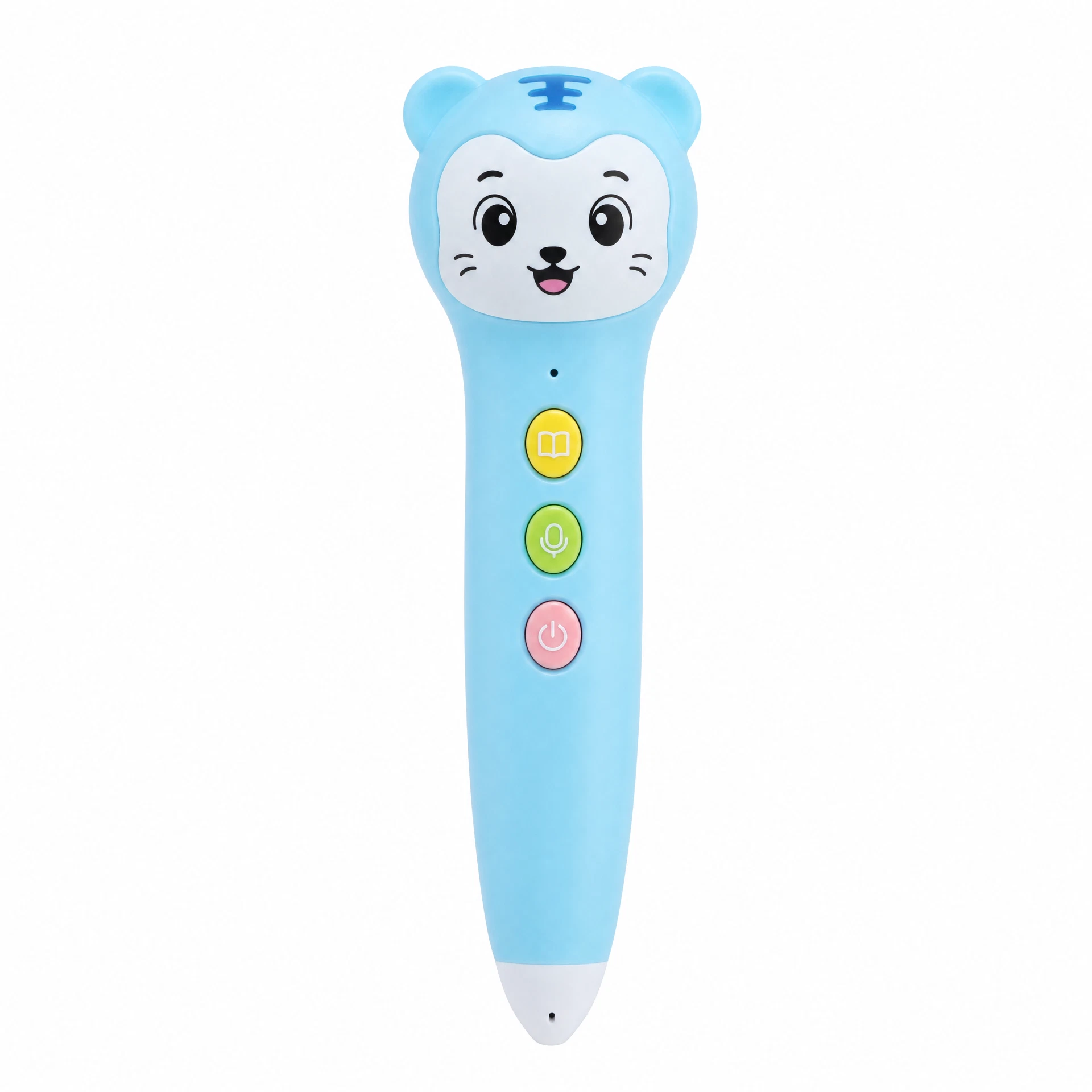
Illustrative blue reading pen with an animal-shaped top and three coloured buttonsReview the reference product
Illustrative product visual. Appearance does not establish specifications, compatibility, certification or availability of a custom configuration.

01 / Select a starting point

Which project route fits your brief?

OEM, ODM and private label are planning labels here, not legal definitions or pre-agreed service packages. Use the written project scope to settle deliverables, intellectual property, ownership and approval responsibilities.

01

Private-label starting point

Start from a selected product direction and discuss your brand, approved content and packaging. Confirm the exact changes and responsibilities before treating a catalogue item as your launch configuration.

Choose a reference product and list the changes you need.

02

OEM against your requirements

Bring a defined product brief, book programme or reference specification. Separate required features from preferences so feasibility, content preparation and quotation assumptions can be reviewed together.

Identify your must-have requirements and acceptance checks.

03

ODM concept review

If your project needs a different housing, interaction or system design, request a feasibility discussion first. Development scope, tooling, design ownership and approval stages require a written agreement; they are not implied by the ODM label.

Describe the problem to solve before committing to a design.

Is your main brief a book catalogue rather than a device redesign?

Use the publisher interactive-book project route for manuscript and audio handoffs, title/edition records, content mapping and sample acceptance. Continue here for wider device, branding, packaging or private-label scope.

02 / Define the scope

What can you ask to customize?

Use these areas to describe your request. An option belongs in the order only after feasibility, evidence, responsibilities and any exclusions have been confirmed for your selected configuration.

Brand & appearance

Bring to the discussion: Reference product, logo position, colour references and finish preferences.

Confirm before approval: Final artwork, material/finish sample, marking method and whether any tooling change is involved.

Books & learning cards

Bring to the discussion: Title list, page or card format, illustrations, touch zones and proposed bundle contents.

Confirm before approval: Print-ready files, code/audio mapping and a tested pen–print–content combination. Ordinary books are not automatically compatible.

Audio & languages

Bring to the discussion: Languages, pronunciation style, narration scripts, audio files and first-use prompts.

Confirm before approval: Named language reviewer, rights status, audio version and supported functions for the selected configuration.

Device & interaction

Bring to the discussion: Controls, storage requirements, charging format, audio behaviour and content-loading needs.

Confirm before approval: Feasibility against the selected platform, firmware/build identifier, accessory list and a functional sample. No feature is universal across products.

Packaging & instructions

Bring to the discussion: Retail box, bundle layout, instruction languages, barcode data and carton needs.

Confirm before approval: Approved dielines, pack-out list, artwork ownership, labelling review and shipment-specific packing requirements.

Market & evidence

Bring to the discussion: Destination, intended users, sales channels, product claims and buyer documentation needs.

Confirm before approval: Applicable requirements and evidence for the final SKU with the responsible importer, adviser or laboratory; no blanket market approval is implied.

For a book-and-pen project, read the publisher bundle planning guide. Technical assumptions belong in the OID print-and-audio review, not in a blanket compatibility promise.

03 / Prepare your inputs

What should your first project brief contain?

You do not need a finished specification to start. Separate confirmed requirements from assumptions, and identify the next decision your team needs help evaluating.

Download the project checklist (TXT)

Buyer & market

Company, buyer role, destination country, sales channel and intended user group. Name the person responsible for market and claims review.

Product & quantity

Reference product or concept, planned units, book/card titles, bundle contents and separate quantities for each version. Estimates can be marked provisional.

Content & rights

Manuscripts, illustrations, scripts, recordings and translations available now. Identify rightsholders, territory, medium, language, term, attribution and any written permissions still required.

Decisions & timing

Must-have features, sample checks, approval owners and your requested launch date. A requested date is a planning input, not a confirmed production or shipping commitment.

Have a reference product and a list of changes?

Send the essentials now. Mark quantities, language assets or dates as provisional if they are still open.

Discuss your project

04 / Agree the checkpoints

How should a sample become an approved configuration?

Agree a project-specific approval path. These proposed checkpoints are a discussion framework, not a promise that a sample alone authorizes production or proves market compliance.

  1. 01

    Define the project baseline

    Agree the reference product, content list, target market and responsibilities. Record open questions and exclusions rather than assuming every requested option is included.

  2. 02

    Review feasibility & quotation

    Separate hardware, books/cards, audio work, packaging and any development work. Confirm assumptions, deliverables, approval gates and the sample route in writing.

  3. 03

    Evaluate a defined sample

    Check handling, controls, touch-zone coverage, audio mapping, language review and pack contents against an agreed checklist. Record deviations and decide which must close before approval.

  4. 04

    Approve the intended configuration

    Attach the sample reference, hardware/firmware identifiers, audio and print revisions, packaging files and approved deviations to the sign-off. Retain a reference and agree how later changes will be reviewed.

  5. 05

    Release only the agreed scope

    Before a production or shipment release, reconcile the order, approved configuration, inspection plan and remaining market or transport documents. Changes to a book, audio file or accessory need impact review.

Keep one traceable approval record

Record the sample identifier, configuration and file revisions, acceptance checks, open items, decision owner and date. If a component, recording, page, firmware or package changes, review its impact before treating the earlier approval as still valid.

05 / Compare the same scope

What should an OEM quotation make explicit?

A unit price is only useful alongside its configuration and exclusions. Ask for an itemized basis where applicable; a requested activity is not automatically offered or included.

Product & printed content

Device configuration, units per version, book/card quantities, print specifications and accessories included in the bundle.

One-off project work

Ask whether artwork preparation, coding, audio editing, development, tooling or sample work is included, separately charged or excluded. Do not assume ownership or reuse rights from a payment alone.

Packaging & verification

Distinguish retail packs, cartons, instructions, language review, agreed inspection and any third-party work. Identify who commissions and pays for each item.

Commercial & logistics basis

Confirm currency, quote validity, payment terms, delivery basis, named place, freight/tax treatment and the schedule assumptions after approvals. Minimum quantities and timing must match the actual scope.

Minimum order quantities, project pricing and scheduling should be confirmed for the actual scope. Do not treat an indicative catalogue entry as approval of custom development, content rights, transport documents or market access.

Rights & market review

Assign the checks before you approve the files.

For text, artwork, translations and recordings, identify the rightsholder and the territory, medium, language, term, attribution and written permissions needed for the intended use. Do not assume a supplied file or a paid recording transfers all rights.

For the finished product, assign destination-market and claims review to the responsible parties and check the final device, printed content, battery, accessories and packaging. A certificate for another configuration is not blanket approval.

WIPO copyright background explains permission and rights concepts; it is not a project-specific legal opinion or an endorsement of ReadGlo.

Which deliverables need confirmation?

Plan an OEM reading pen around children's coded books or cards and paired audio, not arbitrary-paper OCR/TTS or automatic translation. Start from a private-label reference, define OEM changes, or submit an ODM concept for feasibility review.

For China sourcing, identify who contracts, designs, produces and exports each deliverable; a supplier label does not establish factory ownership. Separate branding, content, platform changes and new housing or interaction, with deliverables, approval owners and design/tooling reuse rights to confirm.

Treat proposed geography carriers as feasibility questions before discussing development or bulk supply.

What must device-change requests specify?

For portable use, request dimensions, weight, grip and storage for the pen, paired books and accessories; verify the final sample, age and transport conditions. For headphones, specify connection, volume control, compatibility, included accessories and age/market checks.

Separate USB charging, data transfer and content loading, naming connector, cable, power source and approval route. For Bluetooth, specify audio or content-transfer purpose, pairing, offline use and market/data review needs; neither connection is assumed.

If proposing an app or computer software, identify version, operating system, licensing, accounts/networking, data handling and update/support owner, or request a no-computer route. Define speed as touch-to-audio response or playback behaviour, not scan rate; record sample/build and evaluation conditions. User recording requires confirmation of who records what, storage, deletion, transfer and consent; publisher-supplied audio is not that feature. All requested functions remain pending until verified for the selected configuration.

Use the existing form for requested changes, market, separate quantities and non-confidential content/rights status.

Send Your OEM Project Brief

What belongs in your packaging brief?

Submit custom printed reading pen box requirements against a stated pack-out: pen only, pen with cards, or pen with picture books. Identify artwork revision, requested materials/printing/finishes, barcodes and instruction languages; no process is assumed available.

Separate the units below, then agree dieline, print-proof, structural-sample and actual pack-out-sample checkpoints with named approvers; each approval has its own scope.

Enter quantities, versions and status; assign an approval owner.
Scope lineBuyer input / quantity unitStatusOwner / approval record
Device / accessoriesReference/build; pens and accessory unitsEnter statusConfiguration approver
Books/cards + audioCopies per edition; rights, coding, mapping/audio versionsEnter statusContent/rightsholder reviewer
Retail boxContents per box; retail-pack count; artwork/dielineEnter statusPrint and pack-out approver
InsertFit/layout request; insert count/versionEnter statusStructural-sample approver
Instruction leafletLanguage/artwork version; leaflet countEnter statusLanguage/label reviewer
Inner/master cartonPacks per carton; carton counts/versionsEnter statusPacking/route reviewer
Empty boxesSeparate scope request; empty-box countPending feasibilityScope/quotation owner
One-off / repeat workTooling, files, samples; separate recurring unitsEnter statusCost and reuse-rights owner

What makes pilot and repeat scopes comparable?

Compare quotations using the same configuration, separate quantities and one-off versus repeat work; a budget is not an agreed price, discount or retail offer. Add currency, validity, delivery place, freight/tax treatment and exclusions to the worksheet; confirm MOQ, timing and after-sales boundaries in writing.

Link device/build, code system, touch-zone mapping, print edition, audio version, packaging and unresolved items in the approval baseline; production release remains a separate decision. Assign importer, final-SKU market, battery and transport-document review for the destination and route. Use the quotation-scope and total-cost guides for detailed comparison.

Questions about this procurement scope

Are tooling files, firmware deliverables and reuse rights included by default?

No. Confirm proposed deliverables, ownership, licences, handover and reuse limits in writing; neither payment nor an OEM/ODM label transfers rights automatically.

Can custom reading pen boxes be quoted separately from devices?

Ask whether separate supply is within scope. Distinguish empty boxes, boxes with inserts, packed retail sets and shipping cartons; confirm units, one-off work and repeat charges. Empty-box wholesale availability is not established.

Can a proposed coded map or globe enter an OEM brief?

Ask for feasibility review, distinguishing a flat map from a spherical globe. Material/print recognition, touch zones, authorised audio, geographic names/boundaries, edition and market review need confirmation before development or bulk terms; neither carrier is a confirmed catalogue product.

Email a scope summary and open decisions; compare quotation scope using the existing guides.

Discuss Open Project Scope

Buyer questions

Reading-pen OEM / ODM FAQ

What is the difference between reading-pen OEM, ODM and private label?

Use the labels as starting points for a scope discussion, not as a promise of deliverables. A private-label route may start from a selected product, OEM from your defined requirements, and ODM from a concept or design review. The agreed specification, ownership, deliverables and approval responsibilities govern the project.

What should I send to request an OEM reading-pen quotation?

Send your company, target market, reference product, estimated units, languages, book/card list and requested changes. Add the status of your artwork, scripts, recordings and rights permissions. Mark uncertain items as provisional and list your required sample checks so the quote can state assumptions and exclusions.

Can a custom talking pen read any children's book?

Do not assume so. Compatibility depends on the selected device, code system, printed artwork, content mapping and loaded audio or firmware version. Provide the intended books or production files and agree a sample test for that exact combination; a demonstration with one title does not prove another title will work.

Can I request my own logo, housing colour and packaging?

Include logo artwork, colour references, packaging direction and the reference product in your brief. The application method, finish, tooling implications, quantities and final artwork must be reviewed for the selected configuration. A visual mock-up is not approval of the material or production method.

How are multilingual audio and content rights confirmed?

List each language, script, recording and reviewer. Check the relevant rightsholders and permissions for territory, medium, language, term and attribution, including translations and performances where relevant. Confirm the approved content and device versions together. Neither this page nor a sample transfers content rights or guarantees a requested language feature.

What does sample approval need to identify?

Record a sample reference and the intended hardware, firmware, audio, printed content, packaging and accessory revisions. Attach the agreed checks, results, deviations and approval owner. Define how substitutions or later updates will be assessed so a signed sample is not treated as evidence for a different configuration.

What are the MOQ, price and lead time for a private-label project?

Request these against your actual product, quantities, content and packaging scope. Separate one-off development or sample charges from repeat unit costs and confirm the delivery basis. Any catalogue indication is not a binding project quotation; quantities and timing should be confirmed in writing after the relevant scope and approval dependencies are understood.

Are certifications and market requirements the same for every OEM project?

No. Product classification, intended users, materials, electronics, battery, accessories, destination and claims can affect what must be reviewed. Identify the responsible importer and any qualified advisers or laboratories, then check evidence for the final SKU and route. Do not infer approval for a custom bundle from a generic certificate or another product's report.

How should new books or firmware changes be handled after launch?

Request a version and change-control process before ordering. Define which book/code/audio combinations remain supported, who supplies and approves updates, how regression checks are recorded, and what commercial arrangements apply to later work. Future content compatibility or support is not automatic and should be agreed for the project.

Your next step

Send your OEM project brief

Tell us what you want to build, where you plan to sell it and what still needs to be decided. A provisional brief is welcome; mark unknown items as “to be confirmed”.

This is a request for project discussion, not an order or a confirmed quotation. Requested features, quantities, rights, timing and commercial terms need separate review.

Download the brief checklist (TXT)

Prefer email?

info@readglo.com

For the first discussion, send a summary rather than confidential manuscripts, recordings or personal data about children. File-transfer arrangements can be agreed separately.

Reading-pen project requirements

Fields marked * are required. No phone number is needed.

Your company and project
What would you like reviewed? (optional)

By submitting, you ask ReadGlo to use the contact and project details you provide to respond to this inquiry. Submission does not verify content rights or commit either party to an order.

Email ReadGlo at info@readglo.com