Contents
Direct Answer
To plan a successful multilingual reading pen and talking book program, B2B buyers must integrate three core pillars: regulatory compliance for target regions, cultural localization of content and audio, and technical hardware optimization involving OID (Optical Identification) technology. A responsible procurement strategy should prioritize sample verification, ink-opacity testing for OID printing, and third-party safety inspections to ensure the final product meets international toy safety standards like ASTM F963 or EN71.
Introduction to Global Multilingual Literacy Solutions
The global demand for multilingual educational tools has seen an unprecedented surge, driven by the increasing importance of early childhood language acquisition and the rise of bilingual households [4]. For B2B buyers—ranging from educational publishers and government literacy programs to private school chains—the implementation of a reading pen and talking book system represents a sophisticated intersection of hardware, software, and pedagogical content. Unlike traditional print media, a "talking book" program requires a holistic approach to development that accounts for the nuances of different markets, from the technical specifications of the OID sensor to the cultural sensitivity of the audio recordings.
Planning such a program is not merely a procurement task but a strategic development process. It involves navigating a complex landscape of international safety regulations, linguistic diversity, and technological integration. This guide provides a comprehensive framework for buyers to evaluate, plan, and execute a multilingual reading pen program that is scalable across diverse global markets. By understanding the critical checkpoints in the supply chain—from initial content localization to final shipment inspection—buyers can mitigate risks and deliver high-quality educational experiences to their end-users.
Phase 1: Market Identification and Regulatory Compliance
| Market Region | Primary Safety Standards | Key Regulatory Bodies |
|---|---|---|
| **United States** | ASTM F963, CPSIA | Consumer Product Safety Commission (CPSC) |
| **European Union** | EN71 (Parts 1, 2, 3), CE Mark | European Committee for Standardization (CEN) |
| **Australia/NZ** | AS/NZS ISO 8124 | ACCC / Standards Australia |
| **Global** | ISO 8124 | International Organization for Standardization |
| **China** | GB 6675 | SAMR / SAC |
The first step in planning any international educational hardware program is a thorough analysis of the target market's regulatory environment. Educational toys, particularly those containing electronic components like reading pens, are subject to stringent safety standards that vary significantly by region. A buyer's failure to account for these standards early in the planning phase can lead to costly delays, customs seizures, or product recalls.
**Mapping Language Requirements and Regional Nuances
Buyers should begin by defining the linguistic scope of their program. A "multilingual" offering might target a single country with multiple official languages (such as Switzerland or Canada) or a global audience spanning different continents. It is crucial to distinguish between regional dialects; for instance, a program intended for the Middle East may require Modern Standard Arabic (MSA) for educational content, while a program for Latin America must account for the vocabulary differences between Mexican Spanish and the Spanish spoken in the Southern Cone.
**Navigating Global Safety Standards
A responsible supplier should be able to provide documentation demonstrating their ability to manufacture products that comply with these international safety standards [1] [2]. Buyers can ask for previous test reports from accredited third-party laboratories (such as SGS, Intertek, or BV) to verify a factory's capability. Key areas of focus include:
1. Mechanical and Physical Properties: Ensuring the pen has no small parts that could pose a choking hazard for children under three. 2. Flammability: Testing the materials used in both the pen and the books to ensure they do not ignite easily. 3. Chemical Safety: Restricting the use of heavy metals (like lead and cadmium) and phthalates in plastics and inks. 4. Electronic Safety (RoHS/FCC/EMC): For the reading pen itself, compliance with electromagnetic compatibility (EMC) and the Restriction of Hazardous Substances (RoHS) is mandatory in many markets to ensure the device is safe for both the user and the environment.
Phase 2: Content Strategy and Localization Workflow
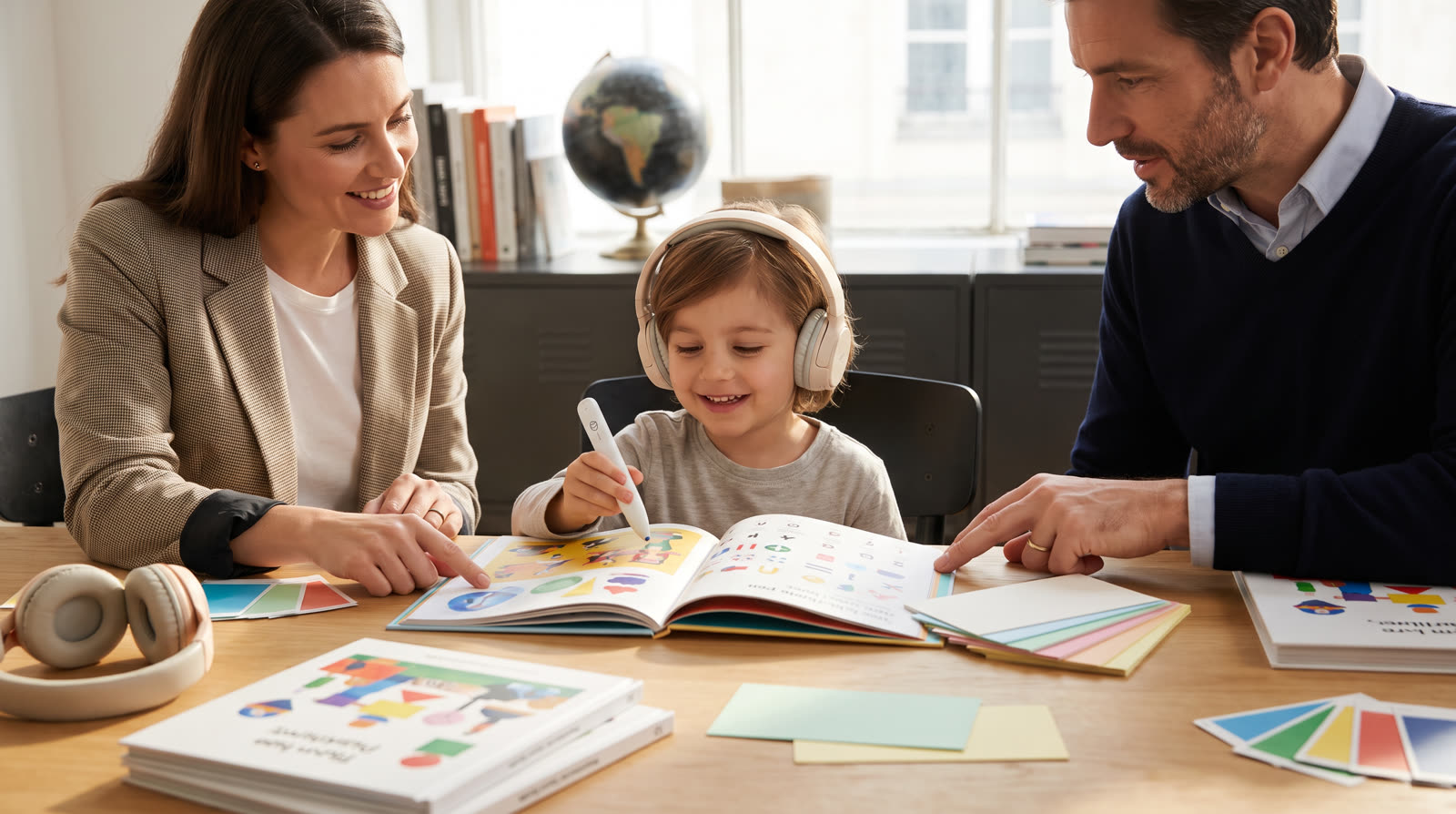
Content is the heart of any talking book program. For a multilingual initiative, the challenge lies in maintaining pedagogical integrity while adapting the material for different cultural contexts. This phase requires close collaboration between educators, translators, and audio engineers.
**Beyond Translation: Cultural Adaptation of Content
Simple word-for-word translation is often insufficient for children's educational materials. A buyer should ensure that the localization process includes "transcreation"—adapting the content to be culturally relevant while protecting intellectual property rights across different jurisdictions [3]. For example, idioms, social norms, and even the choice of illustrations may need to be adjusted to avoid cultural insensitivity or confusion in certain markets. A responsible procurement team should document the localization guidelines provided to the content creators to ensure consistency across all languages.
**Audio Production: Voice Talent and File Optimization
Audio quality is a primary driver of user experience. High-quality programs utilize professional, native-speaking voice actors. Buyers should consider voice characterization for engagement, clear pacing for learners, and optimized audio formats (like MP3 or proprietary variants) to balance quality and battery life. Modern talking books also benefit from layered soundscapes, including background music and sound effects, to create an immersive learning environment.
CTA — Send Your Requirements: If you are planning a multilingual literacy project and need a partner to handle complex content localization and hardware integration, send your company profile, target markets, and estimated quantity to info@readglo.com. Our team can help you navigate the technical and regulatory requirements for your specific region.
Phase 3: Technical Hardware Selection and OID Integration
| Component | Considerations for Buyers |
|---|---|
| **Storage Capacity** | 8GB is standard, but 16GB or 32GB may be needed for programs with dozens of high-quality audio books. |
| **Connectivity** | Bluetooth or WiFi allows for "cloud" updates and data tracking, which is valuable for school-based programs. |
| **Durability** | The outer shell should be made of high-impact ABS plastic to withstand being dropped by children. |
| **Speaker Quality** | A high-fidelity speaker is essential for clear pronunciation, especially in language learning. |
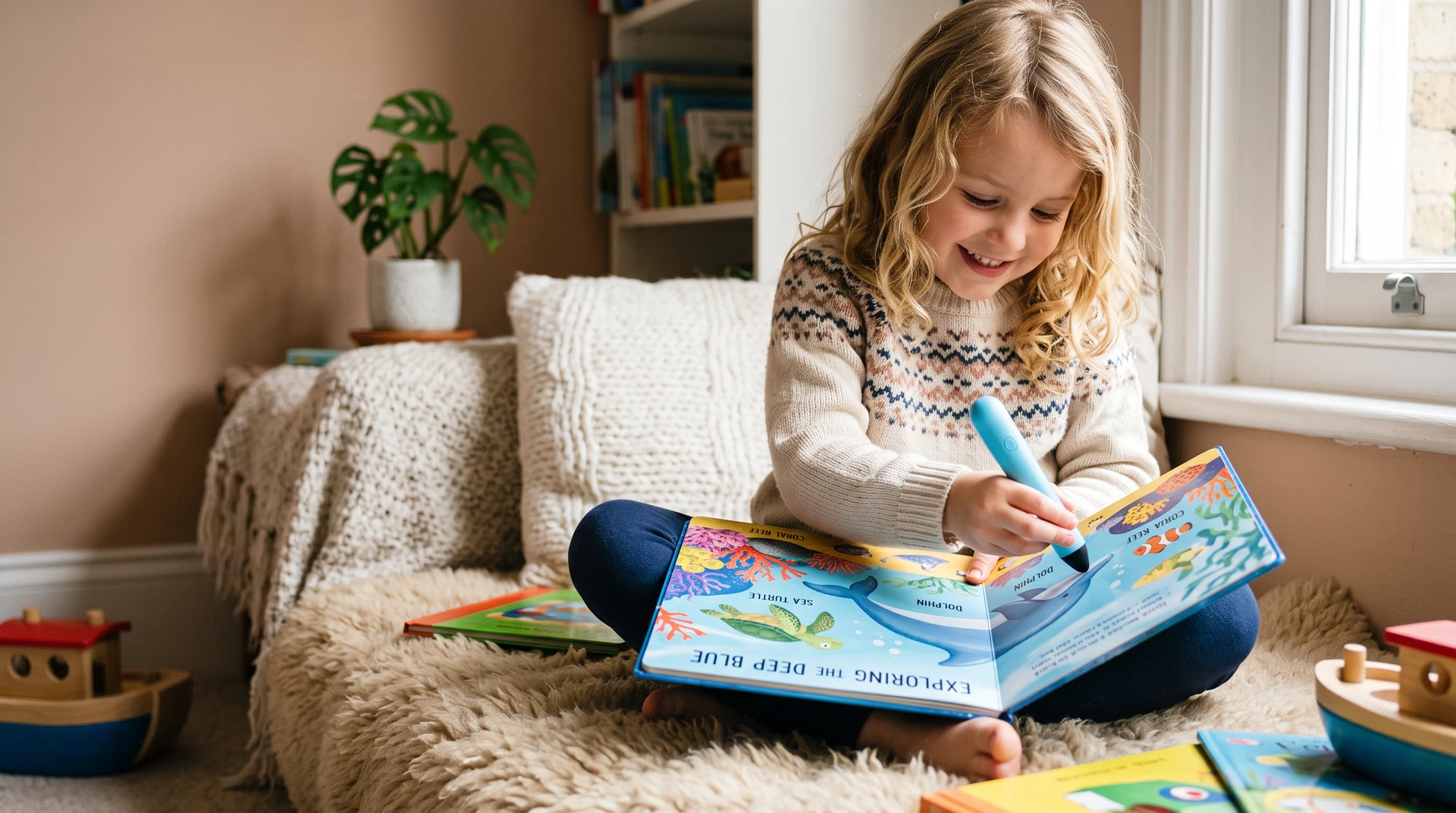
The "magic" of a reading pen lies in OID (Optical Identification) technology. A small camera in the tip of the pen reads nearly invisible dot patterns printed on the book's pages, which the pen's processor then translates into specific audio triggers.
**Choosing the Right OID Technology
There are several generations of OID technology, and the choice depends on the complexity of the books and the desired budget.
1. OID2: An older standard suitable for simple books with large touch areas. It has a limited number of unique codes. 2. OID3: The current industry standard for most professional talking books. It offers high code density, allowing for precise triggers even on small text or complex illustrations. 3. OID4/Digital OID: Newer iterations that offer even higher resolution and can sometimes be read through smartphone screens or other digital interfaces.
Buyers should ask their suppliers which OID version they utilize and ensure that the pen's sensor is compatible with the printing process intended for the books.
**Hardware Specifications for Different Markets
Different markets may have different hardware preferences. For instance, in markets with limited access to reliable electricity, a long battery life or the ability to use standard AAA batteries might be preferred over a built-in lithium-ion battery.
ReadGlo project support
Send Your Requirements
Share your target market, product scope, expected quantity and launch timing. Our team can prepare a relevant product, content or quality-control discussion.
Phase 4: The OID Coding and Printing Process
Integrating OID codes into a book's design is a highly technical process requiring specialized software and precision printing. Each interactive element—whether a word, sentence, or illustration—is assigned a unique OID code stored in a data file (e.g., .bnl or .ap) loaded onto the pen. Buyers should ensure suppliers maintain robust version control for these files across different languages.
**Printing Requirements: The Importance of Ink Opacity
OID codes are printed using carbon-based black ink that absorbs infrared light, while other colors use non-carbon inks. If standard black ink contains too much carbon, it interferes with the sensor. A responsible supplier should conduct ink-opacity tests and provide press proofs for approval. Buyers can request a print-check report to verify code readability across various lighting conditions.
Phase 5: Quality Control and Procurement Best Practices
| Inspection Category | Key Verification Points |
|---|---|
| **Functional Integrity** | Verification that every OID trigger point correctly activates the corresponding audio file without delay or error. |
| **Acoustic Performance** | Assessment of sound clarity, volume levels, and the absence of distortion or background noise in the recordings. |
| **Material Finish** | Physical inspection of the ABS plastic housing, button tactile feedback, and the binding quality of the talking books. |
| **Compliance Labeling** | Confirmation that all required market-specific markings (e.g., CE, FCC, UKCA, WEEE) are correctly applied and legible. |
To ensure the success of a multilingual program, buyers must implement a rigorous Quality Control (QC) framework. This framework should cover every stage from the initial prototype to the final loaded container, ensuring that the technical and linguistic requirements are met consistently across thousands of units.
**Sample Approval and the "Golden Sample"
Before mass production begins, the buyer must approve a "Golden Sample"—a final, production-ready version of the pen and books. This sample serves as the immutable benchmark for all subsequent quality inspections. A buyer should verify the following elements during the approval process:
**In-Process and Final Random Inspections (FRI)
A responsible procurement strategy involves multi-stage inspections to mitigate the risk of mass-production errors. Buyers should not rely solely on the factory's internal QC processes but should instead engage independent third-party inspection services to conduct standardized audits.
1. During Production Check (DUPRO): This inspection is typically conducted when 10% to 20% of the order has been completed. It allows for the early detection of systemic issues, such as printing misalignments or firmware bugs, before the entire batch is finalized. 2. Final Random Inspection (FRI): The most critical checkpoint, conducted when 100% of the goods are produced and at least 80% are packed. Inspectors use the ANSI/ASQ Z1.4 (AQL) standard to select a statistically significant sample size and check for critical, major, and minor defects.
Note on AQL Standards: For educational hardware, buyers typically set an AQL of 0 for critical defects (safety issues), 1.5 or 2.5 for major defects (functional failures), and 4.0 for minor defects (cosmetic issues). A responsible supplier should document their adherence to these limits in a formal inspection report.
Image Plan
| Image Details | Description |
|---|---|
| **Purpose** | To visualize the interaction between the OID reading pen and a multilingual book in a realistic educational setting. |
| **Insertion Position** | Following the "Phase 3: Technical Hardware Selection" section. |
| **Caption** | A high-precision OID sensor allows for seamless interaction across multiple languages in a single book. |
| **ALT Text** | A child using a white and blue reading pen to point at a colorful bilingual picture book on a wooden desk. |
| **AI Prompt** | A high-quality, realistic photograph of a child's hand holding a sleek, modern, white and blue electronic reading pen, pointing it at a vibrant, open children's picture book. The book shows illustrations of animals and text in two different languages. The scene is set on a clean wooden desk in a brightly lit, modern classroom or home library. No text, no logos, no trademarks. Natural lighting, shallow depth of field. |
In a professional B2B guide, visual aids are essential for illustrating the technical integration of hardware and content. The following images are recommended to enhance the reader's understanding of the OID system and the localization workflow.
| Image Details | Description | | :--- | :--- | | Purpose | To illustrate the quality control and inspection process for educational hardware. | | Insertion Position | Following the "Phase 5: Quality Control and Procurement Best Practices" section. | | Caption | Rigorous hardware testing and OID code verification are critical steps in the B2B procurement process. | | ALT Text | A technician in a clean laboratory environment inspecting a reading pen's electronic components. | | AI Prompt | A realistic, professional photograph of a technician wearing a white lab coat and anti-static wrist strap, carefully inspecting the internal circuit board and optical sensor of a disassembled reading pen. The background is a clean, organized electronics laboratory with testing equipment like multimeters and magnifying lamps. The focus is on the precision of the inspection. No text, no logos, no trademarks. |
FAQ: Frequently Asked Questions for B2B Buyers
Q1: How many languages can a single reading pen support? A1: Technically, the number of languages is limited only by the pen's storage capacity. Most modern pens with 8GB or 16GB of memory can store audio for hundreds of books in multiple languages. Buyers should plan their memory requirements based on the total duration of audio and the bit rate used for recording.
Q2: Can we use our own existing book designs for a reading pen program? A2: Yes, existing designs can be adapted. However, the files must be re-processed to include the OID code layer. This usually involves adjusting the black ink settings and ensuring there is enough "white space" or contrast for the sensor to read the codes effectively. A responsible supplier should provide a technical audit of your existing files to determine their suitability for OID integration.
Q3: What is the typical lead time for a custom multilingual program? A3: A standard timeline for a new program—from content localization and OID mapping to mass production and shipment—is typically 12 to 16 weeks. This accounts for the time needed for audio recording, sample approval cycles, and the precision required in the OID printing process. Buyers are encouraged to build in a buffer for regulatory testing and third-party inspections.
Conclusion
Planning a multilingual reading pen and talking book program is a multifaceted endeavor that requires a balance of educational vision and technical precision. By systematically addressing market regulations, content localization, hardware specifications, and rigorous quality control, B2B buyers can create high-impact literacy tools that resonate across borders. The key to success lies in choosing a manufacturing partner that understands the intricacies of OID technology and maintains transparent communication throughout the production lifecycle. Whether for a national literacy initiative or a niche educational product, a well-planned program ensures that the "magic" of a talking book is backed by the reliability of professional engineering.
CTA — Get a Quote: Ready to scale your educational content for international markets? Contact us at info@readglo.com with your project details, including company name, target languages, and desired shipment volume. Our consultants will provide a comprehensive quote and a technical roadmap for your multilingual reading pen program.
References
1. Consumer Product Safety Commission (CPSC) - Toy Safety Business Guidance 2. International Organization for Standardization (ISO) - ISO 8124-1:2022 Safety of toys 3. World Intellectual Property Organization (WIPO) - Managing Intellectual Property in the Book Publishing Industry 4. Association of American Publishers (AAP) - Literacy and Education Resources
Continue your research
Related reading pen buyer guides
Use these related guides to compare the next product, content, sourcing or channel decision in your project.
- Quality ControlHow Can an Educational Toy Importer Define a Golden Sample Acceptance Plan for Reading Pens?Read this guide
- Product SupportHow Should Portuguese-Speaking Channel Teams Prepare Rechargeable Talking-Pen Setup and Support?Read this guide
- Supplier VerificationHow Can B2B Buyers Identify Reliable Talking Pen Factories at the HK Toys & Games Fair?Read this guide
Continue with ReadGlo
See product specifications and request model-specific documentation.
ReadGlo project support
Get a Project Quote
Request product specifications, sample guidance or a tailored proposal for your reading pen, interactive book or distributor program.