Contents
Direct Answer
In the rapidly evolving landscape of educational technology (EdTech), sustainability has shifted from a "nice-to-have" feature to a core requirement for institutional procurement. As global distributors, educational brands, and institutional buyers look to align with Environmental, Social, and Governance (ESG) goals, a specific, high-stakes question has emerged: Is it technically and commercially viable for manufacturers to use recycled ocean plastics (rOP) for reading pen enclosures?
The short answer is yes, but with significant caveats regarding traceability, safety compliance, and technical performance. While several leading electronics manufacturers have begun integrating recycled ocean-bound plastics into their supply chains, B2B buyers must navigate a complex landscape of certifications and material specifications to ensure the final product meets the rigorous safety standards required for children's educational tools. This article provides a comprehensive deep dive into the feasibility, procurement frameworks, and technical realities of sourcing sustainable reading pens in 2026.
The Sustainability Shift in Educational Technology
The educational sector is one of the largest consumers of plastic-based electronics, from tablets and laptops to interactive reading pens. Historically, these devices have relied on virgin ABS (Acrylonitrile Butadiene Styrene) or PC (Polycarbonate) for their durability, high-quality finish, and ease of manufacturing. However, the push for a circular economy has led to an increased interest in "Ocean-Bound Plastic" (OBP)—plastic waste recovered from within 50km of coastlines where waste management is absent or inefficient.
For B2B importers and distributors, offering a product line made from recycled ocean plastics provides a powerful competitive advantage. It resonates with eco-conscious schools, government tenders that prioritize green procurement, and parents who are increasingly wary of the environmental footprint of their children's toys. In major markets, the transition toward circularity is driven by both consumer demand and emerging legislation.
Understanding Recycled Ocean Plastic (rOP) vs. Virgin Plastics
| Feature | Virgin ABS/PC | Recycled Ocean Plastic (rOP) | B2B Verification Tip |
|---|---|---|---|
| **Impact Strength** | High / Consistent | Variable (may require additives) | Request ISO 179/180 Test Reports |
| **Color Consistency** | Excellent | Challenging (slight variance) | Ask for Delta E (ΔE) color tolerance |
| **Surface Finish** | Glossy/Matte (Uniform) | May show "flow lines" or specks | Inspect samples under D65 light |
| **Chemical Purity** | Controlled | Risk of legacy contaminants | Verify REACH and RoHS compliance |
| **Traceability** | Direct from refinery | Requires Chain of Custody (CoC) | Demand GRS or OBP certificates |
| **Tensile Strength** | 40-50 MPa | 30-45 MPa (unfilled) | Compare Technical Data Sheets (TDS) |
| **UV Resistance** | High (with stabilizers) | Lower (requires re-stabilization) | Request Xenon Arc Weathering tests |
Not all recycled plastic is created equal. When a manufacturer claims to use "ocean plastic," buyers should clarify which category of material is being used. The origin of the plastic dictates its quality, price, and the level of processing required.
1. Ocean-Bound Plastic (OBP): This refers to plastic waste collected in areas where it is at high risk of ending up in the ocean (typically within 50km of a coastline). This is the most common source for electronics because the material is typically less degraded by UV exposure and salt water than plastic pulled directly from the sea. 2. Waterway Plastic: Recovered from rivers and canals before it reaches the ocean. This material is often cleaner than beach plastic but requires sophisticated filtration to remove organic matter. 3. Beach Plastic: Collected from shorelines. This material often suffers from significant UV degradation and salt contamination, making it brittle and difficult to use in high-precision electronics without heavy blending with virgin materials. 4. Deep Sea Plastic: Recovered directly from the ocean floor or floating patches. This is rarely used in high-precision electronics like reading pens due to extreme degradation and the high cost of recovery.
**Technical Comparison: Virgin vs. Recycled Ocean Plastic
The Lifecycle of Recycled Ocean Plastic: From Coastline to Classroom
To understand if a manufacturer is truly capable of producing rOP reading pens, buyers should understand the generic industrial process. A responsible supplier should be able to explain their material's journey:
1. Collection and Sorting: Local communities collect plastic waste from coastlines. The waste is sorted by polymer type (e.g., HDPE, PP, PET, ABS). For reading pens, ABS and PC are the primary targets. 2. Cleaning and Shredding: The plastic is washed to remove salt, sand, and organic residues. It is then shredded into small flakes. 3. Decontamination and Pelletizing: The flakes undergo a decontamination process to remove legacy chemicals. They are then melted and extruded into standardized plastic pellets. 4. Compounding: This is the most critical stage for electronics. Recycled pellets are mixed with virgin resins, impact modifiers, and colorants to create a "compound" that meets the specific technical requirements of a reading pen enclosure. 5. Injection Molding: The compound is injected into the reading pen molds. Precision temperature control is required to manage the unique melt-flow characteristics of recycled blends.
Technical Feasibility: Can rOP Meet Reading Pen Standards?
Reading pens are high-precision instruments. They house sensitive optical sensors, PCBAs, and lithium-ion batteries within a compact, ergonomic enclosure. Using recycled materials introduces several engineering challenges that a responsible supplier must address.
**1. Precision and Dimensional Stability The enclosure of a reading pen must fit perfectly to protect the internal components and ensure the optical sensor is aligned at the correct angle. Recycled plastics, particularly those sourced from diverse waste streams, can exhibit different shrinkage rates during the injection molding process. If the shrinkage is inconsistent, the pen's two halves may not snap together correctly, or the internal battery may rattle.
Buyer's Action: Ask the manufacturer: *"How do you control the Melt Flow Index (MFI) to ensure dimensional stability across different batches of recycled feedstock?"*
**2. Durability and Drop Testing Children are not gentle with their tools. Reading pens must survive frequent drops on hard surfaces, from classroom desks to tile floors. The mechanical recycling process—involving shredding, washing, and re-melting—can shorten polymer chains, potentially making the plastic more brittle.
To counteract this, a responsible supplier should use high-quality additives or "impact modifiers" (such as SBS or SEBS) to ensure the rOP enclosure meets standard drop-test requirements (e.g., surviving 10 consecutive 1.2-meter drops onto concrete).
**3. Aesthetic Integrity and Branding Educational brands often have strict color palettes. Achieving a pure "Apple White" or a specific pastel shade using 100% recycled ocean plastic is nearly impossible because the feedstock often contains residual pigments from its previous life.
Most manufacturers use a blend (e.g., 30% to 50% rOP mixed with virgin plastic) to maintain the desired aesthetic while still providing a valid environmental claim. Buyers should be wary of any supplier claiming "100% ocean plastic" for a perfectly white, high-gloss product without significant evidence.
B2B Procurement Note: Buyers should contact technical experts at info@readglo.com to discuss the specific balance of recycled content versus structural integrity for their custom projects.
Safety First: Compliance and Regulations for Recycled Materials
When dealing with products for children, safety is non-negotiable. Recycled plastics carry a higher risk of "legacy additives"—chemicals like lead, cadmium, or certain phthalates that were legal when the plastic was first produced but are now restricted.
**The Regulatory Framework To be sold in major markets, reading pens made from recycled plastic must comply with: * EN71 (Europe): Specifically Part 3 (Migration of certain elements) and Part 9 (Organic chemical compounds). These tests ensure that even if a child chews on the pen, no harmful chemicals will be ingested. * ASTM F963 (USA): The standard consumer safety specification for toy safety, which includes heavy metal limits and flammability tests. * REACH & RoHS: Ensuring the absence of hazardous substances in the plastic enclosure and internal electronics.
A manufacturer cannot simply state that their plastic is "safe." Buyers can and should request Batch-Specific Lab Reports from accredited third-party institutions (such as SGS, Intertek, or TÜV) to verify that the recycled feedstock is free from restricted substances.
ReadGlo project support
Send Your Requirements
Share your target market, product scope, expected quantity and launch timing. Our team can prepare a relevant product, content or quality-control discussion.
B2B Procurement Framework: How to Verify Sustainable Suppliers
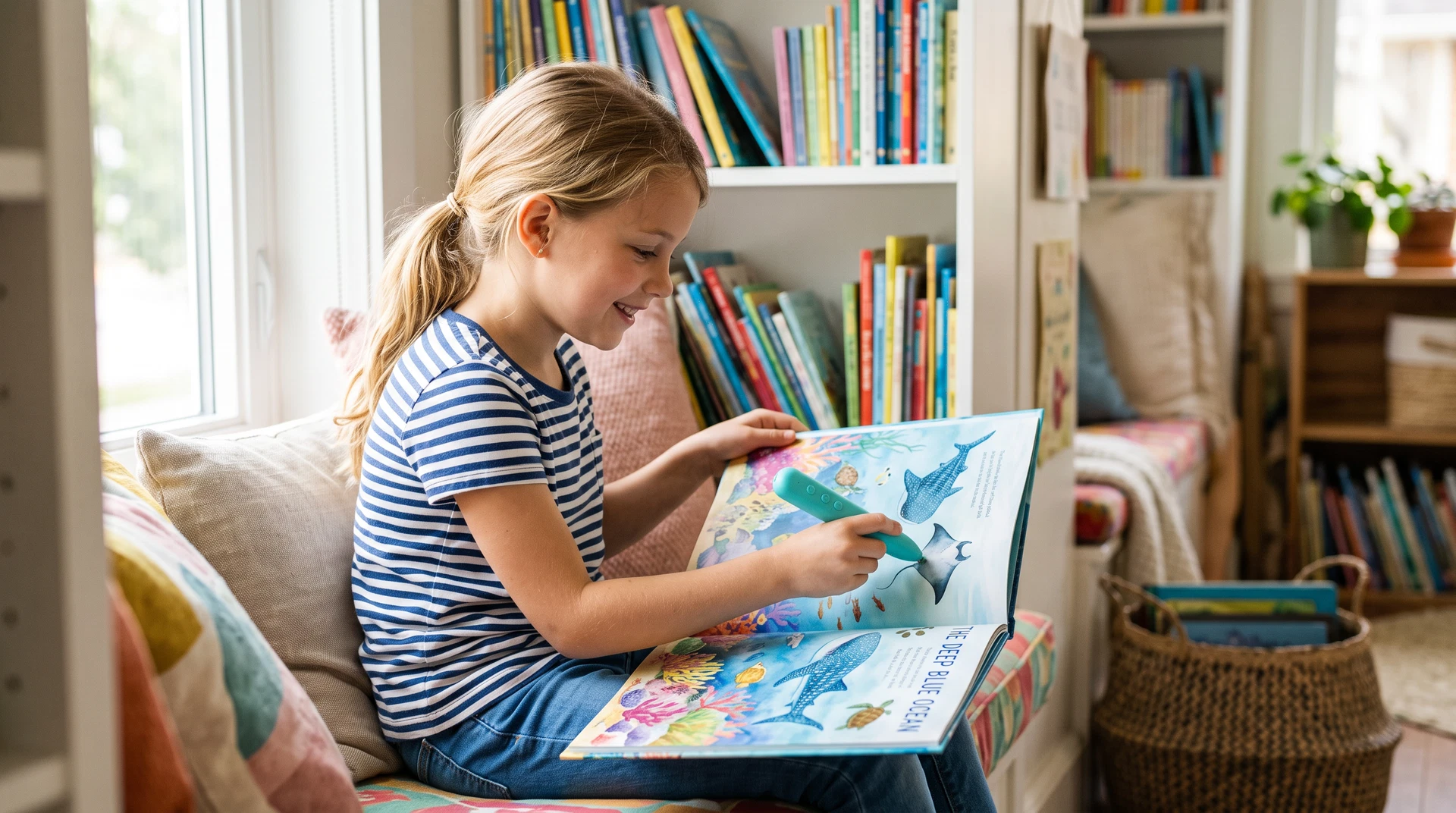
If you are looking to source reading pens with recycled ocean plastic enclosures, do not rely on marketing claims alone. Follow this due diligence framework to ensure your supply chain is both ethical and compliant.
**Step 1: Request Authoritative Certifications Look for suppliers who can provide one of the following "Chain of Custody" (CoC) certifications: * Global Recycled Standard (GRS): This is the gold standard. It tracks the recycled material through the entire supply chain and includes strict social and environmental requirements for the factory. A GRS certificate should list the specific percentage of recycled content. * OceanBound Plastic (OBP) Certification: Specifically verifies that the plastic was collected from high-risk coastal areas. This certification focuses on the *origin* of the waste. * OceanCycle: Provides 100% traceability from the collection point to the manufacturer, with a strong focus on ethical collection and community impact.
**Step 2: Review the Technical Data Sheet (TDS) Ask the supplier for the TDS of the specific resin blend they intend to use. Compare the tensile strength, flexural modulus, and notched Izod impact strength of the rOP blend against standard virgin ABS. If the numbers are significantly lower, the device may not survive institutional use.
**Step 3: Material Traceability and Mass Balance In some cases, manufacturers use a "Mass Balance" approach, where they mix recycled and virgin materials in a way that allows them to claim a certain percentage of recycled content across their total production. While valid under some standards, B2B buyers should clarify whether the *specific units* they are purchasing contain the recycled material or if it is a portfolio-level claim.
**Step 4: Factory Audits and Social Responsibility The "ocean plastic" narrative often involves manual collection by workers in developing nations. A responsible buyer should verify that the collection process is ethical. Does the supplier have a social audit (like BSCI or SMETA) that covers their material providers? Transparency in the "first mile" of collection is just as important as the final injection molding.
The Economic Reality: Cost vs. Value
It is a common misconception that recycled plastic is cheaper because it is "waste." In reality, the cost of collecting, cleaning, sorting, and certifying ocean-bound plastic is significantly higher than the cost of refining virgin petroleum.
For B2B buyers, the unit price of an rOP reading pen may be 10% to 25% higher than a standard version. However, the value proposition is different: * Higher Retail Margins: Consumers are often willing to pay a premium for sustainable products. * Institutional Preference: Many government and school tenders now include "sustainability" as a weighted criteria (often 10-20% of the total score). * Brand Loyalty: Building a reputation as a sustainable brand reduces long-term customer acquisition costs.
Logistics and Supply Chain Stability
Sourcing recycled materials can introduce volatility into the supply chain. Unlike virgin plastic, which is available in virtually unlimited quantities from global petrochemical giants, the supply of certified ocean-bound plastic can fluctuate based on collection seasons and regional disruptions.
Buyers should ask: * *"What is your backup plan if the certified rOP feedstock is unavailable?"* * *"How does the use of recycled materials affect your standard lead times?"* * *"Is there a minimum order quantity (MOQ) specifically for the rOP version of the product?"*
The Future of Eco-Friendly EdTech: Beyond the Enclosure
The transition to recycled ocean plastics is just the beginning of the green revolution in educational technology. We are seeing a move toward "Design for Disassembly," where reading pens are built to be easily repaired or recycled at the end of their life.
**Future Trends to Watch: * Bio-based Plastics: Derived from corn, sugarcane, or algae. While currently less durable than ABS, research is closing the gap. * Post-Consumer Recycled (PCR) Electronics: Using plastic from old computers and phones to make new reading pens. * Carbon-Neutral Manufacturing: Factories powered entirely by renewable energy, offsetting the remaining carbon footprint of the plastic production.
The technology exists to create high-quality reading pens from recycled ocean waste, provided the supplier is committed to transparency and rigorous testing.
Inquiry Opportunity: For a detailed breakdown of sustainable material options and a custom quote for your next educational product launch, please reach out to our procurement team at info@readglo.com.
FAQ: Sourcing Recycled Plastic Reading Pens
Q1: Is recycled ocean plastic as safe as virgin plastic for children? Yes, provided it has been properly processed and tested. A responsible supplier must ensure the material complies with EN71 and ASTM F963 standards. Because recycled plastics can contain legacy contaminants, buyers should always request batch-specific chemical test reports (REACH/RoHS) to verify safety.
Q2: Can I get a reading pen with a high-gloss finish using recycled plastic? Yes, but it is technically challenging. Recycled plastics often have a slightly different surface tension, which can affect the "glossiness." Many manufacturers use a "varnish" or a high-quality mold finish to achieve the desired look. Inspecting a physical sample is essential.
Q3: How does the durability of rOP compare to virgin ABS? Unmodified recycled plastic is generally more brittle. However, when compounded with "impact modifiers" and virgin resins, the durability can match or even exceed standard virgin plastic. Always request a standardized drop-test report (e.g., MIL-STD-810G or similar).
Q4: How can I verify the "Ocean Plastic" claim to my own customers? The most effective way is to provide a copy of the Transaction Certificate (TC) from the Global Recycled Standard (GRS). This document links your specific purchase order to the certified recycled material, providing an auditable trail that you can share with retailers and institutional buyers.
Q5: What is the typical MOQ for custom-colored rOP pens? Because the compounding process for recycled plastic is specialized, MOQs are often higher than for standard colors—typically ranging from 3,000 to 5,000 units, depending on the manufacturer's capacity.
Conclusion
The demand for recycled ocean plastic reading pen enclosures is a reflection of a broader global shift toward sustainable education. While the technical challenges—ranging from dimensional stability to impact resistance—are real, they are not insurmountable for manufacturers with the right expertise and quality control systems.
For B2B importers, distributors, and educational brands, the path forward involves moving beyond the "green" label and conducting deep due diligence. By demanding GRS certifications, reviewing technical data sheets, and insisting on third-party safety testing, you can provide your customers with products that are as good for the planet as they are for the classroom. Choosing the right manufacturing partner is the most critical step in the transition to a circular economy in EdTech.
**References 1. OECD Due Diligence Guidance for Responsible Supply Chains in the Electronics Sector 2. Global Recycled Standard (GRS) Implementation Guide - Textile Exchange 3. Ocean Bound Plastic (OBP) Certification Program Standards and Guidelines 4. ASTM F963-23 Standard Consumer Safety Specification for Toy Safety - Official Portal 5. European Standard EN 71 - Safety of Toys: Requirements and Test Methods
Continue your research
Related reading pen buyer guides
Use these related guides to compare the next product, content, sourcing or channel decision in your project.
- Compliance & SafetyHow Can B2B Buyers Verify Strict Quality Control for Sharp Edges and Points in Plastic Toy Manufacturing?Read this guide
- OEM GuideWhere Can I Find a Reliable Children’s Talking Pen Factory in China?Read this guide
- Compliance & SafetyHow to Verify WEEE Directive Compliance for Electronic Reading Pen Manufacturers in Guangdong?Read this guide
Continue with ReadGlo
See product specifications and request model-specific documentation.
ReadGlo project support
Get a Project Quote
Request product specifications, sample guidance or a tailored proposal for your reading pen, interactive book or distributor program.