
Contents
Introduction
When educators, school district procurement officers, and educational toy distributors evaluate interactive audio devices for early childhood literacy, power source selection is frequently treated as a purely logistical specification. However, from a developmental psychology and instructional design perspective, the choice between a rechargeable reading pen (typically utilizing integrated lithium-ion battery systems) and a battery-powered reading pen (utilizing replaceable alkaline or NiMH AA/AAA cells) directly influences learning value, instructional continuity, and cognitive engagement. Audio-enabled reading pens transform static picture books into multisensory learning environments by decoding invisible optical micro-codes printed on paper pages and triggering synchronized audio tracks, phonics sounds, vocabulary prompts, or storytelling narratives. When a child engages with these tools, uninterrupted focus—often referred to in educational literature as flow state—is paramount for phonological processing, vocabulary acquisition, and independent exploration. This comprehensive B2B analysis examines how power delivery mechanisms impact pedagogical efficacy, device reliability, operational safety, and supply chain selection for publishers, brand owners, and educational institutions.
1. Pedagogical Foundations of Uninterrupted Literacy Engagement
The Role of Cognitive Flow in Early Reading Development
Early childhood literacy acquisition relies heavily on sustained attention and active multisensory participation. According to early literacy guidelines published by organizations such as the American Academy of Pediatrics (AAP) available at AAP Early Literacy, young learners benefit immensely from consistent, responsive interactions between printed text and spoken language. Interactive reading pens bridge this gap by offering instant auditory feedback when the optical sensor contacts coded paper. When a device experiences sudden power loss or voltage sag due to fading alkaline batteries, the interruption breaks the child's cognitive flow. Rechargeable lithium-ion reading pens generally maintain a stable output voltage throughout their discharge cycle, ensuring consistent speaker volume, prompt optical recognition, and zero audio stutter. For educational settings and independent toddler exploration, this technological stability preserves the integrity of the learning loop, preventing frustration and maintaining engagement during phonics drills and guided storytelling sessions.
Power Stability, Audio Fidelity, and Phonemic Clarity
Phonemic awareness requires precise auditory discrimination. Distorted audio, muffled speaker outputs, or lagging response times caused by weak power sources can hinder a child's ability to distinguish subtle phonetic nuances, such as plosive consonants or vowel blends. Battery-powered devices using disposable alkaline cells experience a gradual voltage drop from 1.5V per cell toward 1.0V as energy depletes. This voltage decline often results in noticeable degradation in sound quality, reduced maximum volume, and occasional sensor timeout. Conversely, rechargeable reading pens equipped with regulated DC-DC power management circuits maintain consistent operating voltage until battery capacity is nearly exhausted. B2B buyers evaluating sample specifications during manufacturer reviews must examine power regulation schematics to ensure that audio output pressure levels (SPL) and speech clarity remain uniform across the entire operational window between charges or battery replacements.
2. Operational Reliability, Usage Scenarios, and Classroom Integration
Classroom Management and Daily Charging Workflows
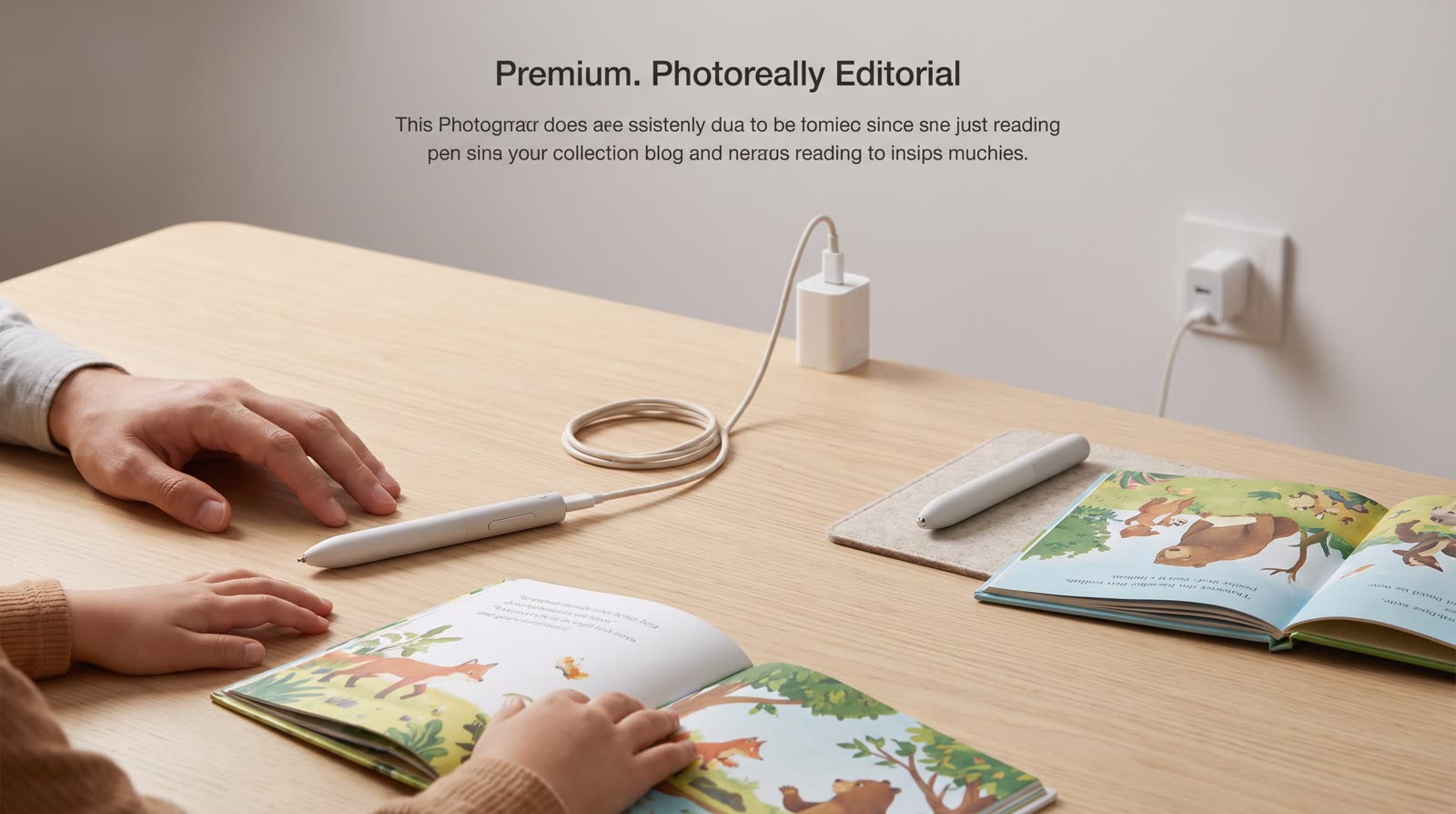
In structured educational environments, such as kindergarten classrooms, language learning centers, and special education support rooms, device readiness directly impacts instructional time. Rechargeable reading pens housed in multi-bay charging docks offer centralized management, allowing educators to place pens into charging slots at the end of each school day. This workflow eliminates the recurring administrative burden of stocking, distributing, and replacing disposable batteries. However, rechargeable systems require consistent access to power outlets and managed charging infrastructure. Battery-powered reading pens offer an alternative deployment model for remote, rural, or low-infrastructure regions where reliable electricity is scarce. In such contexts, replacing AA or AAA alkaline batteries allows immediate device restoration without waiting for charging cycles, illustrating how target market operational environments dictate optimal pedagogical hardware choices.
Independent Exploration and Toddler Ergonomics
Independent exploration is a core tenet of Montessori and constructivist educational models. When toddlers use reading pens independently, device weight, balance, and casing integrity influence learning outcomes. Rechargeable reading pens often feature streamlined, sealed injection-molded casings because they do not require a removable battery compartment door. This seamless exterior improves ergonomic grip and reduces points of ingress for moisture, dust, or small objects. Battery-powered pens, conversely, require compartment doors secured by screws or latches to comply with safety standards for children's products. Procurement teams must review product engineering documentation to verify that battery doors feature child-resistant locking mechanisms that prevent accidental access to small power cells while ensuring comfortable handling for small hands.
ReadGlo project support
Get a Quote
Explore ReadGlo's customizable rechargeable and battery-powered reading pen lines and interactive book sets for your market distribution.
3. Supply Chain, Compliance, and Lifecycle Economic Considerations
Regulatory Compliance and Safety Standards for Power Sources
Children's electronic educational devices are subject to rigorous international safety standards. According to the U.S. Consumer Product Safety Commission (CPSC) guidance for children's products available at CPSC Children's Products, items containing lithium-ion batteries or accessible battery compartments must meet stringent mechanical, electrical, and thermal safety requirements. Rechargeable pens require robust Battery Management Systems (BMS) with overcharge, short-circuit, and thermal protection circuits. Battery-powered pens must comply with standards governing coin cell and cylindrical battery ingestion hazards (such as Reese's Law requirements in relevant jurisdictions), ensuring that battery compartments cannot be easily opened by children without tools. Importers and brand owners must verify that manufacturing partners provide comprehensive third-party testing reports covering electrical safety, EMC compliance, and chemical restrictions (such as RoHS and REACH) prior to finalizing supply agreements.
Lifecycle Cost Analysis and Environmental Sustainability
When developing product catalogs and B2B pricing models, brand owners must balance upfront manufacturing costs against long-term operational expenditures. Rechargeable reading pens involve higher initial bill-of-materials (BOM) costs due to integrated lithium-ion cells, charging ICs, and USB-C or dock interfaces. However, they eliminate ongoing consumable costs for end-users and generate significantly less electronic waste over their operational lifecycle. Battery-powered pens offer a lower initial procurement cost but impose ongoing consumable expenses on schools or families. Furthermore, growing institutional emphasis on environmental, social, and governance (ESG) criteria makes rechargeable, long-lifecycle educational tools increasingly attractive for public tender bids and corporate social responsibility (CSR) procurement guidelines.
4. Step-by-Step B2B Procurement and Specification Evaluation Framework
Evaluating Sample Units and Technical Documentation
Procurement officers, brand managers, and educational distributors should follow a systematic evaluation protocol when selecting between rechargeable and battery-powered reading pen lines. First, request comprehensive specification sheets detailing battery chemistry, nominal capacity (mAh), expected charge-discharge cycles, and power consumption profiles during optical scanning and audio playback. Second, conduct sample evaluations under simulated real-world conditions: test audio response latency, speaker distortion at low battery levels, and ergonomic grip comfort for the target age cohort. Third, review factory quality control (QC) procedures, including aging tests (burn-in testing), drop resistance tests, and battery safety certifications. Ensure that all technical claims align with written supplier warranties and quality assurance agreements.
When to Consult Compliance Specialists and Educational Experts
Navigating power source selection for educational technology requires cross-functional expertise. Brand owners and distributors should consult qualified electrical engineers and compliance testing agencies when exporting to regions with strict battery transport and safety regulations (such as UN38.3 transport certification for lithium-ion batteries). Similarly, when designing interactive book content or phonics curricula intended for special education or early childhood development programs, collaboration with educational psychologists and reading specialists ensures that device ergonomics and audio pacing support diverse learning needs without creating cognitive overload. Organizations should never attempt internal modifications or bypass safety certifications; any technical anomalies must be escalated directly to certified manufacturing partners.
Frequently Asked Questions
Do rechargeable reading pens offer better audio clarity than battery-powered models?
Rechargeable reading pens utilizing regulated lithium-ion power sources maintain a stable voltage output throughout their discharge cycle, preventing the volume drops and audio distortion that can occur when alkaline batteries deplete. This stability supports clear phonemic modeling for early literacy learners.
What safety standards apply to rechargeable lithium-ion reading pens?
Rechargeable reading pens must comply with international safety regulations covering electrical and thermal performance, including UN38.3 for battery transport, EMC directives, and general children's product safety standards outlined by bodies such as the CPSC.
How should educational institutions manage charging workflows for rechargeable pens?
Institutions typically deploy multi-bay charging docks placed in centralized storage or media rooms. Pens are docked at the end of each instructional day to ensure 100% readiness for subsequent sessions, eliminating the need to manage disposable battery inventories.
Are battery-powered reading pens safer regarding chemical and thermal risks?
Both designs carry specific safety considerations. Battery-powered pens eliminate lithium thermal risks but require secure, child-resistant battery compartments to prevent ingestion or tampering. Rechargeable units enclose the power source within sealed housings, eliminating user access to cells.
How do procurement teams verify supplier compliance for reading pen power systems?
Procurement teams should require third-party laboratory test reports, battery safety certificates, BOM audits, and sample durability test results before approving mass production runs or signing exclusive distribution agreements.
Conclusion
In summary, the choice between a rechargeable reading pen and a battery-powered reading pen extends far beyond simple hardware preferences; it directly influences cognitive flow, audio fidelity, classroom management workflows, and long-term educational value. Rechargeable systems provide superior voltage stability, consistent audio performance, and streamlined environmental profiles suited for institutional and structured home learning environments. Conversely, battery-powered models offer immediate deployment flexibility in regions with limited electrical infrastructure, provided strict child-safe compartment standards are maintained. By adhering to rigorous sample evaluation protocols, verifying compliance with international safety authorities such as the CPSC, and aligning product specifications with target market pedagogical needs, B2B buyers and educational brand owners can deliver robust, high-value interactive reading solutions that foster lifelong literacy skills.
Continue your research
Related reading pen buyer guides
Use these related guides to compare the next product, content, sourcing or channel decision in your project.
- Product ComparisonEvaluating Long-Term Cost: Rechargeable vs. Battery-Powered Reading Pens in B2B SourcingRead this guide
- Product ComparisonWhat is the Difference Between a Rechargeable Reading Pen and a Battery-Powered Reading Pen in Terms of Content Compatibility?Read this guide
- Product ComparisonWhat Is the Difference Between a Rechargeable Reading Pen and a Battery-Powered Reading Pen in Terms of Screen-Free Use?Read this guide
Continue with ReadGlo
See product specifications and request model-specific documentation.
ReadGlo project support
Ask for Product Catalog
Ready to expand your educational product portfolio? Contact our B2B team for detailed specification sheets, sample kits, and OEM/ODM partnership opportunities.