
Contents
Introduction
When educational publishers, toy distributors, and institutional buyers evaluate interactive audio devices for early childhood development, power delivery is a foundational architectural choice. Both rechargeable lithium-ion battery configurations and replaceable alkaline battery designs serve the core objective of screen-free learning, yet they introduce distinct operational profiles, user experiences, and supply chain requirements. Screen-free interactive reading relies entirely on tactile book interaction, optical sensor scanning, and auditory feedback without digital displays or emitting screens, aligning with developmental guidelines that encourage tactile-auditory integration. This comprehensive B2B analysis examines the structural, operational, and user experience differences between rechargeable and battery-powered reading pens, offering structured guidance for manufacturers, publishers, and educational buyers navigating product specification, safety compliance, and market alignment.
1. Core Technological and Operational Overview of Power Delivery in Talking Pens
Internal Battery Architecture: Rechargeable Li-ion vs. Replaceable Alkaline Cells
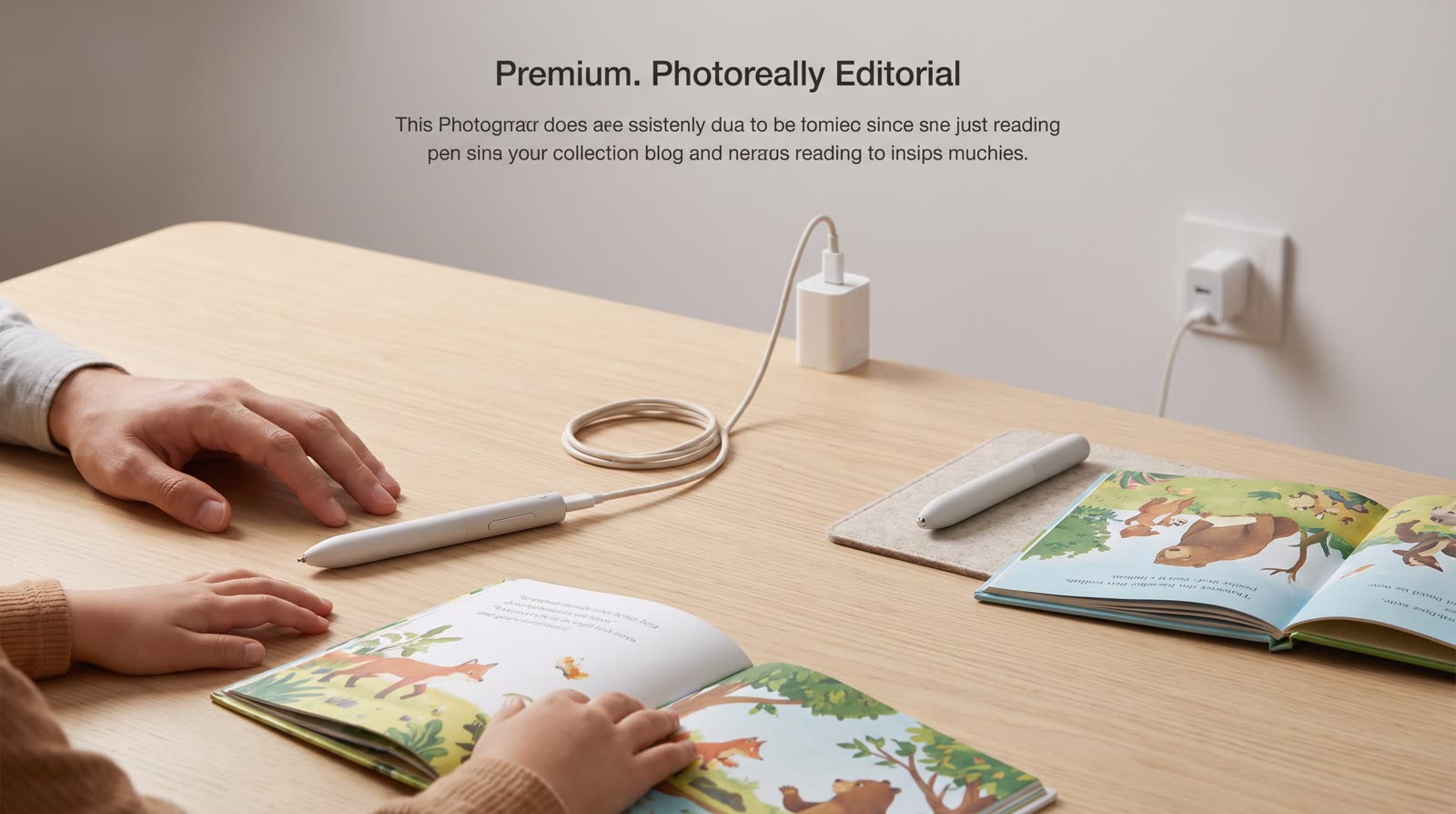
The primary distinction between rechargeable reading pens and traditional battery-powered models lies in their internal energy storage and delivery architecture. Rechargeable reading pens utilize integrated lithium-ion or lithium-polymer battery cells housed within the sealed ABS or PC-ABS enclosure, recharged via USB-C or micro-USB interfaces. Conversely, battery-powered reading pens rely on user-replaceable cells—typically AAA or AA alkaline batteries—accessible through a secured battery compartment door. In a B2B manufacturing context, each architecture dictates distinct circuit board layouts, power management integrated circuits (PMICs), and charging safety circuit designs. Rechargeable systems require built-in overcharge, over-discharge, and short-circuit protection modules on the PCB, whereas battery-powered units emphasize reverse-polarity protection and mechanical spring contact integrity. Educational publishers and brand owners must weigh these underlying electrical engineering parameters when defining product tiering, cost structures, and target retail price points for global distribution.
Impact on Uninterrupted Screen-Free Engagement and Usability Lifecycles
Screen-free educational tools are valued for their ability to foster sustained concentration, tactile exploration, and independent reading habits without the cognitive fatigue associated with digital screens. However, power source selection directly influences how children and caregivers experience uninterrupted engagement. Rechargeable pens offer consistent voltage output throughout their discharge cycle, maintaining stable optical sensor reading accuracy and audio amplifier volume until battery depletion. When power runs low, the device requires a recharging period, which can temporarily interrupt reading routines unless managed proactively. Battery-powered pens, on the other hand, provide immediate restoration of full power simply by swapping depleted cells for fresh ones, eliminating downtime. Yet, as alkaline batteries discharge, voltage sag can occur, potentially affecting peak audio output clarity if not regulated by robust step-up DC-DC converters. Publishers must evaluate these operational dynamics against expected classroom or home usage frequency, ensuring that the chosen power profile aligns with early childhood engagement patterns.
Manufacturing Standards, Component Sourcing, and Supply Chain Specifications
From a supply chain and contract manufacturing perspective, sourcing rechargeable versus battery-powered reading pens involves distinct quality assurance protocols and regulatory compliance pathways. Rechargeable units require strict adherence to international transport and safety certifications for lithium-ion batteries, including UN38.3 testing for air and sea freight, IEC 62133 safety standards for secondary cells, and electromagnetic compatibility (EMC) directives. Component sourcing involves qualifying reputable battery cell vendors, managing battery aging characteristics, and ensuring rigorous factory inspection during battery pack welding and PCB integration. Battery-powered models shift compliance focus toward mechanical safety, specifically battery compartment locking mechanisms, prevention of user access by young children, and compliance with toy safety standards such as ASTM F963 and EN71 regarding battery ingestion hazards. Procurement teams must conduct thorough specification reviews, sample audits, and pre-production risk assessments to ensure that chosen manufacturing partners maintain rigorous traceability and quality control across all electrical and mechanical sub-assemblies.
2. Screen-Free Learning Dynamics: User Experience, Autonomy, and Habit Formation
Maintaining Continuous Tactile and Auditory Focus Without Digital Distractions
The pedagogical rationale for talking pens and interactive picture books centers on multi-sensory learning—combining visual book illustrations, tactile page turning, and auditory narration without visual screen mediation. Both rechargeable and battery-powered pens achieve this screen-free objective by eliminating backlighting, blue light exposure, and algorithmic distraction loops. However, the operational continuity of power delivery shapes how children maintain focus. When a child is deeply engrossed in a phonics story or interactive dialogue, unexpected device shutdown can break immersion. Rechargeable pens provide predictable battery level indicators (such as multi-color LED alerts or audio low-battery prompts), allowing parents or educators to recharge devices overnight. Battery-powered pens allow instant power renewal, which can be advantageous in high-traffic kindergarten environments where charging infrastructure is limited. Educational researchers emphasize that regardless of the power mechanism, the absence of screens encourages children to anchor their attention on the physical book surface, supporting deeper cognitive processing and language comprehension.
Child Ergonomics, Weight Distribution, and Independence in Daily Practice
Ergonomics and physical design are critical parameters for toddler-friendly educational hardware. Rechargeable pens often feature streamlined, lightweight tubular casings because internal lithium-ion pouch cells can be tailored to compact form factors, reducing overall hand fatigue during extended reading sessions. However, the permanent internal battery contributes to a fixed weight distribution that remains constant throughout use. Battery-powered pens require space to house two or more AAA or AA cells, which can increase the barrel diameter and overall weight, particularly near the battery chamber. For young children developing fine motor skills and grip strength, weight balance significantly impacts independent handling. Manufacturers and product designers must carefully calculate center-of-gravity placement, tactile grip textures, and button placement to ensure that children can hold, lift, and maneuver the reading pen effortlessly, fostering autonomy in daily reading routines at home, in preschool classrooms, or during travel.
Supporting Diverse Learners and Early Literacy Environments Safely
In diverse learning environments—including early childhood centers, speech-language therapy practices, and homes supporting bilingual development or diverse learning needs—operational reliability is paramount. According to guidance from organizations such as the American Academy of Pediatrics (AAP) and Reading Rockets, early literacy tools should support adult-child interaction, predictable routines, and sensory regulation without overstimulating digital artifacts. Rechargeable pens eliminate the risk of loose battery components in shared environments, reducing potential choking hazards associated with displaced battery covers. Conversely, battery-powered pens offer operational flexibility in remote or travel settings where stable electrical power grids are absent or unreliable. When advising educators, retailers, or parents, B2B stakeholders must transparently communicate these operational trade-offs, ensuring that product positioning matches the specific environmental context and supervisory capacity of the end-user.
ReadGlo project support
Request Product Catalog
Explore ReadGlo's customizable rechargeable and battery-powered talking pen series designed for global educational publishers and distributors.
3. Procurement, Safety Compliance, and Battery Management Guidelines
Electrical Safety, Charging Protocols, and CPSC Compliance Frameworks
Product safety is non-negotiable in the children's educational toy and publishing sector. Adherence to safety standards established by agencies such as the U.S. Consumer Product Safety Commission (CPSC) governs every aspect of electrical and mechanical design. For rechargeable reading pens, safety protocols focus on thermal management, overcurrent protection, and charger compatibility. Manufacturers must integrate certified charging management ICs to prevent overheating during USB power delivery. For battery-powered reading pens, safety protocols emphasize mechanical containment—specifically, requiring tools or dual-action latches to open battery compartments, thereby preventing young children from accessing coin or cylindrical cells. Independent of power type, users and institutional buyers must adhere to low-risk external maintenance practices: never attempt to disassemble the device casing, avoid exposing electronics to moisture or extreme temperatures, and immediately discontinue use and charging if physical anomalies such as swelling, abnormal heat, leakage, or smoke are detected. Consulting official CPSC educational resources ensures that procurement specifications meet rigorous consumer safety expectations.
Evaluating Supplier Specifications, Quality Assurance, and Sample Inspection
For B2B buyers—including publishing houses, toy brands, and educational distributors—establishing a rigorous specification review and sample inspection protocol is essential before committing to volume production. Procurement teams must scrutinize factory documentation, including battery supplier datasheets, circuit schematics, PCB layout verification reports, and third-party test certificates for electrical safety and electromagnetic compliance. During sample evaluation, quality assurance checklists should verify battery charge retention, discharge curve stability, optical sensor calibration under varying battery voltages, audio amplifier distortion thresholds, and mechanical drop-test durability. Documenting these evaluation steps in standard operating procedures (SOPs) ensures supply chain transparency and minimizes post-delivery defects. Buyers should collaborate closely with manufacturing partners to establish clear acceptance criteria for incoming raw materials and finished goods prior to pre-shipment inspection.
Handling Storage, Maintenance, and Post-Purchase End-User Support
Long-term product reliability extends beyond the factory floor into warehouse storage, retail display, and end-user maintenance. Rechargeable lithium-ion reading pens require specific inventory management protocols: batteries must be maintained at a partial charge state (approximately 50%) during extended warehouse storage to prevent deep discharge degradation, and periodic top-up charges must be scheduled for inventory held longer than six months. Battery-powered pens require clear end-user instructions regarding battery removal during prolonged non-use to prevent alkaline leakage and terminal corrosion. B2B brand owners must provide comprehensive user manuals, troubleshooting guides, and responsive customer support frameworks that address common power-related inquiries. Providing transparent maintenance guidelines enhances brand reputation, reduces return rates, and fosters long-term consumer trust across retail and institutional channels.
4. B2B Decision Framework: Selecting the Right Power Configuration for Your Market
Assessing Retail Channel Requirements and Target Demographic Preferences
Choosing between rechargeable and battery-powered reading pen configurations depends heavily on the intended sales channel, retail environment, and target demographic preferences. Direct-to-consumer (DTC) premium gift sets and modern e-commerce channels often favor rechargeable models due to their sleek consumer electronics appeal, USB-C convenience, and perceived high-end value. Conversely, mass-market retail channels, institutional kindergarten suppliers, and regions with intermittent electrical grid access may prefer battery-powered models that offer immediate usability without requiring charging cables or wall adapters. Product managers and commercial strategists must analyze regional consumer preferences, packaging limitations, and accessory inclusion costs to determine the optimal product configuration for each target market segment.
Reviewing Regional Regulatory Standards and Environmental Compliance
Global distribution requires strict compliance with regional environmental and electronic waste regulations. Rechargeable reading pens fall under Battery Directives, WEEE (Waste Electrical and Electronic Equipment) regulations, and RoHS compliance standards governing hazardous substances in electronic components. Importers must verify that battery suppliers and manufacturing facilities possess valid recycling certifications and environmental audit reports. Battery-powered units must comply with local regulations regarding single-use battery disposal labeling and consumer advisory notices. Collaborating with compliance specialists and testing laboratories ensures that all export documentation, labeling, and material declarations meet the statutory requirements of destination markets across North America, Europe, Asia-Pacific, and emerging global regions.
Collaborative Product Development and Specification Verification Protocols
Successful B2B partnerships rely on structured, collaborative product development frameworks that bridge publishing content design with hardware engineering. When co-developing interactive book and talking pen ecosystems, publishers and manufacturers must establish joint technical reviews to align book-code encoding algorithms, audio file compression standards, memory capacity (SPI flash size), and power consumption profiles. Engaging in thorough specification verification—from initial prototype testing to pilot runs and pre-shipment inspections—ensures that the final product delivers flawless screen-free educational value. Stakeholders seeking to expand their product lines can initiate formal specification discussions, request sample evaluations, and review custom OEM/ODM capabilities through structured industry channels.
Frequently Asked Questions
What are the primary differences between rechargeable and battery-powered reading pens in screen-free learning?
Rechargeable reading pens use integrated lithium-ion batteries charged via USB, offering consistent voltage and sleek ergonomics, whereas battery-powered pens use replaceable alkaline cells, allowing instant power renewal by swapping batteries without downtime.
How do rechargeable and battery-powered reading pens support screen-free childhood development?
Both models support screen-free learning by eliminating digital displays and emitting screens, encouraging children to focus entirely on physical book illustrations, tactile page turning, and auditory narration.
What safety guidelines should be followed regarding reading pen batteries?
Users should adhere to low-risk external checks, never attempt to disassemble device casings, avoid moisture and extreme temperatures, and immediately stop using and charging devices if swelling, leakage, or abnormal heat occurs, following guidelines from agencies like the CPSC.
How should B2B buyers choose between rechargeable and battery-powered models for their target market?
B2B buyers should evaluate target retail channels, end-user demographics, regional electrical infrastructure, regulatory compliance requirements, and institutional usage patterns to determine the optimal power configuration.
Where can publishers and distributors verify technical specifications and safety standards?
Publishers and distributors should consult official regulatory bodies such as the Consumer Product Safety Commission (CPSC) for child safety standards and Google Search Central for digital content and helpful content guidelines, while working directly with qualified manufacturing partners for specification audits.
Conclusion
In summary, the choice between a rechargeable reading pen and a battery-powered reading pen involves balancing operational convenience, user ergonomics, manufacturing compliance, and target market preferences. While rechargeable units offer modern USB charging and consistent performance, battery-powered alternatives provide instant power renewal and operational flexibility in diverse environments. Both configurations uphold the core principles of screen-free interactive learning by fostering tactile engagement, independent reading habits, and multi-sensory literacy development without digital distractions. B2B buyers, publishers, and distributors must conduct rigorous specification reviews, safety audits, and sample evaluations in collaboration with experienced manufacturing partners to deliver reliable, high-quality educational products to global markets.
Continue your research
Related reading pen buyer guides
Use these related guides to compare the next product, content, sourcing or channel decision in your project.
- Product ComparisonEvaluating Long-Term Cost: Rechargeable vs. Battery-Powered Reading Pens in B2B SourcingRead this guide
- Product ComparisonWhat is the Difference Between a Talking Picture Book and an Ordinary Picture Book in Terms of Content Compatibility?Read this guide
- Product ComparisonWhat is the Difference Between a Rechargeable Reading Pen and a Battery-Powered Reading Pen in Terms of Content Compatibility?Read this guide
Continue with ReadGlo
See product specifications and request model-specific documentation.
ReadGlo project support
Get a Quote
Contact our B2B team to discuss your project specifications, sample reviews, and custom OEM/ODM requirements for interactive reading pen ecosystems.