
Contents
Introduction
When educational institutions, retail distributors, or bilingual book publishers look to procure replacement reading pens for interactive talking book sets, identifying the most reliable sourcing channel is critical for maintaining product ecosystem integrity. There is no single universal marketplace that fits every procurement need; rather, the optimal source depends on whether your organization requires factory-direct OEM/ODM bulk supply, authorized regional distribution, or institutional supplier partnerships. Because talking pens rely on sophisticated optical identification (OID) codes, infrared sensors, and proprietary audio firmware, selecting the right procurement channel ensures strict compatibility with existing book libraries, hardware durability, and compliance with international safety standards. This guide provides a comprehensive evaluation framework for B2B buyers, wholesale distributors, and educational administrators seeking to source reliable replacement reading pens while avoiding common pitfalls such as code mismatch, inferior audio clarity, and lack of warranty support. Through rigorous technical specification review, supplier auditing, and systematic quality control, commercial importers can secure durable, fully compatible replacement reading pens that uphold brand reputation and deliver long-term educational value.
Understanding Replacement Reading Pen Ecosystems and OID Technology Compatibility
Optical Code Recognition (OID) Standards and Book Code Matching
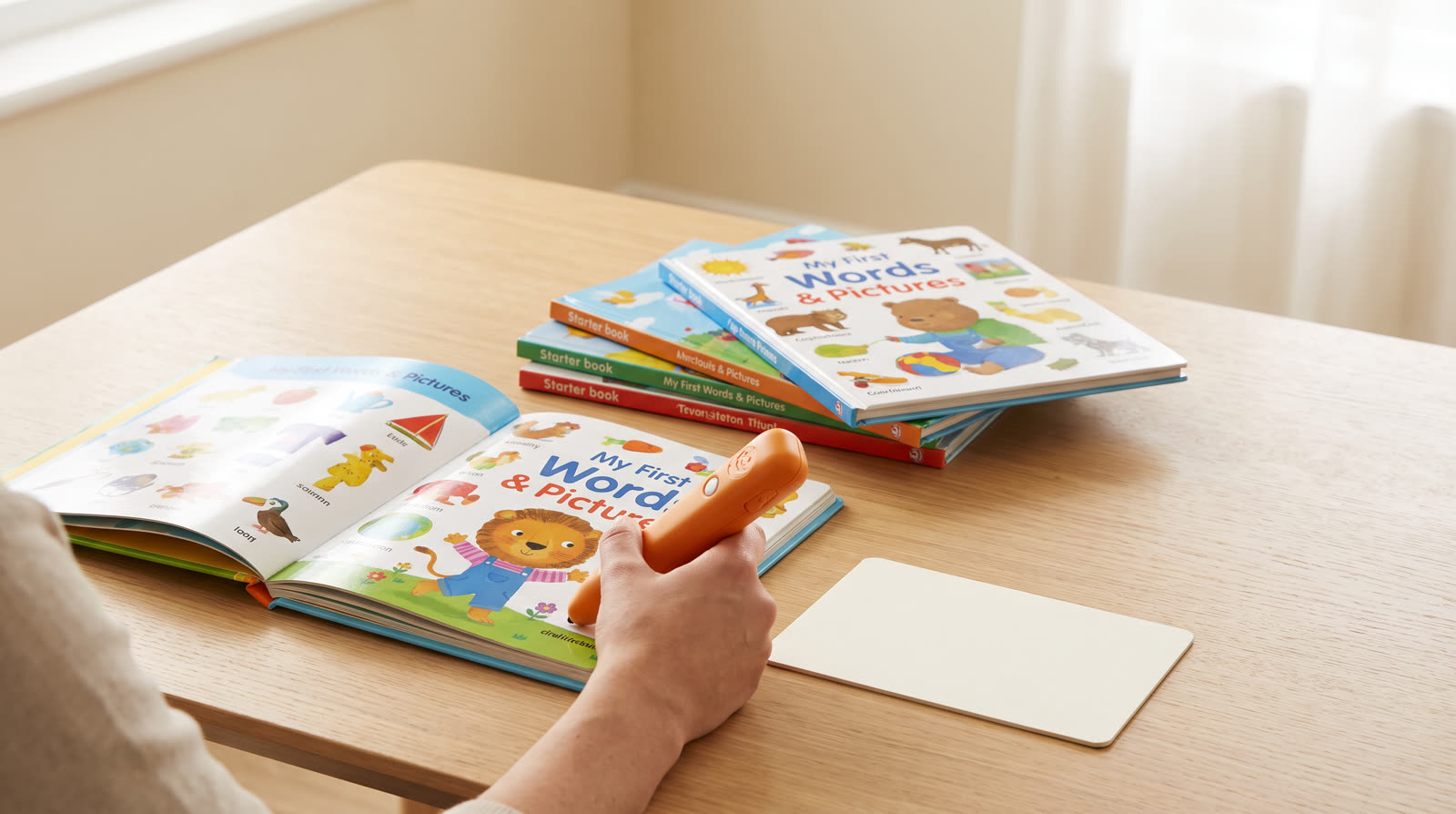
The primary technical determinant when sourcing a replacement reading pen is optical code compatibility. Interactive talking books use microscopic dot patterns—commonly referred to as Optical Identification (OID) codes—printed alongside text, illustrations, and interactive margins. The reading pen's built-in optical sensor reads these invisible coordinate dots and maps them instantly to corresponding audio files stored in the device memory. When purchasing replacement pens in commercial quantities, B2B buyers must verify that the optical engine (such as OID version 2, 3, 4, or proprietary enterprise encodings) precisely matches the book printing plates used during production. A generic pen purchased from an unverified retail marketplace may feature an incompatible optical sensor, incorrect decoding algorithms, or mismatched coordinate matrices, resulting in audio failure or incorrect narration playback. Importers, school district buyers, and wholesale distributors must request detailed technical specification sheets from manufacturers to confirm OID matrix alignment before committing to bulk replacement orders. Furthermore, establishing clear testing protocols for sample units across diverse printing batches ensures that newly sourced replacement pens integrate seamlessly into existing educational book sets without disrupting student learning routines or requiring expensive reprints of physical book inventory. Technical due diligence at this preliminary stage prevents widespread deployment failures and ensures absolute functional harmony between hardware and print media.
Firmware Versioning, Audio File Pack (DAT/BIN) Compatibility, and Storage Formats
Beyond optical sensors, replacement reading pens require precise firmware architecture and structured audio file packs. Audio files are typically compiled into proprietary formats (such as .dat, .bin, or structured directory trees) corresponding to specific book ISBNs, curriculum levels, or publisher series. When sourcing replacement units, procurement teams must ensure that the pen's internal flash memory structure can accept, decompress, and execute the publisher's audio firmware updates. If a replacement pen operates on a newer or older microcontroller architecture without backward compatibility, audio packets may fail to load, or multi-language switching functions may malfunction. Establishing clear firmware protocol agreements with the manufacturer or authorized supplier is an essential step during the technical specification review phase. Procurement managers should also evaluate how easily audio files can be updated across fleets of replacement pens, whether through direct USB data transfer, micro-SD card swapping, or wireless over-the-air (OTA) synchronization. Ensuring robust software compatibility prevents operational friction and guarantees that replacement units perform reliably across diverse institutional environments while supporting multi-language educational programs and dynamic curriculum expansions.
Hardware Specifications: Optical Lens Resolution, Speaker Impedance, and Battery Chemistry
Hardware durability and ergonomic design are vital factors when evaluating replacement reading pens for institutional or retail distribution. Children's learning tools experience frequent handling, accidental drops, and surface spills during daily classroom or home use. Consequently, B2B buyers must examine physical build quality, including ABS housing thickness, drop-resistance impact ratings, optical lens scratch protection, speaker impedance (typically 8 ohms with clear acoustic chamber design), and reliable battery management systems. Whether opting for rechargeable lithium-ion cells or replaceable alkaline/NiMH battery configurations, suppliers must provide comprehensive technical documentation regarding cycle life, charging safety circuits, overcharge protection, and power efficiency. High-quality replacement pens must also feature intuitive button layouts, smooth volume control mechanisms, and child-safe secure battery compartments that prevent accidental ingestion of small parts. Evaluating these hardware parameters guarantees long-term product reliability, minimizes RMA return rates, and upholds the distributor's professional reputation in competitive educational markets where physical durability and safety are paramount.
Sourcing Channels for B2B Buyers, Distributors, and Educational Institutions
Direct Manufacturer Partnerships (OEM/ODM Sourcing with ReadGlo and Certified Factories)
For wholesale importers, publishing houses, and large-scale educational distributors, partnering directly with established manufacturers such as ReadGlo and certified production facilities represents the most secure and cost-effective procurement pathway. Direct factory sourcing allows organizations to customize pen casing designs, adjust firmware configurations for specific linguistic markets, ensure flawless OID code integration, and negotiate scalable minimum order quantities (MOQs). Furthermore, direct manufacturer procurement guarantees access to traceable production records, material safety declarations, and structured quality control inspections prior to dispatch. Buyers should establish direct communication channels with factory engineering teams to review sample units, discuss custom branding options, and confirm component specifications before finalizing master supply agreements. Direct partnerships also facilitate long-term supply chain predictability, ensuring stable pricing, reliable lead times, and priority allocation during peak seasonal demand periods across international markets.
Authorized Regional Distributors and Wholesalers
When smaller inventory replenishment batches are required on short notice or when testing new regional markets, authorized regional distributors and established trade wholesalers serve as viable intermediaries. These entities maintain local warehouse stock, enabling faster logistics turnaround times, lower initial order quantities, and simplified import customs clearance compared to direct factory runs. However, B2B purchasers must exercise rigorous due diligence to verify that regional suppliers source exclusively from authorized original equipment manufacturers. Requesting certificates of authenticity, verifying authorized reseller status, and cross-checking serial number tracking capabilities help mitigate the risk of acquiring counterfeit or substandard replacement units that could damage brand reputation or fail regulatory inspection. Establishing transparent contractual terms with regional wholesalers ensures accountability, protects commercial interests across multi-tier distribution networks, and maintains reliable service levels for end-user clients.
Educational Supply Specialists and Institutional Procurement Portals
Educational institutions, school districts, and specialized learning centers often benefit from sourcing replacement reading pens through dedicated educational supply contractors and institutional procurement portals. These specialized vendors curate product catalogs specifically vetted for classroom durability, child-safe ergonomic design, and curriculum alignment. While unit costs through institutional suppliers may include markup for localized support and customized invoicing, the added value lies in streamlined purchase order processing, educational discount structures, and reliable after-sales support, including teacher training resources and structured return merchandise authorization (RMA) workflows. Institutional procurement portals also simplify compliance documentation, ensuring that school buyers acquire products meeting all regional educational standards, accessibility guidelines, and public sector procurement mandates.
ReadGlo project support
Get a Quote
Looking for reliable, certified replacement reading pens and custom OEM/ODM solutions for your book publishing or educational distribution business?
Key Evaluation Criteria When Selecting a Replacement Pen Supplier
Quality Control, Factory Inspection Protocols, and Pre-Shipment Documentation Checks
A rigorous quality control (QC) protocol is indispensable when evaluating potential suppliers of replacement reading pens. B2B buyers should inquire about the supplier's internal inspection standards, such as Acceptable Quality Limit (AQL) sampling methods for visual defects, sensor calibration accuracy, battery safety testing, and drop-resistance simulations. Pre-shipment inspection (PSI) reports—conducted either by internal quality teams or independent third-party inspection agencies—should be mandated in all purchase contracts. Additionally, verifying pre-shipment documentation, including bill of materials (BOM) conformity declarations and electronics testing certificates, ensures that every batch meets rigorous commercial and safety expectations. Implementing stringent QC checkpoints throughout the manufacturing cycle minimizes defect rates, reduces post-purchase support overhead, and safeguards customer trust across all commercial tiers.
Minimum Order Quantities (MOQ), Lead Time Transparency, and Supply Chain Scalability
Supply chain stability directly influences inventory planning and commercial success. When vetting replacement pen suppliers, procurement professionals must analyze minimum order quantities (MOQs) relative to projected demand, production lead times, and seasonal fluctuations. Transparent communication regarding raw material availability, microcontroller chip sourcing, and assembly line scheduling prevents unexpected delivery bottlenecks. Suppliers capable of offering scalable production capacity without compromising quality control are preferred partners for long-term distribution agreements. Evaluating supply chain resilience, backup component sourcing, and logistics flexibility ensures uninterrupted product availability across dynamic retail and institutional markets, safeguarding revenue streams and client relationships.
Warranty Support, Return Policies, and After-Sales Technical Assistance
Robust after-sales support distinguishes professional suppliers from unreliable vendors. B2B contracts must clearly outline warranty coverage terms, defective unit replacement procedures, and RMA (Return Merchandise Authorization) response timeframes. Suppliers should provide responsive technical assistance for firmware troubleshooting, audio file compilation support, and end-user maintenance guidance. Reviewing the supplier's historical warranty claim resolution rate and contractual liability clauses provides essential risk mitigation for commercial importers. Ensuring clear communication channels for technical escalation guarantees swift resolution of any operational issues encountered during deployment, maintaining high satisfaction across educational and retail channels.
Procurement Checklist and Technical Specification Verification for B2B Importers
Sample Evaluation and Function Checks (Sensor Sensitivity, Audio Playback Clarity)
Before issuing a commercial purchase order or committing to bulk import volumes, procurement teams must request physical pre-production or golden samples for comprehensive evaluation. The sample review process should include rigorous function checks: testing optical sensor recognition speed across various paper stocks and matte/gloss finishes, evaluating speaker audio clarity at multiple volume levels, verifying battery charging stability, and assessing ergonomic comfort for small hands. Documenting sample testing results establishes a definitive quality benchmark for subsequent mass production batches and ensures complete alignment between buyer expectations and manufacturer output. Methodical sample auditing prevents costly manufacturing discrepancies and guarantees optimal product performance in real-world educational settings.
Regulatory Compliance and Safety Standards (CPSC, CE, RoHS, EN71)
Because reading pens are electronic devices designed for young children, strict adherence to international safety and environmental regulations is non-negotiable. Suppliers must provide valid third-party test reports and compliance certificates verifying adherence to standards such as the Consumer Product Safety Improvement Act (CPSIA/CPSC) in the United States, CE marking and EN71 toy safety standards in Europe, and RoHS hazardous substance restrictions. Importers must independently verify the authenticity of test reports with issuing laboratories to protect their businesses from regulatory non-compliance, customs seizures, and product liability risks. Maintaining up-to-date compliance dossiers is essential for seamless market entry, customs clearance, and long-term commercial sustainability in global markets.
Avoiding Common Pitfalls: Incompatible Optical Sensors and Unlicensed Audio Firmware
Sourcing replacement parts without thorough technical vetting frequently leads to costly operational errors. Common pitfalls include procuring pens with unmatched OID sensor resolutions that fail to read existing book libraries, accepting unverified firmware that lacks multi-language support, or dealing with suppliers who obscure component substitutions. To avoid these issues, supply chain managers must maintain detailed technical dossiers, enforce strict supplier auditing, and ensure that all replacement pen specifications are explicitly stated in binding purchase orders. Proactive technical oversight prevents compatibility failures, protects the integrity of the interactive learning ecosystem, and ensures sustained commercial viability for distributors and educational publishers.
Frequently Asked Questions
How do I ensure a replacement reading pen is compatible with my existing talking books?
To guarantee compatibility, verify that the replacement pen's optical identification (OID) sensor version and audio decoding firmware match your specific book printing plates. Always request technical specification sheets from the manufacturer and test a physical sample against your book library before placing bulk orders.
Should B2B buyers source replacement pens directly from manufacturers or through local wholesalers?
The choice depends on order volume and urgency. Direct manufacturer partnerships, such as with ReadGlo, are ideal for large-scale customization, bulk pricing, and strict quality control. Authorized regional wholesalers are suitable for smaller inventory replenishment batches requiring faster local delivery.
What safety and regulatory certifications should I demand from a replacement pen supplier?
Suppliers must provide valid, verifiable test reports and certificates confirming compliance with international child safety standards, including CPSC/CPSIA for North America, EN71 and CE directives for Europe, and RoHS electronic substance restrictions.
What steps should be taken during sample evaluation for replacement reading pens?
Sample evaluation should include testing optical sensor recognition speed across different paper finishes, checking speaker audio clarity and volume control stability, evaluating battery life and charging safety circuits, and assessing overall mechanical durability.
How can distributors protect themselves against receiving defective or incompatible replacement units?
Distributors should enforce rigorous quality control agreements, mandate pre-shipment inspections (PSI) conducted by independent agencies, establish clear warranty and RMA terms in purchase contracts, and verify supplier credentials and test report authenticity.
Conclusion
Sourcing replacement reading pens requires a meticulous, systematic approach that balances technical compatibility, supplier reliability, and rigorous regulatory compliance. Whether partnering directly with established manufacturers like ReadGlo or utilizing authorized distribution channels, B2B buyers, distributors, and educational administrators must prioritize optical code matching, firmware verification, and certified product safety. By implementing structured sample evaluations, comprehensive quality control protocols, and clear after-sales warranty agreements, organizations can successfully maintain their interactive book ecosystems, ensure long-term operational success, and deliver safe, enriching learning experiences to children.
Continue your research
Related reading pen buyer guides
Use these related guides to compare the next product, content, sourcing or channel decision in your project.
- ProductsCan I Return a Premium Reading Pen If a Child Does Not Use It? Distributor and Buyer Evaluation StandardsRead this guide
- ProductsWhere Is the Best Place to Buy a Starter Reading Pen Set? A Strategic Sourcing Guide for B2B Buyers and EducatorsRead this guide
- ProductsCan I Return It If My Child Does Not Use It After Buying a Starter Reading Pen Set? Comprehensive Retail and B2B GuideRead this guide
Continue with ReadGlo
See product specifications and request model-specific documentation.
ReadGlo project support
Contact Us
Partner with ReadGlo for expert engineering support, rigorous quality control, and seamless OID book compatibility for your product line.