Contents
Quick Answer: Find a Supplier That Can Prove Control of the Whole Pen-and-Book System
Publishers and educational brands can find children’s talking-pen suppliers through specialist trade-fair directories, product-category referrals, B2B supplier platforms, and direct factory outreach in China. The reliable choice is not the company with the most product photos. It is the supplier that can document and demonstrate control of the complete child-facing system: pen hardware, firmware, OID or equivalent code mapping, audio assets, book-print specifications, quality testing, compliance evidence, and change management for future editions.
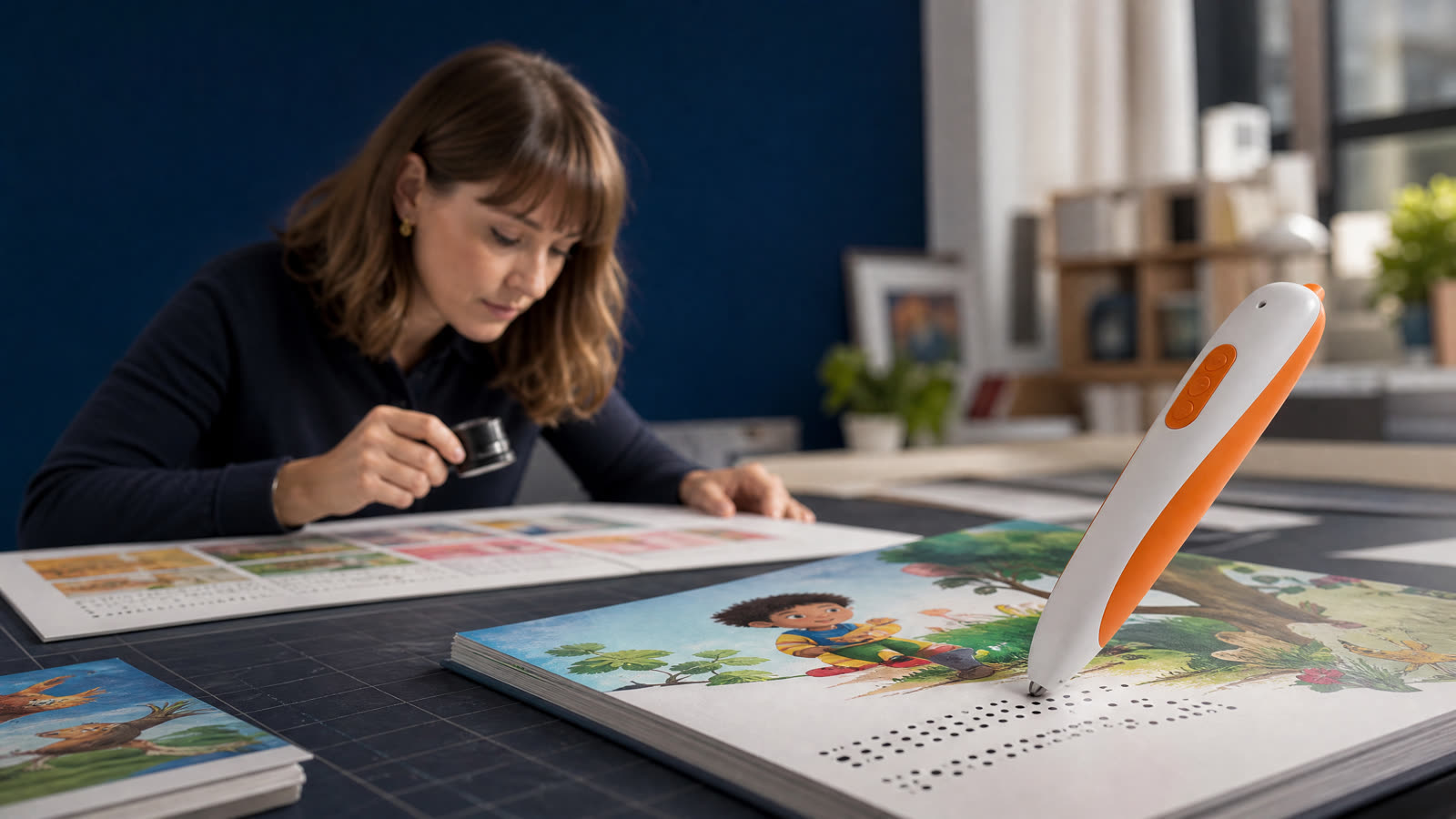
For a publisher, an OID coding service should be treated as a managed publishing workflow rather than a simple prepress add-on. Before the first print run, agree in writing on what is being coded, the code-map format, audio-file naming, print proof, pen compatibility, acceptance test, project-file handover, code-rights terms, and the process for reprints or new editions. The term “OID” is used differently by suppliers; do not assume that every coded-book system uses the same tooling, licence, or ownership model.
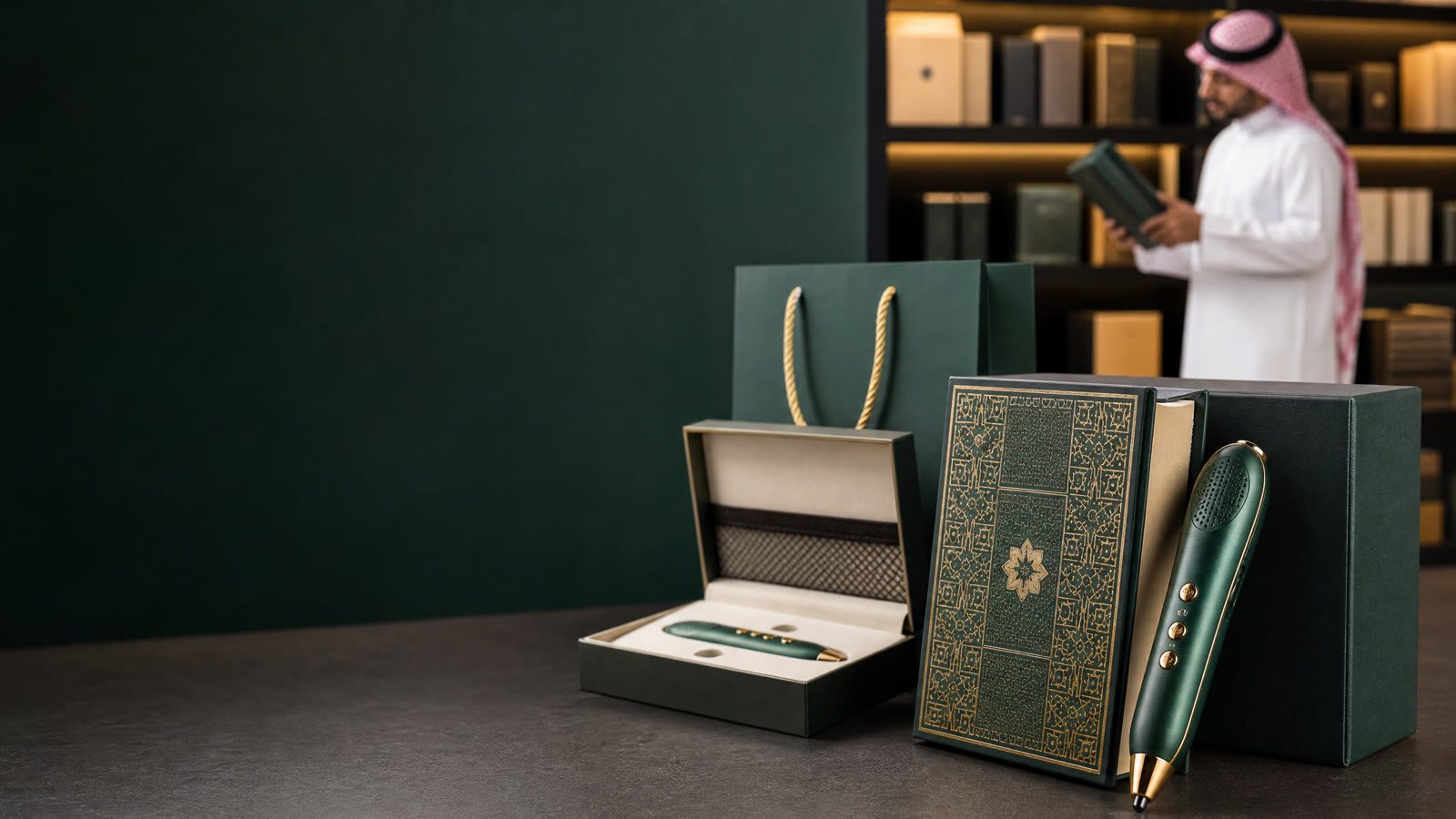
If you are sourcing a Quran reading pen, the same principle applies with additional content controls: confirm the approved audio source, reciter attribution, language and translation requirements, required reviews, book layout, and the exact pen-and-book compatibility test before mass production.
What Do These Global Supplier Searches Really Ask For?
| Buyer search language | Typical search intent | What a reliable supplier should show |
|---|---|---|
| English | Children’s talking-pen supplier; OID coding service for a children’s-book publisher | Factory identity, technical workflow, coding/print proof, sample, and written project scope |
| German | Lesestift Kinder Hersteller China; Lesestift OEM Hersteller Verlag | OEM capability for publishers, book-code workflow, compliance file, and a German-language content plan |
| Arabic | مصنع قلم ناطق للأطفال في الصين; مورد قلم القرآن الكريم بالجملة من الصين | Arabic/RTL capability, controlled Quran audio source, product documentation, and wholesale terms |
| Malay / Indonesian | pembekal / supplier pena berbicara anak dari China | Export experience, practical language-pack plan, after-sales support, and a verifiable factory |
| Korean / Japanese | 중국 어린이 말하는 펜 제조업체; 中国子供用トーキングペンメーカー | Specification discipline, reliable sample approval, traceable quality control, and long-term content support |
The wording changes by language, but the commercial need is consistent: a verifiable factory, a dependable content workflow, and clear ownership terms.
These searches should not be answered with a generic catalogue alone. A publisher is usually seeking a partner that can convert editorial content into a repeatable, testable interactive product. A distributor is looking for reliable supply, market documents, and a clear route from sample to shipment. A Quran-product buyer needs additional clarity on content provenance, language versions, and careful review before market release.
For this reason, begin every supplier conversation with the same compact brief: target country; target age; pen type; book size and page count; language pair or script; number of audio touch points; required Quran content if applicable; launch quantity; certification target; packaging language; and expected reprint or expansion plan. A supplier that asks useful technical questions about this brief is usually a stronger candidate than one that instantly promises any feature at any price.
Where Should You Search for a Reliable Children’s Talking-Pen Supplier?

Use multiple discovery routes so you are not dependent on one platform’s filters. Industry trade fairs and exhibitor lists can reveal manufacturers that specialise in educational electronics, books, or export retail. B2B supplier platforms can help create a broad shortlist. Referrals from publishers, testing labs, freight partners, or distributors can point to suppliers with relevant market experience. Direct outreach to factories can show how quickly the team understands your project.
After discovery, move every candidate through the same verification sequence. Request the legal company name, factory address, production role, talking-pen product history, quality-process overview, current certificates, and a technical contact. Conduct a live video walkthrough or on-site audit. Then order a sample that uses the actual book layout, audio pack, language version, and product configuration planned for your launch.
Do not reject all trading companies by default, but distinguish them from manufacturers. If you need custom firmware, OID mapping, book-print coordination, or rapid problem solving during a reprint, direct access to the team that controls those processes is especially valuable.
What Should an OID Coding Service Include for a Children’s-Book Publisher?
| Workflow stage | Publisher supplies or approves | Supplier delivers | Acceptance evidence |
|---|---|---|---|
| Content inventory | Final page plan, text, artwork, audio script, language and rights status | Technical review of page layout, touch-point density, and proposed coding plan | Signed content-and-layout checklist |
| Audio production | Approved recordings or approved script/voice direction | Named audio files, format confirmation, loading plan, and version record | Audio sample sign-off and language review |
| Code mapping | Page-level interaction requirements | Code-map file, location rules, and OID/coded-print specification suitable for the selected pen | Digital proof plus pen-and-book functional test |
| Prepress and printing | Final artwork approval | Print-ready coded artwork and physical proof guidance | Printed proof scanned with the agreed pen |
| Mass production and reprint | Approved golden sample and change-control authority | Frozen release package, batch test record, archive and reprint procedure | Pre-shipment compatibility test and release record |
Make every step deliverable, reviewable, and traceable. The exact format can vary by supplier, but the responsibilities should not be vague.
Ask the supplier to explain the workflow from a reader touching a printed location to the correct sound playing through the pen. The explanation should cover code assignment, audio mapping, print tolerances, file version control, firmware loading, language switching, and final functional testing. If the process cannot be described clearly, the project may be difficult to support after the first shipment.
Avoid undefined phrases such as “we provide OID codes” or “we make the book talking” without a written delivery list. Your contract should state whether the publisher receives the code map, source files, print specification, audio archive, firmware configuration, and instructions required to make a reprint with the same system. It should also specify what happens if the supplier changes a pen chipset, optical reader, firmware version, or printing partner.
The safe commercial approach is to approve a coded physical proof with the target pen before mass printing. A digital PDF proof is not enough to prove that a child touching the final printed book will trigger the intended audio consistently.
How Should Publishers Protect Content, Audio, and OID Project Rights?
The core commercial question is simple: who has the right to use each asset, in which territory, language, format, and production run? WIPO’s publishing guidance notes that publishers need to acquire appropriate rights from authors, including reproduction and distribution rights. [1] For an interactive book, the agreement should go further and list the rights needed for recorded audio, translations, illustrations, editorial layout, coded interaction map, app or firmware-linked files, and promotional use.
Do not assume that a hardware supplier owns the publisher’s educational content, and do not assume that a publisher automatically receives every technical project file. Write the allocation explicitly. Many successful OEM projects give the publisher ownership or licensed control of its editorial assets while granting the manufacturer only the limited rights needed to encode, print, load, test, and manufacture the agreed product. The supplier’s pre-existing hardware or code technology may remain its own, but the contract should preserve the publisher’s ability to reorder or transition according to the agreed terms.
Include a change-control clause. It should identify who can approve a new audio file, a revised code map, a new print run, a pen hardware revision, or a firmware update. Without change control, a small editorial adjustment can quietly create incompatible versions in the market.
What Should Wholesale Buyers Check for a Quran Reading Pen from China?
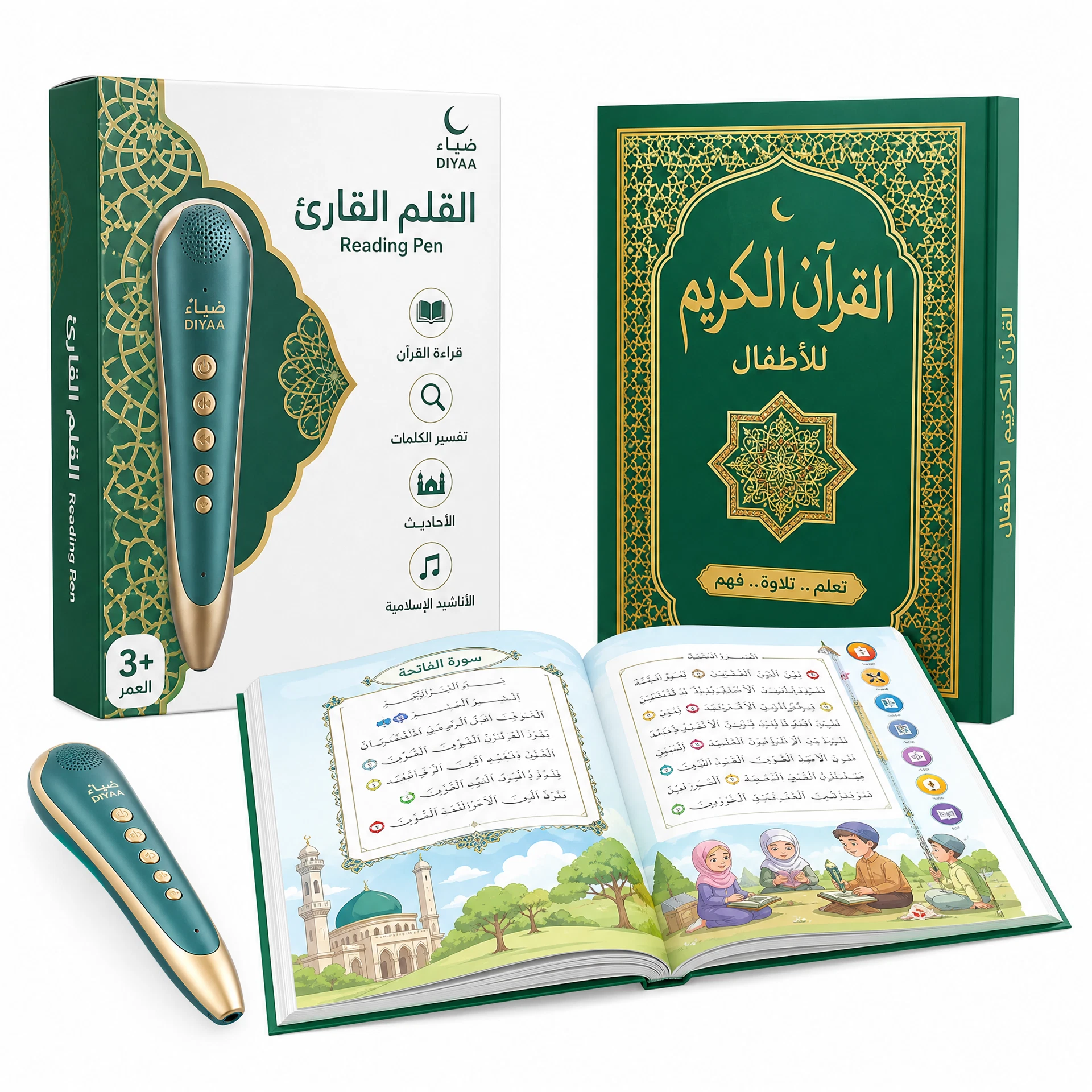
A Quran reading pen is not simply a standard talking pen with Arabic files added. Wholesale buyers should define the intended audience, approved recitation source, reciter attribution, script and page layout, translation languages, tafsir or learning content if included, recording quality, and independent review process before production begins. Where content rights or scholarly review are required, document the party responsible for providing and approving them.
Technical testing should include Arabic and right-to-left page layout, touch-point accuracy around diacritics and dense text, reciter or translation selection, pause/resume behavior, audio clarity, volume range, offline storage capacity, charging, and book-to-pen compatibility after repeated use. For a bundle, review every title in the planned set, not only one demonstration page.
Commercially, ask whether the supplier can support the exact language packs, book volumes, gift-box configuration, barcode or label requirements, replacement books, and reorders required for your target market. These details are often more important to a wholesale program than a low initial pen price.
How Do You Check Product Safety and Quality Before You Order?
| Area | Buyer question | Evidence to request |
|---|---|---|
| EU children’s-product route | Does the finished pen-and-book system meet the applicable EU product rules for the intended age and functions? | Risk assessment, technical-file index, test reports, Declaration of Conformity, CE-marking artwork and final label proof |
| U.S. children’s-product route | Which CPSC rules and third-party tests apply to the finished product? | Model-specific reports, a draft Children’s Product Certificate, manufacturing location, and CPSC-accepted-lab details |
| Functional quality | How will every production batch be checked against the approved system? | Golden sample, test plan, audio/code compatibility record, battery and charging checks, final-inspection record |
| Packaging and warnings | Are the age grade, warnings, languages, and destination-market labels correct? | Approved artwork, carton marks, label proof, and controlled packaging specification |
Compliance is market-specific. Use this checklist to start the conversation with your laboratory, importer, and manufacturer — not as a substitute for legal or technical review.
For EU markets, the European Commission states that toys must meet essential safety requirements before being placed on the market and that all toys sold in the EU must carry CE marking. The relevant risks include physical, mechanical, flammability, chemical, electrical, hygiene, and radioactivity risks. [2] Treat a talking pen, charger, battery, compatible books, and packaging as a child-facing system when defining the assessment scope.
For the U.S., CPSC guidance states that children’s products subject to CPSC rules require third-party testing and a written Children’s Product Certificate from the certifying domestic manufacturer or importer. [3] Ask for evidence that matches your final product model and configuration. A generic report for an unrelated pen is not a meaningful approval document.
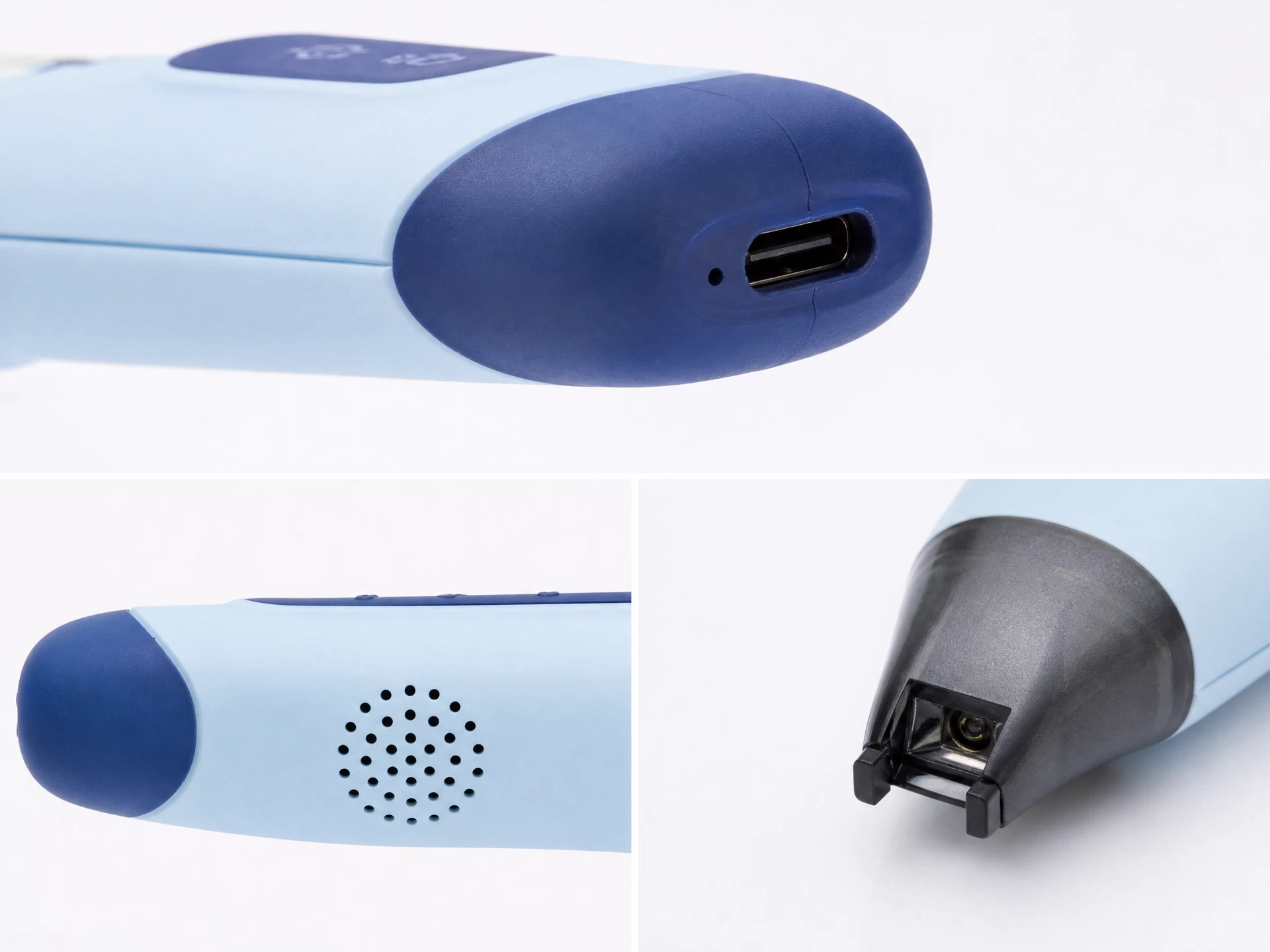
Quality should also be functional. Your pre-shipment sample plan should test correct audio on the actual printed book, code readability across the full page, language switching, charging behavior, sustained playback, drop resistance appropriate to the product specification, packaging accuracy, and a traceable firmware/audio release.
A Publisher’s Supplier Scorecard Before You Pay a Deposit
| Criterion | 0 — Not proven | 1 — Partly proven | 2 — Clearly proven |
|---|---|---|---|
| Factory and technical team | Identity or production role unclear | Factory shown but responsibilities vague | Legal site, relevant process, and named technical owner verified |
| OID and book workflow | Only generic promise | Demo works but no documented handover | Code map, print proof, acceptance test, and reprint/change process documented |
| Content and rights governance | Ownership not discussed | Basic confidentiality only | Written rights, approvals, asset delivery, and permitted-use terms agreed |
| Quran / multilingual readiness | Unverified language claims | Audio demo only | Approved content source, linguistic review, final book test, and release procedure defined |
| Compliance and quality | Generic or mismatched PDFs | Some records supplied | Market-specific evidence, golden sample, and final-inspection plan agreed |
Use clear evidence rather than impressions. Score each criterion from 0 (not proven) to 2 (proven with current, project-specific evidence).
Select the supplier that reduces your total launch risk, not simply the one with the lowest first quotation. A lower price can conceal missing rights work, incomplete coding handover, weak sample controls, or an unplanned retest when a component changes. Compare quotations only after every candidate has responded to the same documented brief.
Before paying a deposit, make sure your project file includes the final scope, deliverables, sample timeline, unit price assumptions, tooling or setup charges, code and content responsibilities, rights clauses, quality criteria, reprint process, warranty, spare or replacement policy, and pre-shipment inspection plan. This paper trail protects both the publisher and the manufacturer by making the approval path visible.
Ready to Discuss a Talking Pen, OID Coding, or Publisher OEM Project?
ReadGlo works with publishers, brands, schools, and distributors on children’s talking-pen and interactive-book programs from Shenzhen, China. We can review your target market, language pack, book plan, OID or compatible coding workflow, custom audio requirements, Quran product brief, sampling plan, and compliance documentation needs.
Send your product brief to info@readglo.com. Include your target country, audience age, book count, languages, expected order volume, and whether you need a standard pen platform, custom firmware, OID coding support, book printing, or a full OEM/ODM program.
The right supplier relationship begins with transparent control of content, code, quality, and the final user experience — from the first touch point in the book to the audio the child hears.
Continue your research
Related reading pen buyer guides
Use these related guides to compare the next product, content, sourcing or channel decision in your project.
- OEM Guideكيف يمكنني الحصول على معلومات موثوقة عن مورد قلم القرآن الكريم بالجملة من الصين؟Read this guide
- Product SupportHow Should Global Buyers Localize Talking-Pen Support for Arabic, Japanese, Korean, Indonesian and Portuguese Queries?Read this guide
- OEM GuideHow to Choose a Quran Reading Pen Manufacturer for a Private-Label ProjectRead this guide
Continue with ReadGlo
Review the Arabic-content reading-pen platform for market-specific programs.