
Contents
Direct Answer
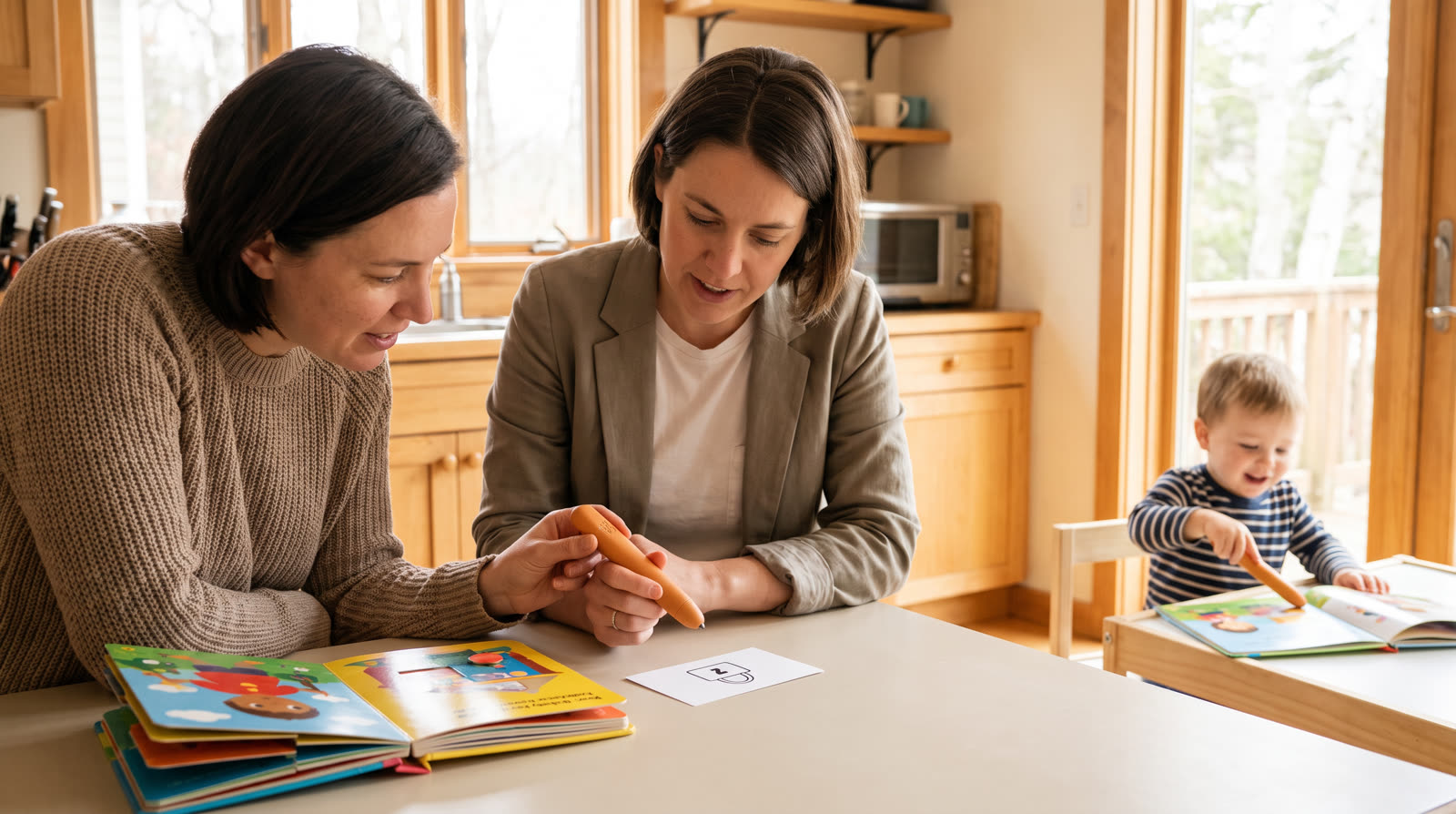
The practical answer: Prefer the least-connected configuration that still serves the learning use case. Before approval, require a product- and route-specific data map covering pen, book, app, cloud, analytics, support and third parties; identify whether audio, account, device, child or location data is collected; test defaults, notice, consent/parental controls, deletion and retention workflows; and record who owns each customer-facing responsibility. A connected configuration should proceed only when the buyer can verify current evidence for the exact model, firmware, app, content version and destination market—not because a supplier uses a general privacy claim.
This guide is written for B2B importers, distributors, education brands, retailers, schools and interactive-book publishers evaluating a children’s reading pen plus book/app programme for a defined market and route to sale.. It addresses Approximately 2,500 words: open with the direct answer; explain offline, USB-update, Bluetooth and Wi-Fi architectures without assuming any feature; give a decision table (data collected, connectivity, child-facing exposure, evidence to request, release/revise/escalate); cover data-flow mapping, microphone/voice and passive-listening checks, account and analytics choices, app permissions, access/deletion requests, security/update boundaries, content and IP handoffs, battery/transport implications where connectivity changes the SKU, and market-specific review for the EU/UK, US and other destinations. Include a buyer checklist, seven FAQs, internal links to ReadGlo resources on offline vs Wi-Fi pens, firmware/content customization, book compatibility, product documentation, battery/transport review and importer questions, plus two CTAs: request a configuration-specific evidence pack and request a market/route review.. The point is not to create more paperwork. It is to make the next commercial decision traceable: what the buyer is approving, what remains open, who owns each proof point and which change would require the decision to be revisited.
Start With the Exact Configuration and Buyer Decision
A reading-pen programme is a connected system rather than a single generic device. The commercial unit can include a pen model, firmware or content build, one or more book editions, a touch or code map, audio files, translations, accessories, package artwork, cartons and a destination route. Before reviewing connected reading pen privacy review for distributors or children's reading pen data processing supplier checklist, write down which of those items are actually in scope.
Create one controlled identifier for the decision. It can combine the buyer project, SKU or bundle, pen revision, book edition, content release, package version, target market and review date. This does not make a legal or regulatory conclusion; it simply prevents a photo, quotation, test response or content file from being applied to a different configuration.
The buyer should also distinguish a product fact from a channel statement. A fact may be observable on the sampled configuration. A channel statement may add a claim about intended user, compatibility, safety, learning, sustainability, delivery, support or rights. The latter needs its own evidence and owner before publication.
Decision Table: Release, Revise or Escalate
| Decision area | Buyer question | Evidence to retain | Next status |
|---|---|---|---|
| Configuration identity | Which pen, content, books, accessories and package are under review? | Versioned scope record and sample identifiers | Release / revise |
| Functional and content match | Do page interactions, audio, language and customer information match the named version? | Test notes, content map and approval record | Release / re-test |
| Market and route | Which destination, battery, transport and channel questions remain? | Owner-led evidence register | Release / escalate |
| Rights and approvals | Which assets and claims are authorised for this exact use? | Permission and claim register | Release / hold |
A buyer control table for the current procurement decision.
Use an evidence gate, not an assumption. The table converts the current question into an accountable buyer decision. “Release” means the named scope has the agreed evidence; it does not mean that every future version, market or shipment is approved.
Privacy exposure can arise from microphones, voice files, identifiers, telemetry, location, account data, third-party SDKs, unclear child/parent notices, passive listening, weak deletion or firmware/app changes. Risks vary by exact hardware, software, content rights, battery-powered SKU, transport route and destination market. Flag missing or stale documents, mismatched model numbers, unexplained data transfers, unverifiable deletion/security claims and feature changes as revise or escalate; recommend qualified local privacy, product-safety, IP and transport professionals for market decisions, without giving legal advice.
Build Evidence Before the Commitment
The useful evidence set is specific enough that a later team can reproduce the review. Use the ICO’s official connected-toys guidance as the single external reference: it highlights clarity about each processor and responsibility, child-suitable defaults, point-of-purchase and setup information, just-in-time explanations, and avoiding passive collection or making listening status unclear. Treat it as a review framework, not a legal conclusion. Ask the supplier for the exact privacy notice, data inventory/flow diagram, SDK and subprocessor list, storage/retention and deletion description, permissions, security/update process, test records, content-rights handover, and change log; validate each against the sampled SKU and target route. The article must not imply ReadGlo holds certifications or guarantees privacy performance.
Ask the person supplying each record to state what it covers and what it does not cover. Useful fields include the model or SKU, book edition, content or firmware reference, sample date, language, market, observer, method, acceptance point and unresolved limitation. A document that names another model, a different book edition or an unconfirmed destination should be treated as a comparison input, not final proof.
For broader context, consult ICO Connected Toys Guidance. It can help frame the relevant buyer questions, but it does not replace verification for the final configuration. Requirements and evidence expectations may change by product design, intended user, battery, content, destination, sales channel and transport route.
Run a Buyer-Owned Review Workflow
1. Freeze the decision scope. Record the current configuration, market and commercial question. Mark any illustrative render, draft file or earlier sample as not yet released.
2. Request the right evidence. H2 plan: 1) direct answer and scope; 2) define the connected system and buyer-owned decisions; 3) map data by component and user journey; 4) compare offline/USB/Bluetooth/Wi-Fi options in a decision table; 5) run evidence gates for collection, transparency, controls, security, retention, support and change management; 6) apply market-, product-, battery-, content- and route-specific verification; 7) buyer checklist; 8) seven FAQs (voice capture, child accounts, offline operation, app permissions, deletion, firmware changes, school/shared-device use); 9) conclusion and two CTAs. Link internally only to relevant existing ReadGlo guides and phrase all supplier capabilities as questions to verify. Keep product, content, rights, market, battery and shipping questions visible as separate workstreams rather than combining them into a broad supplier capability statement.
3. Test representative real use. Observe the named pen and book or content system in the relevant configuration. Record the environment, page or interaction, result and repeat conditions. If a customer-facing process is involved, walk through the actual steps a buyer, retailer, educator, parent or child would encounter.
4. Decide and document. Name the buyer approver, the exceptions, the owner of each correction and the condition that will trigger another review. Keep a dated release, revise or escalate outcome alongside the evidence rather than relying on chat messages or memory.
ReadGlo project support
Send Your Requirements
Share your target market, product scope, expected quantity and launch timing. Our team can prepare a relevant product, content or quality-control discussion.
Coordinate Product, Content, Rights, Market and Route
No one supplier, document or reviewer automatically owns every part of a programme. Hardware, firmware, books, narration, translations, illustrations, packaging, product photography, marketplace copy, battery information and shipment documents can have different owners. The buyer should identify the accountable decision owner for each area and maintain an interface list for handovers.
Content and rights need the same discipline as hardware. Confirm the rightsholder, territory, medium, language, edition, attribution and written permission that apply to the actual text, images, recordings, translations, music or other assets. Do not assume that a print permission authorises an audio, marketplace, app or promotional use. WIPO Copyright Guidance provides international context for these questions.
For battery and transport issues, identify the final battery configuration, packaging, carrier, mode and route. Use IATA Lithium Battery Guidance as planning context and ask the responsible parties to verify the applicable shipment documentation and acceptance conditions. These checks are conditional; they are not blanket assertions about a product or destination.
Control the Handover and Later Changes
The approved record should be useful at the next gate: supplier handover, pilot, purchase order, inspection, receiving, marketplace listing, retailer onboarding or support escalation. Include the current scope, approved assets, sample or test record, exceptions, current customer wording, named owners and next-review trigger.
A later change can be small in appearance but material in effect. A new battery, firmware, audio file, book reprint, language version, package panel, accessory, supplier, destination or shipment method can affect what the buyer needs to verify. Log the change, compare it with the approved baseline, identify affected evidence and decide whether a targeted check or revised sample is needed.
This approach makes smart reading pen COPPA GDPR buyer questions through connected toy privacy due diligence for importers more useful as buyer-intent terms: they lead to a concrete, controlled question instead of a generic promise. It also gives retail, publishing and support teams a better source of truth when a channel asks for an explanation.
Buyer Checklist Before the Next Commitment
Use this list before approving the next commercial step.
- Confirm the exact pen, book edition, content or firmware release, accessories, package and destination.
- Separate observed sample results from unverified future-production, market or channel claims.
- Record who owns product, editorial, rights, market, battery, route and customer-information decisions.
- Link customer wording to the configuration and evidence it describes.
- Keep approvals, exceptions, corrective actions and re-test triggers in one dated register.
- Verify that rights, translation, recording and asset permissions cover the intended territory, language, medium and channel.
- Check market-, battery- and route-specific questions with the responsible specialists before release.
For a practical next step, share the target market, product scope, intended channel and launch window when you send requirements to ReadGlo.
Frequently Asked Questions
1. What does this approval or review cover? It should cover only the recorded configuration: the named pen, books, language and audio release, accessories, package and intended route. A demonstration or earlier version is not evidence for an unspecified later configuration.
2. Who should own the buyer decision? The buyer should appoint an accountable owner, while product, editorial, rights, market, logistics and channel contacts provide evidence for their own areas. A supplier statement alone should not close a buyer-owned decision.
3. How do connected reading pen privacy review for distributors and children's reading pen data processing supplier checklist fit into the process? Treat search phrases as a request for a clearer buyer question, not as proof. Map each phrase to the actual SKU, book edition, content version, market and customer statement before it appears in a listing, package or support answer.
4. What should trigger a revised sample or repeat review? Re-open the affected checks after a hardware, firmware, battery, book, audio, translation, artwork, package, supplier, market or transport-route change. Record why the change matters and what evidence must be refreshed.
5. Can one document cover every destination market? Usually not without checking its scope. Product classification, language, responsible parties, content permissions, battery handling, claims and route details may differ. Match each document to the final destination and configuration.
6. How should the team handle an open question? Place it in a dated issue log with the decision needed, evidence owner, next action and release status. Do not silently convert an unresolved item into a customer-facing promise.
7. When should a buyer escalate? Escalate when an identity, safety, rights, battery, privacy, market, transport or material version-control gap cannot be evidenced for the current scope. Obtain the appropriate qualified review instead of assuming a generic answer applies.
Continue With Related ReadGlo Resources
A buyer can continue with the reading-pen quality-control checklist, OID code and publisher sourcing guide, buyer FAQ. For a project conversation, include the target market, the named pen and book configuration, language/content scope, intended channel and shipment route when you send requirements to ReadGlo.
Conclusion: Release Only the Evidence-Backed Scope
The strongest answer to “How Should Buyers Review Connected Reading-Pen Data and Privacy Before Market Launch?” is not a generic yes or no. It is a buyer-owned record that matches the exact product, content, market and route to current evidence and accountable owners. That lets a buyer compare options honestly, resolve gaps early and avoid turning a preliminary discussion into an unsupported market promise.
Ready to move from a broad inquiry to a controlled project brief? Use the ReadGlo contact page to request a configuration-specific discussion. Include the intended market, pen and book scope, content/language needs, expected order context and any decision that must be verified before your next commitment.
Continue your research
Related reading pen buyer guides
Use these related guides to compare the next product, content, sourcing or channel decision in your project.
- Product DevelopmentHow Can a Brand Record a Talking Pen Product-Variant Decision Before Launch?Read this guide
- Picture BooksHow Can Parents Use Reading Pen Books at Home During Travel?Read this guide
- Product DevelopmentHow Can B2B Buyers Evaluate Suppliers of Reading Pens with 128GB Expandable Storage for Adult Learners?Read this guide
Continue with ReadGlo
See product specifications and request model-specific documentation.
ReadGlo project support
Get a Project Quote
Request product specifications, sample guidance or a tailored proposal for your reading pen, interactive book or distributor program.