
Contents
Introduction
Establishing a sustainable daily reading habit in early childhood is one of the most effective predictors of long-term academic success, language acquisition, and cognitive development. However, modern families and educators frequently encounter significant barriers when attempting to integrate extended reading sessions into demanding daily schedules. Time constraints, competing digital stimuli, and child fatigue can quickly turn traditional reading hours into a source of friction rather than engagement. To address these challenges, developmental specialists and educational researchers advocate for micro-routine frameworks—specifically, the structured 10-minute daily reading routine. By focusing on consistency, positive emotional association, and multi-sensory engagement through interactive tools such as reading pens and touch-responsive picture books, caregivers and educators can cultivate enduring literacy habits without overwhelming young learners. This guide explores the pedagogical foundations, step-by-step implementation strategies, tool selection criteria, and professional evaluation benchmarks necessary for establishing effective 10-minute reading routines in home and institutional environments. Grounded in insights from leading pediatric and literacy organizations such as the American Academy of Pediatrics (AAP) and Reading Rockets, this framework provides actionable, evidence-informed guidance for B2B partners, retail distributors, and early childhood educators seeking to support families in fostering lifelong literacy [1] [2].
The Pedagogical Rationale of Micro-Routines in Early Literacy
Cognitive Load Theory and Attention Spans in Young Children
Young children experience rapid neurological development, accompanied by natural limitations in sustained attention span and working memory capacity. According to developmental psychology and cognitive load theory, forcing extended, unstructured study or reading sessions often leads to cognitive fatigue, disengagement, and negative emotional conditioning toward books. Conversely, brief, highly focused micro-sessions—such as a dedicated 10-minute window—align closely with the natural attention rhythms of early childhood. When reading is bounded by a predictable, manageable timeframe, the psychological barrier to entry is significantly reduced for both child and adult. This consistency reinforces neural pathways associated with language processing and auditory discrimination through repetition and low-stress exposure. Educational distributors and retail partners must communicate this neurological foundation to consumers, emphasizing that frequency and quality of interaction vastly outweigh prolonged duration when building foundational literacy skills [1] [2].
Alignment with Pediatric and Literacy Guidelines
Professional bodies, including the American Academy of Pediatrics (AAP), consistently emphasize that reading aloud with children from infancy onward stimulates optimal brain development and strengthens parent-child bonds. However, pediatric guidance also stresses that interaction quality—characterized by dialogic reading, expressive tone, and responsive questioning—is paramount. A structured 10-minute routine encourages intentional adult-child interaction rather than passive book consumption. By embedding evidence-based strategies into a concise window, parents avoid burnout while consistently meeting recommended developmental touchpoints. Furthermore, digital educational tools, when integrated thoughtfully, can scaffold this process by providing native audio pronunciation, sound effects, and interactive prompts that maintain engagement during the brief session. Institutional programs and wholesale distributors should reference these professional standards when designing accompanying educational collateral for interactive reading systems [1] [2].
Structuring the 10-Minute Reading Routine: A Phased Approach
Phase 1: Environmental Preparation and Selection (Minutes 0 to 2)
A successful 10-minute reading session begins before the book is even opened. The initial two minutes are dedicated to environmental preparation and collaborative book selection. Establishing a designated, quiet reading space free from background noise, television screens, and visual clutter helps signal to the child that a focused activity is beginning. Allowing the child to choose from a curated selection of two or three interactive books fosters a sense of autonomy and intrinsic motivation. During this preparatory phase, the adult ensures that the reading pen is powered, functional, and loaded with the correct audio file data pack for the selected title. Retailers and educational suppliers should provide clear guidelines on how to structure this onboarding phase in user manuals and instructional packaging, ensuring that technical friction is eliminated before the reading experience commences [3].
Phase 2: Active Multi-Sensory Engagement and Guided Exploration (Minutes 2 to 8)
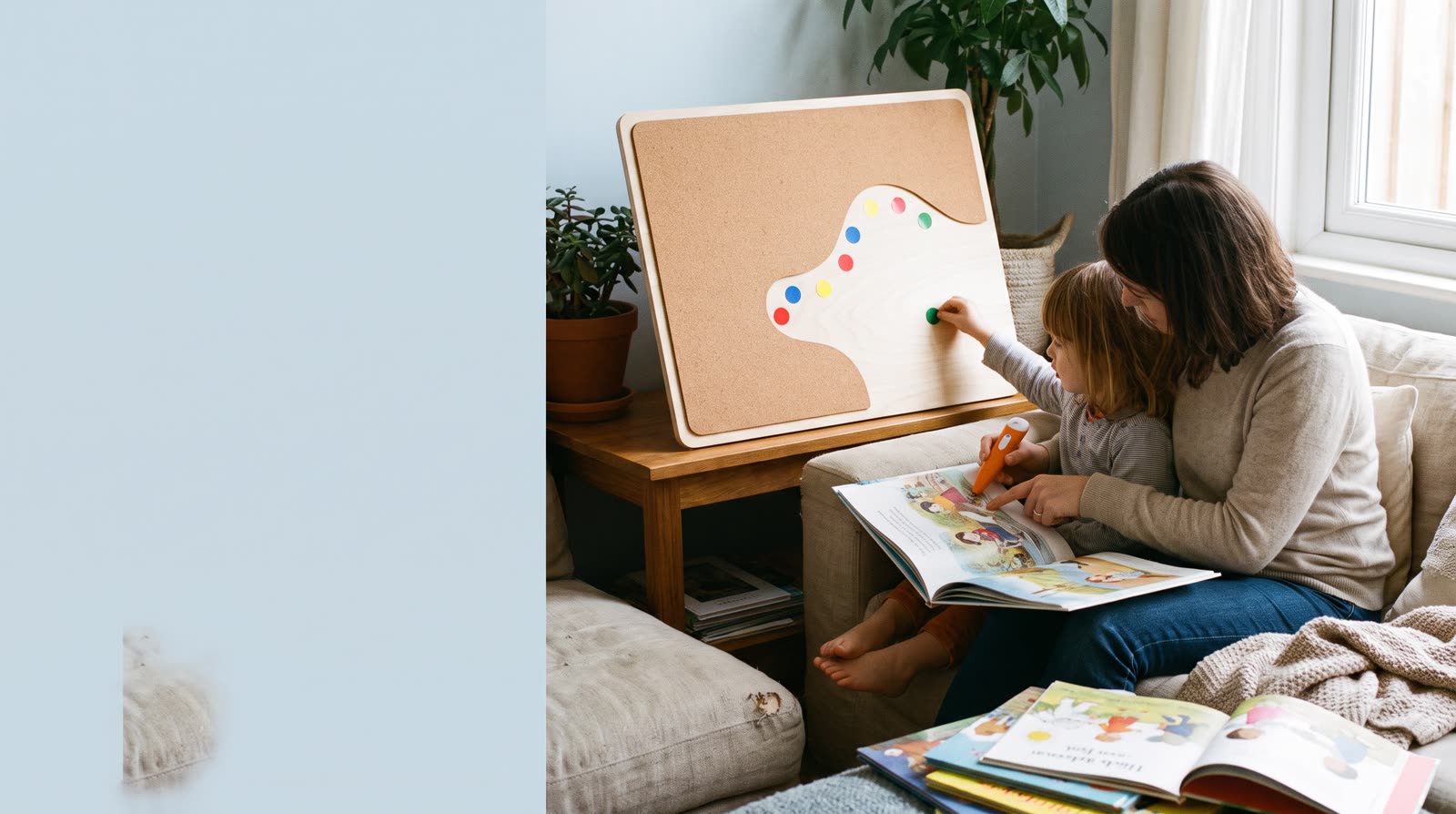
The core six minutes of the routine constitute active engagement. Rather than rushing through pages to complete a story, the 10-minute framework prioritizes depth of interaction over breadth. Utilizing interactive reading pens and sound-enabled picture books, the child explores text, illustrations, audio narration, and character dialogues. The adult plays a critical mediating role, pausing to ask open-ended questions, encouraging the child to imitate native pronunciations, and connecting the narrative themes to the child's real-world experiences. This multi-sensory approach engages visual, auditory, and tactile modalities simultaneously, which neuroscientific research indicates enhances memory retention and vocabulary acquisition. Program designers and publishers must ensure that audio content embedded within book codes supports this interactive dialogue rather than replacing human conversational scaffolding [1] [2].
Phase 3: Reflection, Closing, and Positive Reinforcement (Minutes 8 to 10)
The final two minutes are essential for cementing the positive emotional association with reading. Instead of abruptly closing the book when a timer goes off, the adult guides a brief closing ritual—such as summarizing a favorite character action, placing the reading pen securely onto its charging dock, or placing the book back on the shelf. Offering specific, process-oriented praise (e.g., 'I noticed how carefully you listened to the pronunciation of that new word today') reinforces intrinsic motivation far more effectively than material rewards. This predictable closure signals a smooth transition to subsequent daily activities. B2B clients and educational institutions can integrate these closing frameworks into teacher training workshops and parent-engagement toolkits, ensuring that reading routines remain sustainable and rewarding over months and years [1] [2].
Integrating Interactive Tools and Reading Pens into Micro-Routines
Enhancing Auditory Discrimination and Pronunciation
Interactive reading pens serve as powerful adjuncts in early language acquisition by providing instant, high-fidelity audio feedback when pointed at printed text or illustrations. In a compressed 10-minute routine, these tools maximize learning efficiency by eliminating decoding bottlenecks that often frustrate early readers. Children can instantly hear correct phonetic pronunciation, character voices, and musical soundscapes without breaking the conversational flow of the session. For second-language learners or children with developing phonological awareness, this immediate auditory scaffolding bridges the gap between written symbols and spoken language. Wholesale purchasers and educational buyers should evaluate reading pen hardware based on audio clarity, speaker fidelity, storage capacity for multiple language packs, and ergonomic design suited for small hands.
Balancing Digital Interactivity with Parent-Child Dialogue
While interactive reading pens and smart books offer engaging technological features, pedagogical best practices dictate that technology should augment, rather than replace, human interaction. In a well-designed 10-minute session, the reading pen acts as a collaborative anchor—prompting questions, playing sound effects, and providing localized storytelling elements that the adult and child can discuss together. Caregivers are encouraged to pause the audio playback to ask questions such as, 'Why do you think the character made that choice?' or 'What sound do you think comes next?' This dialogic reading approach ensures that the child remains an active thinker rather than a passive consumer of digital audio. Manufacturers and B2B distributors should emphasize this balanced methodology in product guides, marketing collateral, and educator training manuals [1] [2].
ReadGlo project support
Get a Quote
Explore our premium collection of interactive reading pens, multi-lingual audio books, and customized B2B early literacy starter kits designed for educational distributors and retail brands.
Implementation Guidelines for Educators, Retailers, and Program Managers
Designing Structured Parent-Engagement Programs
For schools, literacy foundations, and retail brands seeking to deploy structured reading programs, providing clear, actionable frameworks to parents is critical for success. Program managers should develop multi-week reading challenge trackers, introductory video tutorials, and step-by-step parent guides that demystify the 10-minute routine. Retailers can bundle interactive reading starter kits—comprising a reading pen, three progressive thematic books, and a quick-start guide—to lower the barrier to entry for families. Clear communication regarding the importance of consistency over duration helps mitigate parental guilt and promotes long-term habit formation. Suppliers partnering with institutional buyers must ensure that all accompanying documentation adheres to accessibility standards and reflects current early childhood education best practices [1] [2].
Hardware Maintenance, Safety, and Quality Assurance Protocols
Because interactive reading pens and electronic books involve rechargeable batteries, microprocessors, and optical sensors, proper product care and safety protocols must be observed. Retailers and institutional buyers should advise parents and educators on basic maintenance procedures: keeping optical scanner lenses clean and free of dust or smudges, storing devices in temperature-controlled environments, and avoiding exposure to liquids. Regarding battery safety and device integrity, users must perform only low-risk external inspections. Never attempt to disassemble the reading pen casing or battery compartment. If a device exhibits signs of moisture ingress, physical damage, abnormal heating, battery swelling, fluid leakage, or smoke emission, cease operation and disconnect from charging sources immediately. For comprehensive child product safety standards and regulatory compliance frameworks, stakeholders should consult official guidelines provided by the U.S. Consumer Product Safety Commission (CPSC) [4].
Assessing Progress and Adapting Routines Over Time
Tracking Qualitative Engagement and Milestones
Unlike formal academic testing, evaluating the success of a 10-minute daily reading routine relies primarily on qualitative observation of engagement, curiosity, and emotional comfort around books. Educators and parents should monitor whether the child shows increased anticipation for the reading session, attempts to retell stories using picture cues, or independently selects books during free-play periods. As the child's developmental stage advances—typically every three to six months—the structure of the 10-minute routine can be adapted. This may involve transitioning from simple touch-and-listen audio books to more complex narrative texts, introducing guided comprehension questions, or encouraging the child to take a more active role in reading aloud. Educational institutions and retail partners should offer progressive book level series that align with these developmental milestones [1] [2].
When and How to Consult Qualified Educational Professionals
While daily micro-routines significantly enhance foundational literacy, every child follows a unique developmental trajectory. If parents or educators observe persistent, marked difficulties with auditory processing, sustained focus, expressive or receptive language delays, or severe aversion to reading despite consistent, supportive implementation, it is essential to consult qualified educational specialists, pediatricians, or speech-language pathologists. Early identification and professional evaluation ensure that children receive tailored support and specialized interventions where necessary. B2B educational suppliers and curriculum developers should explicitly incorporate professional consultation recommendations into their teacher guides and customer support frameworks, reinforcing an ethical, child-centered approach to early learning [1] [2].
Frequently Asked Questions
What is the ideal time of day to schedule the 10-minute reading routine?
The ideal time depends on the child's daily energy rhythms and family schedule. Many families find success during the pre-bedtime wind-down period, as reading serves as a calming transition. Others prefer morning routines when children are alert. The key factor is consistency rather than the specific hour chosen.
How should parents handle a child who wants to stop reading before the 10 minutes are up?
If a child shows signs of fatigue or restlessness before 10 minutes elapse, caregivers should avoid forcing continuation, as negative emotional associations can harm habit formation. Instead, gently close the book, praise the effort made, and aim for a slightly shorter session the next day, gradually building stamina.
Can interactive reading pens replace human reading aloud entirely?
No. Interactive reading pens and smart audio books are designed to supplement, not replace, adult-child interaction. Dialogic reading—where adults ask open-ended questions, discuss illustrations, and connect stories to real life—is vital for cognitive and social-emotional development.
What safety precautions should be followed when handling rechargeable reading pens?
Users should perform only external visual inspections and keep charging ports clean. Never attempt to disassemble the device. If the pen becomes abnormally hot, emits smoke, shows battery swelling, or sustains water damage, stop using and charging it immediately, and contact the manufacturer or service provider following CPSC safety guidelines [4].
How can retail partners and schools support parents in maintaining this habit?
Retailers and educational institutions can provide structured starter kits, multi-week tracking calendars, instructional video guides, and progressive book level recommendations that reduce technical friction and encourage daily engagement.
Conclusion
Building a sustainable daily reading habit in early childhood does not require hours of intense study or rigid academic pressure. By implementing a focused, predictable 10-minute daily routine supported by interactive reading tools, multi-sensory engagement, and responsive adult-child dialogue, parents and educators can lay a robust foundation for lifelong literacy. Grounded in established developmental principles from organizations such as the American Academy of Pediatrics and Reading Rockets, micro-routines respect the cognitive attention spans of young learners while transforming reading into a cherished daily ritual [1] [2]. For B2B partners, educational distributors, and retail brands, offering structured guidance, high-quality interactive book systems, and transparent safety protocols represents an exceptional opportunity to support families and foster meaningful educational outcomes worldwide.
Continue your research
Related reading pen buyer guides
Use these related guides to compare the next product, content, sourcing or channel decision in your project.
- Early LearningHow Can Parents Build a Daily Reading Habit Using a Reward Chart?Read this guide
- Early LearningHow Can Parents Build a Daily Reading Habit Using a Reading Pen and Picture Books Together?Read this guide
- Early LearningHow can parents make parent-child reading more interactive using a 10-minute routineRead this guide
Sources used for further reading
- Creating Helpful, Reliable, People-First Content - Google Search Central
- Early Childhood Health and Development & Early Literacy - American Academy of Pediatrics (AAP)
- Reading Rockets - Literacy Strategies and Resources
- Children's Products Safety Education - U.S. Consumer Product Safety Commission (CPSC)
Continue with ReadGlo
See a DOT-code picture-book set designed for guided early-learning programs.
ReadGlo project support
Send Your Requirements
Partner with us to bring advanced interactive reading solutions and comprehensive educational programs to your market. Submit your product and distribution requirements today.