
Contents
Introduction
In contemporary early childhood development discourse, balancing digital exposure with tactile, screen-free engagement remains a paramount priority for educators, pediatric specialists, and conscientious parents. As digital devices increasingly dominate domestic environments, families frequently seek practical, low-friction methodologies to curb passive screen consumption and re-engage children in active, multisensory learning experiences. Among the most effective strategies is the implementation of structured micro-habits—specifically, a dedicated 10-minute daily reading routine utilizing audio-enabled talking picture books and optical reading pens. For B2B partners, educational publishers, toy distributors, and brand owners sourcing from specialized manufacturers such as ReadGlo, understanding how to frame, merchandise, design, and support these structured routines is essential for meeting evolving global market demands. This comprehensive B2B guide explores the pedagogical rationale underpinning micro-routines, critical hardware and software specification criteria, supply chain quality assurance protocols, support frameworks for diverse learners, and robust safety compliance standards required to deliver exceptional screen-free literacy solutions across international retail and institutional markets.
The Pedagogical Rationale Behind Micro-Habits and Screen-Free Engagement
Contrasting Passive Digital Consumption with Active Tactile Literacy
Modern pediatric health guidelines, supported by institutions such as the American Academy of Pediatrics (AAP), consistently emphasize the necessity of limiting passive screen time for young children. Passive media consumption on tablets, smartphones, and televisions often traps the developing brain in stimulus-driven feedback loops that can fragment attention spans, hinder executive function development, and reduce opportunities for expressive language output. In contrast, tactile reading routines that combine physical books with optical reading pens foster an active cognitive loop. Children control the narrative pace, point to illustrations, listen to localized audio feedback, and coordinate fine motor skills with auditory perception. B2B buyers, educational publishers, and product developers must evaluate how hardware-software integration—such as optical sensor sensitivity and natural voice narration—supports this active learning cycle without overwhelming the child with excessive digital distraction.
Why a 10-Minute Micro-Routine Succeeds Where Rigid Schedules Fail
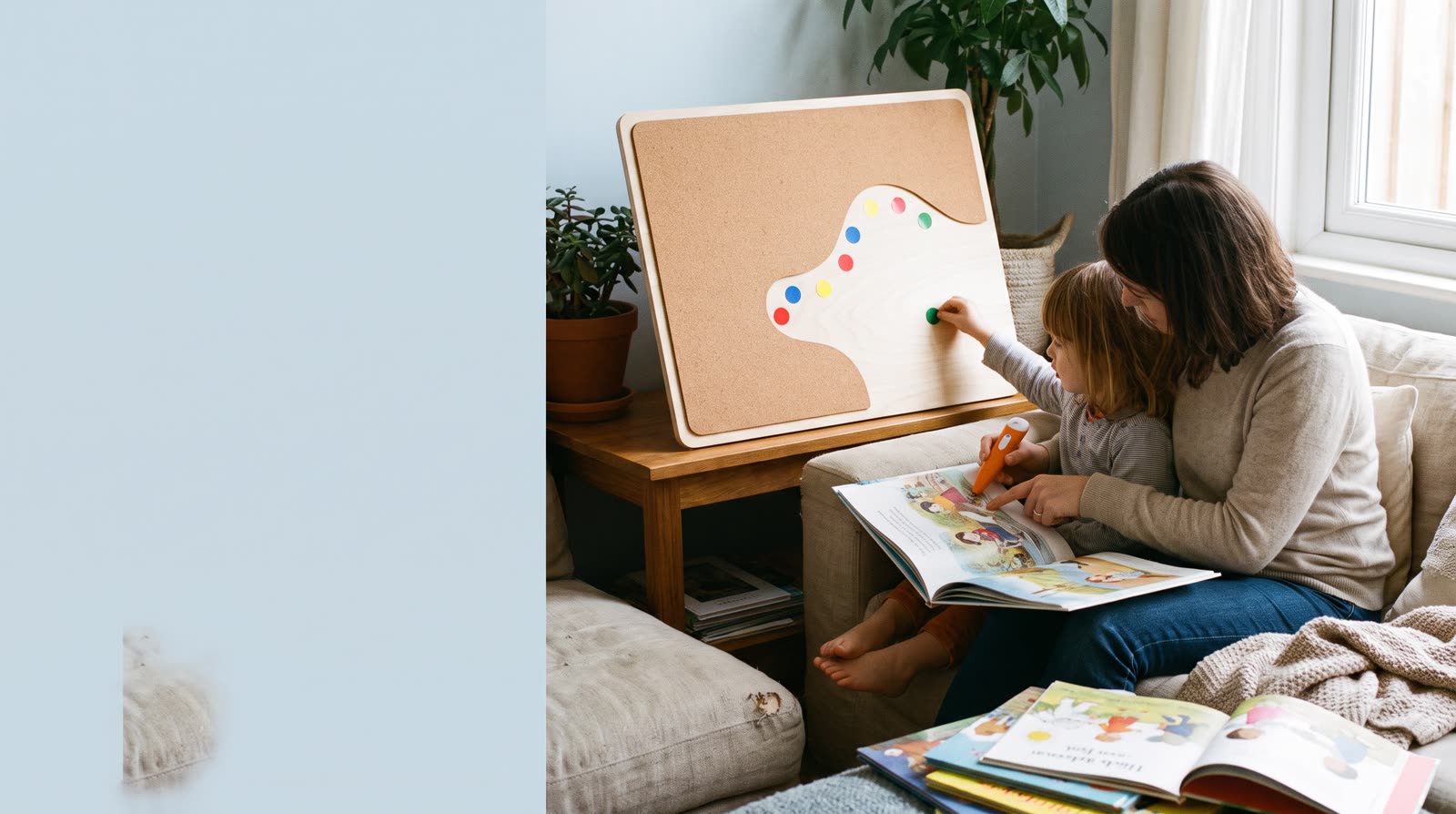
For modern families balancing demanding schedules, attempting to enforce extended, rigid reading sessions often generates friction, resistance, and burnout. A 10-minute micro-routine leverages behavioral consistency over prolonged duration. By focusing on short, highly engaging bursts of interactive reading—whether integrated into morning transitions, quiet afternoon intervals, or bedtime wind-down periods—parents can establish sustainable habits without intimidation. Retailers and wholesale distributors benefit from positioning talking pen sets not merely as isolated toys, but as comprehensive routine solution kits. Product packaging, companion guidebooks, and point-of-purchase merchandising materials should emphasize ease of use, intuitive touch controls, and rapid setup, enabling caregivers to seamlessly incorporate the routine into daily domestic life.
The Role of Multisensory Feedback in Early Vocabulary Acquisition
Multisensory learning theory demonstrates that children acquire vocabulary and literacy skills significantly faster when multiple sensory pathways—visual, tactile, and auditory—are engaged simultaneously. When a child touches an optical reading pen to a specific icon on an interactive picture book page, the immediate audio feedback reinforces the connection between written symbols, spoken words, and visual illustrations. For B2B partners designing educational book sets, ensuring alignment between phonics-based audio tracks and colorful illustrations is critical. Educational publishers must collaborate closely with manufacturing partners during the specification review and sample evaluation phases to guarantee that audio cues match visual layouts precisely, thereby maximizing educational efficacy for young learners across diverse linguistic backgrounds.
Product Specification and Quality Criteria for Screen-Free Literacy Tools
Evaluating Optical Sensor Precision and Audio Clarity in B2B Sourcing
When sourcing talking pen systems and interactive picture book bundles, wholesale buyers, brand owners, and procurement managers must conduct rigorous specification reviews. An effective reading pen relies on high-accuracy optical OID (Optical Identification) decoding sensors capable of reading micro-dot codes embedded beneath printed illustrations without latency or misreading. Furthermore, audio playback quality—evaluated through speaker frequency response, acoustic chamber design, and natural human-voice narration—plays a fundamental role in language comprehension and auditory processing. B2B evaluation protocols should include comprehensive sample testing for audio distortion across adjustable volume levels, battery longevity under continuous daily interaction, and surface durability against spills, drops, and frequent handling by young children.
Ensuring Seamless Integration Between Hardware and Printed Book Content
The synergy between reading pen hardware and accompanying interactive picture books defines the end-user experience. Publishers and distributors must verify that book-code mapping is error-free across all multi-language audio tracks and interactive touch zones. During sample evaluation and pre-shipment document checks, quality assurance teams should audit sound file indexing, book binding integrity, and paper finish (such as matte lamination to reduce glare and improve optical sensor readability). Establishing clear technical specifications with manufacturing partners ensures consistent batch quality and minimizes post-sale support issues for retail partners across global markets. Furthermore, firmware update procedures and storage capacity must accommodate expanding book libraries without compromising system stability.
Ergonomics, Durability, and Material Selection for Toddler Hardware
The physical design of an interactive reading pen must account for ergonomic realities and safety standards associated with young users. Grip diameter, weight distribution, and button placement must accommodate small hands and developing motor coordination. Manufacturers must utilize non-toxic, impact-resistant ABS plastics and food-grade silicone components that withstand frequent drops and mouthing behaviors. During the specification review process, B2B buyers should request detailed material safety data sheets (MSDS) and mechanical testing reports confirming drop resistance and structural integrity, ensuring that the finished product meets the rigorous demands of institutional and domestic environments.
Supporting Diverse Learners and Special Developmental Needs
Promoting Inclusive Literacy Without Over-Reliance on Audio
While interactive reading pens provide valuable auditory scaffolding for children developing early literacy skills or navigating bilingual language exposure, educators and developmental specialists emphasize that audio tools should complement, rather than replace, adult-child interaction. Guidance from organizations such as the International Dyslexia Association and Reading Rockets underscores the importance of balanced, multi-sensory approaches—combining visual text, tactile touch, and spoken narration with active adult engagement. B2B product documentation and accompanying parent guides should explicitly encourage adult co-reading, pausing to ask open-ended questions, and connecting story themes to real-world experiences.
Navigating Boundaries for Children with Attention or Reading Difficulties
For children with attention variations or early reading difficulties, structured micro-routines featuring simple touch controls and adjustable volume offer a supportive, low-anxiety learning environment. However, manufacturers, distributors, and retailers must exercise caution to avoid making medical diagnoses, treatment claims, or guaranteed developmental outcomes in marketing collateral or product packaging. When families encounter persistent reading challenges, language delays, or developmental concerns, product documentation and user guides should direct caregivers to consult qualified educational professionals, pediatricians, or speech-language pathologists. Emphasizing safety, realistic expectations, and professional consultation strengthens brand credibility and consumer trust.
Scaffolding Bilingual and Multilingual Language Exposure
In an increasingly interconnected global economy, bilingual and multilingual early education represents a rapidly growing market segment. Talking pen systems offer unique advantages for language exposure by enabling dual-language audio switching within the same physical picture book. Educational publishers developing bilingual titles must ensure that audio file management supports seamless switching between primary and secondary languages without confusing young users. B2B buyers should evaluate sample audio files for native pronunciation clarity, cultural authenticity, and accurate translation, ensuring that the product serves as a reliable educational asset for multicultural families.
ReadGlo project support
Explore ReadGlo B2B Solutions
Ready to expand your product catalog with certified screen-free interactive learning tools? Connect with our team to review wholesale specifications and sample kits.
Retail Merchandising and Supply Chain Best Practices for B2B Partners
Structuring Product Bundles and Educational Kits for Global Markets
To maximize retail sell-through and educational impact, B2B buyers frequently curate bundled offerings that pair a core rechargeable reading pen with thematic interactive book sets—such as early science and nature exploration, social-emotional learning, early math, and phonics series. Merchandising strategies should highlight the screen-free nature of the product, appealing to safety-conscious parents and progressive educational institutions seeking alternatives to digital screen exposure. Wholesale distributors should work closely with manufacturing partners to review packaging dimensions, multi-language instruction manuals, and regional compliance labeling to ensure smooth customs clearance and retail shelf appeal.
Managing Quality Assurance and Pre-Shipment Protocols
Maintaining high standards across global supply chains requires robust quality control procedures and disciplined workflow management. B2B buyers should establish clear protocols covering incoming material inspection, functional testing of optical sensors and rechargeable lithium batteries, drop testing for impact-resistant housings, and pre-shipment document checks. By aligning factory inspection checklists with international standards, importers protect their brand reputation and ensure that every delivered unit meets strict safety and performance expectations before leaving the production facility.
Establishing Transparent Communication Channels Across the Supply Chain
Successful B2B partnerships rely on transparent, structured communication between brand owners, wholesale distributors, and manufacturing partners. From initial specification reviews and sample evaluations to pre-shipment inspections and logistics coordination, maintaining clear documentation prevents misunderstandings and ensures alignment on product quality and delivery schedules. Importers should establish dedicated quality checkpoints and review cycles with suppliers like ReadGlo to foster continuous improvement and long-term market success.
Product Safety, Care, and Battery Maintenance Standards
Safe Handling and External Maintenance for Electronic Learning Tools
Children's electronic learning devices require clear safety and maintenance guidelines to ensure longevity and safe operation during daily domestic use. Caregivers should perform routine low-risk external checks, inspecting the pen housing, USB charging ports, and book bindings for wear or accumulation of debris. Users must never attempt to disassemble the reading pen or alter internal electronic components. In accordance with guidelines from the Consumer Product Safety Commission (CPSC) regarding children's electronic products, if a device shows signs of dampness, physical damage, abnormal heat generation, battery swelling, fluid leakage, or smoke, users must immediately cease operation, disconnect from power sources, and contact the manufacturer or authorized service channels.
Compliance Sourcing and Regulatory Alignment
Sourcing children's electronic products for international markets mandates strict adherence to established safety standards such as ASTM F963, EN71, and RoHS directives. B2B buyers must request up-to-date third-party laboratory test reports covering heavy metal limits, phthalate content, small parts safety, and electrical safety. Ensuring complete regulatory transparency protects retail partners from compliance liabilities and reinforces consumer confidence in the safety and reliability of educational toys.
Best Practices for Charging and Long-Term Storage
Rechargeable reading pens utilize internal lithium-ion batteries that require proper charging protocols to maintain optimal performance and safety. Caregivers should use certified 5V USB charging adapters and avoid leaving devices connected to power sources indefinitely after a full charge. When storing reading pens for extended periods, devices should be kept in a cool, dry environment with a partial charge to prevent deep discharge and battery degradation. Providing clear, accessible maintenance instructions in user manuals and packaging enhances user safety and extends product lifespan across diverse climates.
Frequently Asked Questions
How can retailers and distributors market reading pens as screen-free alternatives?
Retailers can position talking pen sets alongside physical picture books as complete sensory kits, emphasizing tactile engagement, parent-child bonding, and reduced digital fatigue in promotional displays, catalogs, and digital marketing materials.
What key specifications should B2B buyers verify when sourcing optical reading pens?
Buyers should verify optical sensor decoding accuracy, speaker audio clarity, rechargeable battery capacity, drop-resistant ABS housing durability, and flawless book-code indexing across multi-language audio files during sample evaluations.
Are interactive reading pens suitable for children with special learning needs?
Yes, when used as supportive tools with adjustable volume and simple touch controls. However, products should not claim medical diagnoses or guaranteed outcomes, and caregivers should consult qualified educational professionals for specialized needs.
What safety guidelines apply to rechargeable reading pens for children?
Caregivers should perform external inspections only, never disassemble the device, and immediately stop using and disconnect any pen that exhibits abnormal heat, swelling, leakage, or smoke, following CPSC safety recommendations.
How do 10-minute reading routines benefit early childhood development?
Short, consistent daily reading sessions build sustainable reading habits without overwhelming young children, fostering positive associations with books and supporting early vocabulary acquisition through active participation.
Conclusion
In summary, implementing a 10-minute daily reading routine using interactive talking pens and picture books provides an effective, screen-free method for fostering early childhood literacy. For B2B partners, educational publishers, and toy distributors collaborating with ReadGlo, success hinges on rigorous product specification review, adherence to safety compliance frameworks, and thoughtful merchandising that emphasizes active, multisensory engagement. By prioritizing quality, safety, and human-centered educational value, industry stakeholders can deliver compelling solutions that meet the evolving demands of modern parents and educators worldwide.
Continue your research
Related reading pen buyer guides
Use these related guides to compare the next product, content, sourcing or channel decision in your project.
- Early LearningBuilding Daily Reading Habits with a 10-Minute Routine: Comprehensive Strategies for Early Literacy and Interactive Book ProgramsRead this guide
- Early LearningHow Can Parents Reduce Screen Time Using a Reading Pen and Picture Books Together?Read this guide
- Early LearningHow Can Parents Build a Daily Reading Habit Using a Reward Chart?Read this guide
Continue with ReadGlo
See a DOT-code picture-book set designed for guided early-learning programs.
ReadGlo project support
Request Product Catalog and Samples
Partner with ReadGlo to bring premium talking pen sets and interactive picture books to your educational market. Send your requirements today.