
Contents
Introduction
In the contemporary digital landscape, managing and mitigating excessive screen time among young children has emerged as a central concern for educators, pediatric health advocates, and B2B educational toy distributors worldwide. While digital tablets and video-based streaming applications offer instant entertainment, they frequently foster passive consumption patterns that lack the tactile engagement and reciprocal dialogue essential for healthy cognitive and linguistic development. As institutional buyers, retail category managers, and publishing partners seek viable, screen-free alternatives, the integration of interactive talking pens, audio-enabled picture books, and structured guided questioning has gained significant traction. This comprehensive B2B guide examines how combining multi-sensory reading tools with deliberate, open-ended adult inquiry creates a powerful mechanism for replacing passive screen hours with active, shared literacy experiences. Operating within the boundaries of sound pedagogical research—supported by organizations such as the American Academy of Pediatrics (AAP) and the Centers for Disease Control and Prevention (CDC)—we explore how manufacturers, distributors, and educators can design, evaluate, and implement screen-reduction reading solutions that prioritize human connection, cognitive depth, and verifiable product safety.
The Neurodevelopmental and Behavioral Impact of Screen Time vs. Active Tactile Engagement
Understanding Passive Screen Consumption Patterns in Early Childhood
Excessive digital screen exposure in early childhood has been consistently associated with altered attentional control, reduced expressive language acquisition, and diminished opportunities for self-regulated play. Unlike physical print media and tactile learning objects, digital interfaces present fast-paced visual transitions and automated rewards that bypass the child's internal processing capacity. When children engage with passive videos or static scrolling applications, their cognitive architecture operates primarily in reception mode rather than inquiry mode. B2B distributors and educational publishers must recognize that reducing screen time is not merely about restricting digital access; it requires offering compelling, high-utility analog alternatives that match or exceed the sensory appeal of electronic devices without inducing sensory overload. By analyzing user behavior metrics across global educational markets, product developers observe that families are actively searching for screen-free engagement tools that encourage sustained attention spans and independent tactile exploration. Furthermore, longitudinal studies emphasize that structured offline activities foster neural pathway development associated with executive function, impulse control, and emotional self-regulation, which are frequently compromised by unmanaged digital media consumption.
The Cognitive Advantage of Tactile, Audio-Visual Interactive Print Media
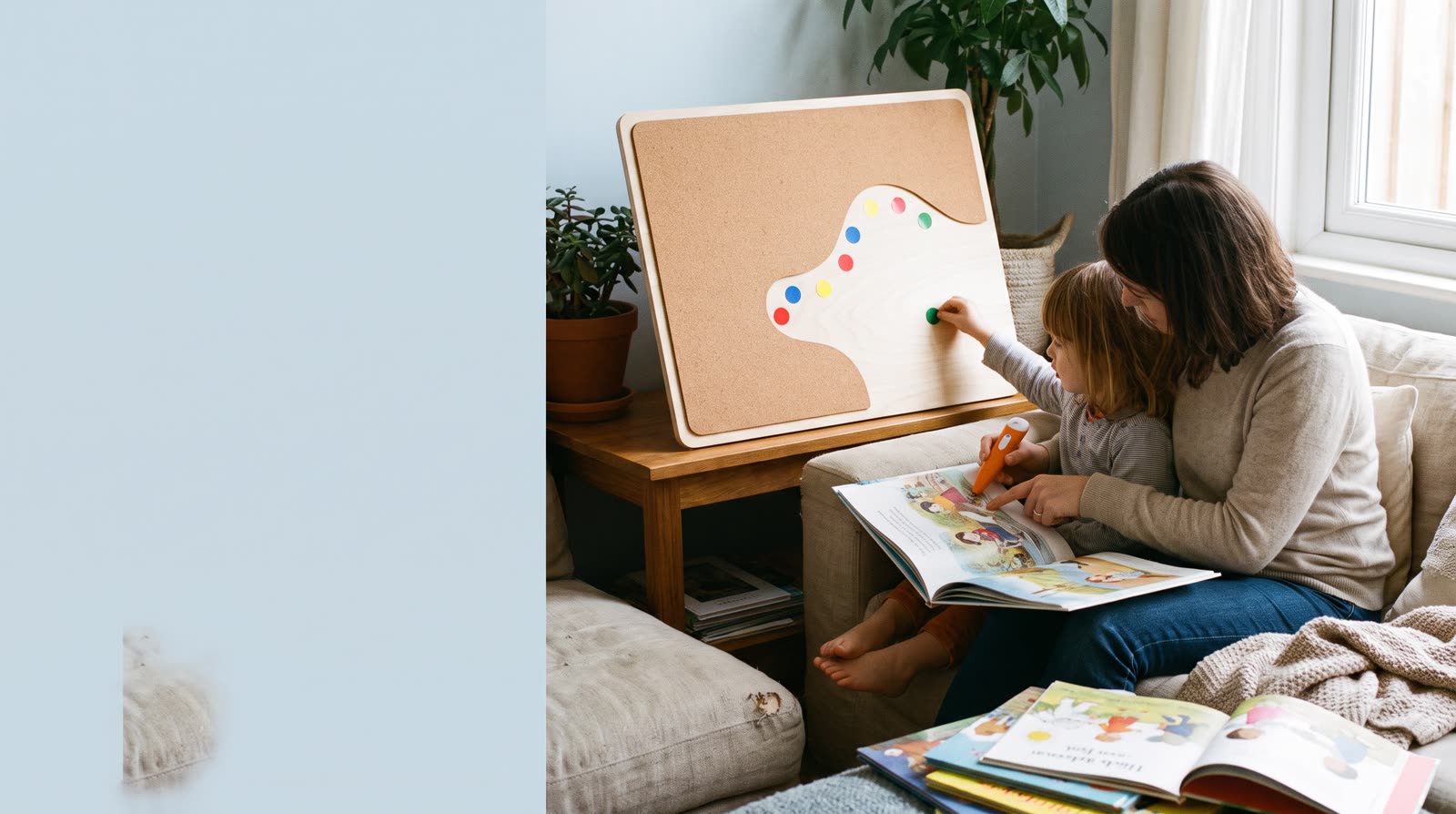
In contrast to glass-screen devices, interactive physical books paired with optical reader pens stimulate multiple sensory modalities simultaneously—sight, touch, and auditory processing—while keeping the child grounded in the physical world. When a child flips a paper page, traces an illustration, and taps a localized invisible dot code to hear targeted vocabulary or character dialogue, they exercise fine motor skills alongside linguistic comprehension. From a product manufacturing standpoint, this multi-sensory synergy is precisely what B2B buyers emphasize during specification reviews. Retailers and institutional purchasers require educational aids that bridge the gap between traditional book publishing and modern electronic interactivity. Educational research highlighted by organizations such as Reading Rockets demonstrates that tactile manipulation of books enhances memory retention and deepens text comprehension. Therefore, positioning interactive reading systems as superior, screen-free developmental assets allows B2B distributors to address parental anxieties while delivering measurable commercial value across diverse global markets.
Pedagogical Foundations of Guided Questions in Interactive Storytelling
How Open-Ended and Scaffolded Questions Stimulate Critical Thinking
The transition from screen-based entertainment to active reading hinges significantly on the quality of adult-child interaction. Guided questions—structured inquiries that prompt children to predict, analyze, connect, and reflect—transform storytime from a one-way broadcast into an engaging dialogue. When adults use scaffolded questioning techniques, they help children bridge narrative content with their own lived experiences. For instance, instead of asking closed questions that require simple 'yes' or 'no' answers, guided prompts encourage children to infer character emotions or speculate on alternative plot outcomes. In B2B product development, integrating these pedagogical frameworks into accompanying parent-teacher guidebooks or audio-embedded conversational prompts elevates a standard picture book into a comprehensive literacy program. Wholesalers and school suppliers increasingly evaluate publishers on the strength of their pedagogical scaffolds, ensuring that end-users possess the practical tools needed to sustain meaningful engagement and foster deep linguistic curiosity without relying on digital screens.
Integrating Talking Pen Audio Prompts with Adult-Led Inquiry
While talking pens provide independent audio feedback, pronunciation models, and sound effects, their true pedagogical power is unlocked when they complement adult-led guided questioning. B2B product design specifications for advanced reading pens now frequently incorporate dual modes: independent exploration mode, where children interact directly with story text and sound effects, and collaborative discussion mode, where the pen or accompanying guidebook prompts the adult and child to pause and discuss specific thematic elements. This blended approach prevents the talking pen from becoming a digital babysitter replacement for screens. By embedding open-ended questioning cues directly into the audio script or marginalia of the printed book, publishers empower parents and educators to guide children through critical analysis. During sample reviews and factory specification checks, quality assurance teams verify that audio pacing allows sufficient latency for children to formulate verbal responses, reinforcing conversational turn-taking, vocabulary expansion, and expressive language development in a natural, pressure-free environment.
B2B Product Design and Content Structuring for Screen-Reduction Tools
Engineering Interactive Books to Prompt Parent-Child Dialogue
Designing interactive picture books specifically for screen reduction requires meticulous layout planning and content architecture. Publishers must balance rich visual illustrations with clean whitespace and clearly designated touch points that invite collaborative reading rather than isolated tapping. During the specification review phase, publishing partners evaluate layout grids, font legibility, OID (Optical Identification) dot code density, and paper stock durability. Pages must withstand frequent page-turning and moisture exposure while maintaining precise optical recognition for the talking pen's CMOS camera sensor. Furthermore, editorial content must intentionally incorporate marginal prompts, discussion icons, and open-ended inquiry cues that guide parents on when and how to ask thought-provoking questions. This meticulous attention to design ensures that the physical book acts as a natural catalyst for reducing dependency on digital devices while supporting comprehensive early childhood education standards.
Hardware and Firmware Specifications Supporting Low-Distraction, Screen-Free Audio Playback
The hardware ecosystem of a talking pen plays a vital role in maintaining a screen-free, low-distraction environment. Unlike multifunctional tablets that feature flashing notifications, internet browsing capabilities, and video streaming apps, a dedicated educational talking pen is engineered for singular focus. B2B buyers examining manufacturing specifications prioritize ergonomic design, lightweight ABS thermoplastic construction, child-safe rounded edges, and simplified button layouts. Firmware is programmed to eliminate complex menus, relying instead on intuitive power toggles, volume adjustment, and direct book-cover tapping for content activation. During pre-shipment inspections and factory audits, quality control inspectors rigorously test audio latency, speaker distortion thresholds, memory storage stability, and battery management systems. These rigorous technical standards ensure that B2B clients—ranging from national distributors to school district suppliers—receive robust, reliable hardware that consistently delivers safe, distraction-free learning experiences across international educational markets.
ReadGlo project support
Get a Quote
Explore our complete catalog of screen-free interactive talking pens and picture book solutions for your distribution network.
Practical Implementation Framework for Retailers, Publishers, and Educators
Evaluating and Selecting Screen-Reduction Reading Kits for Distribution
For retail buyers and educational distributors, selecting the right assortment of interactive reading kits involves evaluating curriculum alignment, age appropriateness, modular expandability, and packaging integrity. Commercial buyers must assess whether product lines offer graded reading levels that grow with the child, thereby maximizing long-term utility for families seeking sustainable screen-reduction strategies. During sample review meetings, procurement teams test the synchronization between audio files and printed books across multiple multilingual packages, ensuring seamless firmware compatibility. Distributors also evaluate wholesale packaging, eco-friendly material disclosures, and compliance with international toy safety standards. By establishing structured evaluation rubrics during supplier negotiations, B2B partners can curate product portfolios that successfully address consumer demand for high-quality, screen-free educational alternatives while maintaining strong commercial margins.
Pre-Shipment Quality Inspection and Content Verification Protocols
Operational excellence in B2B supply chains relies heavily on rigorous pre-shipment inspection (PSI) and content verification protocols. Before bulk orders are cleared for export, independent quality assurance inspectors and client representatives execute multi-point checklists covering electro-acoustic performance, drop-test durability, battery safety certification, and optical code readability. In addition to hardware checks, content verification ensures that audio data packs match the localized text editions, and that guided question prompts included in parent manuals align with educational guidelines. Establishing transparent inspection criteria and maintaining clear communication channels between manufacturing facilities and international buyers minimizes defect rates, prevents supply chain delays, and safeguards brand reputation across global retail and institutional markets.
Professional Guidance, Safety, and Regulatory Compliance
Collaborating with Educators and Pediatric Health Authorities (AAP and CDC Standards)
When promoting interactive reading tools as screen-reduction solutions, commercial entities and educators must maintain strict adherence to professional health and educational guidelines. Organizations such as the American Academy of Pediatrics (AAP) and the Centers for Disease Control and Prevention (CDC) emphasize that early childhood development depends fundamentally on responsive, interactive human communication rather than passive media consumption. Manufacturers and distributors should avoid overstating developmental claims or guaranteeing specific learning outcomes. Instead, marketing collateral and user manuals should frame talking pens and guided questioning as supportive scaffolds that facilitate parent-child bonding and active conversation. When children exhibit persistent speech delays, atypical attention difficulties, or specific learning challenges, parents and educators must consult qualified pediatric specialists, speech-language pathologists, or educational psychologists for formal assessment and individualized intervention.
Product Safety, Electrical Compliance, and CPSC Guidelines for Children's Educational Hardware
Safety is paramount in the manufacturing and distribution of children's electronic educational products. B2B partners must ensure that all talking pens and interactive book accessories comply with stringent regulatory frameworks, such as those established by the Consumer Product Safety Commission (CPSC) in the United States and equivalent international bodies. This includes rigorous testing for heavy metals, phthalates in plastics, small parts choking hazards, and electrical safety standards for rechargeable lithium-ion or standard alkaline batteries. End-users and caregivers must be instructed to perform regular external visual checks of electronic hardware. Caregivers should never attempt to disassemble talking pens or tamper with internal battery compartments. If any device exhibits signs of moisture damage, physical cracking, abnormal thermal heating, battery swelling, fluid leakage, or smoke emission, operation and charging must cease immediately. Users should disconnect the power source and contact the manufacturer or authorized service channels for professional evaluation, safe disposal, and recycling.
Frequently Asked Questions
How do talking pens and guided questions effectively replace digital screen time?
Talking pens and guided questions replace screen time by engaging children in active, multi-sensory physical play rather than passive visual consumption. When children manipulate physical books, tap illustrations to hear audio, and respond to open-ended adult questions, they exercise fine motor skills, critical thinking, and expressive language in a grounded, distraction-free environment.
What criteria should B2B buyers use when evaluating screen-reduction reading tools?
B2B buyers should evaluate sample durability, optical code accuracy, audio clarity, multilingual firmware stability, pedagogical richness of accompanying guided question manuals, and compliance with international toy safety and electrical regulations such as CPSC standards.
How can educators and parents integrate guided questions during shared reading sessions?
Caregivers can integrate guided questions by pausing at key narrative moments to ask open-ended prompts—such as asking a child to predict what happens next, explain a character's feelings, or connect the story to personal experiences—thereby transforming storytime into an interactive dialogue.
What safety precautions should be followed regarding educational electronic hardware?
Caregivers should perform routine external inspections, avoid disassembling devices, and immediately cease use and charging if encountering moisture, physical cracks, abnormal heat, swelling, leakage, or smoke, contacting authorized service channels as guided by CPSC safety protocols.
Where can parents and educators find professional guidelines on early literacy and screen limits?
Authoritative guidance is available through organizations such as the American Academy of Pediatrics (AAP), the Centers for Disease Control and Prevention (CDC), and Reading Rockets, which provide evidence-based recommendations on early childhood development, literacy, and media balance.
Conclusion
In summary, reducing early childhood screen time is a critical objective for modern families, educators, and industry stakeholders committed to healthy cognitive and emotional development. By replacing passive digital consumption with active, tactile reading experiences powered by interactive talking pens and structured guided questions, adults can foster deep conversational engagement and sustained attention spans. For B2B manufacturers, publishers, and retail distributors, delivering high-quality, pedagogically sound, and rigorously safety-compliant reading systems represents both a vital market opportunity and a commitment to human-centered education. By maintaining stringent quality control, adhering to international safety standards, and partnering with educational authorities, the industry can successfully empower families to cultivate lifelong reading habits while minimizing digital distraction.
Continue your research
Related reading pen buyer guides
Use these related guides to compare the next product, content, sourcing or channel decision in your project.
- Early LearningBuilding Daily Reading Habits with a 10-Minute Routine: Comprehensive Strategies for Early Literacy and Interactive Book ProgramsRead this guide
- Early LearningHow can parents track a child's vocabulary progress using a 10-minute routine?Read this guide
- Early LearningHow Can Parents Build a Daily Reading Habit Using a Reward Chart?Read this guide
Sources used for further reading
Continue with ReadGlo
See a DOT-code picture-book set designed for guided early-learning programs.
ReadGlo project support
Contact Us
Partner with ReadGlo to source certified, high-engagement educational reading kits tailored to your educational market.