
Contents
Introduction
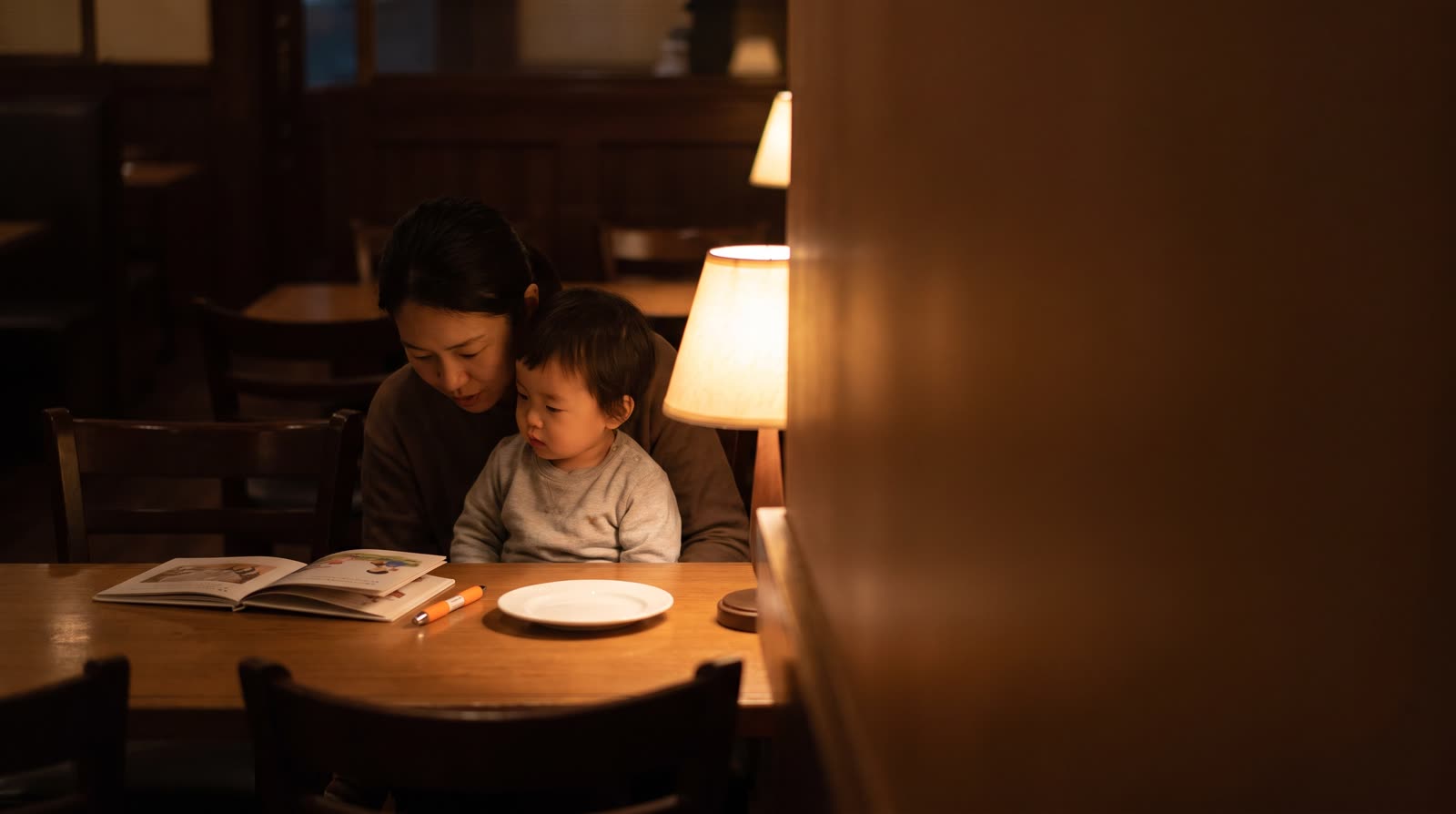
Navigating public dining environments with young children often presents parents and caregivers with a delicate, ongoing challenge: balancing the social expectations of table etiquette with the developmental need to keep restless minds constructively engaged. When families arrive at a restaurant and face the inevitable waiting window—typically spanning ten to thirty minutes before food is served—this interim period can easily transform into a stressful experience characterized by behavioral fatigue or excessive reliance on digital screens. For educators, developmental specialists, and mindful parents, introducing a screen-free micro-learning break utilizing a portable talking pen and interactive picture book set offers an elegant, highly effective alternative. This comprehensive guide examines how families can implement structured, portable reading routines during dining outings, while also providing B2B buyers, distributors, toy importers, and educational publishers with critical product evaluation criteria, ergonomic considerations, and quality assurance benchmarks for portable audio-learning kits.
It is essential to establish clear operational boundaries right from the outset to ensure balanced expectations. A portable reading pen set is not designed to replace family conversation, mealtime socialization, or formal classroom instruction. Rather, it serves as a supplementary, low-stimulus educational tool specifically engineered to bridge transition periods in public spaces without causing sensory overload. According to the American Academy of Pediatrics (AAP) early literacy guidelines, shared parent-child engagement and responsive communication around books foster foundational language skills, listening comprehension, and emotional bonding far more effectively than passive media consumption. When thoughtfully integrated into restaurant waiting times, a ten-minute interactive reading break can stimulate vocabulary acquisition, reinforce phonemic awareness, and maintain calm focus. In full alignment with Google's helpful content standards, this article explores practical methodologies, hardware ergonomics, and manufacturing quality standards designed for ReadGlo's B2B partners and modern families alike.
The Developmental Value of Micro-Learning Breaks in Public Settings
Why Ten-Minute Focus Windows Suit Transitional Environments
Young children naturally possess shorter sustained attention spans, particularly in unfamiliar, highly stimulating public environments like restaurants, airports, or waiting rooms. Expecting extended periods of passive waiting often leads to behavioral friction, restlessness, and frustration for both children and surrounding diners. Conversely, a structured ten-minute micro-learning session matches a child's natural cognitive processing rhythm and neurological development stage. By breaking waiting times into manageable, goal-oriented reading intervals, children can engage deeply with targeted vocabulary, touch-activated sound points, and story illustrations without cognitive fatigue. This targeted approach leverages the intrinsic novelty of optical-code reading pens to capture attention while grounding the experience in physical, tactile book exploration rather than addictive digital loops. Furthermore, child development experts emphasize that micro-learning routines reinforce executive function skills, teaching young learners how to transition between focused attention and relaxed observation smoothly. When parents introduce structured intervals, children learn patience and self-regulation in environments that otherwise challenge their developmental capacities.
Balancing Table Etiquette with Early Literacy Engagement
Dining out provides an exceptional natural laboratory for teaching social etiquette alongside early literacy skills. Parents can use interactive picture books not merely as a mechanical distraction device, but as a dynamic conversational prompt. When a child touches an illustration with a ReadGlo talking pen to trigger narration, character dialogue, or sound effects, parents have an immediate springboard for interactive dialogue and collaborative questioning. For instance, discussing a character's actions in a story about food, sharing, or animal habitats bridges the gap between digital audio feedback and real-world social awareness. Child development specialists emphasize that audio-assisted reading in public spaces should always complement, rather than isolate the child from, their immediate family environment, encouraging shared smiles, cooperative pointing, and verbal turn-taking. This collaborative dynamic ensures that children view reading as a social, connective activity rather than an isolated task, reinforcing positive associations with books across diverse social contexts.
Mitigating Screen Fatigue Through Tactile Audio-Learning
In contemporary digital culture, toddlers and preschoolers are frequently exposed to fast-paced tablet screens and animated videos during public outings. While tablets offer temporary quiet, researchers note that excessive screen time can impair self-regulation, attention spans, and sleep patterns in early childhood. Portable talking pen sets provide a scientifically grounded bridge: they deliver audio feedback through a physical book, preserving the crucial tactile sensation of turning paper pages while eliminating blue-light exposure and erratic visual stimuli. This tactile-auditory synergy helps children develop fine motor control, hand-eye coordination, and deep concentration, ensuring that the ten-minute restaurant break contributes positively to their cognitive and sensory development. When children physically manipulate a book and guide an optical pen tip across illustrated pages, they exercise active cognitive engagement rather than passive observation, cultivating healthier digital-media habits from an early age.
Engineering Portable Talking Pen Kits for On-the-Go Environments
Acoustic Clarity and Volume Control in Noisy Restaurant Acoustics
Restaurants present uniquely challenging acoustic conditions characterized by ambient background chatter, clattering cutlery, background music, and echoing hard surfaces. For a talking pen set to function effectively in such environments without disturbing neighboring diners or causing listening strain, hardware and firmware engineering must prioritize precision audio delivery. Premium reading pens incorporate multi-level adjustable volume settings, high-definition internal speaker chambers, and standard 3.5mm headphone or wireless audio pairing jacks. B2B manufacturers and educational suppliers must evaluate sample units rigorously to ensure that audio prompts remain crisp, clear, and intelligible even at low volume levels, preventing children from pressing the pen aggressively against their ears or missing crucial phonics cues amidst restaurant noise. Acoustic engineers must also tune speaker frequency response curves to emphasize vocal clarity over excessive bass, ensuring speech sounds natural and easy to comprehend in public spaces without requiring high output levels that leak into surrounding areas.
Compact Book Formats and Spill-Resistant Matt Laminated Pages
Portability is paramount when designing educational materials for dining out and travel. Standard hardcover textbooks or oversized workbooks are fundamentally impractical for restaurant tables crowded with plates, drinking glasses, condiments, and silverware. Consequently, publishers and toy manufacturers favor spiral-bound, pocket-sized interactive board books or compact paperback collections equipped with high-precision optical dot-code printing. Furthermore, because restaurant tables are inherently susceptible to condensation rings, food crumbs, accidental spills, and greasy fingerprints, book production standards demand heavy-duty matt lamination, anti-glare coatings, and tear-resistant cardstock. These physical attributes ensure that interactive book sets withstand frequent travel, sanitization wipes, and rigorous daily handling by toddlers. Matt lamination also eliminates harsh lighting reflections, protecting children's developing vision under restaurant overhead spotlights and ensuring long-term product durability across commercial rental or library circulations.
Ergonomic Pen Design and Battery Endurance for Travel
The physical architecture of the reading pen itself dictates whether a restaurant learning break succeeds or results in frustration. Ergonomically designed pens feature lightweight, anti-roll triangular grips or soft-touch cylindrical contours tailored for small, developing hands. The optical sensor tip must be recessed or protected to prevent scratching or dust accumulation during transport in diaper bags or backpacks. Additionally, reliable battery management—incorporating rechargeable lithium-ion cells with auto-sleep power-saving modes or easily accessible battery compartments—ensures that the device remains fully operational throughout extended travel schedules and dining outings. Manufacturers must also implement robust power management circuits that prevent parasitic battery drain when the device is stored in standby mode inside luggage or toy pouches, guaranteeing reliable performance whenever families need an impromptu learning break.
ReadGlo project support
Get a Quote
Looking to source durable, portable talking pen sets for your educational brand or retail catalog? Connect with ReadGlo today for wholesale catalogs and custom manufacturing solutions.
Step-by-Step Parent Guide: Implementing a Restaurant Reading Routine
Pre-Meal Preparation and Device Safety Checks
Successful micro-learning sessions require brief advance preparation by parents or caregivers. Before leaving home, adults should verify that the talking pen is fully charged or equipped with fresh batteries, and that the appropriate book audio files (stored on internal flash memory or external micro-SD cards) are properly indexed and functional. According to Consumer Product Safety Commission (CPSC) children's product guidelines, battery compartments in portable electronics must feature secure, screw-fastened covers to prevent accidental ingestion or exposure. Parents must perform a quick physical inspection of the pen casing for cracks, loose tips, or moisture exposure before handing the device to a child in a public setting. Organizing books and pens into a dedicated, zipped travel pouch ensures that all components remain clean, organized, and immediately accessible upon arrival at the dining venue, minimizing pre-meal stress.
Structuring the Ten-Minute Interactive Session While Waiting for Food
Once seated at the restaurant table, parents can initiate the ten-minute learning break through a systematic, low-stress routine. First, select a single compact book rather than carrying an entire library bag into the dining area. Second, establish clear and calm boundaries: explain to the child that the talking pen will be used while waiting for the food to arrive, and stored away safely once the meals are served and eating commences. Third, encourage active listening by asking the child to find specific items on the page using the optical tip before pressing for audio playback. This multi-sensory engagement—combining visual searching, tactile pointing, and auditory feedback—sustains focus and transforms waiting time into an enriching developmental opportunity. Parents should ask open-ended questions about the story elements, encouraging children to articulate their thoughts and connect narrative themes to their everyday experiences, thereby deepening comprehension and vocabulary retention.
Transitioning Smoothly from Reading to Mealtime
Managing the transition from the reading activity to actual dining is a critical skill for parents. When the server arrives with the meals, adults should provide a clear, positive cue: 'Great job exploring the farm animals today! Let's tuck our reading pen safely into its pouch and enjoy our lunch.' Avoid abrupt or punitive snatching of the device, which can trigger resistance or emotional distress. By treating the transition as a natural milestone in the dining sequence, parents reinforce positive behavioral habits and ensure that educational tools do not interfere with healthy eating and family table interaction. Establishing this predictable ritual helps children develop self-regulation and understand appropriate boundaries for technology and media use in public environments, fostering harmonious family dining experiences.
Sourcing and Quality Assurance for B2B Buyers and Retailers
Evaluating Sample Kits for Portability, Durability, and Audio Quality
For commercial buyers, toy distributors, and school suppliers, sourcing high-performing talking pen systems requires rigorous sample evaluation protocols. Procurement teams should systematically test sample kits across three primary vectors: ergonomic form factor for small hands, optical code reading accuracy under varying restaurant lighting conditions, and audio compression fidelity. A robust quality assurance checklist must verify that optical sensors can instantly decode invisible OID (Optical Identification) dot codes even when pages are tilted or viewed under dim ambient restaurant lighting. Additionally, supplier audits should confirm compliance with international toy safety regulations, such as EN71, ASTM F963, and ISO 8124. B2B buyers must also inspect audio file compression rates to ensure that speech clarity is maintained without requiring excessive internal storage capacity or sacrificing natural vocal inflection.
Compliance, Non-Toxic Materials, and Battery Safety Standards
Safety compliance is non-negotiable in the children's educational product sector. B2B buyers partnering with specialized manufacturers like ReadGlo must ensure that all plastic enclosures utilize non-toxic, food-grade ABS materials free from harmful phthalates, BPA, and heavy metals. Book bindings and coatings must pass strict chemical migration tests. Furthermore, electronic components must incorporate over-current protection circuits, short-circuit safeguards, and secure battery management systems. By adhering to rigorous safety and quality standards, brands protect end-users while building long-term trust in competitive global retail and institutional markets. Importers should request comprehensive third-party laboratory test reports for every production batch to verify compliance with regional safety directives and environmental standards.
Custom Packaging and Retail Presentation for Travel Bundles
In the wholesale and retail landscape, product presentation significantly influences consumer adoption and retail sell-through rates. B2B buyers seeking to capture the family travel and restaurant-entertainment market should collaborate with manufacturers to develop specialized travel bundles. These bundles typically feature a compact carrying case with designated molded slots for the talking pen, charging cable, and a curated set of three to five pocket-sized interactive board books. Effective retail packaging must clearly communicate product benefits—such as screen-free engagement, durability, and portability—allowing retail partners to position talking pen sets as essential travel companions for modern families. Customized OEM and ODM packaging options further empower regional distributors to tailor branding and language localized inserts to their specific target markets, maximizing commercial appeal across diverse international territories.
Frequently Asked Questions
Can toddlers use a reading pen independently at a restaurant without parent supervision?
While talking pens are engineered for intuitive touch-operation, young children require parental guidance in public settings like restaurants. Adults should manage book placement, prevent device loss among tableware, and guide the 10-minute session to ensure balanced engagement and table etiquette.
How do reading pens perform in dim restaurant lighting conditions?
High-quality optical reading pens utilize advanced CMOS image sensors and infrared or broad-spectrum illumination to read invisible OID dot codes reliably. However, extreme dimness can affect reading speed, so selecting well-lit dining booths or utilizing table lighting ensures optimal performance.
Are talking book sets durable enough to withstand food spills and restaurant handling?
Yes, professional educational publishers utilize heavy cardstock, matt lamination, and wipe-clean protective coatings specifically designed for high-wear environments. Parents should gently wipe surfaces with a dry or slightly damp cloth if spills occur, avoiding liquid immersion.
What safety precautions should parents follow regarding device power sources?
Parents should follow CPSC safety guidelines by ensuring battery compartments are securely screwed shut, using recommended chargers, and immediately discontinuing use if the device shows signs of overheating, swelling, or unusual odors.
How can B2B buyers evaluate restaurant-friendly talking pen bundles for wholesale distribution?
B2B buyers should request sample kits to test ergonomic grip size, optical reading speed under varied lighting, battery endurance, and audio clarity. Ensuring compliance with EN71, ASTM F963, and CPSC standards is essential for market entry.
Conclusion
Incorporating a talking pen and interactive picture book set into a restaurant waiting routine offers a practical, screen-free method for turning transitional moments into constructive micro-learning breaks. By maintaining sensible usage boundaries, ensuring device safety, and selecting durable, acoustically clear equipment, parents can foster early literacy while preserving peaceful dining etiquette. For B2B buyers, educational distributors, and retail partners, sourcing premium, compliant portable learning kits from trusted manufacturers like ReadGlo ensures long-term customer satisfaction and market success in the evolving global educational toy sector.
Continue your research
Related reading pen buyer guides
Use these related guides to compare the next product, content, sourcing or channel decision in your project.
- Early LearningBridging Home and Classroom: Integrating Interactive Reading Pens into Kindergarten Morning RoutinesRead this guide
- Early LearningHow Parents and Educators Can Guide Calm Reading Routines Using Interactive Reading Pens and Talking Picture Books in Public SettingsRead this guide
- Early LearningBridging Home and Kindergarten: How Portable Reading Pen Systems Support Mobile Learning and TransitRead this guide
Continue with ReadGlo
See a DOT-code picture-book set designed for guided early-learning programs.
ReadGlo project support
Send Your Requirements
Partner with ReadGlo to develop innovative, high-quality interactive reading systems tailored to your market's exact specifications. Submit your product requirements today.