
Contents
Introduction
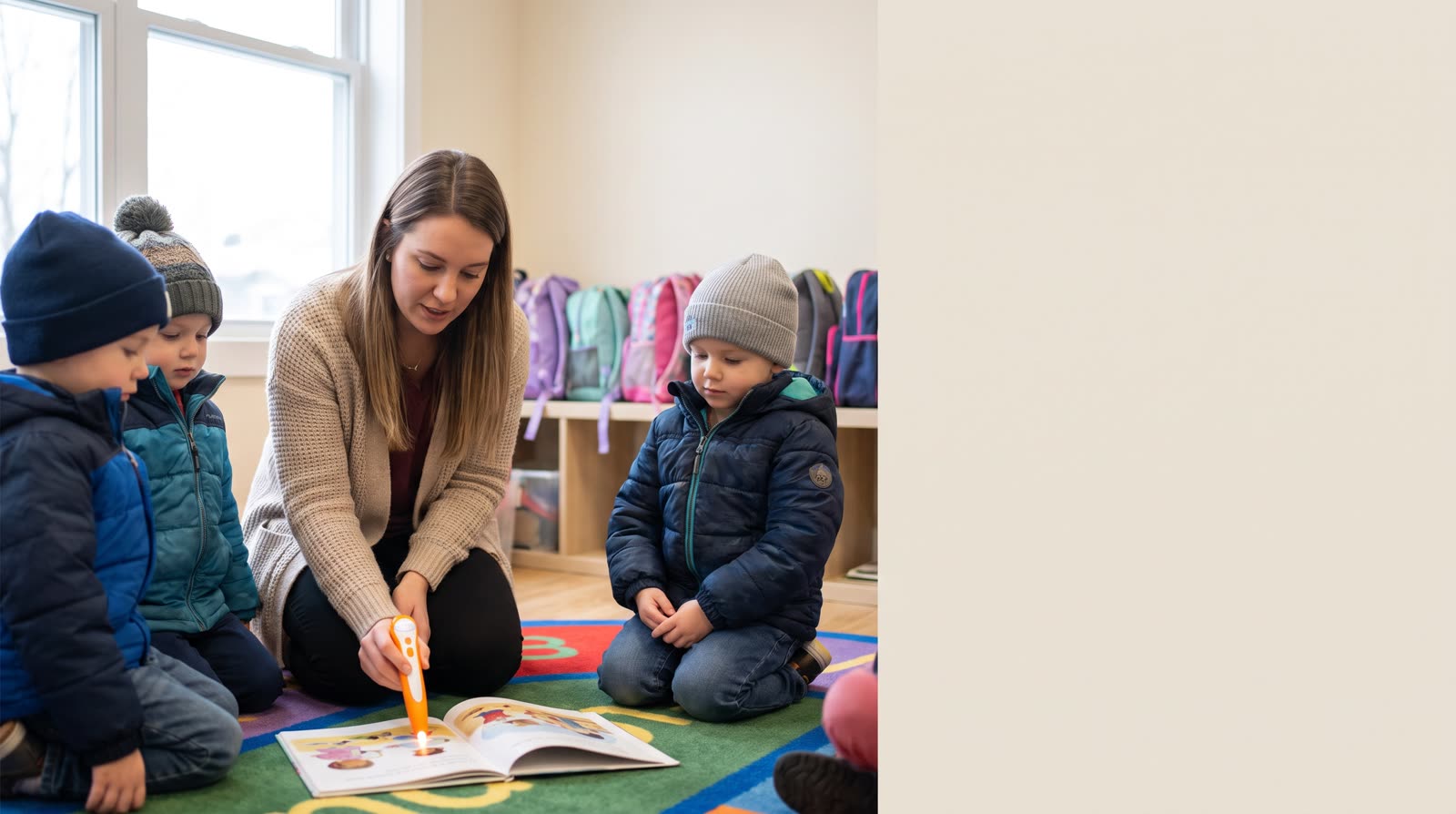
Morning arrival routines in kindergarten represent a critical transition period where children shift from the secure, intimate environment of the home to the structured social and academic setting of the classroom. For educational institutions, toy distributors, curriculum developers, and brand owners partnering with ReadGlo, designing effective morning arrival strategies that bridge home-school connections is a paramount objective. Interactive reading pens paired with optical-coded talking picture books offer a tangible, highly engaging medium to ease this transition, providing children with immediate auditory feedback, multisensory engagement, and autonomous learning opportunities. However, successful institutional deployment requires clear operational protocols, careful hardware selection, robust safety compliance, and a balanced understanding of developmental boundaries. This comprehensive guide examines how educators and parents can collaboratively utilize reading pen books during kindergarten morning routines, outlining actionable steps for station setup, safety compliance, and quality assurance without making unverified learning guarantees.
1. The Pedagogical and Operational Dynamics of Kindergarten Morning Routines
Transitioning from Home to School: The Role of Early Morning Engagement
The first fifteen to thirty minutes of a kindergarten day set the tone for emotional regulation, social interaction, and cognitive readiness. During drop-off, young children frequently experience varying degrees of separation anxiety, environmental disorientation, or transitional restlessness as parents depart for the day. Establishing a predictable, calming arrival routine is essential for mitigating cortisol levels and fostering a sense of psychological safety within the classroom environment. Integrating tactile, self-paced learning tools such as interactive reading pens and talking picture books provides a structured yet gentle anchor activity that welcomes children into the learning space. Rather than experiencing unstructured chaos or passive waiting for late-arriving peers, children can independently select a familiar talking book from a designated classroom shelf, activate their reading pen, and immerse themselves in familiar stories, vocabulary-building songs, or phonics exploration. For B2B partners developing kindergarten solutions, understanding this transitional window helps in designing products that require minimal adult supervision to initiate, featuring intuitive power switches, robust tactile feedback, and immediate audio response upon touching encoded paper. This early morning engagement establishes a focused, calm rhythm that positively influences classroom management and student readiness for subsequent group instruction.
Collaborative Frameworks for Parents and Educators in B2B Educational Solutions
A seamless morning routine relies heavily on consistent reinforcement and open communication channels between home and school. When parents actively participate in morning arrival activities—such as helping their child settle at the classroom reading nook, reviewing a familiar talking book page together for three minutes before leaving, or discussing the day's audio-guided theme—the psychological bridge between home and the educational institution is significantly strengthened. Educational institutions, curriculum developers, and B2B brand owners must provide structured guidance materials, such as parent-teacher communication leaflets, orientation videos, or digital user manuals, detailing how to introduce talking books without overwhelming the child. Establishing clear expectations ensures that reading pens are treated as valued learning companions rather than mere toys, fostering respectful handling, shared responsibility, and mutual trust among families, teachers, and young learners. Furthermore, when parents understand how classroom teachers utilize specific talking book series during morning arrivals, they can replicate similar interactive patterns at home during weekend or evening reading sessions, creating a harmonious and cohesive literacy ecosystem.
2. Designing the Morning Arrival Reading Station: Hardware and Content Specifications
Selecting Durable, Child-Safe Optical Reading Pens for Shared Environments
Kindergarten classrooms and shared institutional environments demand exceptionally rigorous hardware specifications compared to home-use devices. Consumer-grade electronics intended for a single child often fail prematurely under the heavy, multi-user wear and tear typical of a kindergarten classroom. When evaluating B2B manufacturing specifications, procurement teams and curriculum directors must prioritize ergonomic casing constructed from non-toxic, food-grade ABS plastics with reinforced USB-C charging ports or magnetic docking stations. Furthermore, optical sensor modules must be recessed to prevent dust, moisture, and paper fiber accumulation, ensuring reliable code recognition across thousands of page touches. Operational protocols should specify regular exterior cleaning with approved non-abrasive disinfectants while strictly prohibiting immersion in liquids or unauthorized mechanical disassembly. Acoustic engineering must also be factored in: speaker outputs should feature built-in volume caps and distortion-limiting filters to protect young ears against sudden high-decibel tones in noisy classroom settings. Additionally, battery management systems must incorporate overcharge protection, short-circuit prevention, and thermal monitoring to ensure absolute safety during daily multi-unit charging cycles.
Curating Talking Picture Books for Independent and Guided Morning Exploration
The effectiveness of morning reading stations depends equally on the physical durability and digital accuracy of the talking picture books. Books utilized during arrival routines should feature sturdy board pages or heavy-weight offset paper coated with matte lamination to minimize glare under fluorescent classroom lighting, thereby reducing eye strain and enhancing visual comfort. From a technical standpoint, the invisible OID (Optical Identification) dot codes printed alongside CMYK illustrations must maintain high contrast, precise alignment, and robust error correction algorithms to prevent scanning errors caused by smudges or minor creases. Content should be curated to feature short, self-contained narratives, vocabulary-building songs, or simple interactive dialogue prompts that encourage independent exploration without requiring constant supervision from busy morning teachers. B2B publishers must ensure that audio files embedded within the book's digital package are professionally recorded using articulate, natural-sounding voice actors with clear articulation, appropriate pacing, and pleasant intonation suitable for young language learners.
3. Actionable Implementation Steps for Parents and Teachers During Arrival
Step-by-Step Preparation: Setting Up Quiet Reading Corners and Charging Docks
Establishing an effective morning arrival reading station requires deliberate spatial organization and daily preparation protocols. Teachers and support staff should set up a dedicated, well-lit low-table or floor cushion area near the classroom entrance designated as the 'Morning Reading Corner.' Charging docks or organized storage trays for the reading pens must be placed within easy reach of children, allowing them to retrieve their assigned or shared pen independently. Daily preparation checklists should include verifying battery charge levels, checking headphone audio splitters where applicable, and arranging a rotating selection of three to five talking picture books that align with the weekly classroom theme. Teachers should establish clear visual cues, such as color-coded storage slots or picture labels, to guide children in returning pens to their correct charging bays after use, cultivating organizational habits, personal accountability, and classroom responsibility. Moreover, establishing a predictable physical layout helps reduce transition anxiety, as arriving children immediately recognize where and how to begin their morning learning journey.
When and How to Guide Children: Balancing Independent Engagement with Adult Support
During the bustling morning drop-off window, teachers cannot provide one-on-one instruction to every arriving child simultaneously. Therefore, the morning reading routine must be structured for high autonomy. Parents accompanying their children can spend three to five minutes sharing a page of a talking book, demonstrating how to hold the reading pen at a stable 60-to-90-degree angle to the paper, and adjusting the volume to a comfortable level before departing. Teachers observe and offer gentle encouragement, stepping in only to assist with device pairing, volume adjustments, or guiding children who require additional reassurance during separation. This balanced approach fosters self-regulation, peer cooperation, and confidence in young learners, ensuring that the morning routine remains calm, structured, and orderly. Teachers can also designate peer reading buddies among older or more confident children to mentor newcomers, further strengthening classroom community bonds.
Facilitating Parent-Teacher Communication Channels Around Arrival Reading Progress
To maximize the educational impact of morning arrival reading stations, structured communication loops must exist between educators and parents. Digital learning logs, classroom newsletters, or weekly parent-teacher message boards can highlight which talking book titles or phonics themes were introduced during morning sessions. When parents receive brief updates regarding their child's favorite talking books or demonstrated vocabulary engagement at school, they can reinforce these concepts during evening bedtime reading at home. This bidirectional feedback loop ensures that the transition between home and school is not merely geographical, but pedagogical and emotional, aligning literacy goals across both environments without placing undue administrative burdens on teaching staff.
ReadGlo project support
Get a Product Catalog
Explore ReadGlo's comprehensive range of B2B interactive reading pens, customizable talking picture books, and institutional charging solutions designed for modern kindergartens.
4. B2B Procurement, Quality Assurance, and Sample Evaluation Protocols
Establishing Rigorous Functional and Acoustic Checks for Institutional Deployment
For educational distributors, school networks, and brand owners sourcing reading pen systems, establishing a rigorous sample evaluation protocol is essential prior to bulk procurement. B2B buyers must conduct systematic functional checks, verifying optical recognition speed, speaker audio clarity across varying ambient classroom noise levels, and battery discharge curves under simulated continuous use. Acoustic safety is paramount; maximum output levels must comply with international standards to protect developing ears. Pre-shipment inspection procedures should incorporate checklist-driven sampling of firmware stability, memory capacity for audio file storage, and USB data transfer speeds for custom book content loading. Buyers should also evaluate drop-test resistance from standard desk heights and verify that enclosure seams withstand pressure without exposing internal electrical components. Establishing a standardized factory acceptance testing (FAT) protocol ensures that every batch meets stringent commercial and educational requirements before final shipment.
Evaluating Firmware Compatibility, Audio File Management, and Book Code Integrity
Modern interactive reading pens rely on sophisticated firmware and compressed audio formats (such as .WAV or .MP3 files mapped via OID lookup tables) to deliver seamless multimedia playback. B2B procurement managers must collaborate closely with manufacturing partners to ensure robust software update mechanisms, straightforward audio file management utilities, and foolproof book code generation. Quality assurance teams should test sample book batches to confirm that every touchpoint on every page correctly triggers the corresponding audio track without latency or misinterpretation, safeguarding the end-user experience for both teachers and parents. Documentation standards must be maintained, providing clear API or software utility guidelines for future content expansions, custom localization projects, and multi-language firmware updates.
6. Addressing Diverse Learning Needs and Establishing Professional Boundaries
Supporting Diverse Paces of Learning Without Clinical Diagnoses
Children enter kindergarten with diverse developmental backgrounds, sensory preferences, and language exposure levels. Interactive reading pens offer adjustable pacing, repeated audio playback, and multi-sensory reinforcement that can benefit children who process auditory information at different speeds or who are acquiring a new language. However, educational stakeholders must maintain clear professional boundaries. Reading pens and talking books are supportive educational tools designed to enrich early literacy exploration; they do not diagnose, treat, or guarantee specific developmental or academic outcomes. Educators and parents should view these tools as supplementary aids that encourage engagement rather than definitive solutions for learning difficulties. Maintaining realistic expectations ensures that technology is utilized as a facilitator of curiosity rather than a source of undue academic pressure.
When to Escalate to Specialists: Partnering with Educators and Pediatric Specialists
When educators or parents observe persistent challenges during reading and arrival routines—such as extreme difficulty with auditory processing, sustained aversion to shared reading tasks, or significant delays in expressive and receptive language skills—proactive escalation is necessary. Stakeholders should consult qualified educational specialists, speech-language pathologists, or pediatric professionals for formal evaluation and tailored guidance. Grounding institutional policies in recommendations from authoritative bodies such as the American Academy of Pediatrics (AAP) and reading advocacy organizations ensures that interventions remain holistic, child-centered, and medically sound. Effective collaboration between home, school, and clinical professionals creates a supportive safety net for every developing child.
Frequently Asked Questions
How do reading pens handle multiple books in a kindergarten classroom setting?
Most optical reading pens utilize internal flash memory or expandable TF cards capable of storing hundreds of book audio packets. Each book is assigned a unique book ID code printed on the cover or first page. When a child touches the book cover with the pen, the optical sensor reads the book ID, loads the corresponding audio index, and instantly maps all internal page touchpoints to the correct sound files without requiring manual computer syncing each time.
What safety precautions should kindergartens follow regarding rechargeable lithium batteries in reading pens?
Kindergartens should use certified charging docks or UL-listed 5V USB adapters provided or approved by the manufacturer. Devices should never be left charging unattended overnight, and staff must routinely inspect pens for bulging, overheating, or cable fraying in accordance with CPSC guidelines. Any damaged unit must be powered off immediately and quarantined from student access.
Can parents use the same reading pen models at home that schools use in classrooms?
Yes, many educational B2B clients and brand owners design hybrid product ecosystems where consumer-grade and institutional-grade pens share the same OID optical decoding standards and audio library formats. This allows children to seamlessly use their home talking books with classroom sets, reinforcing continuity between home routines and school learning.
How should teachers and parents clean and sanitize shared reading pens safely?
Cleaning should be performed daily using microfiber cloths dampened with mild, alcohol-free surface disinfectant wipes approved for electronics. Liquid must never be sprayed directly onto the device or allowed to enter the USB port, headphone jack, or optical sensor tip. Devices must be completely dry before returning to charging docks.
What is the recommended procedure for addressing damaged talking picture book OID codes?
If a talking book's pages suffer tearing or surface damage that obscures the invisible OID dot matrix, the audio pen may fail to register touches. Teachers should inspect books weekly, mend minor tears with transparent, non-glossy archival tape, or replace heavily damaged books to maintain a frustration-free reading experience for young children.
Conclusion
Integrating interactive reading pens and talking picture books into kindergarten morning routines offers a powerful, structured method to ease the daily transition from home to school. By fostering collaborative engagement between parents and teachers, selecting durable and safe hardware, and adhering to rigorous B2B quality assurance and maintenance protocols, educational brands and institutions can create enriching early literacy environments. While reading pens serve as valuable supplementary tools rather than miraculous learning guarantees, their thoughtful implementation supports diverse learning paces, strengthens home-school connections, and sets a positive tone for the entire school day.
Continue your research
Related reading pen buyer guides
Use these related guides to compare the next product, content, sourcing or channel decision in your project.
- Early LearningBridging Home and Kindergarten: How Portable Reading Pen Systems Support Mobile Learning and TransitRead this guide
- Early LearningHow Can Parents and Educators Integrate Reading Pen Books During Kindergarten Quiet Time?Read this guide
- Early LearningBridging Kindergarten Classrooms and Home Bedtime Routines with Interactive Reading Pen BooksRead this guide
Continue with ReadGlo
See a DOT-code picture-book set designed for guided early-learning programs.
ReadGlo project support
Send Your Requirements
Partner with ReadGlo for reliable OEM/ODM manufacturing, rigorous quality assurance, and tailored early literacy solutions for your educational distribution network.