
Contents
Introduction
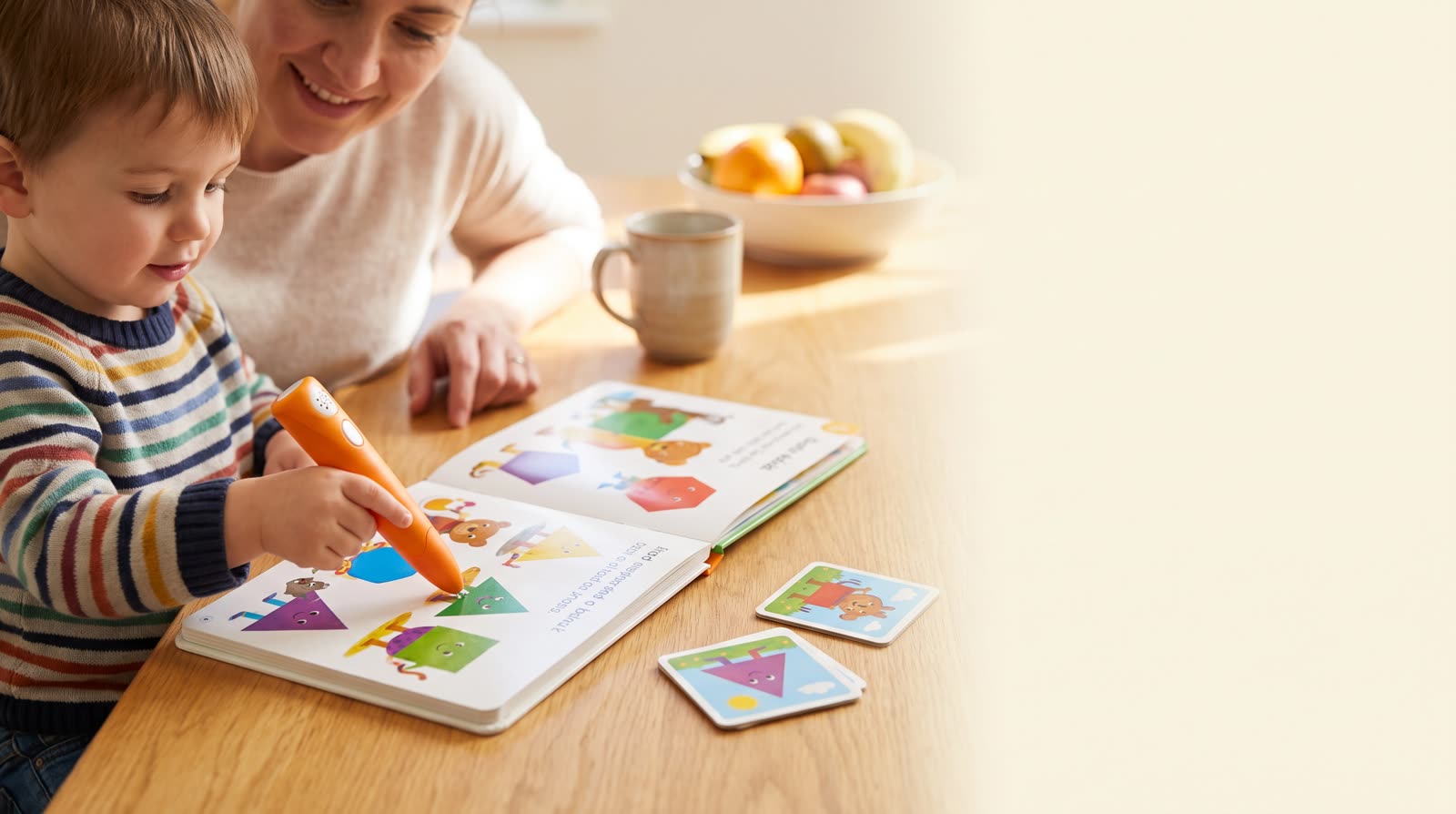
Choosing new talking picture books that integrate early math with vocabulary expansion requires a balanced evaluation of pedagogical design, linguistic density, optical code integration, and manufacturing quality standards. For B2B buyers, educational publishers, toy distributors, and institutional procurement specialists, curating a portfolio of interactive math titles involves looking beyond simple counting features to assess how well audio prompts introduce mathematical terminology—such as spatial relations, comparative attributes, and quantitative descriptors—alongside everyday language. According to American Academy of Pediatrics (AAP) early literacy guidelines, rich language exposure combined with interactive manipulation during formative years significantly enhances cognitive and linguistic development. Furthermore, aligning with Google helpful content standards, procurement professionals must ensure that product selections deliver genuine educational utility rather than superficial novelty. This guide outlines comprehensive criteria for evaluating, specifying, and sourcing early math talking picture books that foster both mathematical reasoning and rich vocabulary acquisition across global educational markets.
Evaluating Math-Linguistic Synergy in Interactive Book Publishing
Balancing Numerical Concepts with Descriptive Vocabulary
Early math talking picture books should never treat mathematics as merely rote counting or number recognition. Effective publishing selections integrate foundational numerical concepts with rich, descriptive vocabulary that contextualizes mathematical ideas in everyday scenarios. When reviewing publisher catalogs or sample manuscripts, procurement teams must assess whether the narrative and interactive sound spots introduce diverse lexical categories, including spatial prepositions (above, below, beside, inside, through), comparative adjectives (heavier, lighter, taller, shorter, wider, narrow, equal), and sequencing markers (first, second, next, finally, alternating). Interactive audio elements should prompt children not just to identify a number digit, but to articulate the underlying relationships between objects. For instance, rather than simply stating 'three apples,' an interactive audio prompt might ask, 'How many more apples are in the basket on the left than the right? Let's count together and compare their sizes.' This dual focus stimulates both mathematical thinking and expressive language skills, providing publishers and distributors with high-value products that resonate with modern early childhood educators and parents seeking holistic developmental tools.
OID Code Mapping and Audio Script Synchronization Quality
The technical backbone of any talking picture book series relies on flawless Optical Identification (OID) dot code mapping and audio script synchronization. When evaluating supplier samples, B2B buyers must conduct thorough functional checks to verify that OID invisible dot patterns printed on the page correspond precisely with the audio data loaded on the talking pen. Poorly synchronized audio or misaligned dot matrices lead to frustrating user experiences, audio latency, or mispronunciations that diminish educational value. Procurement specifications must mandate rigorous pre-press verification protocols, ensuring that audio scripts feature natural cadence, correct syllable stress, professional voice acting, and multi-language support where applicable. Publishers must inspect whether the interactive audio triggers include not only word-level pronunciations but also contextual sound effects, musical math rhymes, and open-ended questioning prompts that encourage children to repeat and expand upon the vocabulary heard through the pen speaker.
Designing and Selecting Pedagogically Sound Math Vocabulary Content
Age-Appropriate Mathematical Terminology and Scaffolding
Curating successful early math talking books requires careful calibration of cognitive load and vocabulary complexity across developmental stages. For younger cohorts (toddlers and early preschoolers), interactive content should focus on basic quantitative terms (more, less, all, none, add, take away) and fundamental shapes paired with tactile or visual auditory prompts. As target age groups advance toward kindergarten readiness, the content should seamlessly integrate advanced mathematical vocabulary such as symmetry, pattern repetition, capacity, measurement units, and spatial orientation. B2B buyers should request sample chapter outlines and audio transcript breakdowns to evaluate how the content scaffolds learning—gradually increasing lexical and numerical complexity without overwhelming the young learner. Ensuring that books support progressive skill development makes the product line more attractive to institutional buyers, such as preschool networks, daycare chains, and specialized educational supply distributors.
Interactive Prompt Design: Encouraging Open-Ended Verbalization
The primary advantage of talking picture books over static texts is their interactive capability. However, the design of these interactions dictates whether a child passively listens or actively builds vocabulary. Procurement specialists should prioritize books where audio prompts utilize open-ended questioning and conversational turn-taking models rather than closed yes/no questions. For example, an interactive spot placed next to a geometric pattern should prompt the child to describe what comes next, identify patterns in nature, or explain why a shape fits into a specific slot. This pedagogical approach aligns with recommendations from early childhood specialists, who emphasize that language acquisition flourishes when children are prompted to articulate their reasoning rather than merely repeating canned answers. Evaluating the script structure during sample review ensures that your product offering stands out in competitive international markets for its genuine educational depth and pedagogical rigor.
Ensuring Seamless Integration Between Talking Pens and Math Book Series
Optical Identification (OID) Compatibility and Reader Accuracy
A critical technical consideration in B2B hardware and software co-development is ensuring absolute compatibility between the talking pen firmware and the printed book's OID coding scheme. Different pen manufacturers utilize proprietary or standardized OID algorithms (such as Sonix or proprietary invisible dot patterns). When sourcing new math book titles, buyers must verify that the dot density, printing ink absorption rates, and varnish coatings do not interfere with the optical sensor of the target talking pen model. Factory specification reviews should include sample testing across multiple pen batches to guarantee low reading error rates, high recognition speed, and stable audio playback even under imperfect lighting conditions or with slightly worn pages. Maintaining strict print quality control standards prevents costly post-production returns and customer dissatisfaction.
Audio File Management, Storage Allocation, and Multi-Language Support
Modern educational markets demand versatility, including multi-language audio packs and expandable memory options. When establishing procurement contracts for talking book series, buyers must review how audio data files (.bnk, .wav, or compressed formats) are managed, updated, and downloaded onto the talking pen device. For global distribution, the ability to support dual-language audio files (e.g., English-Spanish, English-Mandarin, English-Arabic) within a single book layout is a major commercial advantage. Technical specifications should confirm internal memory capacity (e.g., 8GB or 16GB TF card expansion options), USB-C data transfer speeds, and user-friendly firmware update mechanisms that allow end-users or institutional administrators to easily manage content libraries and download new math curriculum packs as children progress.
ReadGlo project support
Get a Quote
Ready to expand your product catalog with premium talking picture books and interactive pens? Request our wholesale catalog and customized quotation today.
B2B Procurement Protocols: From Sample Review to Pre-Shipment Standards
Conducting Rigorous Prototype and Audio Synchronization Audits
Establishing a robust quality assurance pipeline is essential for mitigating risks in international publishing and toy supply chains. The procurement process should follow a structured sequence: initial specification review, physical sample evaluation, audio-visual synchronization audit, pilot production run inspection, and pre-shipment document verification. During the sample evaluation phase, quality control teams must test every interactive touchpoint on every page, verifying audio clarity, volume consistency, battery performance, and paper durability. Documenting these acceptance criteria in the formal purchase agreement ensures alignment between the buyer and the manufacturing partner regarding acceptable tolerance levels for print registration, OID read success rates, and acoustic output levels suitable for young ears.
Safety, Battery Compliance, and Regulatory Verification
Children's electronic educational products are subject to stringent international safety and compliance regulations. B2B buyers must ensure that all talking pens, charging cables, and paper book components comply with relevant standards such as ASTM F963, EN71, RoHS, and FCC regulations. Particular attention must be paid to battery safety, secure battery compartment designs, non-toxic soy-based inks, and rounded book corners suitable for young hands. According to safety advisories from the Consumer Product Safety Commission (CPSC) children's products guidelines, electronic items must be thoroughly certified to prevent electrical hazards, choking risks from small parts, or harmful chemical exposure. Always request up-to-date third-party testing certificates from accredited laboratories before finalizing bulk production orders.
Facilitating Effective Adult Mediation and Educator Collaboration
Supporting Parents and Teachers in Co-Reading Math Narratives
While talking pens provide interactive autonomy, educational research consistently demonstrates that children achieve the greatest vocabulary and mathematical gains when adults actively participate in co-reading sessions. Publishers and distributors can add significant value to their product offerings by including comprehensive adult mediation guides, teacher handbooks, and suggested extension activities inside the book covers or accompanying digital portals. These guides help parents and educators ask probing questions, connect abstract math concepts to everyday household objects, and expand upon the vocabulary introduced by the talking pen. Incorporating educator-friendly supplementary materials enhances the market appeal of the book series for schools, libraries, and institutional adoption.
Referencing Professional Guidelines for Early Childhood Development
When developing marketing collateral, teacher manuals, or product positioning statements for early math talking books, referencing recognized international organizations strengthens credibility and trust. Alongside AAP guidelines, incorporating insights from bodies such as the National Association for the Education of Young Children (NAEYC) or Reading Rockets ensures that the product messaging remains grounded in established pedagogical principles. B2B buyers should collaborate with publishing partners who incorporate evidence-based instructional strategies, ensuring that interactive math books effectively bridge playful audio technology with rigorous cognitive development.
Frequently Asked Questions
What key features should B2B buyers look for when selecting early math talking picture books?
Buyers should evaluate the pedagogical balance between numerical concepts and descriptive vocabulary, OID code printing accuracy, audio script quality, multi-language support, age-appropriate scaffolding, and compliance with international safety standards such as CPSC and EN71.
How do talking picture books contribute to vocabulary expansion in early mathematics?
By combining visual illustrations, interactive OID audio spots, and spoken prompts, talking books introduce spatial prepositions, comparative adjectives, and quantitative terms in context, encouraging children to repeat, verbalize, and actively engage with mathematical concepts.
What technical compatibility factors must be verified between talking pens and new book series?
Procurement teams must verify that the invisible OID dot pattern printed in the books matches the optical sensor specifications and firmware decoding algorithms of the target talking pen model, ensuring low error rates and reliable audio playback.
What safety and regulatory certifications are required for electronic children's books and talking pens?
Children's electronic products typically require compliance certifications such as ASTM F963 (US toy safety), EN71 (European toy safety), FCC, RoHS, and strict adherence to CPSC children's product safety guidelines regarding battery compartments, non-toxic inks, and small parts.
How can publishers ensure that interactive audio prompts promote active learning rather than passive listening?
Publishers should design audio scripts that utilize open-ended questioning, problem-solving prompts, and conversational cues, encouraging children to explain their reasoning or predict outcomes rather than just listening to rote number identification.
Conclusion
Selecting and procuring new talking picture books focused on early math and vocabulary expansion is a strategic investment for educational publishers, distributors, and toy brands. By rigorously evaluating the synergy between mathematical concepts and lexical richness, verifying OID technical compatibility, ensuring uncompromised safety compliance, and providing robust adult mediation resources, B2B buyers can curate high-performing product portfolios. Grounding your selection process in authoritative developmental guidelines ensures sustainable commercial success and delivers meaningful educational value to young learners worldwide.
Continue your research
Related reading pen buyer guides
Use these related guides to compare the next product, content, sourcing or channel decision in your project.
- Picture BooksHow Do I Choose New Talking Picture Books About Early Math to Support Bilingual Learning?Read this guide
- Picture BooksHow Do I Choose New Talking Picture Books About Early Math to Keep an Older Child Engaged?Read this guide
- Picture BooksHow Do I Choose New Talking Picture Books About Science and Nature to Support Bilingual Learning?Read this guide
Continue with ReadGlo
See product specifications and request model-specific documentation.
ReadGlo project support
Send Your Requirements
Partner with ReadGlo for reliable OEM/ODM manufacturing, rigorous quality assurance, and cutting-edge educational audio solutions. Send your project specifications today.