
Contents
Introduction
In the modern global educational publishing and toy distribution market, early childhood education requires innovative tools that bridge cognitive development and language acquisition. Combining early mathematics with bilingual learning through audio-enabled talking picture books presents a unique opportunity for educational institutions, distributors, and publishers. When sourcing or developing talking picture books focused on early math concepts—such as quantification, spatial awareness, patterning, and operational logic—in two or more languages, B2B buyers must evaluate multiple technical, pedagogical, and regulatory dimensions. This guide establishes a rigorous, E-E-A-T-aligned framework for publishers, school suppliers, and wholesale distributors to select, audit, and procure high-quality early math bilingual talking picture books that satisfy educators, parents, and international safety authorities.
Pedagogical Foundations of Early Math in Bilingual Contexts
Core Mathematical Concepts for Early Childhood Learners
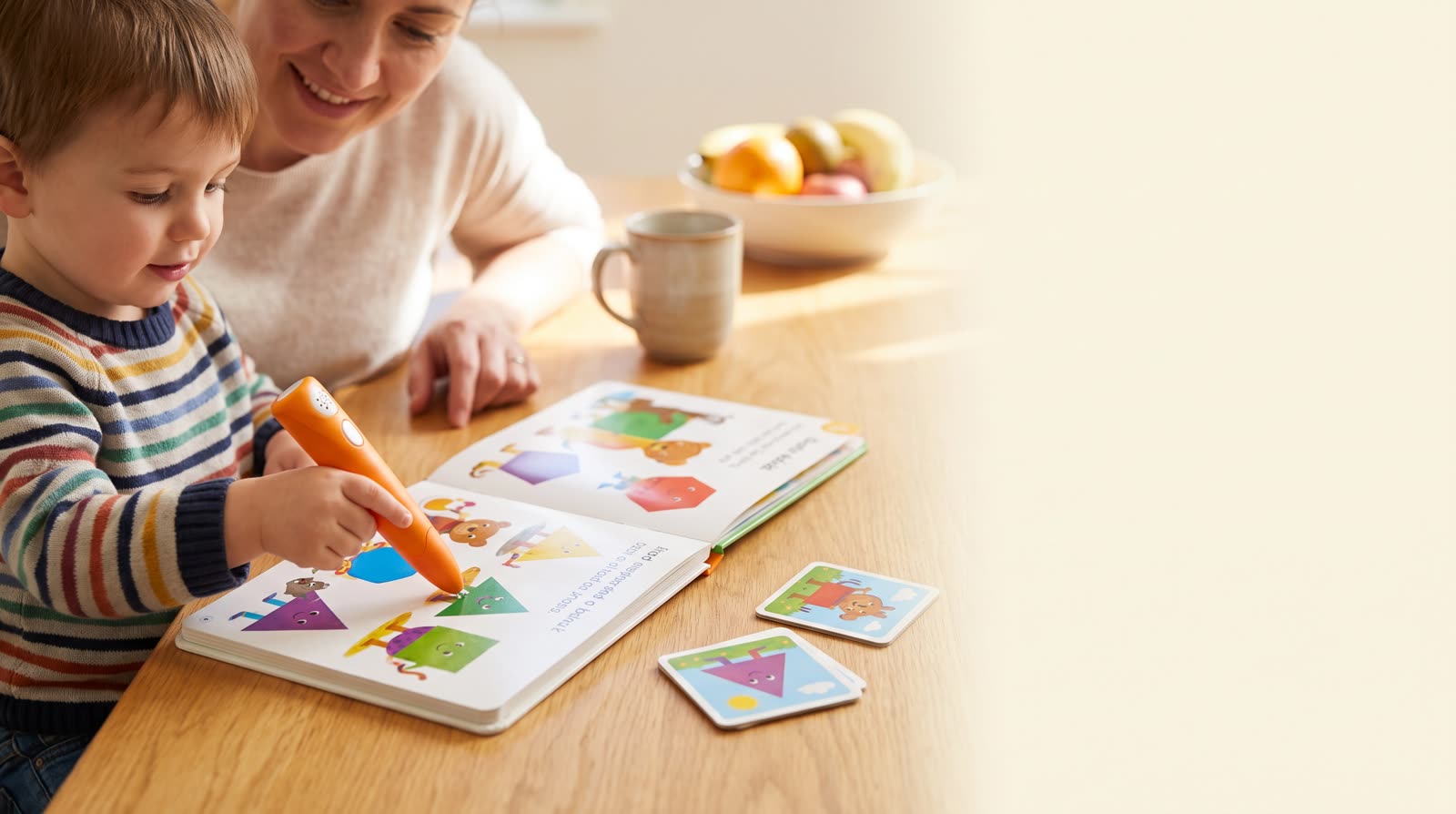
Early childhood mathematics goes beyond rote counting; it encompasses foundational spatial reasoning, sorting, seriation, measurement, and basic number sense. When designing or selecting talking picture books for this domain, B2B buyers must verify that the curriculum aligns with established developmental milestones recognized by organizations such as the National Association for the Education of Young Children (NAEYC) and early childhood experts. Content must introduce mathematical vocabulary naturally within narrative contexts rather than abstract drills. For instance, stories should embed counting, geometric shape identification, and comparative sizing (larger, smaller, heavier, lighter) into engaging storylines that invite child interaction via reading pens.
Integrating Bilingual Acquisition with Mathematical Logic
Bilingual education in early childhood enhances cognitive flexibility, executive function, and linguistic dexterity. However, introducing mathematical concepts simultaneously in two languages requires precise pedagogical scaffolding. Audio scripts must avoid cognitive overload by maintaining clear linguistic separation—such as assigning distinct characters, narrators, or interactive touch points to each language, or utilizing structured dual-language audio tracks. Publishers and distributors must ensure that mathematical terminology in both target languages is mathematically accurate and age-appropriate, consulting with bilingual educators and linguists during the manuscript review phase to prevent translation ambiguities that could impede numerical comprehension.
Audio Engineering and OID Technology Specifications
Optical Identification (OID) Code Mapping and Printing Precision
Talking picture books rely heavily on Optical Identification (OID) dot codes embedded invisibly within the printed illustrations or text. For early math books, where illustrations often feature complex geometric arrangements, countable objects, and distinct interactive zones, OID dot density and printing registration are critical. B2B procurement teams must audit printing suppliers for high-precision lithographic capabilities, ensuring that OID dot patterns do not interfere with artwork aesthetics while maintaining a 99.9% optical recognition rate across various lighting conditions and reading pen models. Code mapping must support multi-language switching, allowing children to tap the same illustration to hear the math vocabulary in Language A or Language B seamlessly.
Audio File Management, Bitrates, and Interactive Sound Design
The auditory experience directly influences user engagement and language retention. Audio production for bilingual math books requires professional voice talent with native fluency in both target languages, clear articulation, and appropriate pacing for young learners. Sound design should incorporate subtle auditory cues—such as a specific chime for correct counting sequences or gentle acoustic feedback upon touching interactive elements—without causing sensory fatigue. Technical specifications for audio storage on the reading pen chip generally require compressed yet high-fidelity formats (such as optimized MP3 or WAV encoded at appropriate bitrates) to balance storage capacity across multi-book library series with crystal-clear pronunciation.
Material Safety, Durability, and Regulatory Compliance
Paper Stock, Binding, and Physical Durability Standards
Educational materials utilized in preschools, kindergartens, and home environments undergo rigorous physical handling. B2B buyers must specify robust material standards, such as heavy-weight non-toxic cardboard stock (e.g., 350gsm to 400gsm duplex board for board books), rounded corners to prevent accidental scratching, and safe, eco-friendly matte lamination that minimizes glare and resists moisture from spills. Binding methods, whether heavy-duty case binding or robust wire-o stitching, must withstand repeated opening, page-turning, and tactile engagement without compromising structural integrity or exposing sharp edges.
Regulatory Compliance and Consumer Product Safety Protocols
Children's books and electronic reading accessories are subject to stringent international safety regulations. Importers and distributors must verify that all products comply with statutory frameworks such as the Consumer Product Safety Improvement Act (CPSIA) in the United States, ASTM F963 toy safety standards, and EN71 European toy safety directives. Materials must be tested for heavy metal content, phthalates, and toxic printing inks. Furthermore, reading pens and rechargeable battery components must adhere to strict electrical safety standards. As outlined by the Consumer Product Safety Commission (CPSC), buyers should demand comprehensive, accredited third-party test reports and verify that electronic components include built-in overcharge protection and secure battery compartments.
ReadGlo project support
Request B2B Catalog
Explore ReadGlo's comprehensive collection of bilingual talking picture books and customizable reading pen solutions for educational publishers and distributors.
Evaluation, Sample Testing, and Quality Assurance Protocols
Establishing a Rigorous Sample Review and In-House Testing Workflow
Before committing to volume manufacturing or large-scale distribution, procurement professionals must institute a structured sample evaluation workflow. This includes functional testing of OID recognition latency across various reading pen firmware versions, acoustic clarity evaluations in simulated classroom environments, and stress-testing book bindings and page coatings. Educational consultants and bilingual teachers should review physical and audio samples to ensure that the mathematical progression aligns with curricular goals and that bilingual audio prompts are culturally resonant and linguistically natural.
Supply Chain Transparency and Pre-Shipment Inspection Checklists
Maintaining consistent quality across mass production requires rigorous quality assurance protocols. B2B buyers should establish clear specifications covering paper weight tolerances, color fidelity matching against approved proofs, OID code scannability thresholds, and electronic accessory drop-resistance parameters. Independent pre-shipment inspections (PSI) should be conducted based on Acceptable Quality Limit (AQL) standards to verify that bulk production matches approved golden samples before goods are dispatched to international distribution centers.
Strategic Inventory, Publishing Partnerships, and Customization
OEM/ODM Customization for Regional Curricula and Languages
Different educational markets have unique curricular mandates and linguistic requirements. Publishers and distributors often benefit from partnering with experienced manufacturing and publishing partners capable of OEM (Original Equipment Manufacturer) and ODM (Original Design Manufacturer) services. Customization capabilities should encompass translating and re-recording audio tracks into regional dialects, adapting mathematical story themes to local cultural contexts, and tailoring OID firmware integration to proprietary reading pen hardware platforms.
Inventory Management and Scalable Distribution Strategies
Balancing seasonal demand spikes in the educational sector—such as back-to-school purchasing cycles—requires strategic inventory planning and agile logistics partnerships. Publishers and wholesale distributors must coordinate production lead times, freight consolidation, and firmware update distribution channels (such as cloud-based audio pack downloads for reading pens) to ensure a seamless supply chain from factory floor to end-user classrooms and retail shelves.
Frequently Asked Questions
What key pedagogical criteria should B2B buyers look for in early math talking picture books?
Buyers should verify that the books cover foundational concepts such as counting, spatial reasoning, patterns, and measurement in a narrative context. Content must be developmentally appropriate, scaffolded for young learners, and reviewed by early childhood education specialists.
How does bilingual audio mapping work in optical recognition (OID) talking books?
OID dot codes printed on the pages are scanned by the reading pen's optical sensor. In bilingual editions, touching specific interactive zones or toggling language selection icons switches the firmware audio library, allowing children to hear the exact same math concept pronounced in two distinct languages.
What safety certifications are required when importing children's interactive books and pens?
Products must comply with international safety standards such as CPSIA and ASTM F963 in the US, and EN71 in Europe. This includes non-toxic, lead-free printing inks, child-safe binding, and strict electrical and battery safety certifications for electronic accessories as overseen by authorities like the CPSC.
How can publishers ensure translation and audio accuracy for bilingual math content?
Publishers should collaborate with native-fluent bilingual educators and certified translators specializing in early childhood pedagogy. Voice talent must possess professional recording studio backgrounds with clear pronunciation and appropriate pacing for young learners.
What is the recommended protocol for conducting pre-shipment inspections on bulk orders?
Buyers should utilize independent inspection agencies to evaluate mass production against approved golden samples using established Acceptable Quality Limit (AQL) sampling. Key checks include OID scannability, audio playback fidelity, paper stock durability, and packaging integrity.
Conclusion
Selecting and publishing early math talking picture books for bilingual learning is a sophisticated undertaking that demands rigorous attention to pedagogical design, optical audio engineering, material safety, and supply chain quality assurance. By partnering with experienced manufacturers and adhering to international safety and educational standards, B2B publishers, distributors, and educational institutions can deliver impactful, engaging learning tools that foster early mathematical competence and bilingual fluency. As the global educational landscape continues to evolve, maintaining uncompromising standards in content quality and technical reliability remains the cornerstone of long-term market success.
Continue your research
Related reading pen buyer guides
Use these related guides to compare the next product, content, sourcing or channel decision in your project.
- Picture BooksHow Do I Choose New Talking Picture Books About Early Math to Expand Vocabulary?Read this guide
- Picture BooksHow Do I Choose New Talking Picture Books About Science and Nature to Encourage Independent Exploration?Read this guide
- Picture BooksHow Do I Choose New Talking Picture Books About Science and Nature to Support Bilingual Learning?Read this guide
Continue with ReadGlo
See product specifications and request model-specific documentation.
ReadGlo project support
Send Your Requirements
Partner with ReadGlo to develop bespoke early math interactive book series and OID audio solutions tailored to your regional curriculum and market.