
Contents
Introduction
Selecting educational technology and interactive publishing products for older children—typically spanning ages six to nine—presents distinct developmental and design challenges compared to early toddler programming. When curating or publishing talking picture books centered on social-emotional learning (SEL) for this demographic, stakeholders such as school distributors, educational publishers, and institutional buyers must look beyond basic phonics or simple vocabulary matching. Older children demand narrative depth, sophisticated emotional dilemmas, and interactive mechanics that respect their growing cognitive autonomy and desire for peer affiliation. Without careful evaluation of narrative complexity, audio architecture, and pedagogical alignment, interactive books risk alienating older readers who may perceive simplistic interfaces as juvenile. This comprehensive B2B guide outlines rigorous evaluation frameworks, pedagogical standards, and technical considerations for procurement teams seeking to source high-engagement SEL talking books that support healthy emotional development while sustaining long-term user interaction.
Understanding the Developmental and Cognitive Needs of Older Children in SEL Contexts
Shifting from Basic Emotion Recognition to Perspective-Taking and Conflict Resolution
Early childhood SEL materials typically focus on foundational emotional literacy, such as identifying primary facial expressions (happy, sad, angry) and naming basic feelings. However, children in the early elementary and upper elementary grades navigate increasingly complex social ecosystems involving peer negotiation, empathy, impulse control, and ethical decision-making. When evaluating talking picture books for this cohort, B2B buyers must examine whether the narrative content moves beyond superficial emotional labeling. Effective materials present multi-perspective scenarios where characters experience ambiguous feelings, moral dilemmas, or interpersonal friction. Interactive features should prompt the reader to pause, evaluate alternative courses of action, and consider the emotional impact of choices on different community members. This approach fosters critical thinking and aligns with evidence-based frameworks established by organizations such as the Collaborative for Academic, Social, and Emotional Learning (CASEL).
Evaluating Narrative Complexity and Relatable Scenarios for Upper Elementary Learners
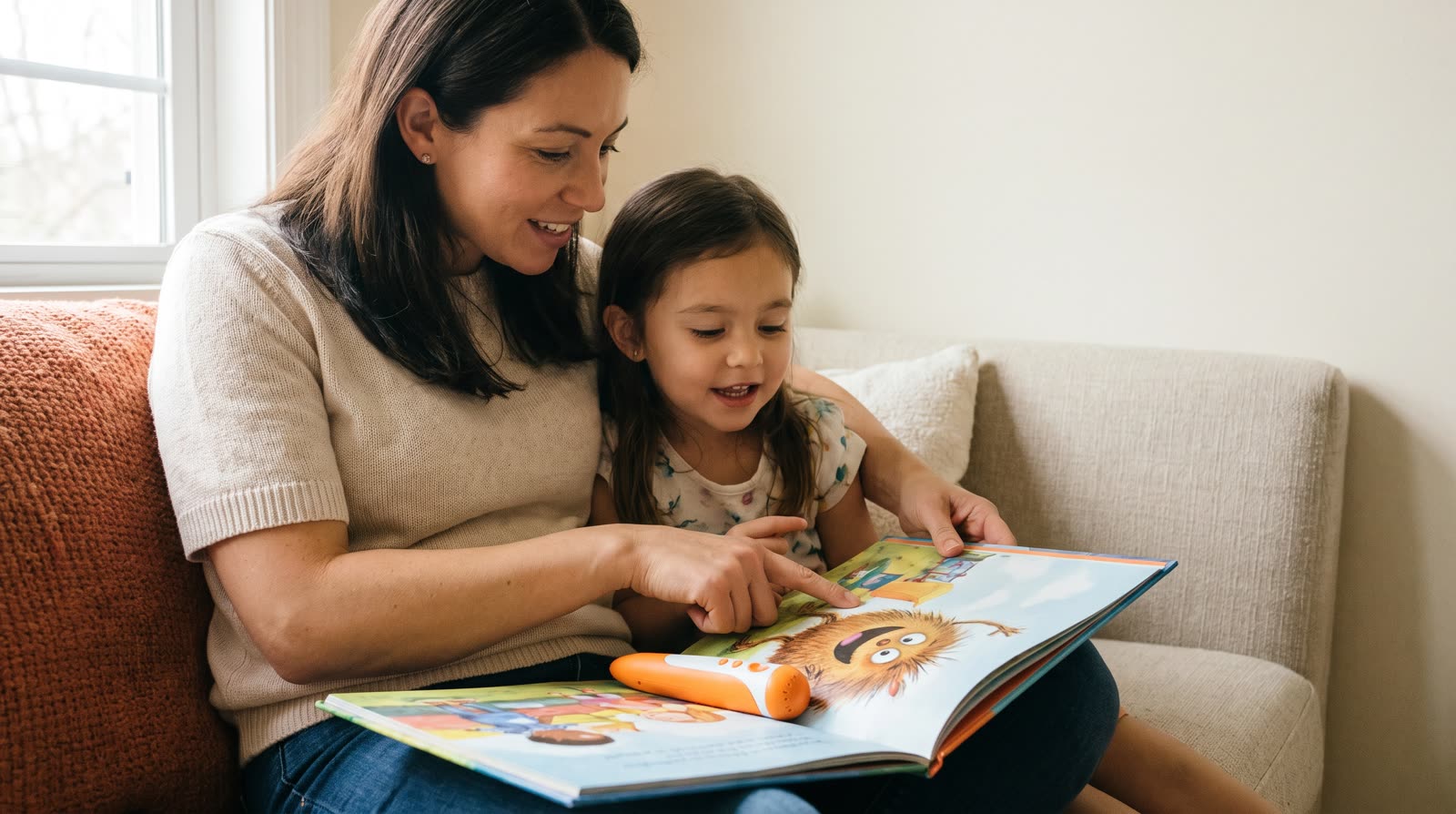
Maintaining engagement among older children requires storylines that reflect their lived experiences and developing independence. Themes such as academic pressure, teamwork dynamics, exclusion, digital citizenship, and coping with failure resonate strongly with this age group. Publishers and distributors should review manuscript outlines and sample spreads to ensure the storytelling avoids didactic moralizing, favoring instead open-ended narratives that invite reader interpretation. The integration of audio elements via optical reading technology must enhance rather than distract from this narrative depth. Instead of reading simple text aloud verbatim, audio tracks should provide internal monologues, ambient environmental soundscapes, or secondary character dialogue that enriches the subtext. By treating the talking pen as a dynamic narrative layer rather than a mere reading assistant, products successfully capture the attention of older children who might otherwise outgrow traditional interactive books.
Technical and Interactive Specifications of Talking Pens for Older Audiences
Multi-Layered Audio Architecture and Open-Ended Prompting
The hardware and software ecosystem supporting interactive books must evolve alongside the cognitive capabilities of older users. Basic talking pen models rely on single-track audio files linked to optical dot codes (OID codes) printed beneath illustrations or text. For older children, this single-layer interaction can feel restrictive. Advanced talking pen systems utilized in professional publishing incorporate multi-tiered audio architecture. Tapping different areas of an illustration can yield contrasting character viewpoints, background sound effects that contextualize emotional tension, or reflective discussion prompts that encourage the child to articulate their own thoughts aloud. Procurement specialists should verify that firmware supports customizable audio packaging, multi-language toggles, and expandable memory capacity to accommodate richer narrative scripts and higher-fidelity audio recordings.
Optical Code Integration, Durability, and Ergonomic Design
While toddler-oriented pens often feature chunky, brightly colored housings with simplified button layouts, older children require hardware that feels mature, reliable, and comfortable during extended study or leisure sessions. Ergonomic profiling, sleek finishes, and intuitive power management are essential hardware considerations for school and library environments. Furthermore, optical code integration requires high-precision printing standards. The OID dot patterns must remain unobtrusive within sophisticated, mature illustration styles without compromising visual aesthetics. B2B purchasers must collaborate closely with manufacturing partners to ensure that CMYK or specialized varnish printing processes preserve dot readability while maintaining vibrant, professional-grade visual presentation suitable for an older demographic.
ReadGlo project support
Request B2B Product Catalog
Explore our comprehensive collection of advanced talking picture books and interactive audio solutions tailored for modern educational markets.
B2B Procurement and Quality Assurance Frameworks for Publishers and Distributors
Curating Content Alignment with Evidence-Based Educational Frameworks
Institutional buyers, school districts, and retail distributors face rigorous scrutiny regarding the educational validity of the products they offer. When sourcing SEL-focused talking picture books, procurement teams should request comprehensive editorial outlines detailing how the curriculum addresses recognized standards, such as self-awareness, social awareness, relationship skills, and responsible decision-making. Collaborating with educational consultants, child psychologists, or experienced educators during the product development phase ensures that the emotional scenarios depicted are developmentally appropriate and sensitive to diverse cultural backgrounds. B2B catalogs should clearly articulate the pedagogical goals of each title, enabling educators to integrate the books seamlessly into existing guidance counselor toolkits, library collections, or classroom emotional regulation centers.
Rigorous Sample Review Protocols, Audio File Management, and Compliance
A structured sample review protocol is essential before committing to large-scale manufacturing or distribution agreements. Procurement teams should establish clear evaluation phases, including physical prototype inspection, optical code scanning reliability tests across various paper stocks and finishes, and exhaustive audio synchronization checks. Audio file management—ensuring correct bitrates, clear voice acting, and zero latency between pen contact and audio playback—directly impacts user retention. Additionally, compliance with international toy and children's product safety standards, such as CPSC guidelines for electronic learning aids, is mandatory. Buyers must review material safety datasheets (MSDS) for battery compartments, non-toxic soy-based inks, and durable binding materials to guarantee long-term safety in institutional settings.
Implementation Strategies and Adult Mediation in Educational and Retail Settings
Balancing Independent Exploration with Guided Facilitation
Even with advanced interactive technology, the greatest gains in social-emotional learning occur when children have opportunities for guided discussion and collaborative reflection. While talking picture books empower older children to explore sensitive topics independently without fear of immediate judgment, educators and parents play a vital role in scaffolding these experiences. B2B suppliers can add substantial value to their product offerings by providing accompanying digital teacher guides, discussion prompt cards, and workshop materials. These supplementary assets help educators facilitate group circles or one-on-one mentoring sessions, connecting the emotional themes explored in the interactive book to real-world classroom dynamics and interpersonal problem-solving.
Integrating Talking Books into Library Lending and School Curricula
For educational distributors targeting school libraries and literacy centers, product versatility is a key purchasing driver. Interactive talking book sets should be packaged with durable storage cases, rechargeable docking stations, and easily replaceable headphone splitters to accommodate multi-user environments. Furthermore, clear instructions on digital firmware updates and audio file replenishment ensure that institutions can refresh content libraries cost-effectively. Distributors should evaluate manufacturers on their willingness to provide scalable licensing options, customizable packaging for institutional branding, and robust after-sales technical support to streamline long-term deployment across multiple school districts.
Frequently Asked Questions
What age range is considered optimal for advanced social-emotional talking picture books?
Advanced SEL talking picture books are generally tailored for children aged six to nine (early to upper elementary grades). At this stage, children transition from basic emotional recognition to complex peer dynamics, perspective-taking, and collaborative problem-solving, requiring more sophisticated narrative structures and multi-layered audio interactions.
How do multi-layered audio pens differ from standard toddler talking pens?
While standard toddler pens typically trigger single-word pronunciations or simple sound effects from basic OID codes, multi-layered audio pens for older children support contextual dialogue, ambient environmental soundscapes, alternative character viewpoints, and open-ended reflective prompts that encourage critical thinking and discussion.
What safety and compliance standards should B2B buyers verify for electronic talking books?
Procurement teams must ensure that products comply with recognized children's product safety regulations, such as CPSC guidelines in the United States and equivalent international safety standards. This includes verifying non-toxic materials, secure battery compartments, child-safe volume limitations, and durable electronic components suitable for institutional use.
How can publishers ensure that SEL content resonates across diverse cultural contexts?
Publishers should collaborate with international educational consultants, child psychologists, and local educators during the development phase. Universal emotional themes like empathy, friendship, and resilience should be paired with adaptable artwork and localized audio scripts that respect cultural nuances and regional educational frameworks.
What supplementary support should B2B suppliers provide to educational distributors?
Suppliers should offer comprehensive digital teacher guides, structured discussion prompts, durable library packaging, clear firmware update protocols, and responsive technical support to help schools and institutional buyers successfully integrate interactive book sets into existing curricula.
Conclusion
Curating and publishing talking picture books focused on social-emotional learning for older children requires a delicate balance of advanced narrative design, robust hardware engineering, and sound pedagogical principles. As educational institutions and retail markets increasingly demand tools that foster emotional intelligence alongside literacy, B2B buyers must prioritize products that offer multi-layered audio interactions, mature thematic depth, and strict safety compliance. By partnering with experienced manufacturers who understand the unique developmental needs of early elementary and upper elementary learners, publishers and distributors can deliver high-impact educational solutions that sustain engagement, inspire empathy, and support lifelong learning journeys.
Continue your research
Related reading pen buyer guides
Use these related guides to compare the next product, content, sourcing or channel decision in your project.
- Picture BooksHow Do I Choose New Talking Picture Books About Social-Emotional Learning to Expand Vocabulary?Read this guide
- Picture BooksSourcing Talking Picture Books for Storytelling and Independent Exploration: B2B Evaluation and Quality FrameworkRead this guide
- Picture BooksHow Do I Choose New Talking Picture Books About Storytelling and Creative Thinking to Prepare for Preschool?Read this guide
Continue with ReadGlo
See a DOT-code picture-book set designed for guided early-learning programs.
ReadGlo project support
Contact Our Partnership Team
Ready to expand your educational product portfolio with high-engagement SEL talking books? Send your specifications and partnership requirements to our team today.