
Contents
Introduction
Preparing young children for preschool requires educational resources that bridge oral language development, narrative comprehension, and imaginative thinking. In the B2B educational publishing and toy sectors, selecting new talking picture books—where optical dot-coded text interacts with an electronic talking pen—demands a rigorous evaluation of both pedagogical value and manufacturing standards. This guide outlines the essential criteria for B2B buyers, preschool administrators, and publishing distributors seeking to curate high-quality interactive book titles that support preschool readiness without relying on unverified claims or exaggerated developmental guarantees. By focusing on structured storytelling frameworks, robust audio integration, and strict safety compliance aligned with authorities such as the American Academy of Pediatrics (AAP) and the Consumer Product Safety Commission (CPSC), buyers can make informed, professional procurement decisions.
Understanding Preschool Readiness Through Storytelling and Creative Thinking
The Developmental Role of Narrative Skills in Early Childhood
Storytelling forms the foundation of literacy and cognitive organization in early childhood. For children approaching preschool age, listening to and retelling simple narratives helps build vocabulary, sequence events, and understand cause-and-effect relationships. Interactive talking picture books enhance this process by providing synchronized audio models—such as character voices, sound effects, and narrated text—that reinforce phonological awareness. B2B buyers evaluating narrative content should look for structured story arcs with clear character motivations, predictable yet engaging plots, and rich, age-appropriate vocabulary that encourages children to express their own thoughts.
Fostering Open-Ended Creative Thinking with Interactive Audio
Creative thinking in preschool preparation involves more than passive listening; it requires active engagement, questioning, and imaginative play. Talking books that prompt children to predict story outcomes, explore alternative character actions, or interact with hidden sound triggers stimulate divergent thinking. When assessing new titles, educational publishers and distributors should examine whether the audio prompts encourage open-ended inquiry rather than simple rote response. This approach aligns with modern early childhood frameworks that prioritize active problem-solving and social-emotional exploration over static memorization.
Core Criteria for Evaluating Talking Picture Books for B2B Procurement
Audio Code Compatibility and Optical Dot-Code Accuracy
The technical backbone of any talking book program is the precision of its optical dot-coding (such as OID technology). During procurement and sample review, technical teams must verify that the printed dot patterns integrate seamlessly with standard talking pen hardware without reading latency or misfires. B2B buyers must request pre-production sample batches to test decoding accuracy across different lighting conditions and paper finishes. Ensuring robust firmware and software compatibility between books and pens is critical for reducing post-sale support issues in classroom or retail environments.
Content Appropriateness, Narrative Structure, and Vocabulary Scaling
Preschool-bound children exhibit diverse developmental stages, making vocabulary scaling and visual-textual balance essential selection criteria. Text density must be appropriate for early attention spans, typically featuring short, rhythmic sentences paired with expressive illustrations that provide visual context for unfamiliar words. Furthermore, narrative themes should reflect familiar preschool social environments—such as sharing, cooperative play, and emotional regulation—helping children mentally prepare for the transition to a structured group setting.
Material Safety, Durability, and Regulatory Compliance for Preschool Environments
Non-Toxic Materials, Rounded Edges, and Tear-Resistant Substrates
Books destined for preschool classrooms and young children must withstand heavy handling, moisture, and frequent use. B2B buyers should specify durable paper stocks (such as heavy-weight board books or laminated offset paper with rounded safety corners) and non-toxic, child-safe soy-based inks. Compliance with international toy and book safety standards, including EN71 and ASTM F963, is non-negotiable. Procurement contracts must explicitly require material safety data sheets and batch testing reports from accredited third-party laboratories.
Battery Safety, Compartment Security, and CPSC Guidelines
Because talking book programs frequently involve electronic accessories like rechargeable or battery-operated talking pens and charging docks, safety governance is paramount. Buyers must adhere strictly to guidelines set by regulatory bodies such as the Consumer Product Safety Commission (CPSC). Battery compartments on accompanying hardware must feature secure, screw-fastened doors to prevent child access. For general product care and safety, users should conduct low-risk external inspections only; never attempt to disassemble electronic components. If devices show signs of moisture damage, abnormal heat, swelling, leakage, or smoke, discontinue use immediately, avoid charging, and contact the manufacturer or authorized service channels.
ReadGlo project support
Request Sample Catalog
Explore ReadGlo's certified interactive talking picture book series designed for preschool readiness and early childhood development.
Pedagogical Guidance and Adult Mediation in Preschool Preparation
Scaffolded Learning and Adult-Child Co-Engagement
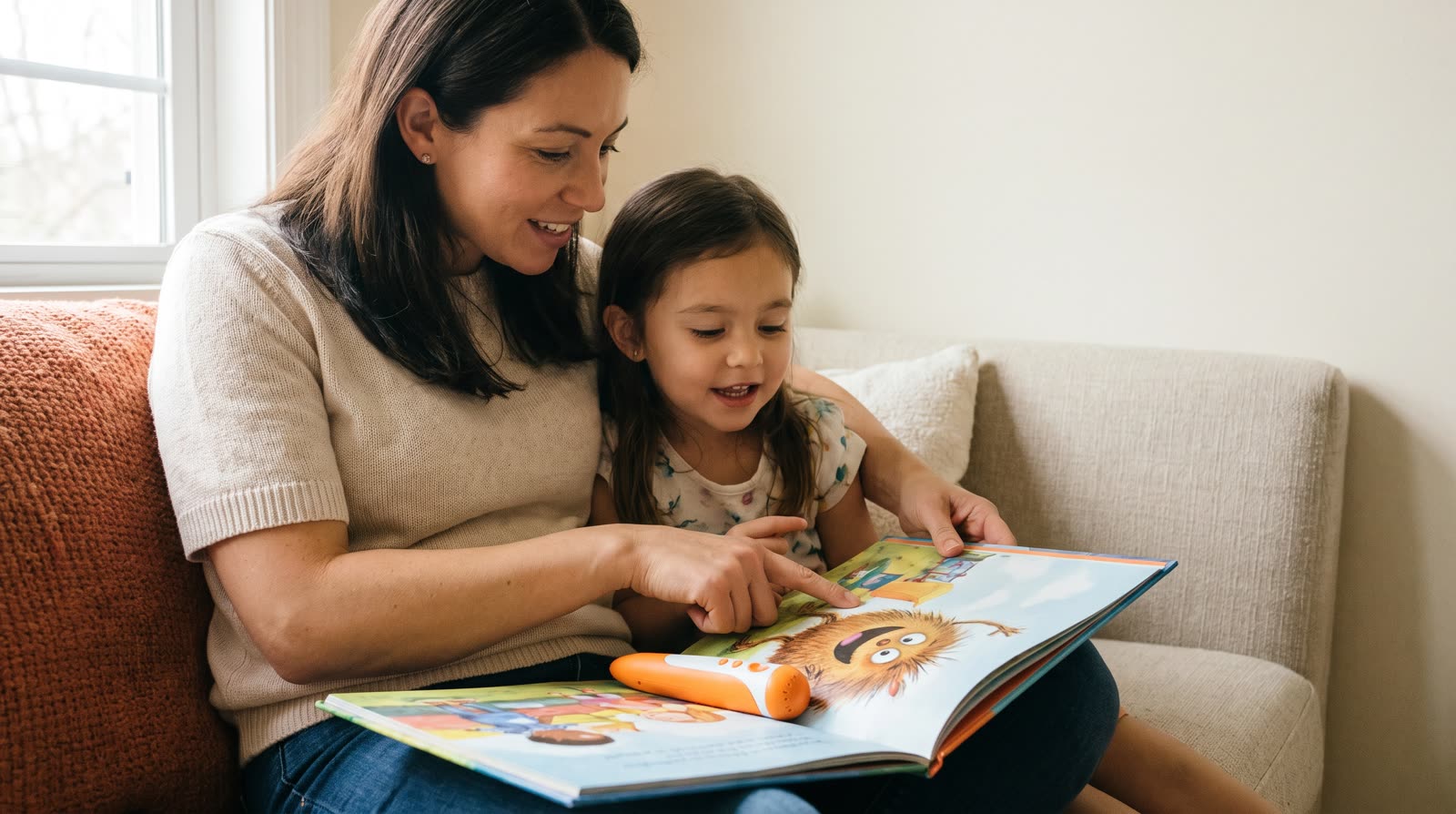
Interactive media is most effective when embedded within scaffolded adult-child interactions. Publishers and educational distributors should provide accompanying teacher guides, parent brochures, or digital resource portals that encourage co-reading and guided discussion. Adults play a vital role in asking open-ended questions about the story, connecting book plots to real-world preschool experiences, and helping children articulate their feelings. Designing books that prompt adult-child dialogue enhances the overall educational value of the program.
Integrating Insights from Professional Educational Bodies
Curriculum developers and B2B buyers should ground their product selection in research published by recognized educational and health authorities. For instance, guidance from the American Academy of Pediatrics (AAP) emphasizes the importance of interactive, shared media reading that promotes social communication over solitary screen time. Similarly, resources from organizations like Reading Rockets provide valuable frameworks for evaluating early literacy milestones and vocabulary acquisition. Referencing these standards ensures that commercial offerings meet professional educational expectations.
Supplier Evaluation, Sample Review, and Custom Publishing Workflows
Establishing Spec Sheets and Pre-Production Audio Testing
When partnering with manufacturers like ReadGlo for OEM/ODM talking book projects, buyers must establish detailed specification sheets covering paper grammage, binding strength, audio file formats (such as WAV or MP3 coding specs), and memory allocation. Pre-production sample reviews should involve rigorous testing of audio clarity, speaker output levels, and dot-code readability. Clear communication protocols regarding artwork submission, audio scripting, and linguistic localization prevent costly revisions during mass production.
Managing Pre-Shipment Quality Control and Documentation Audits
A disciplined quality control (QC) workflow safeguards supply chain integrity. B2B importers should establish clear pre-shipment inspection protocols based on Acceptable Quality Limit (AQL) standards. Inspection checklists must cover physical integrity, sound synchronization, packaging drop tests, and barcode scannability. Furthermore, verifying all compliance certificates and shipping documentation ensures smooth customs clearance and regulatory alignment across target export markets.
Frequently Asked Questions
What key features should B2B buyers look for when selecting talking picture books for preschool preparation?
B2B buyers should evaluate optical dot-code accuracy, durable paper substrates (such as board book formats), age-appropriate vocabulary scaling, narrative themes that foster social-emotional readiness, and strict regulatory compliance (such as EN71, ASTM, and CPSC guidelines).
How do talking picture books support storytelling and creative thinking in young children?
By combining synchronized audio narration, character voices, and sound effects with visual storytelling, talking books engage multiple senses. Titles that incorporate interactive questions and open-ended audio prompts encourage children to predict outcomes, explore alternative actions, and develop divergent thinking skills essential for preschool.
What safety precautions should be communicated regarding electronic talking pens and charging accessories?
Users should conduct low-risk external inspections only and never attempt to disassemble electronic devices. If any device exhibits moisture, unusual heat, swelling, leakage, or smoke, immediately cease use, do not charge, and contact the manufacturer or authorized service channels in accordance with CPSC safety recommendations.
How can educational distributors ensure audio file and optical code compatibility across different manufacturing batches?
Distributors should establish rigid technical specification sheets, require pre-production sample sign-offs, verify OID dot-code consistency with target pen firmware, and conduct systematic pre-shipment quality control audits.
Conclusion
Selecting new talking picture books focused on storytelling and creative thinking for preschool preparation requires a balanced synthesis of engaging narrative design, robust interactive technology, and uncompromising safety standards. For B2B buyers, educational distributors, and preschool administrators, partnering with experienced manufacturers like ReadGlo ensures access to certified, high-quality interactive publishing solutions. By adhering to evidence-based frameworks from authoritative bodies such as the AAP and CPSC, and by maintaining rigorous pre-production evaluation workflows, stakeholders can deliver impactful early literacy programs that successfully support children as they transition into preschool environments.
Continue your research
Related reading pen buyer guides
Use these related guides to compare the next product, content, sourcing or channel decision in your project.
- Picture BooksHow Do I Choose New Talking Picture Books About Social-Emotional Learning to Expand Vocabulary?Read this guide
- Picture BooksHow Do I Choose New Talking Picture Books About World Cultures and Geography to Encourage Independent Exploration?Read this guide
- Picture BooksHow Do I Choose New Talking Picture Books About Social-Emotional Learning to Keep an Older Child Engaged?Read this guide
Continue with ReadGlo
See a DOT-code picture-book set designed for guided early-learning programs.
ReadGlo project support
Contact Our B2B Specialists
Partner with ReadGlo for customized talking pen solutions, OEM/ODM publishing support, and comprehensive early literacy catalog access.