
Contents
Introduction
In early childhood education and educational product curation, the intersection of social-emotional learning (SEL) and targeted vocabulary expansion represents a cornerstone of holistic development. For B2B buyers, school suppliers, and educational publishers sourcing talking picture books and optical reading pen systems, selecting titles that effectively build emotional literacy while enriching lexical repertoires requires rigorous pedagogical, technical, and safety evaluations. Rather than relying on generic content or unverified learning guarantees, professional curation demands a structured framework grounded in developmental research from recognized authorities such as the American Academy of Pediatrics (AAP) and Reading Rockets. This guide outlines comprehensive criteria for evaluating SEL talking picture books, ensuring distributors, educators, and manufacturers align on high standards of quality, safety, and engagement.
1. Core Pedagogical and Linguistic Criteria for SEL Talking Picture Books
Integrating Emotional Literacy with Vocabulary Scaffolding
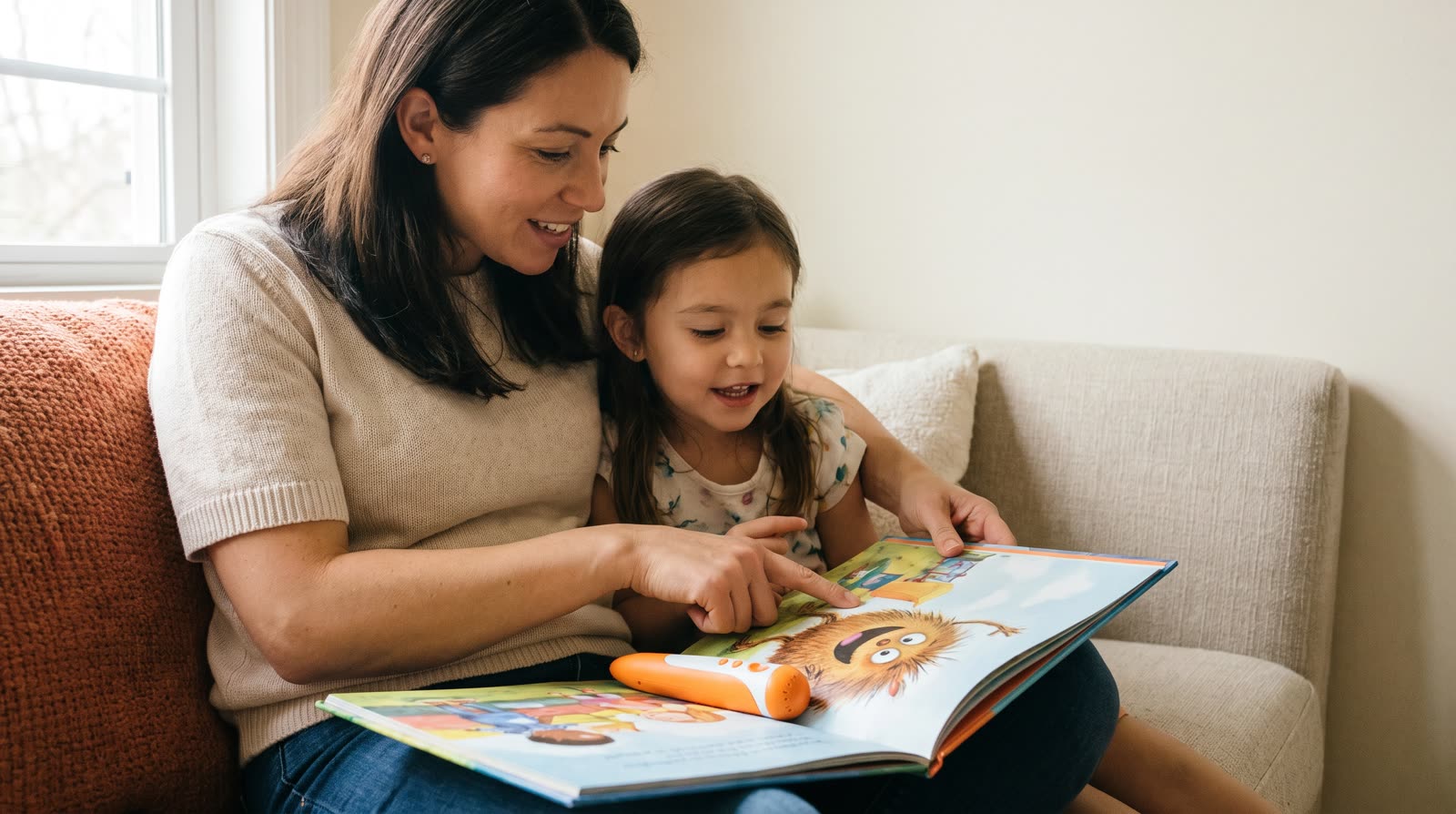
Social-emotional learning (SEL) books must introduce complex emotional concepts—such as frustration, empathy, anticipation, and resilience—using concrete, relatable narratives. When paired with talking pen technology, these books offer a dual-channel learning experience where visual illustrations and auditory prompts reinforce word meanings. B2B buyers should evaluate whether the vocabulary introduced moves beyond basic emotion labels (e.g., happy, sad) into nuanced lexical domains (e.g., hesitant, overwhelmed, determined, cooperative). Publishers and distributors must verify that text-to-audio synchronization supports contextual word learning without overwhelming the young reader's cognitive load. Adult mediation, as highlighted in early literacy frameworks, remains essential to help children connect auditory definitions with real-world emotional experiences.
Evaluating Narrative Structures for Conversational Turn-Taking
Effective SEL picture books utilize narrative structures that naturally invite dialogue between children and caregivers or educators. When assessing new book titles for wholesale catalogs, procurement teams should examine whether the interactive audio hotspots on the page encourage open-ended questions rather than simple yes/no responses. Interactive reading pens can be programmed to prompt reflective questions, simulate character dialogues, or offer soundscapes that enhance emotional immersion. This interactive design supports expressive language development and encourages children to articulate their internal states, fostering both linguistic competence and social awareness.
Age-Appropriate Lexical Progression and Decoding Support
Vocabulary expansion in early childhood requires a careful balance between familiar sight words and challenging target vocabulary. Curation teams should review sample texts to ensure that new emotional and descriptive terms are introduced incrementally and reinforced through repeated exposure across the narrative arc. For children with diverse learning needs or developing language skills, visual cues and clear auditory articulation via reading pens provide crucial scaffolding. However, educational distributors must ensure that product marketing avoids unverified diagnostic claims or guarantees of accelerated learning outcomes, maintaining an objective focus on supportive developmental exposure.
2. Technical and Audio Integration Standards for Read-Along Systems
Optical Code Accuracy and Paper Surface Reflectivity
The seamless interaction between a reading pen and talking picture books relies on precise optical dot-code printing (often using specialized OID or invisible dot patterns). B2B buyers must inspect sample print runs to ensure that paper stock selection, ink density, and surface reflectivity prevent optical scanning errors. High-gloss finishes can cause glare that interferes with the optical sensor, while overly porous paper can distort dot-matrix patterns. Establishing strict print production guidelines with manufacturing partners ensures reliable audio triggering across every page spread, minimizing return rates and technical friction in classroom or home environments.
Multi-Language Audio Encoding and Interactive Hotspots
For international markets and bilingual learning environments, talking picture books frequently require multi-language audio files encoded into the reading pen's firmware or downloadable book packs. Procurement specialists should verify that audio file management supports clean channel separation, natural cadence, and professional voice acting that models expressive reading. Interactive hotspots should be strategically distributed across illustrations, character dialogue bubbles, and background elements, allowing children to explore lexical variations without causing sensory overload or accidental audio triggering.
Durability, Ergonomics, and Safe Tactile Materials for Young Learners
Because talking picture books and reading pens are handled by young children, physical durability is a critical procurement criterion. Books should feature tear-resistant, heavy-weight paper stock, child-safe binding, and non-toxic coatings that withstand repeated handling and page-turning. Similarly, optical reading pens must feature ergonomic grips suited for small hands, impact-resistant outer shells, and secure battery compartments. Buyers should request independent laboratory test reports verifying compliance with international toy and book safety standards before finalizing large-scale wholesale orders.
3. B2B Evaluation, Sourcing, and Specification Review Protocols
Reviewing Sample Books and Audio File Mapping
The sample review phase is the cornerstone of B2B quality assurance. Before committing to volume production, wholesale buyers and educational distributors must thoroughly test physical sample kits. This process includes verifying that every printed optical code correctly triggers its corresponding audio file, checking for latency issues in pen response, and ensuring that audio files match the written text precisely. Collaboration between publishers, software developers, and manufacturers during this stage prevents costly post-production firmware patches and ensures a polished end-user experience.
Verifying Compatibility Across Reading Pen Firmware Generations
As educational technology evolves, hardware upgrades and firmware revisions are common. Procurement managers must ensure backward and forward compatibility between new talking picture book releases and existing reading pen models deployed in the field. Establishing clear version-control documentation and standardized audio compilation protocols prevents compatibility failures where older pen models fail to recognize newly published book codes, protecting brand reputation and distributor investments.
Establishing Quality Assurance Checklists with Manufacturers
Successful wholesale partnerships depend on transparent, mutually agreed-upon quality assurance (QA) checklists. These checklists should cover optical print density tolerance, audio file integrity checks, drop-test resilience for pens, and batch-level inspection protocols. While specific defect rates and test numerical values vary by production run and should be verified in written supplier agreements rather than assumed, having a structured pre-shipment inspection process ensures consistent product quality across every delivery.
ReadGlo project support
Request B2B Product Catalog & Samples
Explore ReadGlo's latest collection of SEL talking picture books and optical reading pens designed for educational distributors and publishers.
4. Safety, Compliance, and Responsible Guidance in Educational Environments
Low-Risk External Inspection and Battery Safety Protocols
Product safety is paramount in children's educational goods. Educators, parents, and institutional buyers should perform routine, low-risk external inspections of reading pens and book sets. This includes checking for cracks in pen casings, ensuring charging ports are free of debris, and verifying that battery doors remain securely fastened. In accordance with guidelines from the Consumer Product Safety Commission (CPSC), users must never attempt to disassemble electronic reading pens. If a device exhibits abnormal heat, swelling, chemical leaking, smoke, or water damage, discontinue use immediately, disconnect power sources, and contact the manufacturer or authorized service channel for guidance.
Supporting Diverse Learners Without Diagnostic Claims
Talking picture books focusing on social-emotional learning and vocabulary expansion provide valuable supplementary support for all children, including those with developing language skills or diverse learning profiles. However, B2B marketers, publishers, and educators must exercise strict ethical discipline: interactive reading tools are educational aids, not medical or clinical interventions. They do not diagnose, treat, or cure learning disabilities or developmental delays. When addressing diverse learning needs, materials should emphasize adult mediation and recommend consultation with qualified educational psychologists, speech-language pathologists, or pediatric specialists when formal evaluations are required, referencing trusted bodies like the Centers for Disease Control and Prevention (CDC) and the American Academy of Pediatrics (AAP).
Transparent Communication with Retailers, Educators, and Families
Maintaining trust across the supply chain requires transparent and accurate product labeling. Retailers and wholesale distributors must ensure that packaging and marketing collateral clearly state age appropriateness, required hardware specifications, and book code compatibility. Avoiding exaggerated pedagogical claims protects consumers and strengthens B2B brand credibility. Clear guidance on how to use talking pens as interactive tools rather than passive babysitters ensures that children derive maximum developmental benefit from shared reading sessions.
5. Procurement Decision Framework and Supplier Partnership Readiness
Assessing Supplier Customization and OEM/ODM Capabilities
When selecting manufacturing partners for talking picture book lines and reading pen systems, B2B buyers must evaluate supplier capabilities in original design manufacturing (ODM) and original equipment manufacturing (OEM). Key criteria include software localization flexibility for new languages, custom packaging design, firmware update support, and adherence to international intellectual property standards. Evaluating a supplier's engineering infrastructure ensures they can support iterative product updates and tailored catalog expansions.
Evaluating Written Terms, Warranty Policies, and Code Licensing
Commercial agreements must be governed by clear written terms rather than informal understandings. Procurement teams should carefully review warranty policies, replacement procedures for defective hardware units, intellectual property licensing for audio recordings, and optical code formatting rights. Ensuring that contracts explicitly detail dispute resolution mechanisms, delivery verification milestones, and compliance documentation safeguards the long-term viability of educational publishing ventures.
Managing Long-Term Catalog Updates and Curriculum Alignment
Educational publishing is a dynamic field where curricula and developmental standards continuously evolve. Distributors and publishers should partner with manufacturers who offer scalable publishing platforms—allowing new SEL themes, vocabulary sets, and interactive book series to be integrated into existing ecosystems without requiring hardware obsolescence. This strategic alignment ensures sustainable catalog growth and enduring value for schools, libraries, and retail channels.
Frequently Asked Questions
What should B2B buyers look for when sourcing social-emotional learning talking books?
Buyers should evaluate narrative quality, lexical depth, optical print accuracy, audio file synchronization, and compliance with safety standards. It is essential to verify that book codes match pen firmware and that suppliers provide comprehensive documentation.
Can talking picture books replace professional speech or behavioral therapy?
No. Talking picture books and reading pens are designed as supplementary educational and interactive tools. They do not diagnose, treat, or replace professional clinical interventions. Consult qualified educators or healthcare specialists for specific developmental needs.
How can distributors ensure optical code compatibility between pens and new book titles?
Distributors should establish strict pre-production sample testing protocols, verify OID dot-code specifications with manufacturing partners, and maintain standardized version control across all firmware and audio compiler releases.
What safety precautions should be followed regarding reading pen batteries and hardware?
Users should conduct low-risk external inspections for cracks or wear and never attempt to disassemble devices. If a pen shows signs of abnormal heat, swelling, leaking, or water exposure, stop use immediately, avoid charging, and contact authorized service channels as advised by CPSC safety principles.
Where can educators and parents find authoritative guidance on early childhood literacy and development?
Authoritative resources include the American Academy of Pediatrics (AAP), Reading Rockets, the Centers for Disease Control and Prevention (CDC), and Google's Search Essentials for helpful content evaluation.
Conclusion
Choosing new talking picture books focused on social-emotional learning and vocabulary expansion is a strategic undertaking that bridges advanced publishing design, optical audio technology, and foundational child development principles. By prioritizing pedagogical rigor, technical precision, robust quality assurance, and ethical safety standards, B2B distributors, publishers, and educational suppliers can deliver exceptional value to schools, libraries, and families. Through structured evaluation protocols and trusted manufacturing partnerships, stakeholders can foster meaningful early literacy experiences that support children's emotional and communicative growth.
Continue your research
Related reading pen buyer guides
Use these related guides to compare the next product, content, sourcing or channel decision in your project.
- Picture BooksHow to Choose New Talking Picture Books About World Cultures and Geography to Expand VocabularyRead this guide
- Picture BooksHow Do I Choose New Talking Picture Books About Social-Emotional Learning to Keep an Older Child Engaged?Read this guide
- Picture BooksHow Do I Choose New Talking Picture Books About Early Math to Expand Vocabulary?Read this guide
Continue with ReadGlo
See a DOT-code picture-book set designed for guided early-learning programs.
ReadGlo project support
Connect with Our Wholesale Team
Ready to expand your educational catalog with certified, high-engagement talking book systems? Send your requirements and partnership inquiries to our team today.