Contents
Introduction
For educational distributors, school suppliers, retail brand owners, and ed-tech importers navigating the competitive children's publishing and educational toy market, determining the appropriate financial investment for a phonics book set paired with an interactive optical reading pen is a foundational strategic decision. Unlike consumer-facing advice that focuses strictly on retail price tags or single-unit purchases, B2B procurement professionals must balance unit economics, material integrity, audio processing capabilities, software licensing, and stringent international safety standards. When evaluating how much to spend on a wholesale phonics book set with pen, buyers cannot rely on a single benchmark figure or generic pricing matrix. Investment thresholds vary widely depending on critical manufacturing specifications—such as optical OID (Optical Identification) dot-code printing density, micro-controller processing power, internal flash memory capacity, speaker acoustic fidelity, rechargeable battery management systems, paper stock weight, soy-based ink printing, and binding durability. This comprehensive guide provides a rigorous, data-driven framework for B2B buyers to assess production tiers, analyze cost-to-quality trade-offs, and establish robust procurement criteria that protect brand reputation while maximizing commercial return on investment. In accordance with professional evaluation standards, all procurement decisions must be guided by verified sample testing, factory audits, and compliance documentation from recognized authorities such as the Consumer Product Safety Commission (CPSC) [1] and early childhood literacy frameworks established by the American Academy of Pediatrics (AAP) [2], ensuring educational efficacy and regulatory alignment across global markets.
Deconstructing the Wholesale Cost Structure of Phonics Book Sets with Reading Pens
The Optical Reading Pen: Hardware Architecture, Sensors, and Acoustic Components
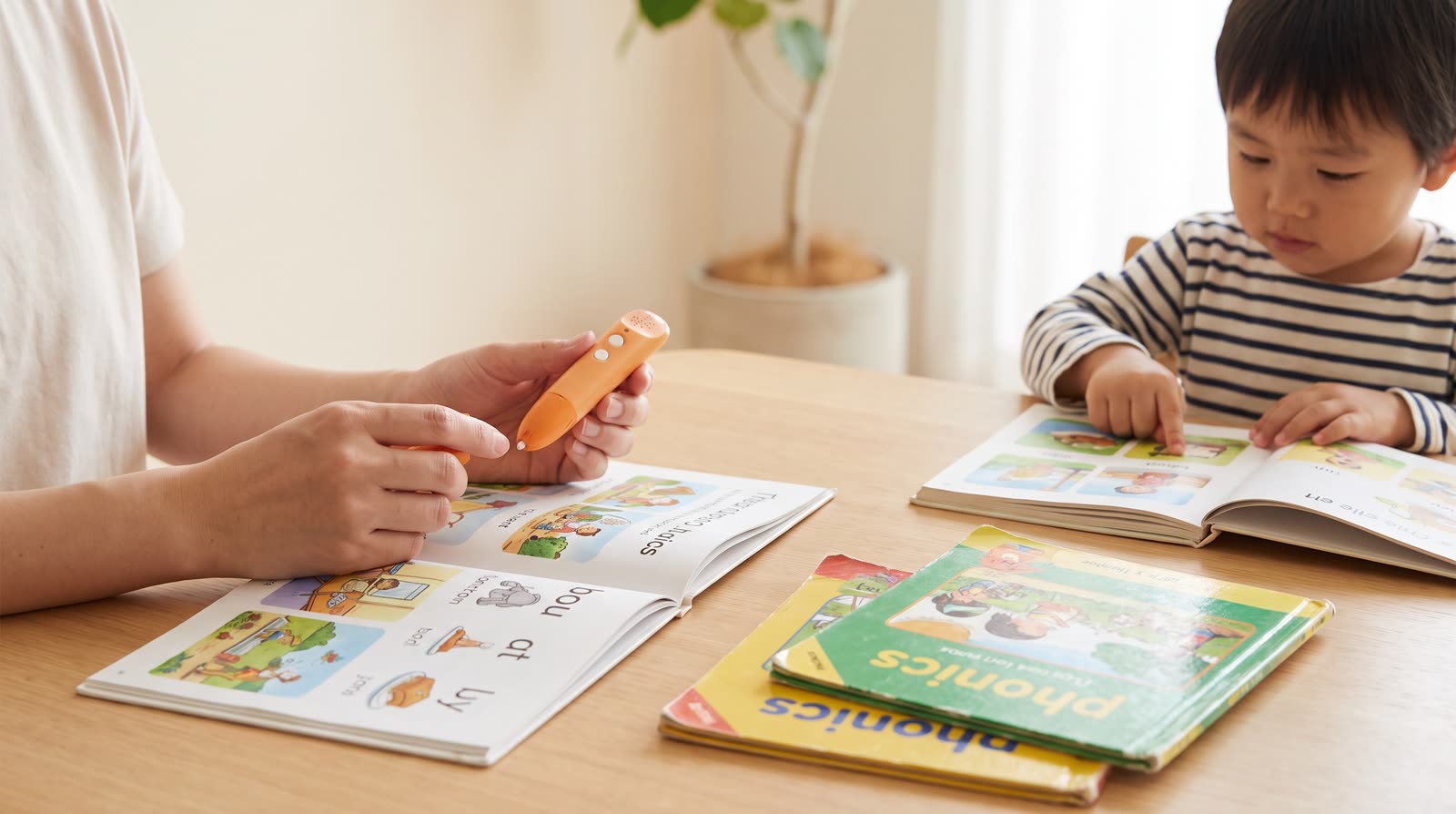
The optical reading pen represents the core electronic hardware component of any interactive phonics set, directly dictating the baseline production investment. B2B buyers must understand that pen manufacturing costs fluctuate significantly based on micro-controller unit (MCU) processing speed, OID camera sensor precision, internal flash memory capacity (typically ranging from 8GB to 32GB for multi-language audio files and firmware), lithium-ion battery safety circuits, and speaker acoustic fidelity. Low-cost pen variants often utilize lower-grade OID sensors that struggle to read dot-codes on matte or textured paper, leading to high consumer return rates and warranty claims in retail channels. Conversely, premium industrial-grade pens feature high-speed CMOS sensors capable of instantaneous code recognition even under suboptimal lighting conditions, paired with robust ABS-PC housing materials that withstand toddler drops and saliva exposure. When establishing a target wholesale budget, B2B buyers must differentiate between basic pen models designed for simple single-book audio loops and advanced multi-functional pens supporting Bluetooth synchronization, record-and-compare voice functions, and multi-language switching.
Printed Material Engineering: Paper Stock, OID Dot Printing, and Binding Durability
The physical book component of a phonics set is equally critical to the overall procurement budget. Phonics readers designed for early childhood require specialized paper engineering to endure repeated tactile interaction in classrooms and homes. Standard offset paper is wholly inadequate; professional manufacturing requires heavy-weight coated art paper (typically 250gsm to 300gsm) with matte lamination or anti-glare varnishing to protect young eyes and prevent light reflection from interfering with the pen's optical sensor. Furthermore, printing OID dot-codes requires specialized dual-pass or multi-pass printing presses that overlay invisible infrared or carbon-based dot matrices alongside high-definition CMYK text and illustrations using non-toxic soy-based inks. Binding methods—ranging from heavy-duty sewn hardcover binding to child-safe rounded board books—add incremental costs but drastically extend product lifespan in institutional classroom settings. Procurement teams must calculate these material investments against expected usage cycles in schools, libraries, and home environments.
Software Licensing, Audio Production, and Content Localization
Beyond physical manufacturing, a significant portion of the development expenditure in phonics book sets involves software engineering and professional audio production. High-quality phonics programs require studio-recorded native speaker audio, precise sound-letter synchronization, interactive game coding, and firmware optimization. When sourcing white-label or custom OEM sets, buyers must clarify whether audio copyright and OID encoding files are included in the unit price or billed as separate non-recurring engineering (NRE) fees. Localization for international markets—such as adapting phonics blending rules for American, British, or international English curricula, or adding bilingual dual-audio tracks—requires specialized linguistic validation and additional memory allocation, which directly influences the target wholesale acquisition cost.
Packaging, Accessories, and Unboxing Experience
In B2B wholesale procurement, the packaging configuration heavily impacts both shipping volume and retail presentation. Phonics sets packaged in robust magnetic-flap gift boxes or durable molded plastic trays provide superior protection during international transit and enhance perceived retail value. However, rigid packaging increases dimensional weight and shipping costs. Buyers must evaluate whether to source bulk educational editions (streamlined slipcase packaging intended for school districts) or retail-ready gift editions (high-end presentation boxes with custom foam inserts), balancing freight economics with target market positioning.
Market Tiers and Wholesale Price Band Analysis for B2B Buyers
Entry-Level Sourcing Tier: Basic Phonics Kits for Mass Market Retail
Entry-level wholesale tiers are engineered for mass-market retail chains, promotional campaigns, and budget-conscious distribution channels. These sets typically feature a simplified 4GB to 8GB reading pen with basic optical recognition, molded ABS plastic housing, and a softcover or lightweight staple-bound phonics booklet collection (usually 4 to 8 books). While initial unit acquisition costs are highly attractive for high-volume orders, buyers must exercise rigorous quality control during pre-shipment inspections. Common risk areas in entry-level tiers include loose battery compartments, inconsistent OID code readability on curved page gutters, and lower-fidelity mono speakers. Importers targeting this tier must establish strict acceptable quality limit (AQL) thresholds and ensure that all electrical components comply with mandatory safety regulations such as CE, RoHS, and ASTM F963, without compromising on child safety standards.
Mid-Range Sourcing Tier: Standard Educational Kits for Schools and Specialty Retail
The mid-range tier represents the optimal sweet spot for specialized educational distributors, regional school suppliers, and premium toy brands. These sets generally include a 16GB rechargeable reading pen with upgraded battery capacity, voice recording features, adjustable volume control, and a comprehensive set of 10 to 20 hardcover or heavy-board phonics readers covering systematic synthetic phonics, sight words, and decodable stories. Manufacturing costs in this tier reflect higher-grade paper stocks, durable matte lamination, precise OID dot printing, and rigorous drop-test resilience. Mid-range products strike an optimal balance between wholesale affordability and long-term durability, making them ideal for institutional adoption where products must endure heavy daily handling by multiple children in classroom environments.
Premium Sourcing Tier: Advanced Interactive Ecosystems and Bilingual Publishing
Premium-tier phonics sets are targeted at high-end specialty boutiques, premium subscription boxes, and elite private educational institutions. These configurations often feature 32GB smart pens with Bluetooth connectivity, companion app integration, rechargeable docking stations, multi-language switching capabilities, and extensive library sets comprising 30 or more progressive phonics readers, workbooks, reward stickers, and interactive game cards. Sourcing at this level involves substantial upfront tooling and software development investments, but yields higher retail margins and strong brand differentiation. Buyers operating in this segment must prioritize long-term manufacturer partnerships capable of providing continuous firmware updates, scalable content expansion packs, and comprehensive intellectual property protection.
ReadGlo project support
Request Wholesale Quotation
Looking to source premium phonics book sets with custom talking pens for your distribution network? Connect with ReadGlo's manufacturing experts for tailored volume tiers and sample evaluations.
Evaluating Quality, Safety Compliance, and Regulatory Standards
Electrical Safety, Battery Management, and Mechanical Integrity
Because interactive reading pens and electronic book accessories are classified as children's products, regulatory compliance is non-negotiable for B2B importers. Procurement professionals must verify that manufacturing partners adhere to international safety frameworks such as those enforced by the U.S. Consumer Product Safety Commission (CPSC) [1] and European toy safety directives (EN71). Key verification areas include non-toxic surface coatings, phthalate-free plastics, secure battery compartment closures that prevent toddler access to coin-cell or lithium-ion power sources, and strict thermal management during charging. As outlined in standard safety protocols, any electronic toy exhibiting signs of overheating, swelling, or mechanical damage must be immediately removed from circulation and reported to the supplier [1].
Pedagogical Alignment and Literacy Framework Integration
From a commercial standpoint, phonics book sets that align with recognized educational research enjoy significantly higher adoption rates among educators and parents. Sourcing partners should look for sets structured around systematic synthetic phonics, grapheme-phoneme correspondence, and decodable text progression. Citing guidance from organizations like the American Academy of Pediatrics (AAP) on early childhood development and literacy [2], successful interactive media should encourage active adult-child co-engagement rather than passive listening. B2B buyers should evaluate whether the accompanying curriculum supports structured literacy milestones, enabling retail partners to market the products credibly to schools, tutoring centers, and homeschool networks.
Strategic Procurement Workflow: How to Negotiate, Contract, and Scale Orders
Sample Evaluation, Factory Audits, and Specification Sign-Off
The procurement journey must begin with a comprehensive sample evaluation phase. B2B buyers should request pre-production physical samples to test OID reading speed across all page areas, evaluate speaker distortion levels at maximum volume, assess paper tear resistance, and verify ink safety certifications. Factory audits—whether conducted independently or via certified third-party inspectors—are essential to review production lines, quality assurance checkpoints, and labor standards. Once samples are approved, buyers must lock in a detailed technical specification sheet (TechSpec) covering bill of materials (BOM), firmware versions, packaging drop-test standards, and acceptable defect limits before issuing formal purchase orders.
Volume Tiering, Lead Time Management, and Logistics Planning
Optimizing unit expenditure requires careful negotiation of minimum order quantities (MOQs) and volume-based pricing tiers. While lower MOQs offer flexibility for new market entrants, high-volume production runs (typically starting at 3,000 to 5,000 units per SKU) unlock substantial economies of scale on custom tooling, OID printing plates, and packaging. Procurement teams must also factor seasonal lead times—particularly around global manufacturing holidays—into their supply chain schedules. Establishing clear contractual terms regarding shipping packaging (such as double-wall master cartons and moisture-barrier bags for electronics) ensures that goods arrive at destination warehouses in pristine, retail-ready condition.
After-Sales Support, Warranty Terms, and Defect Resolution
In B2B distribution, establishing clear warranty and defective unit replacement protocols is vital for maintaining brand equity. Procurement contracts should define acceptable defect rates (typically capped below 1% to 1.5% for electronic pens) and outline fault liability procedures. Suppliers should provide replacement accessory stock—such as extra pen tips, charging cables, and replacement book signatures—to enable seamless local customer service support for school and retail end-users.
Frequently Asked Questions
What is the typical wholesale price range for a standard phonics book set with pen?
Wholesale acquisition costs vary significantly based on component specifications, memory capacity, book count, and order volume. Entry-level mass-market kits generally range from lower price brackets, while robust mid-range educational sets designed for schools and specialty retail occupy a higher tier. Premium smart pen ecosystems with extensive book libraries represent the upper tier of manufacturing investment.
How do memory size and OID sensor quality impact the wholesale cost of a reading pen?
Memory capacity (e.g., 8GB vs. 32GB) directly affects the volume of audio files and multi-language packs the pen can store, adding incremental flash memory costs. High-speed OID optical sensors capable of instant recognition on matte or textured paper require superior CMOS hardware and advanced decoding algorithms, which increase the baseline hardware cost compared to basic sensors.
What certifications should B2B buyers demand from phonics pen manufacturers?
B2B buyers must require comprehensive compliance documentation proving adherence to international safety standards, such as CPSC and ASTM F963 for toy safety in North America, CE and RoHS for the European market, and EN71 parts 1, 2, and 3 covering mechanical, flammability, and chemical safety, alongside non-toxic soy ink and food-grade plastic certifications.
Are non-recurring engineering (NRE) fees included in standard wholesale quotes?
NRE fees—such as custom tooling for new pen molds, custom OID dot-code generation, studio audio recording, and localized packaging design—are typically quoted separately from unit manufacturing costs, especially for OEM/ODM custom projects. Buyers should clarify NRE breakdowns and amortization terms across projected volume tiers.
What is the recommended minimum order quantity (MOQ) for custom-branded phonics sets?
Standard MOQs for custom logo printing on existing pen molds and standard book layouts generally start around 1,000 to 2,000 units. Fully customized tooling, unique pen industrial design, and exclusive curriculum publishing typically require MOQs of 3,000 to 5,000 units or higher to achieve viable production economics.
How can distributors mitigate electronic defect risks when importing reading pen sets?
Distributors can mitigate risks by contracting independent third-party pre-shipment inspections (PSI) compliant with ISO 2859-1 standards, requiring 100% aging tests on electronic pen motherboards during assembly, and negotiating contractual clauses that require suppliers to replace defective units or issue credit notes for defect rates exceeding agreed limits.
Conclusion
Determining how much to spend on a phonics book set with pen requires a balanced B2B procurement strategy that weighs electronic hardware reliability, optical reading precision, paper and binding durability, software licensing, and rigorous international safety compliance. By moving beyond simple unit-price comparisons and focusing on total cost of ownership, quality assurance, and pedagogical alignment, educational distributors and retail brands can secure high-performing products that delight end-users and build lasting market trust. Whether sourcing entry-level mass-market kits or investing in premium interactive learning ecosystems, partnering with experienced, certified manufacturers like ReadGlo ensures long-term commercial success and compliance with global safety standards established by authorities such as the CPSC [1] and AAP [2].
Continue your research
Related reading pen buyer guides
Use these related guides to compare the next product, content, sourcing or channel decision in your project.
- ProductsDoes It Usually Come with a Warranty? A Professional B2B Sourcing Guide for Phonics Book Sets with Talking PensRead this guide
- ProductsHow Much Should I Spend on a Premium Reading Pen? A Comprehensive B2B Sourcing and Cost Evaluation GuideRead this guide
- ProductsIs It Worth Buying a Used Phonics Book Set with Pen? Evaluating Institutional Risks, Optical Code Compatibility, and Wholesale ValueRead this guide
Continue with ReadGlo
See product specifications and request model-specific documentation.
ReadGlo project support
Partner with ReadGlo
Schedule a consultation with ReadGlo to discuss your OEM/ODM requirements, safety compliance standards, and custom phonics publishing projects.