
Contents
Introduction
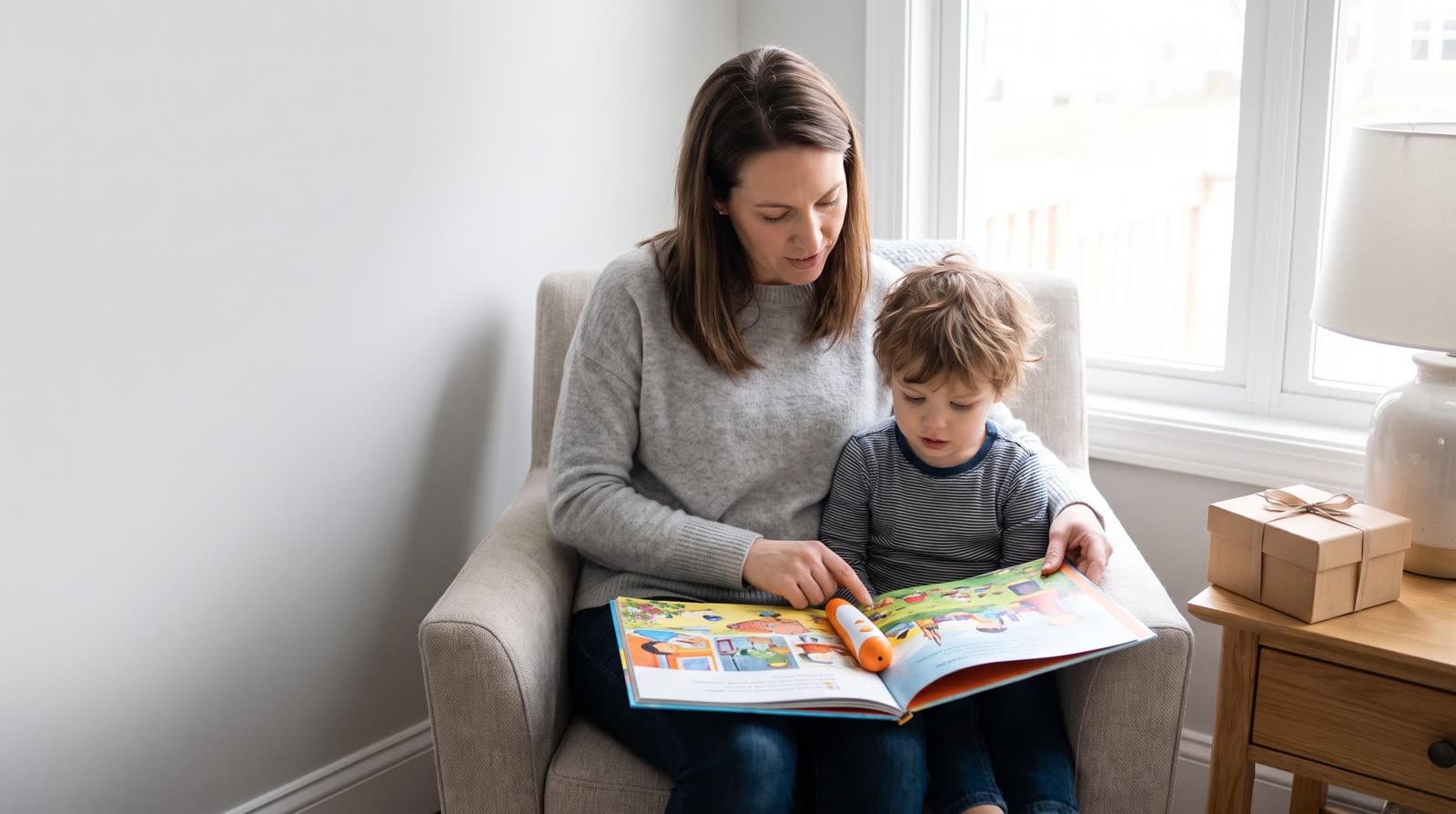
Chinese New Year (Spring Festival) is a season of profound cultural renewal, family reunions, and thoughtful gifting. For extended family members, educators, and retail buyers exploring meaningful presents for four-year-old children, selecting an appropriate gift involves balancing traditional festive goodwill with long-term cognitive and developmental value. Among modern educational toys, interactive reading pens paired with talking picture books have emerged as a prominent category in global B2B markets and retail channels. This article examines whether an interactive reading pen and talking picture book set serves as an exceptional Chinese New Year gift for a four-year-old, analyzing developmental milestones, cultural contexts, hardware safety, and procurement evaluation criteria for B2B partners and educators.\n\nAt age four, children undergo a remarkable cognitive and linguistic transition. They expand their vocabulary rapidly, construct complex sentences, engage in imaginative pretend play, and demonstrate an active curiosity about written symbols and narratives. Traditional gifts such as toys or clothing provide immediate entertainment, but an interactive reading system bridges tactile book engagement with auditory reinforcement. When a child touches a specialized optical sensor pen to a printed page, audio files embedded in the book code are triggered, delivering narration, character voices, sound effects, or bilingual vocabulary prompts. However, gifting such a device during a high-energy holiday like Chinese New Year requires careful consideration of environmental context, adult mediation, and product suitability. While reading pen sets offer substantial engagement, they are most effective when integrated thoughtfully into daily routines rather than treated as passive electronic babysitters.
Understanding the Developmental Milestones of a 4-Year-Old Reader
Cognitive and Linguistic Readiness at Age Four
Four-year-olds occupy a critical stage in early childhood development. According to developmental guidelines outlined by organizations such as the American Academy of Pediatrics (AAP) and early literacy frameworks like Reading Rockets, children at this age typically possess an expressive vocabulary of over 1,500 words, ask constant why questions, and enjoy following multi-step storylines. Their fine motor skills have advanced significantly, allowing them to grasp pencils or specialized educational pens with greater control, turn sturdy paper pages independently, and point to specific illustrations matching spoken descriptions.\n\nWhen evaluated against these developmental markers, interactive reading pen sets align closely with a four-year-old's desire for autonomy and mastery. Unlike digital tablets that present passive video streams or distracting animations, talking picture books anchor the child's attention to physical print. The tactile sensation of turning paper pages combined with self-directed audio triggering fosters active cognitive participation. A four-year-old can independently explore a storybook, re-listen to complex sentences, and mimic pronunciation, reinforcing phonological awareness and narrative comprehension without relying on constant adult intervention.
Role of Interactive Audio in Supporting Narrative Comprehension
The integration of audio within physical books serves as a bridge between spoken language and print literacy. For four-year-olds, listening comprehension far exceeds reading comprehension. When an interactive reading pen reads a story aloud with professional voice acting, expressive inflection, and contextual sound effects, it models proper fluency and intonation.\n\nFurthermore, bilingual or multilingual families find immense value in dual-language talking books during festive periods. A four-year-old exposed to both Mandarin and English through synchronized audio cues can map auditory sounds to visual characters and English alphabets simultaneously. Educational researchers emphasize that such tools are most beneficial when paired with scaffolded adult interaction—such as parents discussing the story themes or asking open-ended questions about the characters. Educational toys should complement, not replace, human social engagement.
Cultural Context and Gift-Giving Dynamics during Chinese New Year
Aligning Educational Gifts with Traditional Family Values
Chinese New Year is deeply rooted in cultural values of family harmony, respect for elders, academic achievement, and future prosperity. Gifting books and educational materials during the Spring Festival carries symbolic weight, often expressed through traditional wishes of wisdom and educational success (学业有成). In contemporary households, grandparents, aunts, and uncles frequently seek gifts that transcend fleeting entertainment value, favoring items that contribute meaningfully to a child's growth.\n\nAn interactive reading pen set bridges traditional cultural aspirations with modern interactive learning. During family gatherings, where relatives gather to celebrate, educational picture books can serve as a shared activity. Instead of isolating children behind screens, talking book sets encourage shared reading moments where older family members can guide the child, share cultural stories, and participate in interactive quizzes embedded in the books.
Balancing Screen-Free Interactive Play with Festive Gatherings
Festive seasons often bring an influx of screen-based entertainment, ranging from television broadcasts to mobile games. Pediatric health guidelines consistently advise moderating screen time for young children to protect eye health, attention span, and social-emotional development. Reading pen sets provide an engaging screen-free alternative that captures a child's interest through audio-tactile engagement without emitting disruptive blue light or overstimulating digital interfaces.\n\nFor B2B buyers and retail merchandisers, positioning reading pen sets as screen-free festive gifts resonates strongly with modern parents who prioritize balanced, wholesome development. Retailers marketing these products ahead of Chinese New Year benefit from highlighting how interactive books foster independent focus while preserving traditional family bonding time.
B2B Evaluation and Quality Standards for Retailers and Distributors
Core Hardware Specifications: Ergonomics, Optical Sensor Accuracy, and Audio Clarity
For B2B buyers, importers, and retail chains sourcing reading pen sets for seasonal campaigns, evaluating core hardware specifications is paramount. A four-year-old's physical ergonomics differ significantly from those of older children or adults. The reading pen must feature a lightweight, chunky body profile that accommodates a preschooler's developing pincer grasp without inducing hand fatigue.\n\nKey hardware considerations during sample evaluation and specification review include:\n1. Optical Sensor Performance: The tip of the pen houses an optical camera module that reads invisible OID (Optical Identification) dot codes printed beneath the book graphics. Importers must verify swift recognition speeds and low error rates across glossy and matte paper finishes.\n2. Speaker Acoustic Quality: Audio output must be crystal clear, distortion-free at medium volumes, and regulated to safe decibel levels suitable for young ears.\n3. Material Durability: Casing materials must consist of non-toxic, high-impact plastics capable of withstanding accidental drops from table height during enthusiastic play.
Content Curation and Audio-Book Code Compatibility
Beyond hardware, the software and content architecture determine long-term product value. Educational publishers and distributors must ensure seamless audio file management (compiler software, audio formatting, and proper OID code mapping). A common pitfall in low-tier manufacturing is mismatched audio data packets or erratic book-to-pen recognition. Retailers should audit sample batches rigorously during pre-shipment quality inspections, checking whether audio files load reliably via USB interfaces and whether multi-language packages switch smoothly between regional dialects or foreign languages.
ReadGlo project support
Explore ReadGlo Catalog
Looking to source premium, safe, and engaging interactive reading pen sets and picture books for your retail or distribution network? Review our comprehensive B2B product catalog and partnership options.
Safety, Durability, and Product Care Guidelines
External Inspection and Low-Risk Maintenance Protocols
Safety is the absolute cornerstone of children's product manufacturing and distribution. When introducing electronic learning aids into family homes, adherence to established safety frameworks is mandatory. According to guidance from regulatory bodies such as the Consumer Product Safety Commission (CPSC) and international toy safety standards, children's products must undergo rigorous evaluation for mechanical hazards, chemical toxicity, and electrical safety.\n\nFor end-users and retail customer support teams, establishing clear product care guidelines ensures safe, long-term operation:\n- External Inspection: Users should perform routine external checks of the reading pen casing, charging ports, and optical tip for cracks, loose parts, or accumulated dust.\n- No Disassembly: Consumers must never attempt to disassemble, modify, or repair the reading pen housing. Internal electronic components and batteries present safety risks if tampered with.\n- Handling Environmental Exposure: If a device is exposed to moisture, liquid spills, or abnormal physical impact, users must immediately power off the unit, cease charging, and contact authorized service channels. If signs of overheating, swelling, unusual odor, smoke, or battery leakage occur, discontinue use immediately.
Battery Safety, Storage, and Handling Precautions
Most interactive reading pens utilize rechargeable lithium-ion batteries or standard rechargeable cells. Retailers should ensure that instruction manuals clearly outline safe charging practices—such as using certified USB chargers, avoiding overnight charging unattended, and storing devices in cool, dry environments away from direct sunlight during seasonal storage. Clear safety communication protects brand reputation and ensures a secure user experience.
Practical Procurement and Retail Merchandising Framework
Sample Evaluation and Specification Review for B2B Partners
For commercial buyers, distributors, and educational institutions looking to stock reading pen sets for seasonal gifting seasons like Chinese New Year, establishing a disciplined procurement protocol is vital. A structured evaluation roadmap includes:\n1. Specification Review: Reviewing technical data sheets covering battery capacity, memory storage for audio libraries, supported audio formats, and certification documentation.\n2. Sample Evaluation: Conducting hands-on testing of sample units across multiple book titles to verify response latency, audio fidelity, battery endurance, and drop resistance.\n3. Packaging and Presentation: Evaluating unboxing aesthetics, gift-box rigidity, and multilingual manual clarity. Festive retail packaging plays a decisive role during gifting seasons; boxes featuring elegant sleeve designs and durable inner trays enhance perceived value.
Merchandising and Educational Support in Retail Channels
Successful retail distribution of interactive reading systems extends beyond hardware sales. Retailers and educational distributors can differentiate their offerings by providing comprehensive customer onboarding materials, teacher guides, and curated book bundles tailored to specific developmental milestones. By partnering with reputable manufacturers who prioritize educational soundness, product safety, and robust quality control, B2B partners can deliver exceptional value to families celebrating Chinese New Year.
Frequently Asked Questions
Are reading pen sets suitable for 4-year-olds who are just beginning to learn character recognition or alphabets?
Yes, four-year-olds are at a prime developmental stage for letter and character recognition. Interactive reading pens provide multimodal reinforcement—combining visual graphics, spoken phonics, and touch—which helps children connect spoken sounds to written symbols naturally.
How should retailers verify optical code compatibility between talking pens and newly published picture books?
Retailers and distributors should request sample OID (Optical Identification) code maps and test book batches during the sample review phase. Ensuring that the pen's firmware correctly reads the specific dot-code generation used in the printing press prevents recognition errors and audio mismatches.
What are the key safety and compliance standards B2B importers should check for children's electronic learning devices?
Importers should verify compliance with major international toy and electronics safety standards, including CPSC requirements in the United States, CE/EN71 in Europe, and national toy safety standards. Documentation should cover mechanical safety, electrical insulation, battery safety, and non-toxic material certifications.
Can reading pen sets replace traditional parent-child storytelling during festive family gatherings like Chinese New Year?
No, interactive reading pens are designed to supplement, not replace, human interaction. While they encourage independent exploration and focus, the highest educational gains occur when parents or family members engage with the child, discuss the stories, and share quality reading time together.
What steps should distributors take when inspecting sample batches of interactive audio books and reading pens?
Distributors should execute a multi-step quality check: inspect physical enclosures for burrs or sharp edges, test optical sensor recognition speed across various paper stocks, check audio volume levels and clarity, verify charging stability, and confirm that all packaging materials and user manuals meet target market regulatory requirements.
Conclusion
In summary, an interactive reading pen and talking picture book set represents an outstanding, thoughtful gift for a four-year-old during Chinese New Year. By blending the cultural warmth of festive gift-giving with advanced interactive literacy tools, these sets support early vocabulary growth, narrative comprehension, and independent focus without the drawbacks of passive screen time. For B2B buyers, retailers, and educational institutions, success in this product category depends on rigorous adherence to hardware quality standards, robust safety protocols, and age-appropriate content design. By prioritizing safety, ergonomic suitability, and reliable optical code compatibility, brands and distributors can deliver meaningful, enduring educational value to families worldwide.
Continue your research
Related reading pen buyer guides
Use these related guides to compare the next product, content, sourcing or channel decision in your project.
- Gift GuideEvaluating Talking Pen and Interactive Picture Book Sets as 4-Year-Old Sibling Gifts for Baby Showers: A B2B Buyer and Retail Strategist GuideRead this guide
- Gift GuideIs a Reading Pen and Talking Picture Book Set a Good Chinese New Year Gift for Bilingual Families?Read this guide
- Gift GuideIs a Reading Pen and Talking Picture Book Set a Good Baby Shower Gift for a Bilingual Family?Read this guide
Continue with ReadGlo
See product specifications and request model-specific documentation.
ReadGlo project support
Request Product Specifications & Samples
Partner with ReadGlo to bring certified, high-standard talking pens and interactive storytelling kits to your market. Send your requirements to our team today.