
Contents
Introduction
When evaluating holiday gifts and seasonal retail inventory for four-year-olds, educational electronic toys such as reading pens paired with talking picture books frequently emerge as top contenders. Direct and prudent answer: Yes, when chosen with careful attention to age-appropriateness, content quality, and safety compliance, reading pen sets provide exceptional engagement, supporting vocabulary growth and independent exploration without the passive glare of digital screens. At four years old, children are undergoing a crucial developmental transition characterized by expanded expressive language, enhanced narrative comprehension, and refined fine-motor dexterity. However, the success of such a gift—whether purchased by a family member or sourced by a B2B distributor—depends heavily on technical reliability, optical code accuracy, audio clarity, and robust safety standards. This guide provides a comprehensive evaluation framework for educators, retailers, and families seeking to understand the developmental, technical, and procurement considerations surrounding talking book sets during the holiday season. By examining cognitive milestones, sensor technology, acoustic safety, and supply chain integrity, stakeholders can make informed decisions that maximize both educational value and commercial success in competitive holiday markets.
Developmental Alignment for Four-Year-Old Learners
Cognitive and Linguistic Milestones at Age Four
By age four, children typically exhibit remarkable progress in spoken language, sentence complexity, and phonological awareness. According to developmental guidelines from pediatric and early childhood authorities, four-year-olds are capable of understanding multi-step instructions, following complex story plots, and asking inquisitive 'why' and 'how' questions. Their vocabulary expands rapidly, and they begin recognizing letter-sound correspondences, rhyming patterns, and print concepts. Interactive talking pens bridge the gap between auditory stimulation and visual print by translating touch into immediate speech, sound effects, or musical cues. This multisensory reinforcement aligns closely with how four-year-olds naturally learn, reinforcing the connection between written symbols and spoken language without demanding formal reading instruction. Furthermore, four-year-olds thrive on repetition and autonomy; being able to tap a character repeatedly to hear different responses builds confidence and active engagement with literacy materials, establishing a positive attitude toward books.
The Role of Screen-Free Interactive Audio in Early Literacy
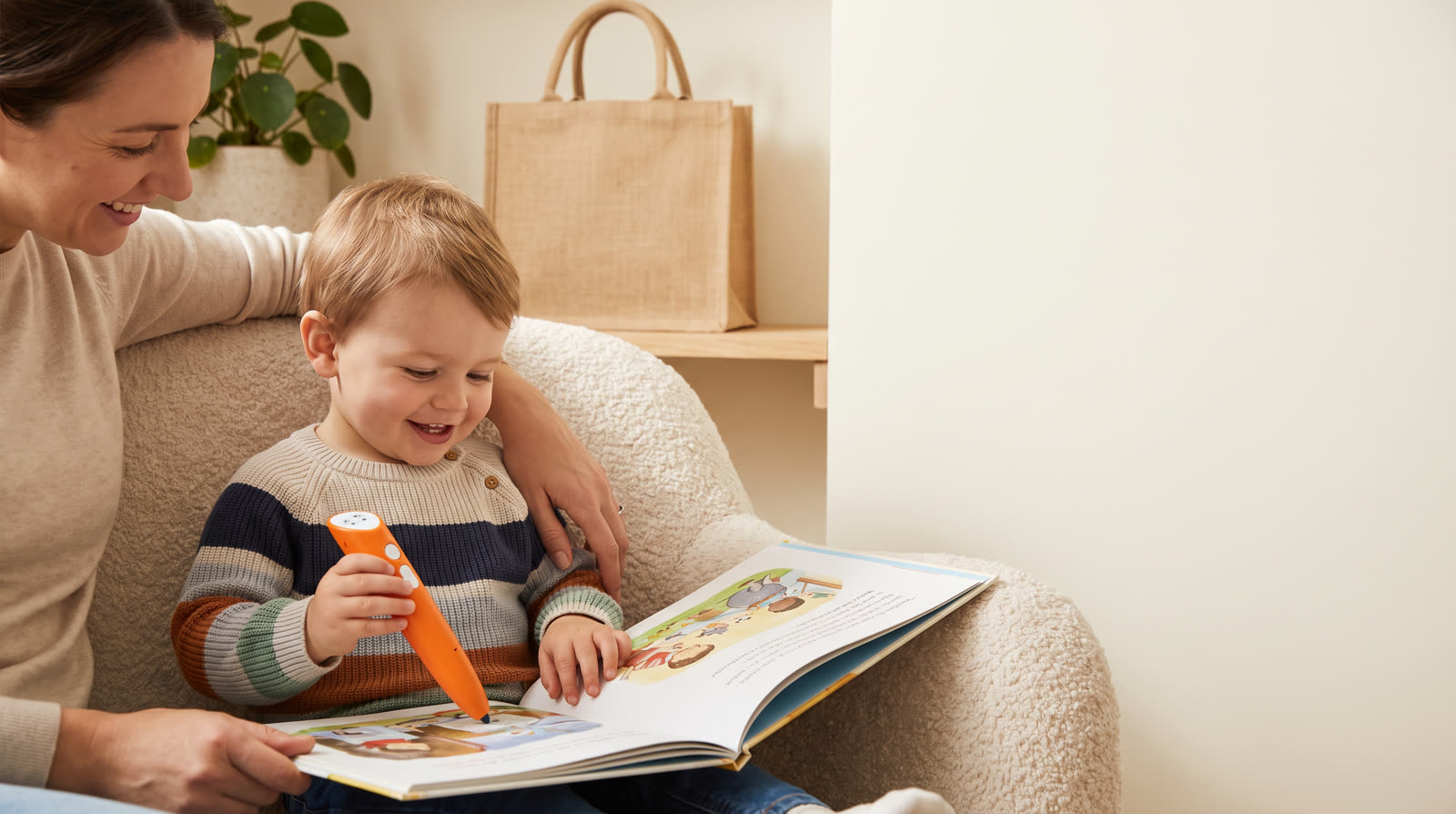
In an era dominated by tablets and video screens, parents and educators increasingly seek screen-free alternatives that encourage active participation. Reading pens require physical manipulation—holding the stylus, pointing accurately at designated optical dots or icons on paper pages, and turning physical book leaves. This tactile engagement fosters hand-eye coordination, spatial awareness, and fine-motor control while eliminating the passive scrolling associated with digital devices. As emphasized by pediatric health organizations, early literacy is deeply rooted in joint attention, listening comprehension, and conversational turn-taking. Talking books equipped with dialogue prompts, character voices, and phonetic sound play encourage children to pause, listen, and repeat, cultivating attentive listening habits that serve as the foundation for future academic success. Screen-free interactive audio ensures that children remain anchored in the physical world of books, tactile textures, and tangible illustrations, nurturing deep concentration skills.
Adult Mediation and Shared Reading Dynamics
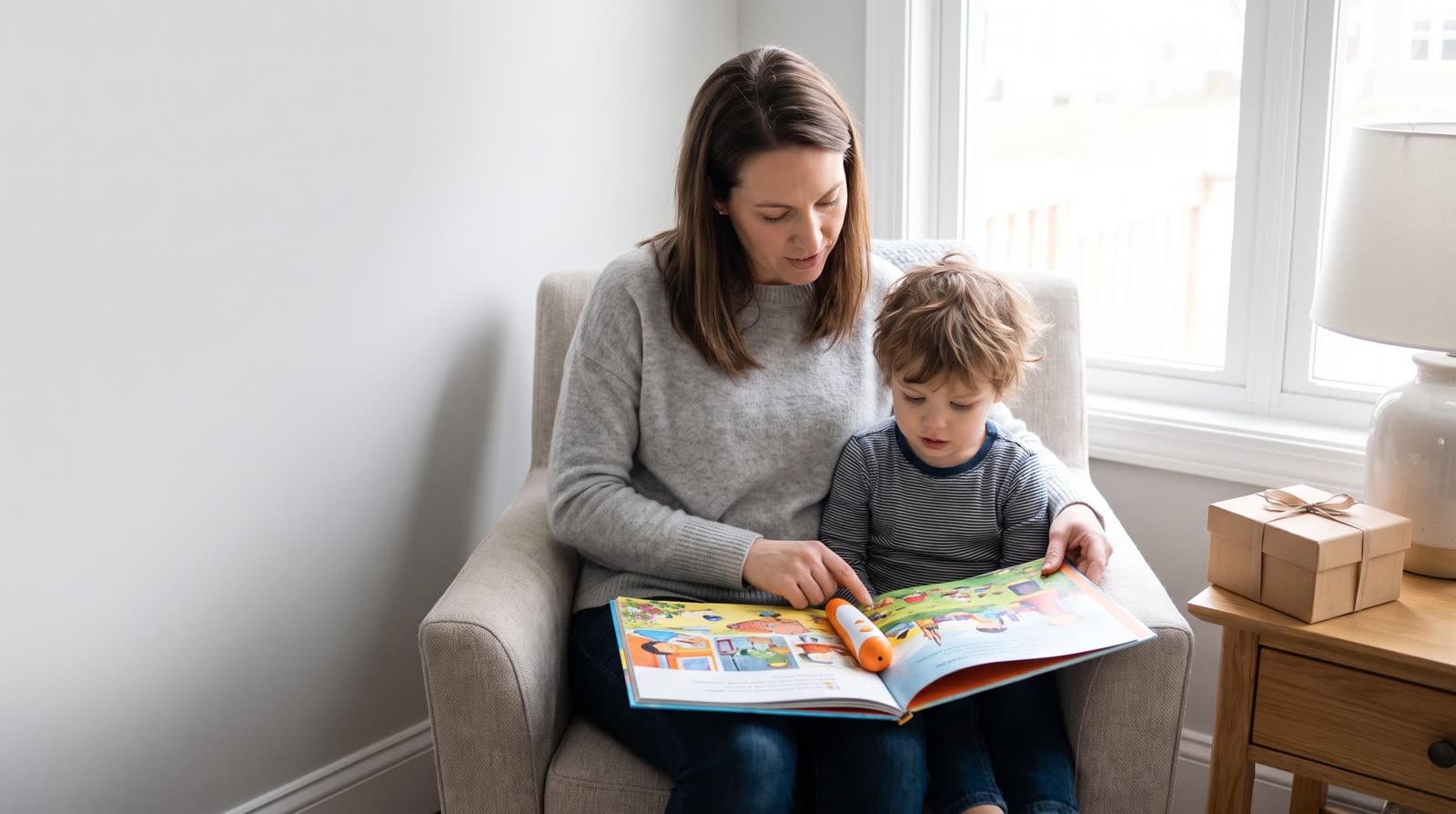
Although reading pens are designed to support independent exploration, child development specialists emphasize that technology should complement, rather than replace, adult-child interaction. For four-year-olds, the greatest literacy gains occur when adults share reading experiences, asking open-ended questions about the story, discussing character motivations, and connecting narrative themes to real-world experiences. When gifting a reading pen set for Christmas, adults should view the tool as a catalyst for shared engagement rather than a standalone babysitter. Parents, caregivers, or educators can sit alongside the child, taking turns pointing the pen at different characters, imitating sound effects, or predicting what happens next. This collaborative dynamic enriches social-emotional development, deepens the child's comprehension of the book's content, and transforms holiday gift-giving into a meaningful bonding experience that reinforces emotional security and cognitive growth.
Evaluating Hardware and Book Quality for Holiday Retail Sourcing
Optical Sensor Accuracy and OID Code Compatibility
From a manufacturing and B2B procurement perspective, the technical core of any reading pen system lies in its optical sensor and invisible dot-code technology (commonly referred to as OID or Optical Identification encoding). High-quality reading pens feature high-resolution CMOS cameras embedded in the tip, capable of reading microscopic dot patterns printed beneath or alongside visible ink without distorting illustration aesthetics. When sourcing or evaluating holiday gift sets, buyers must verify that the sensor latency is minimal—meaning the audio response triggers instantaneously upon contact without noticeable delay. Furthermore, book publishers and toy distributors must ensure strict version control between the pen firmware and the book printing plates; mismatched audio data files (BIN/OID files) will result in reading errors or silent touch points. Ensuring robust decoding algorithms across diverse paper finishes (matte vs. glossy) is vital for flawless user experience across diverse publishing formats.
Acoustic Quality, Speaker Safety, and Volume Limiting
Acoustic fidelity is paramount in children's educational electronics. Poor audio reproduction with static, distorted speech, or unnatural synthetic accents can hinder phonetic learning and discourage young users. Premium talking pens utilize high-clarity built-in speakers or headphone jacks with strict volume-limiting features designed to protect developing ears from excessive decibel levels. When assessing product samples for holiday retail, quality assurance teams inspect frequency response curves, maximum decibel output thresholds, and microphone clarity for record-and-compare functions. Ensuring clear articulation, correct linguistic intonation, and native-speaker pronunciation is essential for four-year-olds who are actively refining their pronunciation and vocabulary during critical developmental windows. High-quality audio encoding formats (such as compressed WAV or MP3 audio arrays) further guarantee crisp sound reproduction.
Durability, Ergonomics, and Child-Friendly Materials
Four-year-olds are energetic learners whose handling of toys can be vigorous. Consequently, reading pens and companion books must be engineered for physical durability to survive everyday classroom or household use. Pens should feature impact-resistant ABS plastic outer shells, secure battery compartment closures fastened with screws to prevent accidental ingestion by younger siblings, and rounded ergonomic grips tailored to small hands. Companion books require heavy-duty board pages or tear-resistant coated art paper with rounded corners and non-toxic soy-based inks that withstand repeated page-turning and accidental moisture exposure. B2B buyers and retail purchasers should review drop-test reports, hinge strength evaluations, and surface wear resistance data to guarantee that the product withstands the rigors of holiday distribution and intensive child play.
ReadGlo project support
Request Product Catalog
Explore ReadGlo's complete range of customizable OEM/ODM talking pens and interactive picture book libraries designed for global educational markets.
Safety Compliance, Product Care, and Regulatory Standards
CPSC Guidelines and Children's Toy Safety Regulations
Safety compliance is a non-negotiable requirement for any children's product distributed during the holiday season. Regulatory bodies such as the Consumer Product Safety Commission (CPSC) establish stringent guidelines governing mechanical hazards, sharp points, small parts, and chemical composition in children's toys and books. Importers, wholesalers, and retail buyers must verify that products comply with relevant safety standards (such as ASTM F963 in the United States and EN71 in Europe). These standards mandate rigorous testing for heavy metal content, phthalates in plastics, flammability, and structural integrity under simulated drop and pull stresses. Ensuring complete compliance documentation protects brand reputation, satisfies retail gatekeepers, and guarantees end-user safety.
Battery Safety, Charging Standards, and External Inspection
Most modern reading pens operate on rechargeable lithium-ion batteries or standard AAA/AA alkaline cells. For rechargeable models, electrical safety certification (such as UL, CE, or RoHS) is mandatory to prevent overheating, short-circuiting, or battery swelling during charging cycles. Users and retail staff should perform routine external inspections of devices. If a reading pen exhibits abnormal heat, unusual odors, swelling, physical casing cracks, or moisture ingress, operation must cease immediately, and the device should not be plugged into a charger. Consumers should never attempt to disassemble electronic toys or replace built-in battery cells independently. Instead, they should contact the manufacturer or qualified service channels for authorized inspection and repair.
Proper Storage, Moisture Management, and Troubleshooting Protocols
To maximize product lifespan and maintain safety, proper storage and handling guidelines must be observed. Reading pens and talking books should be stored in dry, temperate environments away from direct sunlight, extreme heat, and high humidity, which can warp paper pages, degrade adhesives, and damage internal circuit boards. If a pen fails to read book pages, troubleshooting steps should begin with checking battery charge levels, cleaning the optical tip gently with a dry, lint-free cloth to remove dust or smudges, and verifying that the correct audio data pack is loaded onto the device memory. For unresolved technical difficulties, buyers and parents should consult official customer support channels rather than attempting unauthorized modifications.
B2B Procurement and Retail Merchandising Strategies for the Holiday Season
Verifying Supplier Credentials, Packaging, and Age Grading
For B2B distributors, toy store owners, and educational suppliers, the Christmas holiday season represents a critical peak sales window requiring meticulous inventory planning. Sourcing successful holiday inventory requires rigorous evaluation of manufacturing partners. Importers should partner with established OEM/ODM manufacturers like ReadGlo who possess proven expertise in optical coding, audio production, and international compliance. Packaging must be visually appealing, clearly displaying age-grading labels (such as 'Ages 3-6'), clear contents lists, and multilingual instructions where applicable. High-quality gift packaging reduces retail return rates, enhances perceived product value under the Christmas tree, and creates a memorable unboxing experience for young recipients.
Bundling Strategies: Starter Kits vs. Expansion Book Libraries
Merchandising reading pen sets for the holiday gift market often involves strategic product bundling to maximize retail value and consumer appeal. Starter kits typically include one multi-functional reading pen, a USB charging cable, and a foundational thematic book set (covering themes such as nursery rhymes, animal habitats, or early math concepts). Retailers can also offer expansion book libraries as complementary add-on gifts for returning customers. This modular ecosystem approach encourages long-term customer engagement, repeat purchases, and sustained brand loyalty throughout the year following the initial Christmas purchase, providing recurring revenue streams for retail partners.
Logistics, Ocean Freight, and Regional Compliance Planning for Holiday Peak Seasons
Managing holiday inventory logistics requires early coordination between buyers and manufacturing facilities. Because international shipping lanes experience peak congestion in the third and fourth quarters, B2B procurement schedules must account for extended transit times and customs clearance windows. Furthermore, regional compliance audits—such as verifying local language localization, battery transport certifications (UN38.3), and importer-of-record documentation—must be finalized well in advance of retail distribution. Partnering with experienced suppliers who maintain rigorous quality assurance and transparent shipment tracking ensures that holiday merchandise arrives on schedule, ready for retail placement.
Frequently Asked Questions
Are reading pen sets safe for unsupervised use by a 4-year-old?
While reading pens are designed to be child-friendly with durable casings and non-toxic materials, adult supervision is recommended, especially for younger children. Parents should ensure that children do not attempt to open battery compartments or insert foreign objects into the optical tip or charging port.
What should I look for when checking book compatibility for a reading pen?
Buyers and gift-givers must ensure that the talking picture books match the specific OID optical encoding version and firmware of the reading pen. Books from different manufacturers or older firmware versions may not trigger correct audio playback unless updated.
How should a reading pen be cleaned and stored when not in use?
Clean the exterior casing and optical tip using a soft, dry, lint-free cloth. Avoid liquid cleaners, alcohol, or abrasive solvents. Store the device in a cool, dry place away from moisture and extreme temperatures, and power it off when not in use for extended periods.
What steps should be taken if a reading pen stops recognizing book pages?
First, verify that the battery is fully charged and that the correct audio data pack for the specific book title is loaded in the pen's memory. Gently clean the optical lens at the tip. If the issue persists, contact the manufacturer or retailer customer service.
How do reading pens support 4-year-olds compared to standard picture books?
Reading pens add an interactive auditory dimension to traditional picture books, enabling children to hear pronunciation, dialogue, sound effects, and musical narration by touching illustrations or text, thereby fostering independent exploration and active listening.
What key safety certifications should B2B buyers look for when sourcing reading pen sets?
B2B buyers should verify compliance with international toy safety standards such as ASTM F963 (US), EN71 (Europe), CPSC children's product regulations, and electrical certifications including CE, RoHS, and UN38.3 for rechargeable battery systems.
Can expansion books be added to a starter reading pen set purchased as a gift?
Yes, provided the expansion books utilize the same OID dot-code specification and audio firmware version compatible with the pen model. Modular expansion libraries are a popular retail add-on for holiday gifting.
Conclusion
In conclusion, a reading pen and talking picture book set is an excellent holiday gift and retail product for four-year-olds when selected with careful regard to safety, developmental appropriateness, and technical quality. By combining tactile book exploration with screen-free audio engagement, these educational tools support vocabulary expansion, listening comprehension, and independent learning during crucial developmental windows. For B2B buyers, distributors, and retailers, sourcing certified, durable, and well-designed talking book sets from reputable manufacturers like ReadGlo ensures strong seasonal demand and customer satisfaction. Adhering to safety guidelines, verifying optical code compatibility, and encouraging shared reading experiences ensure that this holiday gift delivers lasting educational value.
Continue your research
Related reading pen buyer guides
Use these related guides to compare the next product, content, sourcing or channel decision in your project.
- Gift GuideEvaluating Talking Pen and Interactive Picture Book Sets as 4-Year-Old Sibling Gifts for Baby Showers: A B2B Buyer and Retail Strategist GuideRead this guide
- Gift GuideIs a Reading Pen and Talking Picture Book Set a Good Christmas Gift for a Bilingual Family?Read this guide
- Gift GuideIs a Reading Pen and Talking Picture Book Set a Good Baby Shower Gift for a Bilingual Family?Read this guide
Continue with ReadGlo
See product specifications and request model-specific documentation.
ReadGlo project support
Send Your Requirements
Partner with ReadGlo for reliable, certified, and child-safe interactive reading solutions tailored to your brand's seasonal retail requirements.