
Contents
Introduction
In the modern landscape of early childhood education and children's publishing, bilingual language exposure has become a cornerstone of global curricula and home learning environments. Publishers, toy distributors, and educational institutions continually seek innovative hardware solutions that facilitate natural dual-language acquisition without cognitive friction. Among these tools, optical reading pens paired with interactive books have emerged as prominent catalysts for independent listening and reading. A central question for B2B buyers, educational developers, and curriculum designers is whether a reading pen equipped with adjustable volume is suitable and effective for bilingual language exposure. Direct Answer and Application Boundary: Yes, a reading pen with adjustable volume is highly suitable and functionally valuable for bilingual language exposure, provided that the acoustic output meets pediatric child safety standards, the optical sensor accurately decodes multi-language book codes, and the device is deployed alongside structured pedagogical frameworks and active adult guidance. However, adjustable volume alone does not guarantee language proficiency; it is a supportive hardware feature designed to optimize listening clarity across diverse acoustic environments, prevent auditory fatigue, and accommodate varying ambient noise levels in classrooms, libraries, and homes. According to guidelines from the American Academy of Pediatrics (AAP) and research on early literacy, auditory learning tools must be carefully managed to protect children's hearing while supporting immersive language input [1]. Furthermore, adherence to digital content standards as outlined by search quality frameworks ensures that educational resources remain helpful, reliable, and user-centered [2]. This comprehensive guide explores the technical, pedagogical, and procurement considerations for integrating adjustable-volume reading pens into bilingual publishing and educational distribution programs.
Understanding Dual-Language Acoustic Environments and Audio Hardware Needs
The Role of Auditory Clarity in Dual-Language Phonics and Vocabulary Acquisition
Bilingual language exposure requires children to distinguish subtle phonemic differences between two or more distinct linguistic systems. Different languages possess unique phonetic structures, vowel elongation rules, pitch accents, and consonantal nuances that demand exceptional audio reproduction fidelity. When children engage with interactive books featuring dual-language audio tracks—such as English narration on the primary touch target and a secondary target language on an adjacent icon—the clarity of the pronunciation is paramount. An adjustable volume control allows young learners and supervising adults to calibrate the sound output precisely to the acoustic demands of the listening environment. In quiet home settings, a moderate volume level prevents auditory overstimulation and sensory fatigue, whereas in bustling classrooms or group learning centers, a higher, distortion-free output ensures that children can clearly discern native-speaker intonations, stress patterns, and tonal variations without straining. This fine-tuning capability directly supports phonological awareness, helping children map printed graphemes to accurate auditory phonemes across multiple languages simultaneously. Furthermore, industry standards emphasize that hardware reliability must align with educational goals to ensure long-term adoption by institutional buyers and retail distributors.
Why Volume Customization Matters Across Diverse Home and Classroom Acoustics
Acoustic environments vary dramatically between a quiet bedroom, a shared kindergarten classroom, a library corner, and a moving vehicle during daily commutes. Fixed-volume audio devices often fail in these dynamic settings, leading either to inaudible narration in noisy rooms or uncomfortably loud audio in quiet spaces. For bilingual learners, who may already be navigating cognitive switching between two distinct languages, environmental acoustic interference can significantly hinder comprehension and focus. Adjustable volume empowers educators, parents, and children to maintain an optimal signal-to-noise ratio regardless of external disruptions. From a B2B product development perspective, incorporating multi-level volume adjustments or seamless digital volume toggles ensures that the reading pen remains adaptable across diverse geographical markets and institutional use cases. Publishers and distributors must evaluate how hardware responsiveness to ambient noise impacts user retention, engagement duration, and learning satisfaction across international retail channels. Furthermore, industry standards emphasize that hardware reliability must align with educational goals to ensure long-term adoption by institutional buyers and retail distributors.
Evaluating Reading Pen Hardware Specifications for Bilingual Publishing Programs
Technical Specifications for Sound Reproduction and Speaker Output Quality
When designing or procuring reading pens for bilingual publishing programs, hardware specifications extend far beyond basic optical sensor accuracy. The internal audio amplifier, speaker diaphragm composition, and digital-to-analog converter (DAC) quality dictate whether dual-language voice tracks sound crisp, natural, and distinct. Bilingual audio files often require dual-channel encoding or extensive internal memory allocation to store high-definition native-speaker recordings in multiple languages without compression artifacts or audio clipping. A robust adjustable volume mechanism must operate smoothly across incremental steps, preventing sudden volume spikes that could startle young children or damage sensitive developing ears. B2B buyers must review supplier engineering documentation to verify frequency response curves, maximum decibel thresholds, and harmonic distortion rates, ensuring that audio output remains faithful to professional linguistic recordings. Furthermore, industry standards emphasize that hardware reliability must align with educational goals to ensure long-term adoption by institutional buyers and retail distributors.
Balancing Speaker Amplification and Ear Safety Standards for Children
Child safety is an uncompromising priority in educational hardware manufacturing. While higher volume amplification may seem desirable for noisy classrooms, excessive sound pressure levels pose significant risks to pediatric auditory health. International safety standards, monitored by regulatory bodies such as the Consumer Product Safety Commission (CPSC) and global electro-technical commissions, mandate strict limits on personal audio output devices intended for children. For reading pens, manufacturers typically cap maximum output levels between 75 and 85 decibels, even at the highest adjustable volume setting, to safeguard developing eardrums during extended listening sessions. Procurement teams must request third-party acoustic compliance test reports and verify that volume adjustment controls are intuitive for adults yet secure against accidental over-amplification by children. Furthermore, industry standards emphasize that hardware reliability must align with educational goals to ensure long-term adoption by institutional buyers and retail distributors.
B2B Procurement, Specification Review, and Sample Testing Protocols
Conducting Structured Sample Evaluations for Audio Clarity and Volume Range
The B2B procurement lifecycle for interactive reading systems requires rigorous factory sample evaluation before committing to large-scale manufacturing runs. Importers, publishers, and educational distributors should establish a standardized sample testing protocol focusing specifically on audio performance and volume adjustment functionality. Evaluators must test the reading pen across various companion books featuring dual-language scripts, checking for latency, audio clipping, and clarity at minimum, middle, and maximum volume settings. Furthermore, sample testing should examine the tactile feedback and durability of the volume buttons or software interface controls, ensuring they withstand repetitive use by young learners. Documenting these evaluation metrics in a standardized specification sheet minimizes quality discrepancies between golden samples and mass-produced shipments. Furthermore, industry standards emphasize that hardware reliability must align with educational goals to ensure long-term adoption by institutional buyers and retail distributors.
Pre-Shipment Documentation, Compliance Checks, and Supplier Verification
Ensuring supply chain transparency and regulatory compliance is essential for successful international distribution of children's electronic learning aids. Before bulk orders leave the manufacturing facility, quality assurance teams must execute comprehensive pre-shipment inspections (PSI) and verify all compliance documentation. This includes reviewing material safety data sheets (MSDS) for batteries, electromagnetic compatibility (EMC) certifications, and acoustic safety certificates. B2B contracts should explicitly outline acceptable quality limits (AQL) for electronic components, speaker integrity, and volume control responsiveness. Publishers must also verify that book OID (optical identification) dot-codes align perfectly with the pen firmware's multi-language audio mapping tables to prevent decoding errors during bilingual reading activities. Furthermore, industry standards emphasize that hardware reliability must align with educational goals to ensure long-term adoption by institutional buyers and retail distributors.
ReadGlo project support
Request Product Catalog
Looking to integrate high-quality bilingual reading pens and interactive books into your publishing or distribution portfolio? Explore ReadGlo's complete hardware catalog and customization options.
Pedagogical Integration and Adult Guidance in Bilingual Reading Environments
Facilitating Balanced Exposure Between Primary and Target Languages
Effective bilingual language acquisition relies on balanced and meaningful exposure to both the primary (L1) and secondary (L2) languages. While a reading pen with adjustable volume provides the mechanical means to access dual-language audio effortlessly, pedagogical strategy determines how children process and internalize this input. Educators and curriculum developers recommend structured reading routines where children listen to the native narration in L2, adjust the volume to a comfortable level for focused listening, and subsequently verify comprehension using L1 translations or contextual picture cues. Adjustable volume assists in this process by allowing children to lower the sound when listening closely to subtle pronunciation nuances or to raise it slightly when engaging in group storytelling sessions with peers. Furthermore, industry standards emphasize that hardware reliability must align with educational goals to ensure long-term adoption by institutional buyers and retail distributors.
Strategies for Educators and Parents Supporting Multilingual Learners
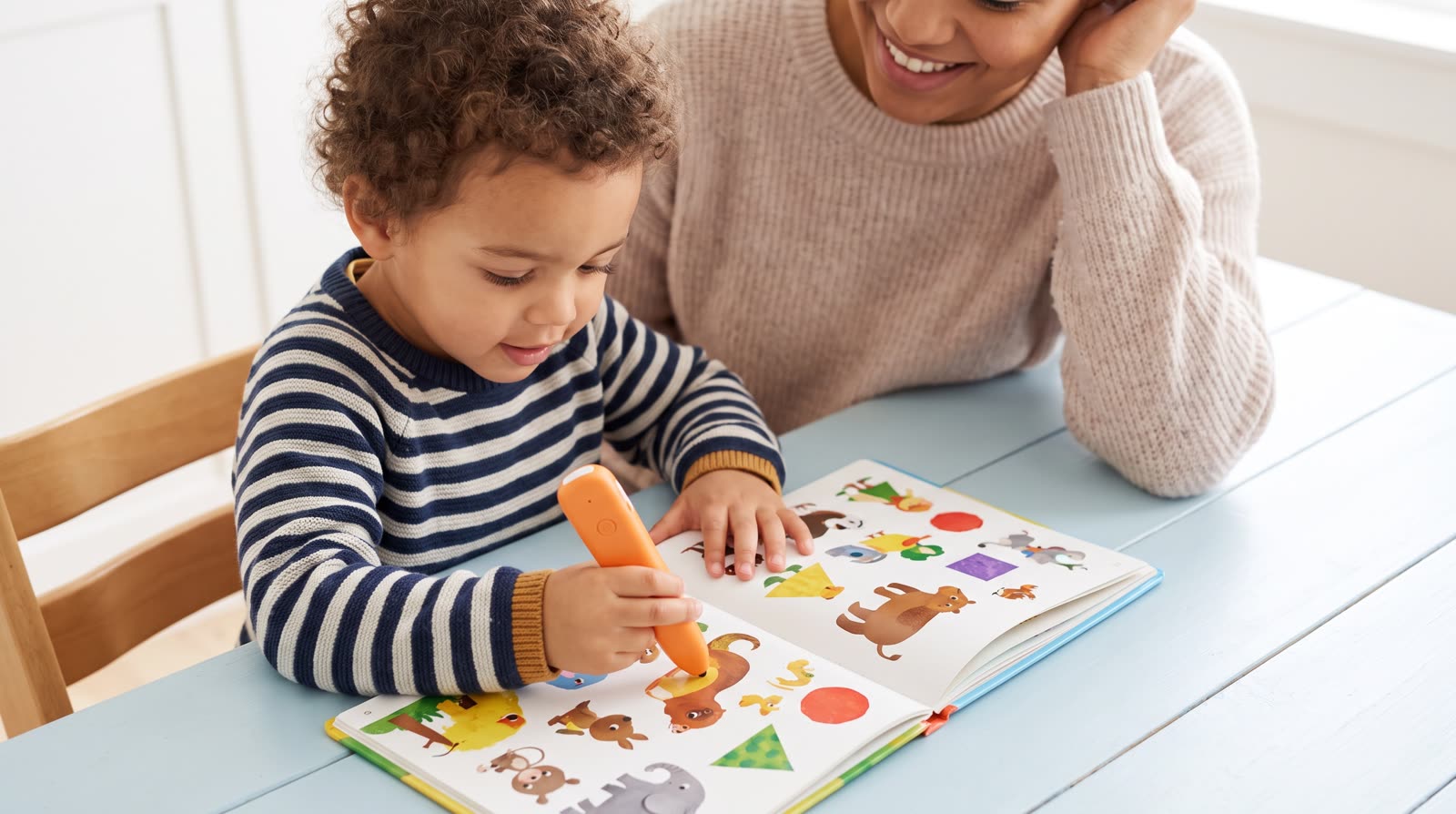
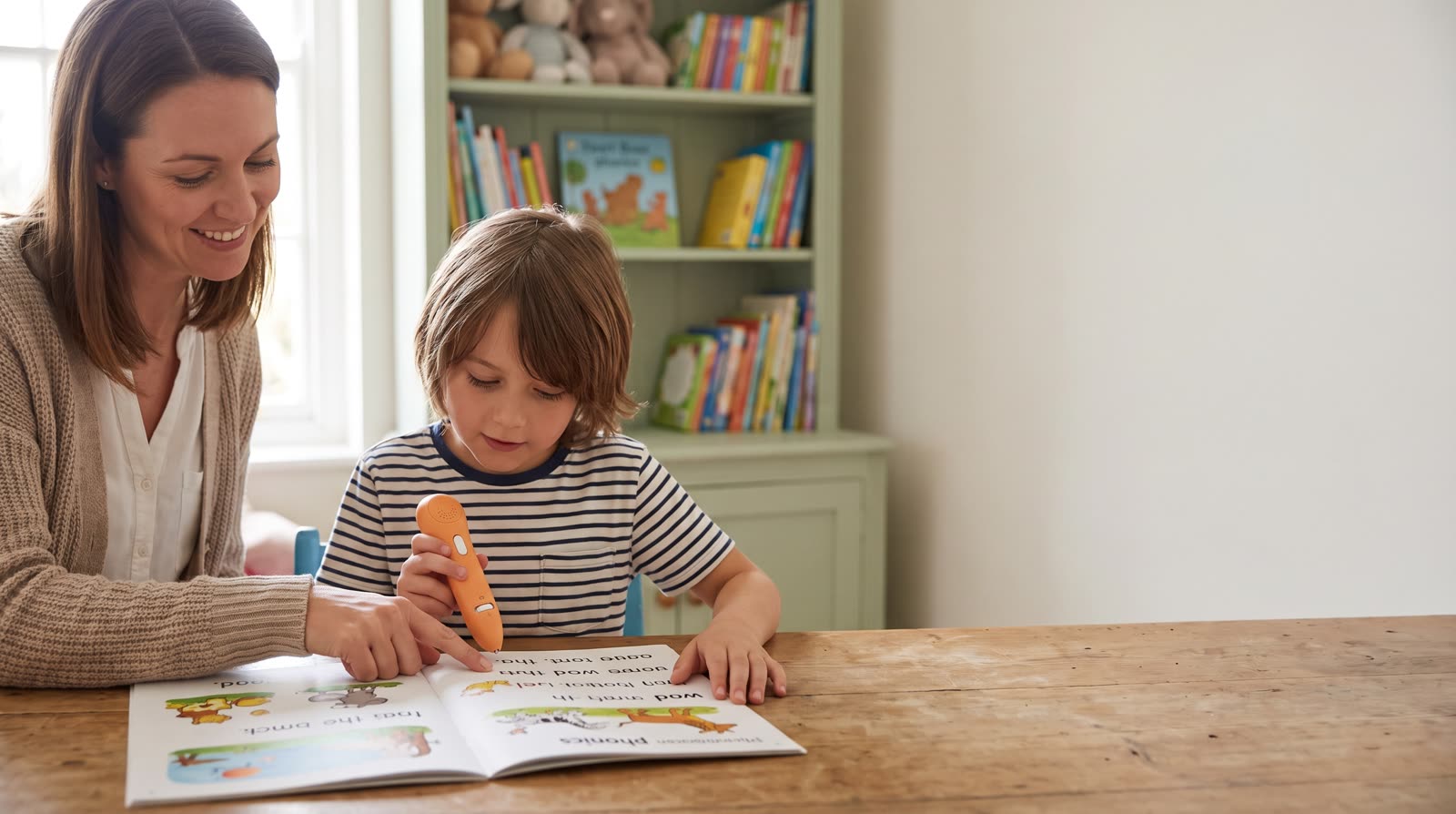
Hardware alone cannot replicate the nuanced social interactions that drive language learning. Active adult mediation—often referred to in educational theory as scaffolding—is crucial when introducing interactive reading pens to bilingual learners. Parents and teachers should sit alongside children, modeling how to adjust volume appropriately based on room acoustics, guiding them through dual-language vocabulary exercises, and discussing the narrative themes in both languages. According to developmental guidance from organizations such as Reading Rockets, combining interactive media with responsive adult conversation significantly enhances vocabulary retention and listening comprehension in multilingual children. B2B suppliers can add substantial value to their product offerings by bundling comprehensive teacher guides and parent handbooks with their reading pen and book sets. Furthermore, industry standards emphasize that hardware reliability must align with educational goals to ensure long-term adoption by institutional buyers and retail distributors.
Product Safety, Battery Maintenance, and Proper Device Care
Low-Risk External Inspection and Daily Maintenance Protocols
Maintaining the longevity and safety of electronic reading pens requires adherence to structured daily care and inspection protocols. Teachers, parents, and caregivers should perform routine low-risk external inspections of the device housing, optical lens tip, speaker grille, and volume control buttons. Users should check for accumulated dust or debris around the optical sensor that might interfere with book code scanning. Cleaning should be performed exclusively with a dry or slightly damp lint-free microfiber cloth, avoiding harsh chemical sprays or liquid immersion. Never attempt to disassemble the reading pen casing, as internal components are sensitive and unauthorized modification can compromise electrical safety barriers. Furthermore, industry standards emphasize that hardware reliability must align with educational goals to ensure long-term adoption by institutional buyers and retail distributors.
Battery Safety, Thermal Management, and Manufacturer Support Guidelines
Reading pens typically utilize rechargeable lithium-ion or standard replaceable alkaline batteries to power their processors and internal speakers. Safe battery handling is vital for preventing thermal incidents and ensuring user protection. Users must strictly utilize certified charging cables and compatible power adapters supplied or recommended by the manufacturer. If a device exhibits signs of moisture ingress, physical damage, abnormal heating during charging, battery swelling, fluid leakage, or unusual smoke, users must immediately cease operation, disconnect power sources, and avoid charging. Under no circumstances should damaged batteries be handled casually; instead, contact the manufacturer or authorized service channels immediately. For comprehensive child product safety standards and incident reporting guidelines, refer to regulatory resources provided by the Consumer Product Safety Commission (CPSC) [3]. Furthermore, industry standards emphasize that hardware reliability must align with educational goals to ensure long-term adoption by institutional buyers and retail distributors.
Frequently Asked Questions
Can an adjustable volume reading pen be used in noisy kindergarten classrooms for bilingual lessons?
Yes, an adjustable volume reading pen is designed to accommodate various acoustic environments. In noisier classrooms, raising the volume to its maximum safe threshold—typically capped between 75 and 85 decibels to protect children's hearing—helps students clearly hear native-speaker pronunciations. However, educators should also encourage small group listening corners or headphone accessories to minimize background interference.
Does adjustable volume improve language comprehension for bilingual children?
Adjustable volume itself is a hardware feature that optimizes acoustic clarity and listening comfort, which indirectly supports comprehension by reducing auditory fatigue. True language comprehension, however, depends on structured pedagogical design, meaningful vocabulary exposure, and active adult guidance that connects the audio input to contextual understanding.
What safety standards should B2B buyers look for regarding audio output in reading pens?
B2B buyers and procurement teams should verify that the reading pen complies with international child safety regulations, such as CPSC guidelines and EN71 standards. Specifically, the device should feature built-in acoustic limiting circuits that prevent the maximum volume output from exceeding safe pediatric decibel limits (generally 85 dB), protecting young ears during extended use.
How should schools and distributors inspect reading pen volume controls during bulk sample reviews?
During sample evaluations, quality assurance teams should test the volume adjustment mechanism across all available levels using standard dual-language companion books. Inspectors must check for smooth increment transitions, absence of audio distortion or clipping at peak volume, tactile durability of the control buttons, and consistent response latency across different language audio tracks.
What steps should be taken if a reading pen shows signs of abnormal heating or battery swelling?
If a reading pen exhibits abnormal heat generation during operation or charging, battery swelling, fluid leakage, or smoke, users must immediately stop using the device, disconnect it from any power source, and refrain from attempting to disassemble or charge it. Contact the manufacturer or authorized service channels promptly for replacement or repair guidance.
Conclusion
In summary, a reading pen equipped with adjustable volume serves as a highly versatile and practical tool for bilingual language exposure, bridging the gap between independent interactive learning and diverse acoustic environments. While hardware features like volume customization, optical precision, and clear sound reproduction are essential for delivering crisp dual-language audio, they must be supported by rigorous B2B procurement standards, safety compliance, and structured pedagogical integration. Publishers, educational distributors, and school administrators must prioritize devices that balance audio clarity with strict pediatric hearing protection, complemented by active adult guidance. By adhering to international safety frameworks and maintaining strict quality control during sample testing and pre-shipment inspections, stakeholders can successfully deploy interactive reading programs that foster engaging, safe, and effective multilingual learning experiences for children worldwide.
Continue your research
Related reading pen buyer guides
Use these related guides to compare the next product, content, sourcing or channel decision in your project.
- Learning SupportEvaluating Simple Touch Controls in Bilingual Children's Reading Pens: A Comprehensive B2B Buyer and Educator GuideRead this guide
- Learning SupportIs a Reading Pen with Adjustable Volume Suitable for Children with Dyslexia or Early Reading Difficulty?Read this guide
- Learning SupportIs a Reading Pen with Human-Voice Narration Suitable for Children with Bilingual Language Exposure?Read this guide
Sources used for further reading
Continue with ReadGlo
See a DOT-code picture-book set designed for guided early-learning programs.
ReadGlo project support
Get a Custom Quote
Partner with ReadGlo for reliable manufacturing, strict acoustic safety compliance, and tailored OEM/ODM solutions for your educational brand. Contact our B2B team today to discuss your project requirements.