Contents
Introduction
In the rapidly evolving landscape of early childhood education and EdTech publishing, bilingual language acquisition has become a cornerstone of global curriculum design. As publishers and educational institutions seek effective tools to support dual-language learners, interactive reading pens paired with specially coded picture books have emerged as prominent technological aids. A central design consideration for these devices is interface ergonomics—specifically, whether a reading pen equipped with simple touch controls is suitable for children navigating bilingual language exposure. This comprehensive guide examines the pedagogical principles, hardware specifications, evaluation methodologies, and safety considerations that B2B buyers, publishers, school administrators, and wholesale distributors must evaluate when sourcing or designing bilingual reading pen systems. By focusing on intuitive point-and-tap navigation, multi-language audio encoding, and structured adult scaffolding, stakeholders can make informed decisions that foster natural phonemic differentiation and engagement without inducing cognitive overload.
Pedagogical Foundations of Bilingual Language Exposure in Early Childhood
The Role of Auditory-Visual Association in Dual-Language Acquisition
Early childhood dual-language acquisition relies heavily on simultaneous auditory and visual reinforcement. When young children interact with printed text while hearing native-speaker pronunciation, neural pathways connecting visual orthography with phonological representation are strengthened. In bilingual environments, where children may be learning a primary home language alongside a secondary or foreign target language, immediate multisensory feedback helps demystify phonetic structures and vocabulary distinctions. According to early literacy guidelines from pediatric and educational authorities such as the American Academy of Pediatrics (AAP), interactive media that encourages active participation rather than passive consumption supports foundational language skills when paired with supportive adult guidance. For B2B publishers, designing picture books that seamlessly integrate dual-language tracks requires meticulous planning of optical dot-code mapping, ensuring that children can easily toggle or access distinct language streams without confusion.
Supporting Natural Code-Switching and Phonemic Differentiation Without Cognitive Overload
Bilingual children frequently engage in code-switching—alternating between two or more languages within conversation or reading sessions. While natural, early learners can experience cognitive fatigue if educational interfaces are overly complex or require intricate menu navigation. Simple touch controls on a reading pen—such as a single tap on a specific book icon, character, or vocabulary word to switch between language audio tracks—minimize executive function demands. By keeping the mechanical and software interface minimalist, the child's cognitive capacity remains focused entirely on linguistic comprehension, vocabulary acquisition, and semantic association. Manufacturers and educational publishers must collaborate during the specification stage to establish clear audio zone layouts on book pages, ensuring that language switching buttons are distinct, predictable, and ergonomically positioned for small hands.
Hardware Ergonomics: Why Simple Touch Controls Matter for Young Bilingual Learners
Reducing Cognitive Friction Through Intuitive Point-and-Tap Pointing Technology
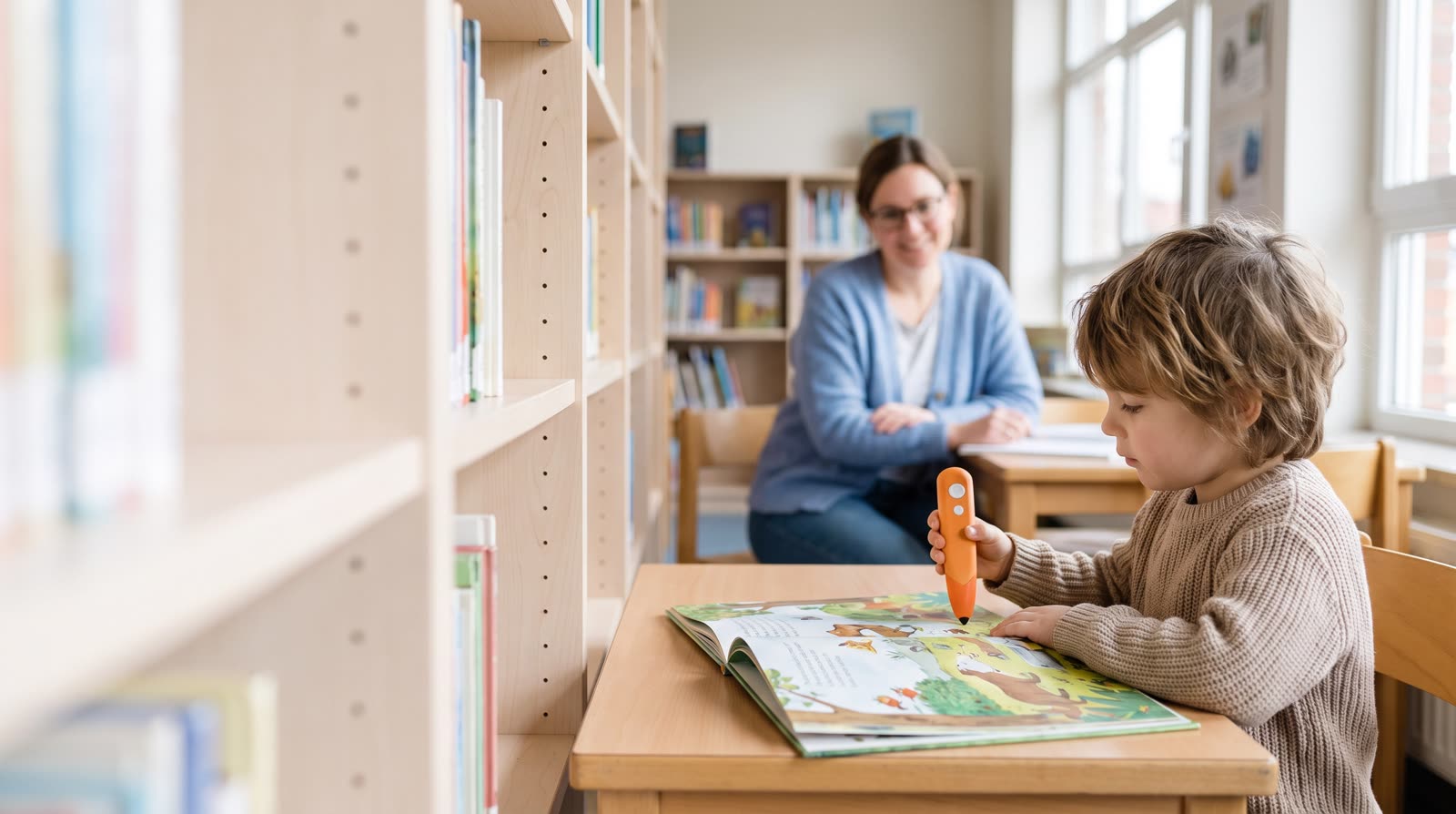
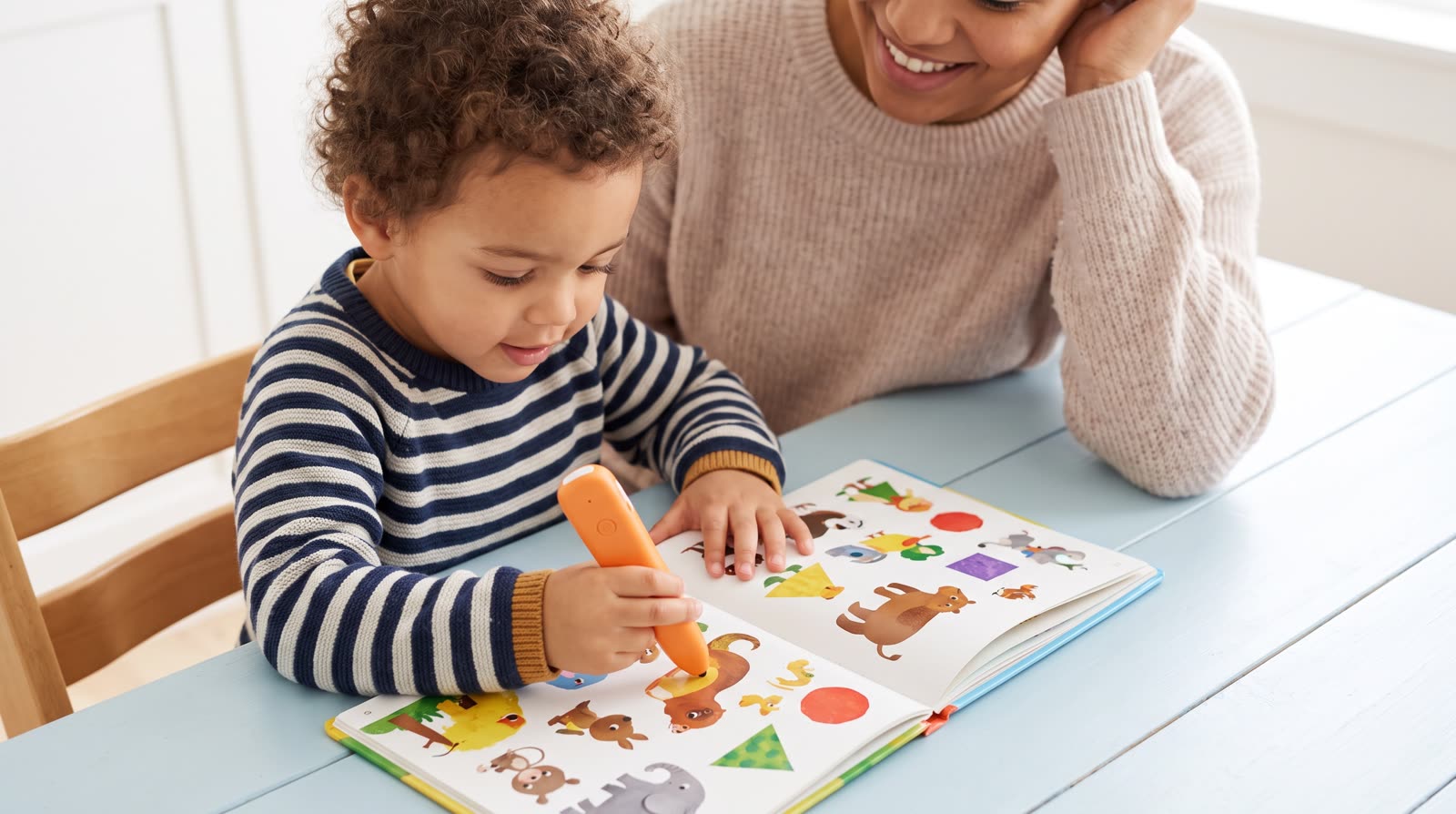
Hardware usability directly dictates learning efficacy in early childhood technology. Complex multi-button remote controls, touchscreens requiring multi-gesture swipes, or intricate software settings often frustrate young learners and disrupt the natural flow of storytelling. Conversely, an optical reading pen featuring a high-precision optical sensor tip and a single primary activation button—or direct tap-to-read functionality—eliminates operational barriers. When a child touches a word or illustration, the embedded OID (Optical Identification) code is instantly recognized and translated into the corresponding dual-language audio file. This immediate cause-and-effect loop fosters confidence, encourages independent exploration, and allows bilingual children to explore target vocabulary at their own pace. Procurement specialists evaluating ODM/OEM samples should test the responsiveness of the optical sensor across various paper finishes, matte lamination, and multi-color ink densities to ensure zero latency during bilingual playback switching.
Tactile Feedback, Durability, and Motor Skill Considerations for Toddlers and Preschoolers
Fine motor skill development varies significantly across the toddler and preschool age spectrum. Simple touch controls must be engineered with appropriate tactile resistance—preventing accidental activations while remaining effortless for small fingers to depress. Furthermore, external casing materials must withstand the rigorous conditions of home environments, classrooms, and daycare centers. B2B buyers must review supplier compliance with drop-test durability standards, non-toxic food-grade plastics (such as ABS or polycarbonate blends), and secure battery compartment designs. Ergonomic barrel diameters, lightweight balancing, and textured grip zones ensure that children can hold the pen comfortably during extended bilingual reading sessions, reducing hand fatigue and promoting correct pencil-grip precursors.
B2B Procurement and Specification Checklist for Bilingual Reading Systems
Evaluating Optical Code Resolution, Dual-Language Audio Encoding, and Memory Capacity
Sourcing bilingual reading pen systems requires a rigorous technical audit of internal hardware and software architecture. Key parameters to examine during sample evaluation include optical sensor frames per second (FPS), OID code density compatibility (such as OID 3, OID 4, or proprietary coding schemes), and audio file compression formats (e.g., MP3, WAV, or high-efficiency custom codecs). For dual-language applications, internal flash memory (ranging typically from 8GB to 32GB) must be sufficient to store extensive multi-language libraries without truncation. Procurement teams should request detailed technical specifications regarding sample rate support, speaker output clarity (ensuring distortion-free native accent reproduction), and firmware update protocols. Establishing clear acceptance criteria for audio switching speed—the time elapsed between tapping a language toggle icon and hearing the secondary language output—is vital for maintaining user engagement.
Sample Evaluation, OEM/ODM Customization Protocols, and Supplier Compliance Standards
Before committing to volume manufacturing runs, publishers and brand owners must execute a structured sample review protocol. This process involves verifying mechanical fit and finish, functional testing of dual-language switching accuracy, acoustic output measurements in simulated classroom environments, and packaging drop tests. During OEM/ODM discussions, clear documentation regarding firmware customisation, silk-screen branding, custom OID book printing guidelines, and quality control inspection thresholds (such as Acceptable Quality Limit standards) must be established in writing. B2B buyers should request independent third-party laboratory test reports for electrical safety, electromagnetic compatibility, and chemical composition (such as RoHS, REACH, and EN71 compliance) to ensure seamless importation and distribution across global markets.
ReadGlo project support
Get Product Catalog
Explore ReadGlo's advanced bilingual talking pen and interactive picture book OEM/ODM solutions tailored for global publishers and distributors.
Classroom and Home Integration Strategies for Educators and Distributors
Structuring Immersive Dual-Language Listening Stations and Interactive Storytimes
Successful deployment of bilingual reading pen systems in schools and homes depends on structured pedagogical integration. Educators and curriculum developers recommend establishing dedicated listening stations where children can independently explore dual-language picture books using tactile reading pens, supplemented by group read-aloud sessions led by teachers. Distributors can add substantial value to their B2B client base by providing comprehensive teacher resource guides, lesson plan templates, and curriculum alignment charts. These materials demonstrate how simple touch controls facilitate differentiated instruction, allowing bilingual students to reinforce primary language comprehension while actively experimenting with secondary vocabulary pronunciation in a low-pressure environment.
Guiding Adult Facilitation: Parental and Teacher Involvement in Bilingual Literacy
Technology functions most effectively as a collaborative bridge rather than an isolated tutor. Adult scaffolding—whether by parents at home or educators in the classroom—remains essential for maximizing the benefits of bilingual reading pens. Adults should engage children in dialogic reading: asking open-ended questions about story characters, encouraging children to repeat words in both languages, and connecting story themes to everyday experiences. B2B packaging and companion guidebooks should explicitly encourage adult-child co-reading moments. As emphasized by educational frameworks from organizations like Reading Rockets, active parental involvement significantly enhances language retention and socio-emotional bonding during dual-language literacy activities.
Safety, Durability, and Compliance Standards for Children's Electronic Learning Devices
Electrical Safety, Battery Management, and Non-Toxic Materials Compliance
Child safety is paramount in the manufacturing and distribution of electronic learning aids. B2B buyers must ensure that all sourced reading pens comply with stringent international safety standards, including CPSC guidelines for children's products in the United States and equivalent European safety directives. Devices must incorporate robust overcharge, over-discharge, and short-circuit protection for rechargeable lithium-ion batteries, alongside secure, screw-fastened battery doors if replaceable cells are utilized. Surface coatings must be non-toxic, lead-free, and resistant to saliva corrosion. Importers should routinely verify manufacturing batch compliance and maintain comprehensive documentation to safeguard against regulatory liabilities.
Proper Device Care, Inspection Protocols, and Maintenance Best Practices
Establishing clear maintenance guidelines protects hardware longevity and ensures consistent user experiences. Distributors and educational institutions should instruct end-users on proper handling: keeping optical lenses clean and free of smudges, avoiding exposure to moisture or extreme temperatures, and storing pens in dedicated charging docks. In accordance with standard electronic safety advisory protocols, if any device exhibits signs of overheating, swelling, unusual odors, or physical damage, users must immediately cease operation, disconnect from power sources, and contact authorized service channels or the manufacturer. Routine visual inspections of charging cables and casing integrity prevent potential hazards and uphold product reliability.
Frequently Asked Questions
Are reading pens with simple touch controls suitable for toddlers starting bilingual education?
Yes. Simple touch controls—such as tapping directly on text, characters, or dedicated language-switching icons—eliminate complex menu navigation, allowing toddlers and preschoolers to interact intuitively without inducing cognitive fatigue.
How do bilingual reading pens support children learning two languages simultaneously?
Bilingual reading pens combine optical recognition technology with pre-loaded dual-language audio files, enabling children to instantly hear native-speaker pronunciation in either language by tapping corresponding OID codes on specially printed picture book pages.
What technical specifications should B2B buyers evaluate in bilingual reading pen systems?
Key evaluation criteria include optical sensor frame rate, OID code compatibility, internal memory capacity (8GB to 32GB+), audio reproduction fidelity, battery safety management systems, and third-party regulatory compliance such as CE, RoHS, and CPSC standards.
How can educators and parents maximize the educational impact of bilingual reading pens?
Technology should be paired with adult scaffolding—such as dialogic reading, open-ended discussions about story content, and encouraging children to practice vocabulary pronunciation in both languages during shared reading sessions.
What safety precautions should be observed regarding charging and device maintenance?
Users should use certified charging adapters, keep optical lenses clean, and avoid exposure to moisture. If a device shows signs of abnormal heating, swelling, or physical damage, operation must be stopped immediately and the manufacturer or service channel contacted.
Conclusion
In summary, reading pens equipped with simple touch controls offer an exceptionally effective, intuitive, and engaging technological solution for children engaged in bilingual language exposure. By minimizing mechanical complexity and maximizing tactile accessibility, these devices allow young learners to focus their cognitive energy on linguistic discovery, phonemic differentiation, and vocabulary acquisition. For publishers, educational distributors, and school administrators, successful market entry and deployment rely on rigorous B2B specification audits, adherence to international safety standards, and the integration of supportive adult scaffolding. Partnering with experienced manufacturing specialists like ReadGlo ensures that educational hardware and interactive books meet the highest benchmarks of quality, safety, and pedagogical efficacy.
Continue your research
Related reading pen buyer guides
Use these related guides to compare the next product, content, sourcing or channel decision in your project.
- Learning SupportIs a Reading Pen with Adjustable Volume Suitable for Bilingual Language Exposure?Read this guide
- Learning SupportEvaluating Simple Touch Control Reading Pens for Children with Dyslexia and Early Reading Difficulties: A B2B Procurement and Pedagogical GuideRead this guide
- Learning SupportIs a Reading Pen with Human-Voice Narration Suitable for Children with Bilingual Language Exposure?Read this guide
Continue with ReadGlo
See a DOT-code picture-book set designed for guided early-learning programs.
ReadGlo project support
Contact Our Team
Connect with ReadGlo's engineering and product development specialists to discuss customized bilingual educational hardware solutions.