
Contents
Introduction
When evaluating assistive educational technology for children with dyslexia, phonological processing challenges, or early reading difficulties, B2B buyers, educational publishers, and school distributors frequently investigate the efficacy and developmental suitability of human-voice narration reading pens. Google's helpful content guidelines emphasize that educational materials must prioritize authentic user value, reliability, and practical guidance rather than marketing hyperbole. For young learners experiencing decoding friction, visual-spatial print crowding, or rapid cognitive fatigue, human-voice audio support—when paired with structured multisensory book design—can serve as a valuable scaffolding tool. However, reading pens are not diagnostic medical devices, therapeutic treatments, or standalone solutions for dyslexia. According to the American Academy of Pediatrics (AAP) and the International Dyslexia Association (IDA), children with reading difficulties benefit most from structured literacy instruction guided by qualified educators and speech-language pathologists, supported by multisensory tools that encourage active adult-child engagement. This comprehensive B2B guide examines the functional mechanisms, sourcing considerations, safety standards, and pedagogical boundaries of human-voice reading pens for publishing partners and institutional buyers worldwide.
Understanding the Role of Human-Voice Narration in Early Reading Support
Acoustic Naturalness Versus Synthesized Text-to-Speech (TTS) Systems
For developing readers and children with dyslexia, the quality and naturalness of auditory input significantly influence cognitive engagement and comprehension. Synthesized text-to-speech (TTS) engines frequently exhibit mechanical cadence, flat intonation, robotic phrasing, and unnatural pauses, which can confuse young learners attempting to map complex graphemes to corresponding phonemes. In contrast, human-voice narration—recorded by professional voice talent in controlled studio environments using high-end condenser microphones—provides natural prosody, emotional nuance, correct phrasing, and rhythmic pacing. When children point an optical reading pen at printed text, hearing authentic human inflection helps them internalize natural speech patterns and sentence structures. For B2B publishers and brand owners like ReadGlo, sourcing high-fidelity audio files with clear articulation and balanced dynamic range is critical for supporting early literacy frameworks. Professional voice recording ensures that subtle phonemic distinctions are delivered accurately, which is especially vital for children who rely heavily on auditory cues to bridge gaps in visual decoding.
Cognitive Load Theory and Phonological Processing Benefits
Children with dyslexia frequently struggle with phonological awareness—the fundamental ability to recognize, segment, and manipulate the spoken parts of sentences and individual words. Multisensory learning, which combines visual tracking with simultaneous auditory reinforcement, has long been recommended by educational researchers and developmental specialists. When a child touches a word or sentence icon with an optical reading pen and hears an immediate human voice, two sensory channels activate simultaneously. This dual-coding mechanism reduces cognitive fatigue compared to struggling solely with decoding dense text blocks on a static page. Nevertheless, educational publishers must ensure that audio playback speed is moderate and clear, avoiding rapid delivery that could overwhelm auditory working memory in vulnerable learners. By distributing cognitive processing across both auditory and visual pathways, children can allocate more mental bandwidth toward extracting meaning and enjoying the narrative.
Mitigating Visual Stress and Print Crowding in Interactive Books
Visual stress and scotopic sensitivity often accompany reading difficulties, causing letters to appear blurred, distorted, or overlapping on standard white paper. When designing interactive book sets for reading pens, publishers must collaborate closely with manufacturing partners to select cream-tinted matte paper stocks, appropriate font typefaces (such as open-sans or specialized dyslexia-friendly fonts), and generous line spacing. The optical reading pen acts as a tangible tracking anchor, guiding the child's hand and eye across the page. This tactile-visual-auditory synchronization helps minimize eye strain and prevents line skipping, providing a more comfortable and accessible reading experience for children with early literacy challenges. Furthermore, uncluttered page layouts with clear demarcation for touch-sensitive OID codes ensure that children can activate audio playback independently without visual confusion.
Evaluating Technical Specifications and Manufacturing Standards
Optical Sensor Precision and OID Code Integration Protocols
During the product specification and sample review phase, B2B buyers must examine the technical precision of the optical recognition module embedded in the reading pen tip. Reliable OID (Optical Identification) decoding requires seamless synchronization between the invisible dot-matrix printed on the interactive book pages and the infrared optical sensor of the pen. If sensor jitter occurs or if poor-quality offset printing causes code misreadings, children experiencing reading friction may become frustrated and disengage from the learning process. Sourcing teams should establish rigorous sample testing protocols to verify that sensor response times remain under 0.2 seconds across various lighting conditions, ambient environments, and paper finishes. Ensuring robust optical decoding across diverse manufacturing batches is essential for maintaining consistent product performance in global educational markets.
Acoustic Output Quality, Volume Limiting, and Hearing Safety
Children with learning differences or sensory sensitivities may react strongly to unexpected sound bursts or distorted audio playback. Specification reviews must mandate high-quality internal speakers and secure volume-limiting chipsets to protect young ears from excessive decibel levels. When defining product requirements with manufacturing partners, buyers should specify adjustable volume ranges that comply with international child safety acoustic standards. Furthermore, audio distortion rates must be kept below specified thresholds to ensure that human-voice narration remains crisp, intelligible, and free of static interference during extended daily classroom or home use. Sound quality testing should be conducted across multiple frequency bands to guarantee acoustic clarity for listeners with auditory processing considerations.
Ergonomics, Grip Design, and Motor Skill Accessibility
Many children with dyslexia or early developmental challenges also experience mild fine-motor skill delays or dysgraphia. Traditional narrow writing instruments can cause hand cramping and fatigue. B2B buyers should prioritize reading pen designs featuring triangular ergonomic contours, lightweight durable ABS plastics, soft-touch silicone grip zones, and appropriately balanced center of gravity. A well-designed pen encourages a natural tripod grasp, allowing the child to focus cognitive energy entirely on comprehension and exploration rather than struggling to hold an uncomfortable device. Ergonomic accessibility ensures that children of varying physical abilities can operate the tool comfortably during extended reading sessions.
Pedagogical Boundaries and Multi-Stakeholder Collaboration
Avoiding Misleading Therapeutic and Diagnostic Claims
It is essential for educational distributors, retail partners, and publishing brands to maintain absolute transparency regarding what reading pens can and cannot achieve. Reading pens with human-voice narration are powerful supplementary learning tools, but they do not diagnose, treat, or cure dyslexia or specific learning disabilities. B2B marketing collateral, wholesale catalogs, and product packaging must avoid exaggerated claims that suggest independent pen usage can replace professional educational remediation. Manufacturers and distributors must guide educators and parents to understand that tools should complement—not substitute—individualized educational plans (IEPs) and professional clinical guidance. Maintaining strict ethical boundaries protects educational brands and ensures that consumers receive honest, reliable guidance.
Integrating Adult Guidance and Structured Literacy Frameworks
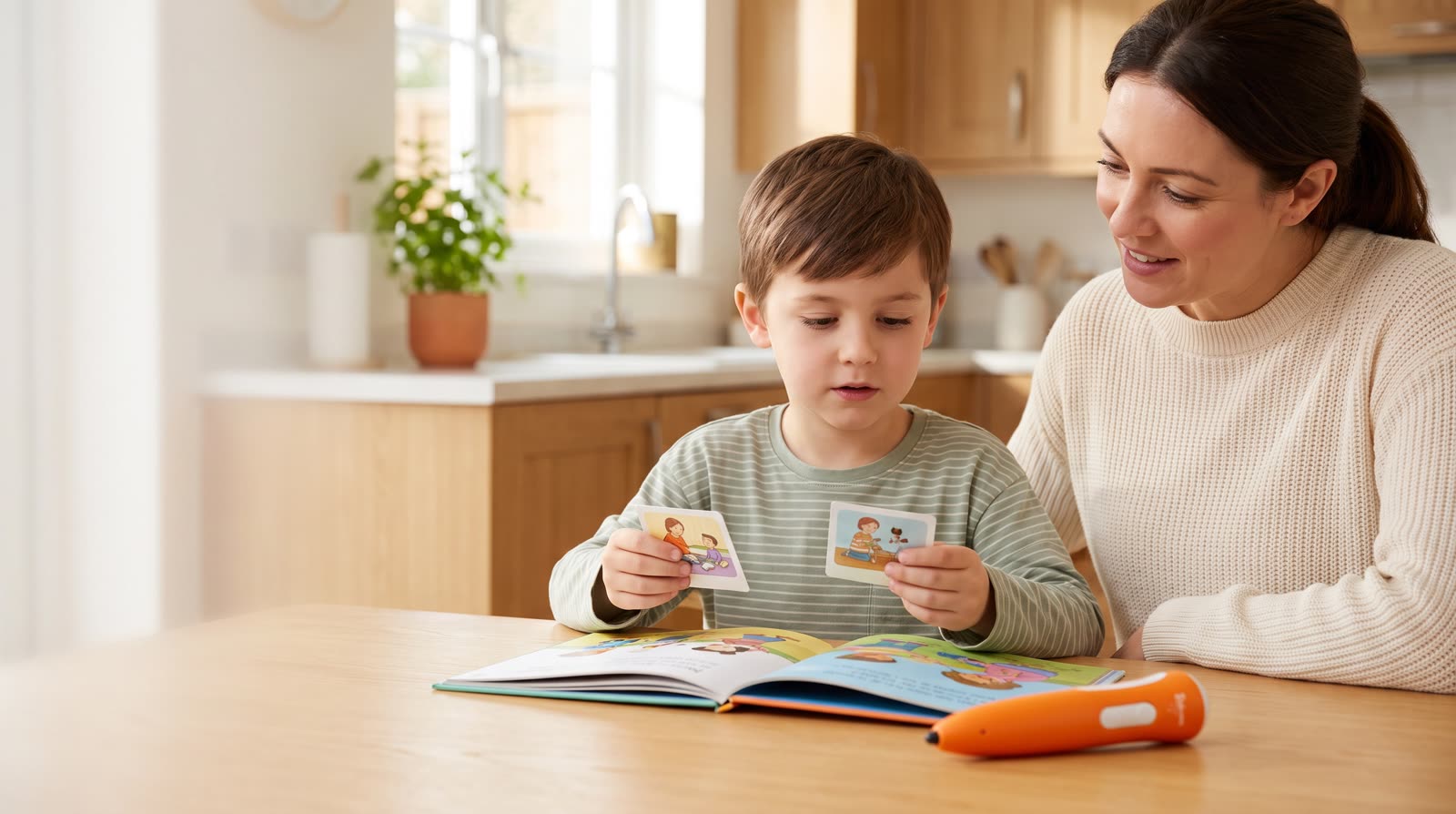
Independent device use without adult scaffolding can sometimes lead to passive listening or rote clicking without genuine comprehension. To maximize educational value, publishers should design companion activity guides that encourage parents, teachers, or reading specialists to engage in dialogic reading with the child. Asking open-ended questions about the story, discussing character motivations, and connecting narrative themes to real-world experiences transform the reading pen from a mere gadget into an effective bridge for literacy development. Educators should use pen-enabled books as part of a comprehensive curriculum that includes explicit phonics instruction and vocabulary discussion. Collaborative adult involvement ensures that children actively process narrative content and build robust linguistic comprehension.
Collaborating with Educators and Reading Specialists in Product Design
To ensure genuine pedagogical utility, B2B publishing houses must involve practicing reading specialists, special education teachers, and speech-language pathologists in the early stages of book content creation and software UI design. Collaborative design reviews help ensure controlled vocabulary levels, appropriate syntactic complexity, and meaningful interactive checkpoints. By aligning product development with established literacy research from organizations like the International Dyslexia Association, publishers create durable educational value that satisfies institutional procurement committees and school district standards. Engaging pedagogical advisors early in the product lifecycle minimizes redesign costs and maximizes market acceptance.
ReadGlo project support
Request Product Catalog
Discover ReadGlo's certified talking pens and interactive picture book collections designed for global educational markets. Contact our B2B team today to review OEM/ODM specifications and request sample evaluation kits.
Supply Chain Quality Control and Pre-Shipment Verification
Rigorous Sample Review and Functional Audit Protocols
Before finalizing large-scale production orders, procurement teams must conduct comprehensive sample reviews. This process involves evaluating physical ergonomics, button durability, battery compartment security, and audio file integrity. Quality assurance checklists should verify that all audio tracks match the corresponding book page indices without lag, omission, or cross-talk between multi-language files. Establishing clear quality acceptance criteria with manufacturing suppliers ensures brand reputation and long-term customer satisfaction in global educational markets. Routine factory audits and pre-production sample sign-offs help eliminate technical discrepancies before mass manufacturing begins.
Pre-Shipment Data Verification and Compliance Documentation
A structured pre-shipment data check is essential for international trade compliance and customs clearance. B2B buyers must review electronic data files, firmware versions, multilingual audio pack compatibility, and regulatory certification documents (such as CE, RoHS, FCC, and ASTM F963). Ensuring that all packaging materials clearly indicate target age ranges, operational instructions, and battery safety guidelines protects downstream distributors and retail partners from regulatory liabilities and consumer disputes. Comprehensive documentation packages also facilitate smooth customs inspections and institutional bid submissions.
Ethical Sourcing and Material Transparency for Institutional Buyers
Institutional buyers, school districts, and government procurement agencies increasingly require strict transparency regarding manufacturing supply chains and material safety. Sourcing partners must provide verifiable documentation proving that all plastics, paints, and paper stocks are non-toxic, lead-free, and phthalate-free. Ensuring transparent supply chain practices reinforces brand trust and meets the stringent ESG (Environmental, Social, and Governance) requirements demanded by modern educational institutions. Ethical manufacturing audits ensure labor standards and environmental stewardship across the production lifecycle.
Product Care, Battery Safety, and Regulatory Compliance
Safe Handling and External Maintenance Protocols
To ensure device longevity and user safety, end-users and institutional buyers must follow strict maintenance guidelines. Devices should be cleaned externally using a slightly damp, lint-free microfiber cloth without harsh chemical solvents, abrasives, or liquid immersion. According to guidelines from the U.S. Consumer Product Safety Commission (CPSC), children's electronic products must be handled with care to prevent mechanical damage or electrical hazards. Users must never attempt to disassemble the reading pen or alter internal circuitry. Proper exterior maintenance prevents dust accumulation in optical sensor windows and ensures reliable daily operation.
Battery Safety and Emergency Escalation Procedures
Battery integrity is a critical safety consideration for children's electronic learning aids. If a reading pen exhibits signs of moisture ingress, physical damage, abnormal overheating, battery swelling, fluid leakage, or smoking, users must immediately cease operation, disconnect from charging sources, and avoid recharging. Institutional buyers and retail partners must establish clear warranty escalation channels with manufacturers to manage defective units safely and professionally, adhering strictly to CPSC safety standards and local electronic waste recycling regulations. Clear emergency protocols protect young users and provide peace of mind for educators and parents.
Managing Warranty Terms, Returns, and Compatibility Checks
B2B buyers and retail distributors must establish clear, written warranty terms and return policies for reading pen bundles. Because reading pens rely on precise firmware matching and specialized OID book codes, replacement pens must be verified for correct software version compatibility before deployment in classrooms or retail channels. Clear documentation regarding warranty coverage periods, troubleshooting escalation steps, and authorized service channels minimizes friction and ensures a dependable customer experience. Transparent post-purchase support strengthens long-term commercial relationships between publishers, distributors, and educational institutions.
Frequently Asked Questions
Can a reading pen with human-voice narration replace professional tutoring for children with dyslexia?
No. While human-voice reading pens provide excellent multisensory scaffolding and pronunciation support, they are supplemental learning tools and cannot replace specialized instruction from qualified educators, reading specialists, or speech-language pathologists.
What is the primary advantage of human-voice narration over synthetic text-to-speech for struggling readers?
Human-voice narration offers natural cadence, emotional expression, and correct prosody recorded by professional voice actors. This helps young readers with decoding friction or dyslexia connect printed words to natural spoken language more effectively than robotic synthesized voices.
How should B2B buyers evaluate the quality of a reading pen supplier during sample review?
B2B buyers should evaluate optical sensor response time, audio clarity and distortion levels, OID code printing precision, battery safety certifications, and compliance with international child safety standards such as CE, RoHS, and ASTM F963.
What safety precautions should be taken regarding reading pen batteries and charging?
Users must only use recommended charging accessories and inspect devices regularly. If any device shows signs of damage, overheating, swelling, or leakage, stop use immediately, do not charge, and contact the manufacturer or qualified service channel following CPSC guidelines.
How can teachers and parents maximize the educational impact of talking books with children?
Adults should engage in dialogic reading by asking open-ended questions, encouraging discussion about story themes, and using the reading pen as a collaborative tool rather than relying entirely on independent, passive listening.
Conclusion
In summary, a reading pen with human-voice narration serves as a highly effective multisensory scaffolding tool for children experiencing early reading difficulties or dyslexia, provided it is utilized within a balanced, structured literacy framework. By combining natural acoustic recordings with accurate optical recognition and carefully designed interactive picture books, educational publishers and brands like ReadGlo can empower young learners to build confidence, vocabulary, and phonetic awareness. However, these devices must be positioned honestly as supportive educational aids rather than medical or therapeutic treatments. B2B buyers, distributors, and educators must maintain rigorous standards during sample evaluation, prioritize child safety and regulatory compliance, and ensure that adult guidance remains central to the reading experience.
Continue your research
Related reading pen buyer guides
Use these related guides to compare the next product, content, sourcing or channel decision in your project.
- Learning SupportEvaluating Human-Voice Narration Reading Pens for Children with ADHD: A Comprehensive B2B GuideRead this guide
- Learning SupportEvaluating Short Interactive Activities in Reading Pens for Children with ADHD: A B2B Evaluation and Design FrameworkRead this guide
- Learning SupportEvaluating Simple Touch Control Reading Pens for Children with Dyslexia and Early Reading Difficulties: A B2B Procurement and Pedagogical GuideRead this guide
Sources used for further reading
- Google Search Central: Creating Helpful, Reliable, People-First Content
- American Academy of Pediatrics: Early Literacy Guidance
- International Dyslexia Association: Understanding Dyslexia and Multisensory Structured Literacy
- U.S. Consumer Product Safety Commission: Children's Products Business Education
Continue with ReadGlo
See a DOT-code picture-book set designed for guided early-learning programs.
ReadGlo project support
Send Your Requirements
Partner with ReadGlo for reliable, high-quality children's educational electronics and multisensory book sets. Send your custom project requirements or speak with our manufacturing specialists to discuss partnership opportunities.