
Contents
Introduction
Educational publishers, school suppliers, and literacy specialists evaluating assistive learning tools frequently ask whether reading pens featuring short interactive activities are suitable for children with dyslexia or early reading difficulties. As a direct, prudent answer: yes, when thoughtfully designed, low-friction interactive prompts can reinforce multisensory decoding, maintain engagement without cognitive overload, and support guided practice. However, these tools are assistive learning aids rather than clinical medical devices; they do not diagnose, treat, or guarantee remediation of reading disorders. Educators, parents, and institutional buyers must evaluate pen-book compatibility, audio clarity, and pedagogical scaffolding alongside professional educational guidance. This guide provides B2B buyers, publishers, and curriculum developers with an in-depth operational and pedagogical framework for selecting, reviewing, and deploying interactive reading pen solutions.
Understanding Early Reading Difficulties and Dyslexia in Educational Publishing
Defining Early Reading Challenges and Multisensory Needs
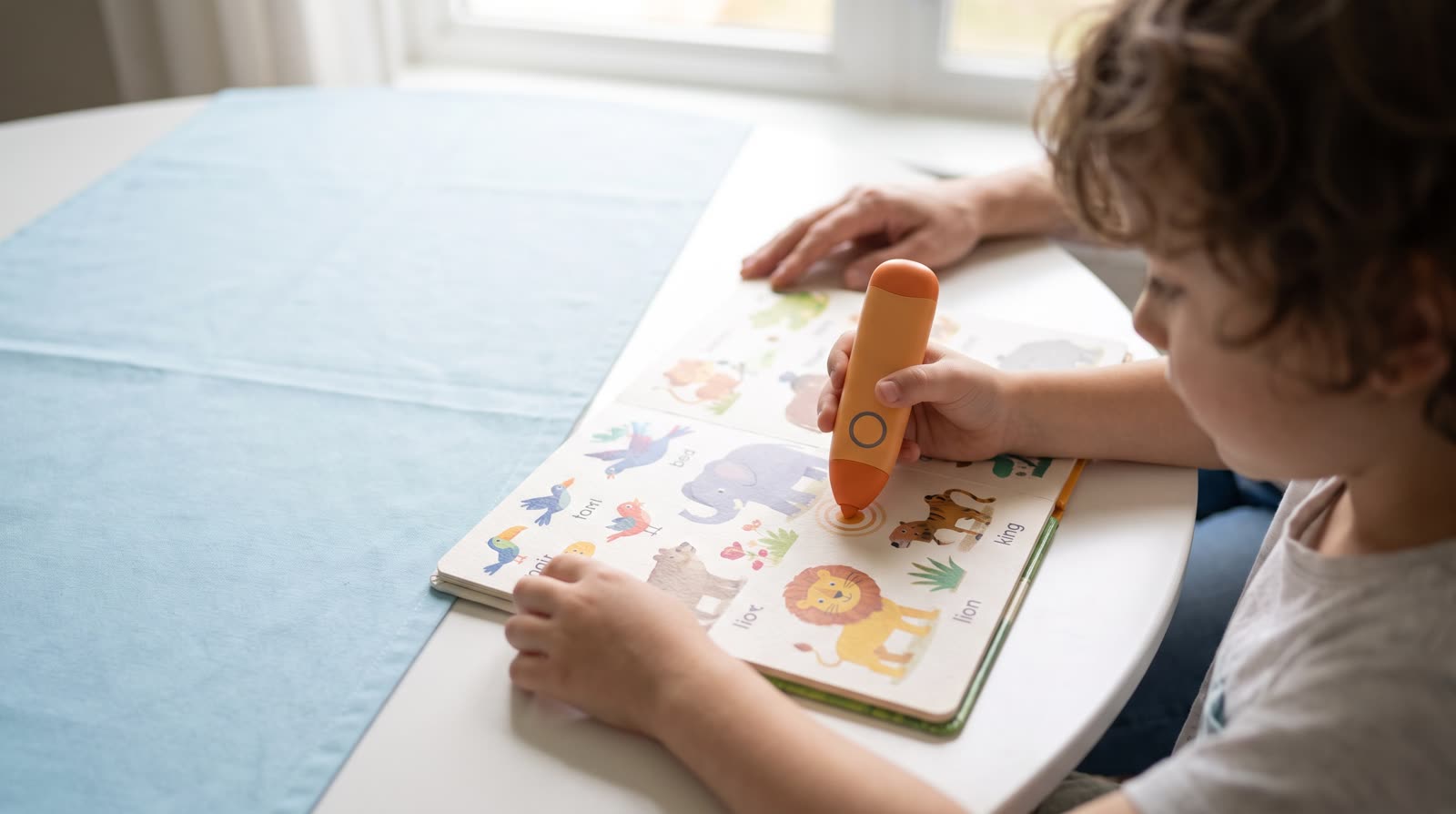
Early reading difficulties and dyslexia involve complex phonological processing challenges that affect how children map speech sounds to written letters. According to the International Dyslexia Association and the American Academy of Pediatrics (AAP), effective literacy interventions must engage multiple sensory pathways—visual, auditory, and tactile—to strengthen neural pathways for decoding [1] [2]. For B2B publishers and distributors designing physical-digital learning ecosystems, understanding these cognitive foundations is essential. Interactive reading pens bridge the gap between static text and spoken phonemes by translating optical codes on printed pages into instant, high-fidelity audio playback. When structured with micro-interactions, these tools provide immediate auditory feedback without overwhelming short-term memory.
The Pedagogical Role of Short Interactive Activities
Children experiencing reading difficulties often struggle with sustained attention and working memory capacity. Traditional long-form exercises or dense digital screens can induce cognitive fatigue and frustration. Conversely, short interactive activities—such as tap-to-match phoneme games, prompt-and-response rhythm taps, or brief guided comprehension checks embedded directly into picture book margins—offer manageable micro-tasks. These activities keep cognitive load low while fostering active participation. B2B educational buyers must assess whether supplier firmware supports customizable activity pacing, adjustable audio speeds, and non-punitive repetition loops that accommodate diverse learning paces.
Evaluating Technical and Firmware Specifications for Assistive Reading
Optical Sensor Precision and OID Code Robustness
The effectiveness of any reading pen hinges on its optical recognition hardware. For children with dyslexia or motor coordination challenges, holding a pen at rigid angles is difficult. Commercial buyers must verify that supplier optical mark recognition (OMR) or optical identification (OID) dot-code sensors support wide-angle scanning and high tolerance for slight hand tremors. Manufacturers should provide technical documentation detailing optical scan rates, decoding latency under 0.3 seconds, and print contrast requirements for companion book publishers. Ensuring robust sensor calibration prevents scanning errors that cause user frustration and disengagement.
Audio Fidelity, Pacing, and Multilingual Support
Clear, crisp, human-voice narration is vital for children learning phonics or managing reading difficulties. Synthetic or compressed robotic speech can distort phonemic boundaries, leading to misinterpretation. B2B purchasers must review audio compression bitrates, speaker decibel limits (ensuring safe hearing thresholds in compliance with institutional standards), and multilingual capabilities. Furthermore, features such as variable speech rate playback—allowing children to listen to syllables at half-speed—are critical specifications to verify during sample reviews and pre-shipment quality inspections.
B2B Procurement and Quality Assurance Workflow for Publishers
Specification Review and Sample Evaluation Protocols
When educational distributors or publishing houses source interactive reading pen systems, establishing a rigorous sample evaluation protocol is paramount. Procurement teams should request sample kits that include diverse picture books with varying font sizes, high-contrast layouts, and embedded OID dot codes. The evaluation phase must test device ergonomics, tactile grip comfort, button responsiveness, and battery safety compliance. Buyers should verify that hardware suppliers provide clear documentation regarding compliance with consumer product safety standards, such as CPSC guidelines for children's products [3], ensuring safe physical handling in school and home environments.
Pre-Shipment Material Verification and Compliance Audits
Maintaining consistent quality across mass production runs requires meticulous pre-shipment material verification. B2B contracts should outline clear inspection milestones, including firmware stability checks, acoustic output validation, drop-test durability assessments, and book-code synchronization audits. Publishers must ensure that the OID dot printing on paper aligns perfectly with audio file indices stored on the pen's internal memory or TF card. Establishing these quality gates safeguards brand reputation and ensures that end-users receive reliable, safe, and pedagogically sound learning tools.
ReadGlo project support
Get a Quote
Looking to source reliable, custom-configured interactive reading pen solutions for your educational publishing catalog? Request our comprehensive B2B product catalog and factory pricing details today.
Pedagogical Integration and Adult Guidance in Home and School Environments
The Essential Role of Adult Scaffolding and Co-Reading
Assistive reading technology functions most effectively when integrated into a broader supportive framework involving parents, teachers, and specialists. Research highlighted by Reading Rockets and educational authorities emphasizes that technology should complement, not replace, human interaction. Adults play a crucial role in co-reading sessions, helping children connect pen-delivered audio prompts with broader narrative comprehension and emotional context. B2B suppliers should support this by embedding parental guidance notes and teacher facilitation guides directly into companion book packaging.
Consulting Qualified Educational and Clinical Professionals
Because reading difficulties and dyslexia vary widely in presentation and severity, standardized tools cannot substitute for professional diagnostic evaluation. Institutional buyers and educational retailers should advocate for transparent communication regarding product capabilities. Marketing and instructional materials must clearly advise parents and educators to consult qualified reading specialists, speech-language pathologists, or educational psychologists when persistent reading hurdles occur. Partnering with professional networks ensures that children receive comprehensive, multi-tiered support tailored to their unique developmental needs.
Safety, Care, and Operational Best Practices for Hardware longevity
Low-Risk External Inspection and Routine Maintenance
Ensuring the longevity and safety of reading pens in classroom or home settings requires adherence to proper care guidelines. Users and facility managers should perform only low-risk external inspections, such as checking casing integrity, cleaning optical lenses with dry microfiber cloths, and inspecting USB charging ports for debris. Under no circumstances should non-technical users attempt to disassemble the device, as internal lithium-ion battery cells pose electrical and thermal hazards.
Handling Anomalies, Charging Protocols, and CPSC Safety Standards
Safety is a top priority in child-targeted electronic manufacturing. In accordance with guidelines from the Consumer Product Safety Commission (CPSC) [3], if a device exhibits signs of moisture ingress, physical crushing, abnormal overheating, battery swelling, fluid leakage, or smoke emission, operation must cease immediately. Discontinue charging, power down the device, store it in a safe, non-flammable location, and contact the manufacturer or authorized service channels for professional evaluation or replacement. Strict adherence to these safety protocols protects young learners and ensures institutional compliance.
Frequently Asked Questions
Can a reading pen with short interactive activities replace formal dyslexia remediation or tutoring?
No. Reading pens are assistive learning tools designed to support multisensory engagement and independent practice. They do not diagnose, treat, or replace clinical remediation programs led by qualified educational specialists or speech-language pathologists.
How do short interactive activities help children with early reading difficulties?
Short interactive activities break learning tasks into manageable micro-steps, reducing cognitive fatigue and working memory overload. They provide immediate auditory feedback, reinforcing phonemic awareness and keeping young learners actively engaged.
What should B2B buyers look for when sourcing reading pens for special educational needs?
Buyers should verify optical sensor precision (for smooth scanning), high-fidelity human-voice audio, adjustable playback speeds, robust CPSC-compliant safety certifications, and seamless book-code synchronization.
Are reading pen books compatible with standard commercial printing inks?
No. Companion books require specialized OID (Optical Identification) dot-code printing overlaid on standard CMYK graphics. Publishers must collaborate closely with pen manufacturers to ensure exact code-to-audio synchronization.
What safety precautions should be followed regarding reading pen batteries and hardware care?
Users should perform external cleaning only and never attempt to disassemble the device. If abnormal heating, swelling, or moisture damage occurs, stop use immediately, disconnect from power, and consult the manufacturer.
Conclusion
Reading pens equipped with short interactive activities represent a powerful assistive technology for educational publishers, distributors, and literacy specialists aiming to support children with dyslexia or early reading difficulties. By combining multimodal optical scanning, clear human-voice audio, and low-friction cognitive tasks, these tools foster independent practice and phonological awareness. However, their ultimate success depends on rigorous B2B procurement standards, sample evaluation protocols, adult scaffolding, and alignment with professional educational guidance. As publishers and manufacturers continue to innovate, maintaining strict compliance with safety regulations and child-centered pedagogical principles ensures that interactive reading ecosystems deliver genuine, reliable value to young learners worldwide.
Continue your research
Related reading pen buyer guides
Use these related guides to compare the next product, content, sourcing or channel decision in your project.
- Learning SupportEvaluating Human-Voice Narration Reading Pens for Children with ADHD: A Comprehensive B2B GuideRead this guide
- Learning SupportIs a Reading Pen with Simple Touch Controls Suitable for Children with ADHD? A B2B Evaluation for Educational BuyersRead this guide
- Learning SupportEvaluating Short Interactive Activities in Reading Pens for Children with ADHD: A B2B Evaluation and Design FrameworkRead this guide
Continue with ReadGlo
See a DOT-code picture-book set designed for guided early-learning programs.
ReadGlo project support
Send Your Requirements
Partner with ReadGlo to develop accessible, high-quality talking pens and interactive picture books tailored to your curriculum and market requirements. Send your project requirements to our engineering and publishing support team.