Contents
Introduction
For educational institutions, retail distributors, and parents evaluating budget-friendly procurement options, the secondhand market for children's electronic hardware—such as premium talking pens and interactive audio book sets—presents an appealing initial cost saving. However, determining whether it is worth buying a used premium reading pen requires a rigorous analysis of hardware degradation, optical code compatibility, firmware update lifecycles, and child product safety standards. While pre-owned devices may offer lower upfront costs, they often lack manufacturer warranties, risk optical sensor wear, and present battery safety concerns. This comprehensive evaluation guide examines the technical realities of secondhand reading pens, comparing total cost of ownership against brand-new wholesale procurement, and outlines prudent decision-making frameworks for B2B buyers, school administrators, and retailers.
2. Technical and Operational Risks of Secondhand Reading Pens
Optical Sensor Wear and OID Scanning Accuracy
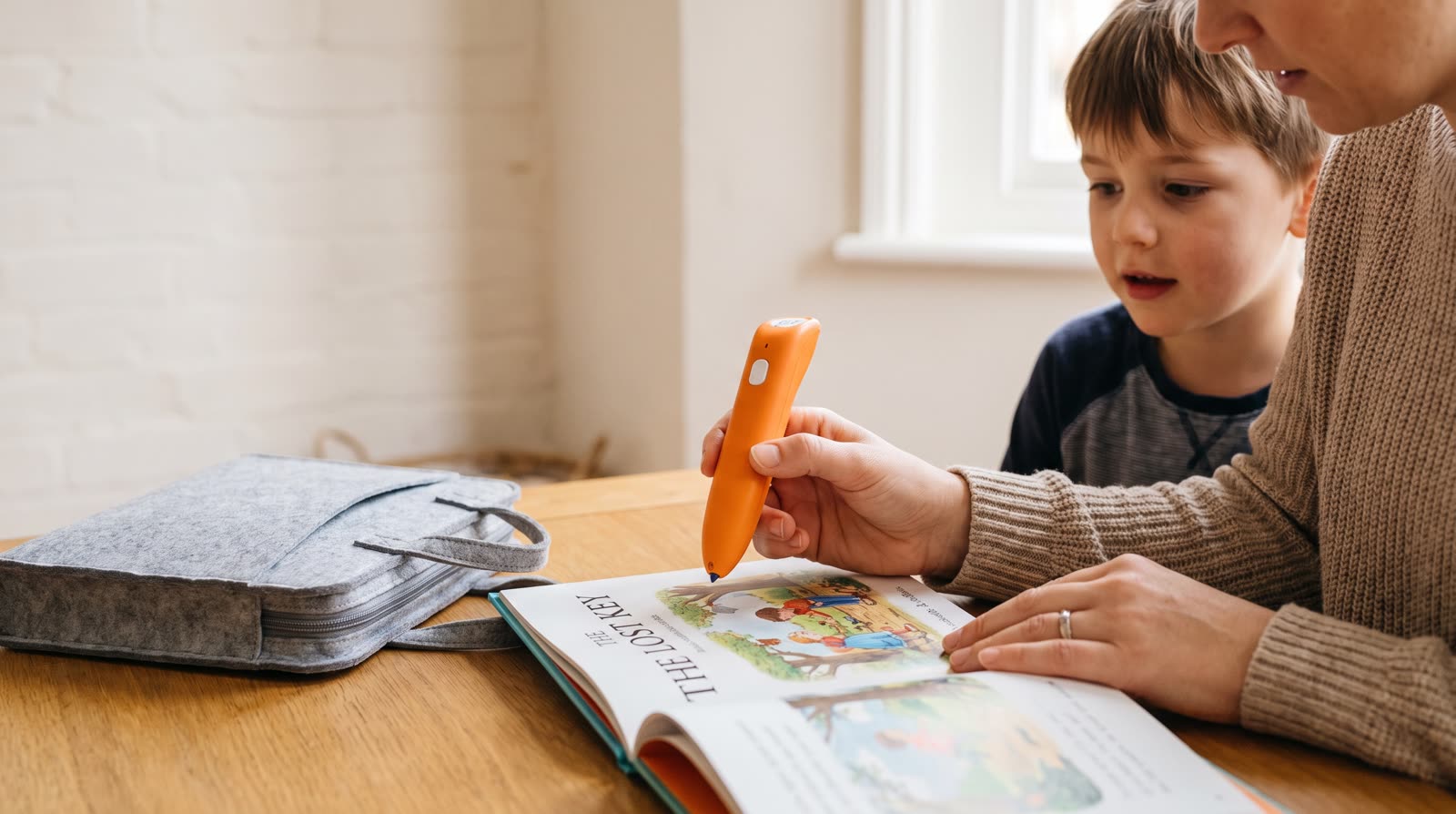
The optical CMOS sensor and infrared LED emitter located at the tip of the reading pen are subjected to continuous friction against paper surfaces. Over time, protective lens covers accumulate micro-scratches, dust, or oils from children's fingers. In used devices, degraded optics can lead to misreading OID dot codes, resulting in delayed audio response, incorrect track playback, or complete scanning failure. When conducting sample evaluations or pre-shipment inspections on bulk lots, quality assurance teams must verify optical tracking stability across diverse paper stocks and printing finishes.
Battery Degradation and Child Product Safety Compliance
Most premium reading pens rely on integrated rechargeable lithium-ion batteries. Used batteries suffer from capacity fade, reduced charge retention, and potential internal resistance increases. Furthermore, mishandled or aged batteries pose risks of overheating, swelling, or electrical faults. According to safety guidelines established by the Consumer Product Safety Commission (CPSC), electronic children's products must maintain strict electrical integrity. Buyers should never attempt to disassemble electronic housings or service damaged battery cells. If a device exhibits abnormal heat, swelling, liquid leakage, or smoke, it must be taken out of service immediately and disconnected from power sources.
Firmware Lock-In and Software Update Limitations
Manufacturer firmware supports audio file organization, encryption keys for proprietary book series, and system stability. Used reading pens often run outdated firmware versions that may conflict with newly published interactive book sets. Without official manufacturer support channels or access to developer update tools, updating legacy firmware on secondhand devices can brick the hardware or render it incompatible with current educational curricula.
3. OID Code Compatibility and Ecosystem Fragmentation
Proprietary vs. Universal Book Code Standards
A critical technical challenge in the secondhand market is OID engine compatibility. Different manufacturers utilize proprietary dot-code encoding algorithms (such as Sonix OID, proprietary matrix grids, or custom micro-code standards). A pre-owned pen sourced from Brand A will generally fail to read interactive books published by Brand B, or even older editions from the same brand if the encoding protocol was updated. Institutional buyers and retail partners must verify exact model numbers, firmware revisions, and book-code compatibility charts before committing to any secondhand inventory acquisition.
Evaluating Companion Book Integrity and Wear
Interactive reading systems depend on the symbiotic relationship between the pen and the book. Even if a used pen functions correctly, companion books in secondary lots often suffer from torn pages, water damage, or surface glare from lamination. Because OID dot codes rely on precise contrast between printed inks and white paper backgrounds, damaged or photocopied pages will cause scanning errors. Educational programs and retail stores cannot reliably deploy incomplete or degraded book sets without compromising learning outcomes.
ReadGlo project support
Request Wholesale Catalog
Explore our certified range of premium talking pens and interactive picture books designed for global educational distributors.
4. Total Cost of Ownership (TCO) and Financial Viability
Upfront Savings vs. Hidden Operational Losses
At first glance, purchasing used equipment at a 50% to 70% discount appears cost-effective. However, TCO calculations must factor in failure rates, lack of warranty coverage, absence of replacement parts, and high administrative overhead for testing and repairing returned units. For commercial retailers and schools, high failure rates among secondhand pens lead to customer dissatisfaction, administrative friction, and reputational risk. Aligning procurement strategy with Google Helpful Content guidelines underscores the necessity of delivering dependable, high-value educational solutions rather than short-term compromises.
Warranty Protection and Manufacturer Support Value
Brand-new wholesale orders from certified manufacturers include comprehensive warranties, batch traceability, quality inspection reports, and direct customer support. Secondhand purchases are typically sold 'as-is' with zero recourse upon mechanical or electrical failure. When scaling educational programs or commercial inventories, predictable reliability outweighs marginal initial savings.
5. Decision Framework: When to Choose New Wholesale vs. Secondhand Alternatives
Checklist for Institutional and Retail Procurement Managers
Before finalizing any acquisition strategy, decision-makers should follow a structured evaluation protocol: (1) Verify the exact model specifications and OID encoding standard against target book catalogs; (2) Inspect physical samples for optical lens clarity, casing cracks, and battery port wear; (3) Confirm compliance with international safety standards; (4) Assess the availability of firmware updates and customer service channels. Supporting early childhood development requires reliable tools that align with expert recommendations, such as those discussed in American Academy of Pediatrics (AAP) early literacy guidelines, which emphasize consistent, engaging adult-child shared reading experiences.
Partnering with Certified Manufacturers for Sustainable Growth
For B2B buyers seeking scalable, high-quality interactive reading solutions, collaborating directly with established manufacturers ensures access to customized OEM/ODM services, rigorous pre-shipment inspections, and guaranteed accessory compatibility. Rather than absorbing the risks associated with the secondhand market, partnering with reliable producers guarantees long-term value for schools, bookstores, and families.
Frequently Asked Questions
Is it safe to buy used electronic reading pens for young children?
Buying used electronic devices for children carries inherent risks regarding battery degradation, electrical safety, and hygiene. Without manufacturer warranties or battery health verification, secondhand pens may present hidden electrical faults or optical wear. Always inspect devices for external damage, avoid disassembly, and consult CPSC safety guidelines.
Will a used premium reading pen work with any interactive talking book?
No. Reading pens rely on specific OID (Optical Identification) decoding algorithms and firmware versions. A secondhand pen from one brand or generation will generally fail to read books from another brand or newer edition unless exact encoding compatibility is confirmed.
What are the primary signs of optical sensor failure in a secondhand reading pen?
Signs of optical sensor wear include delayed audio response, repeated error prompts ('Please try again'), failure to recognize valid OID dot codes, or sensitivity to lighting conditions and page glare due to a scratched or dusty lens cover.
Do pre-owned reading pens come with manufacturer warranty or technical support?
Generally no. Secondhand items are usually sold without warranty or ongoing technical support. Buyers assume full responsibility for firmware updates, repairs, and troubleshooting, which can outweigh initial cost savings in commercial or educational deployments.
How can B2B buyers and educators ensure reliable quality for reading pen programs?
B2B buyers and educators should partner directly with certified manufacturers for brand-new wholesale equipment. This ensures strict quality control, verified OID code compatibility, comprehensive warranties, and full compliance with child safety standards.
Conclusion
In conclusion, while acquiring used premium reading pens may offer immediate financial savings on the surface, the long-term technical, operational, and safety risks rarely justify the investment for B2B buyers, educational institutions, or retail distributors. Optical sensor degradation, battery aging, firmware incompatibility, and the absence of warranty protection undermine the reliability required for effective early childhood education. By prioritizing certified brand-new wholesale procurement, stakeholders ensure uncompromising product safety, seamless book-code compatibility, and enduring educational value for children and families worldwide.
Continue your research
Related reading pen buyer guides
Use these related guides to compare the next product, content, sourcing or channel decision in your project.
- ProductsCan I Return a Premium Reading Pen If a Child Does Not Use It? Distributor and Buyer Evaluation StandardsRead this guide
- ProductsIs It Worth Buying a Used Replacement Reading Pen? Evaluating Quality, Compatibility, and SafetyRead this guide
- ProductsCan I Return It If My Child Does Not Use It After Buying a Starter Reading Pen Set? Comprehensive Retail and B2B GuideRead this guide
Continue with ReadGlo
See product specifications and request model-specific documentation.
ReadGlo project support
Contact Our B2B Team
Partner with us for reliable OEM/ODM solutions, custom OID encoding, and bulk quotation requests tailored to your market.