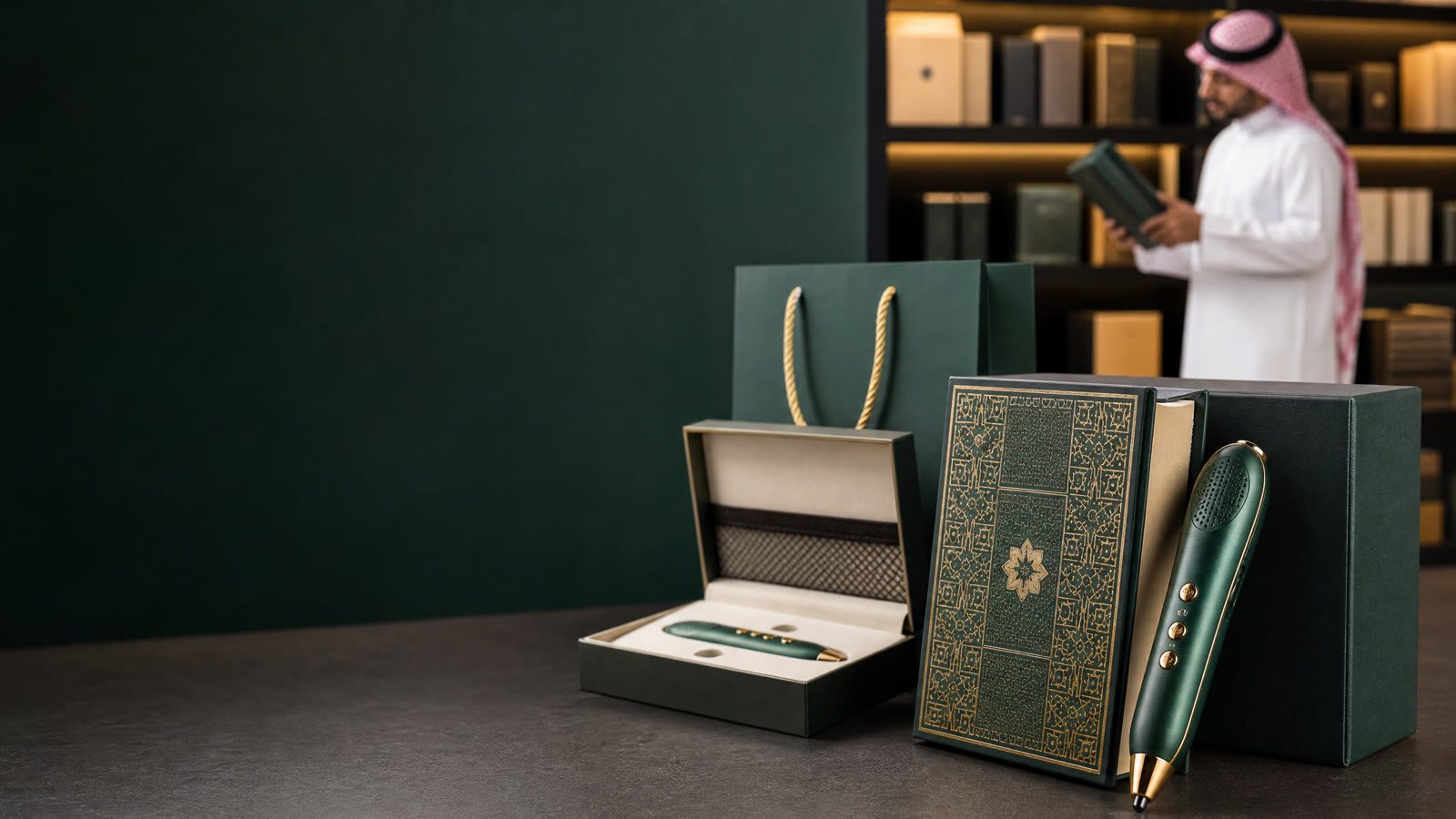

How to Write an RFP for a Quran Reading Pen OEM Project
OEM Guide10 min read

How to Write an RFP for a Quran Reading Pen OEM Project

ReadGlo Editorial Team·September 5, 2026
HomeBlogHow to Write an RFP for a Quran Reading Pen OEM Project

Direct Answer

Child using a reading pen beside a green Quran learning book and blank project cards
A well-scoped RFP connects the learning set, buyer decisions and evidence requests.

Write a Quran Reading Pen RFP as a controlled project brief, not a request for a generic product list. State the intended users, markets, book format, language scope, buyer-supplied assets, bundle components, approval stages and evidence requests. Give every supplier the same brief so that their proposed configuration, sample route and commercial assumptions can be compared on a like-for-like basis.

Define the Buyer-Owned Scope

Start with the commercial question: what is the buyer trying to launch, for whom, in which market and through which channel? Then separate the hardware, book edition, content package, packaging and logistics workstreams. The RFP should state what is confirmed, what is optional and what needs supplier input. A vague request for a “Quran pen” makes it hard to distinguish an illustrative response from a usable proposal.

Record the buyer’s own responsibilities too. The buyer or its authorised partner should control content permission, editorial approval, claims and destination-market decisions. The RFP can ask a supplier to explain its process and provide relevant product information, but it should not transfer unverified rights or regulatory obligations by implication.

Give Suppliers One Comparable Project Brief

Build the RFP around decisions rather than assumptions. A practical brief describes the intended learning set and asks suppliers to identify the information they need before making a proposal. It also separates standard items from requests that need separate review.

- Identify the target users, markets, intended sales channels and proposed launch sequence.

  • List the book edition, languages, buyer-supplied assets and responsible content reviewer.
  • Describe the proposed device, accessory and packaging scope without assuming an existing model is final.
  • Ask for the available sample, proof, change-control and production-release steps.
  • State the evidence and document questions that must be answered for the buyer’s destination market.

This format makes commercial comparison more useful. It encourages a supplier to expose dependencies early, such as a missing artwork file, an unresolved language decision or a packaging component that changes the bundle. It also gives a buyer a traceable basis for later approvals.

Confirm Content Rights and Approval Responsibility

A Quran learning product may combine a physical pen with printed book pages, edition-specific layout, translations, audio recordings, illustrations, supporting learning material and product files. A buyer should not treat the project as a single rights question. Build a rights register that identifies the supplied asset, the person or organisation responsible for its permission, permitted media and territory, attribution instructions, version and approval status.

For a new programme, the buyer should decide who can approve the print proof and who can approve the content-and-interaction sample. That responsibility may sit with different parties. The process is intended to preserve accuracy, traceability and respectful handling. It is not a statement that the device, supplier or distributor grants religious approval or owns the content.

Convert RFP Responses into a Decision Register

Child and parent reviewing a Quran learning pen sample set with a neutral project folder
A controlled sample discussion helps turn a proposal into an accountable project brief.
Decision areaBuyer questionEvidence or control
RFP scopeWhat exactly is the first release?Versioned buyer brief
Content packageWho approves each supplied asset?Rights register and approval owner
Supplier proposalWhat is included, optional or excluded?Dated response comparison
Sample stageWhich experience must be reviewed?Buyer acceptance notes
Market handoverWhat requires final confirmation?Destination-market checklist

Use this buyer-side table to assign a decision owner and evidence request for the specific release.

Do not score a response only by headline price or broad language. Create a comparison sheet that records the supplier’s stated configuration, exclusions, sample path, buyer inputs, document requests and open questions. Ask each candidate to date its response and link it to the same revision of the RFP.

Before a purchase order is considered, the buyer should resolve material differences in writing. A response may be helpful without being an approved product specification. The decision register should show which statements were accepted, which require a sample or proof, and which remain conditional on buyer-supplied content, market review or final packaging.

ReadGlo project support

Send Your Requirements

Share your target market, product scope, expected quantity and launch timing. Our team can prepare a relevant product, content or quality-control discussion.

Set Release Gates Before Commercial Commitment

Assign a named buyer owner for the project brief, content register, book proof, packaging proof, sample review, market file and shipment release. Invite the supplier to identify its operating contact for each production input. This prevents a commercial approval from being mistaken for approval of content or artwork.

At every gate, issue a brief written outcome: approved, approved with stated revision, awaiting evidence or not approved. This approach is simple enough for a small brand while remaining useful for a publisher, distributor and logistics partner working across several territories.

Keep Evidence and Changes Under Control

Keep the project file useful by linking evidence to the actual release configuration. A quotation, approved book proof, content manifest, packaging proof, sample notes and shipment file should identify the relevant edition or bundle rather than becoming a generic library of documents. Record the owner, date, version and decision supported by each item.

Use a short decision log for open points. The log should state the question, responsible owner, evidence requested, review date and outcome. This helps a publisher, importer or reseller distinguish a draft from an approved master. It also prevents an old sample, earlier carton design or unconfirmed asset list from being treated as authority for a new release.

Check the Final Product and Market Path

Product and market evidence must be reviewed for the final product, target country, intended age group, battery configuration and product claims. CPSC guidance notes that the requirements applicable to a children’s product can depend on its specific characteristics. For EU sales, the European Commission explains that toys placed on the market must meet applicable safety requirements and carry CE marking. These references are buyer prompts, not a claim about any individual item.

If a battery-powered product moves by air, the responsible shipper and forwarder should confirm the shipment classification, packing, marking, labelling and documentation for the actual configuration and route. IATA explains that requirements depend on battery configuration and rating. Keep the final record with the purchase order and packing configuration rather than relying on a document for an earlier shipment.

Frequently Asked Questions

What should be attached to an OEM RFP?

Attach the project brief, proposed bundle, brand files that are ready to share, intended markets, known book or content requirements and a list of questions. Keep unapproved content masters out of uncontrolled circulation.

Can an RFP ask for a quotation before all files are final?

Yes, provided the request labels assumptions clearly and asks the supplier to identify what could change when final files or market details are confirmed.

Who owns the content-rights decision?

The buyer should identify the authorised content or rights owner. A supplier response does not replace written permission for the buyer’s proposed use.

How many suppliers should receive the same brief?

Use a manageable shortlist and give each candidate the same versioned scope so that responses remain comparable.

What should be reviewed before a PO?

Review the proposed configuration, inclusions, sample path, change process, buyer responsibilities and outstanding market or content questions.

Can the RFP include future languages?

List them as planned options unless their content, permissions and release route are already confirmed for the first programme.

What makes an inquiry easier to answer?

Clear market, user, bundle, content and approval information lets a supplier respond with relevant questions instead of generic claims.

Conclusion

A useful Quran Reading Pen programme is managed as a controlled product-and-content release, not as a catalogue order. Define the buyer’s scope, named reviewers, evidence requests and final market handover before authorising the next stage. To discuss a project scope, review the Quran Reading Pen product route and send your requirements. You can also visit the ReadGlo Blog Hub for related B2B sourcing guidance.

Further Reading

For rights, market and shipment decisions, use the responsible professional and current official sources. Useful starting points are WIPO Copyright guidance, CPSC Toy Safety Business Guidance, European Commission Toy Safety guidance and IATA battery guidance.

ReadGlo project support

Get a Project Quote

Request product specifications, sample guidance or a tailored proposal for your reading pen, interactive book or distributor program.

Related Articles

Email ReadGlo at info@readglo.com