
Contents
Introduction
In the early childhood education and developmental toy sectors, product selection for toddlers (typically ages two to four) hinges heavily on developmental appropriateness, safety, and independent usability. B2B buyers, toy distributors, educational publishers, and kindergarten suppliers frequently evaluate two distinct categories of handheld audio devices: brand-specific reading pens—which rely on optical dot-code (OID) technology embedded in physical picture books—and universal scanning pens—which utilize optical character recognition (OCR) to scan and translate printed text lines. For toddlers, whose fine motor control, literacy skills, and cognitive attention spans are in early stages of development, the choice between these technologies profoundly impacts engagement, safety, and autonomous interaction. Brand-specific reading pens are architecturally engineered for pre-literate children, featuring chunky, tactile form factors, point-and-tap mechanical simplicity, and localized audio feedback that requires no screen navigation. Conversely, universal scanning pens are engineered for literate students and adults, demanding steady linear hand-tracking, menu navigation, and character recognition that present steep usability barriers for young children. This comprehensive B2B analysis examines the foundational mechanics, ergonomic design considerations, cognitive load factors, safety implications, and distribution suitability of both device types, providing procurement professionals, educational institutions, and brand owners with the empirical framework necessary for informed product sourcing and portfolio curation.
1. Technological Foundations and Interaction Mechanics
Optical Dot-Code (OID) Technology in Brand-Specific Reading Pens
Brand-specific reading pens operate on optical identification (OID) technology, where microscopic dot patterns are printed alongside or beneath illustrations and text in specially formatted children's picture books. An optical sensor embedded in the pen tip captures these invisible coordinate codes instantly upon contact, translating spatial data into audio files stored on internal flash memory or a microSD card. For toddlers, this mechanism establishes a direct, intuitive cause-and-effect loop: touching an image of an animal, a character, or a word produces immediate auditory reinforcement—such as animal sounds, spoken vocabulary, or narrative dialogue. Because the technology relies on spatial coordinate recognition rather than text line-scanning, the physical accuracy required is extremely forgiving. A toddler can tap anywhere within an illustrated boundary to trigger the corresponding audio asset. This operational simplicity aligns with early childhood development principles highlighted by organizations like Reading Rockets, which emphasize that pre-literate sensory exploration should be frictionless and self-directed. B2B buyers evaluating OID reading pens must examine code density, optical sensor resolution, and memory architecture to ensure seamless audio playback without latency.
Optical Character Recognition (OCR) and Line-Scanning in Universal Pens
Universal scanning pens, by contrast, are built around optical character recognition (OCR) engines designed to scan lines of printed text, convert raster images into digital strings, and execute dictionary lookups, text-to-speech rendering, or language translations. These devices require the user to manually align the scanner tip with a printed line of text and maintain a steady horizontal sweep at a consistent speed and angle. While highly effective for language learners, middle school students, and adults reading dense text, this mechanical requirement creates insurmountable friction for toddlers. Pre-literate children do not yet possess the directional tracking skills (such as left-to-right eye and hand movement across text lines) required to operate an OCR scanner. Furthermore, universal scanning pens typically require printed alphabetic text rather than rich illustrations, rendering them incompatible with tactile picture books designed for early childhood engagement. When sourcing products for early childhood distribution, procurement managers must recognize that universal scanning pens serve an entirely different demographic and educational objective than OID reading pens.
Comparative Interface Architecture and Code Compatibility
The underlying software and content architecture of both device types dictate how publishers and manufacturers structure their product ecosystems. Brand-specific reading pens require custom audio compilation (.bnk, .dat, or proprietary audio formatting) matched strictly to specific book editions. This proprietary nature ensures tight quality control over content curation, age-appropriateness, and curriculum alignment. Universal scanning pens operate on open-text recognition, bypassing the need for embedded book codes but introducing heavy reliance on screen menus, touchscreens, or companion smartphone applications to display definitions and translations. For toddlers, screen interaction is widely discouraged by pediatric health guidelines during early developmental stages. Brand-specific reading pens maintain a strictly screen-free profile, eliminating visual fatigue and digital distraction, whereas universal scanning pens inherently depend on micro-displays and complex button arrays that invite misuse and accidental setting modifications by young children.
2. Ergonomics, Fine Motor Skills, and Toddler Independent Usability
Physical Form Factor and Grip Dynamics for Small Hands
Ergonomic engineering for toddlers (ages 2-4) requires adherence to strict anthropometric standards regarding hand size, grip strength, and weight distribution. Brand-specific reading pens are intentionally manufactured with wider barrel diameters, soft-touch matte non-slip coatings, and durable, shock-absorbent ABS housings capable of withstanding frequent drops from tables or high chairs. The optical tip is recessed or reinforced to prevent damage from aggressive vertical tapping—a common motor behavior among toddlers exploring objects. In contrast, universal scanning pens are styled like sleek, slender highlighters or fountain pens, optimized for adult or adolescent finger grasps. Their narrow barrels, rigid plastic casings, and exposed glass scanner windows make them fragile and difficult for toddlers to grip securely using a palmar or transitional digital grasp. B2B distributors assessing product samples must conduct rigorous physical handling evaluations to ensure that toddler-targeted devices minimize hand fatigue and eliminate pinch points or small detachable components.
Cognitive Load and Autonomous Operation Without Adult Mediation
True independent usability means a toddler can interact with the educational tool without continuous intervention from a parent, caregiver, or educator. Brand-specific reading pens achieve high autonomy through simplified power management (single-button operation or auto-wake upon touch) and immediate tactile-auditory feedback. A toddler taps a picture, hears the sound, and understands the result instantly, fostering confidence and self-directed exploration. Universal scanning pens impose a heavy cognitive load: children must navigate settings menus, select translation languages, adjust volume via delicate side buttons, or interpret error messages on miniature LCD screens when a scan fails due to unsteady hand movement. This operational complexity frustrates toddlers, leading to device abandonment or unsafe usage patterns. Educational toy buyers must prioritize low cognitive friction when selecting inventory for retail channels focused on independent play.
Durability and Safety Compliance Under Intensive Toddler Handling
Toddler environments are notoriously demanding on hardware. Devices must survive accidental immersion in liquids, forceful biting, chewing on tips, and repeated drops onto hard flooring. Brand-specific reading pens are engineered with sealed acoustic chambers, waterproofed optical sensor housings, and secure battery compartments secured by tamper-resistant screws (complying with ASTM F963 and EN71 toy safety standards). Universal scanning pens, containing delicate optical modules, touchscreens, and complex internal circuit boards, lack the ruggedized structural reinforcement required for early childhood settings. Furthermore, universal pens often incorporate micro-USB or USB-C charging ports with exposed pins or delicate spring contacts that can be easily jammed or contaminated by debris during toddler play. Procurement teams must verify that factory production partners adhere to rigorous mechanical stress testing, drop testing, and chemical composition safety verifications.
ReadGlo project support
Request Wholesale Catalog
Explore our certified OID reading pen models, custom book publishing solutions, and OEM/ODM manufacturing capabilities for your brand.
3. Educational Value, Content Curation, and Developmental Alignment
Alignment with Early Literacy and Sensory-Rich Picture Books
Early childhood literacy development relies heavily on multi-sensory engagement, bridging visual imagery, tactile book handling, and spoken language acquisition. Brand-specific reading pens are designed to complement illustrated picture books, nursery rhymes, and bilingual storybooks where images and characters serve as the primary entry points for learning. When a toddler taps a picture of a puppy, the pen does not merely pronounce the word 'puppy'; it may trigger barking sounds, descriptive sentences, or interactive songs that enrich vocabulary and contextual understanding. Universal scanning pens offer zero value in this context because picture books lack continuous lines of searchable text. For B2B buyers supplying preschools, daycare centers, and children's bookstores, OID reading pens represent an integrated content ecosystem where books and hardware form a cohesive, curriculum-aligned learning package.
The Role of Adult Mediation and Guided Participation
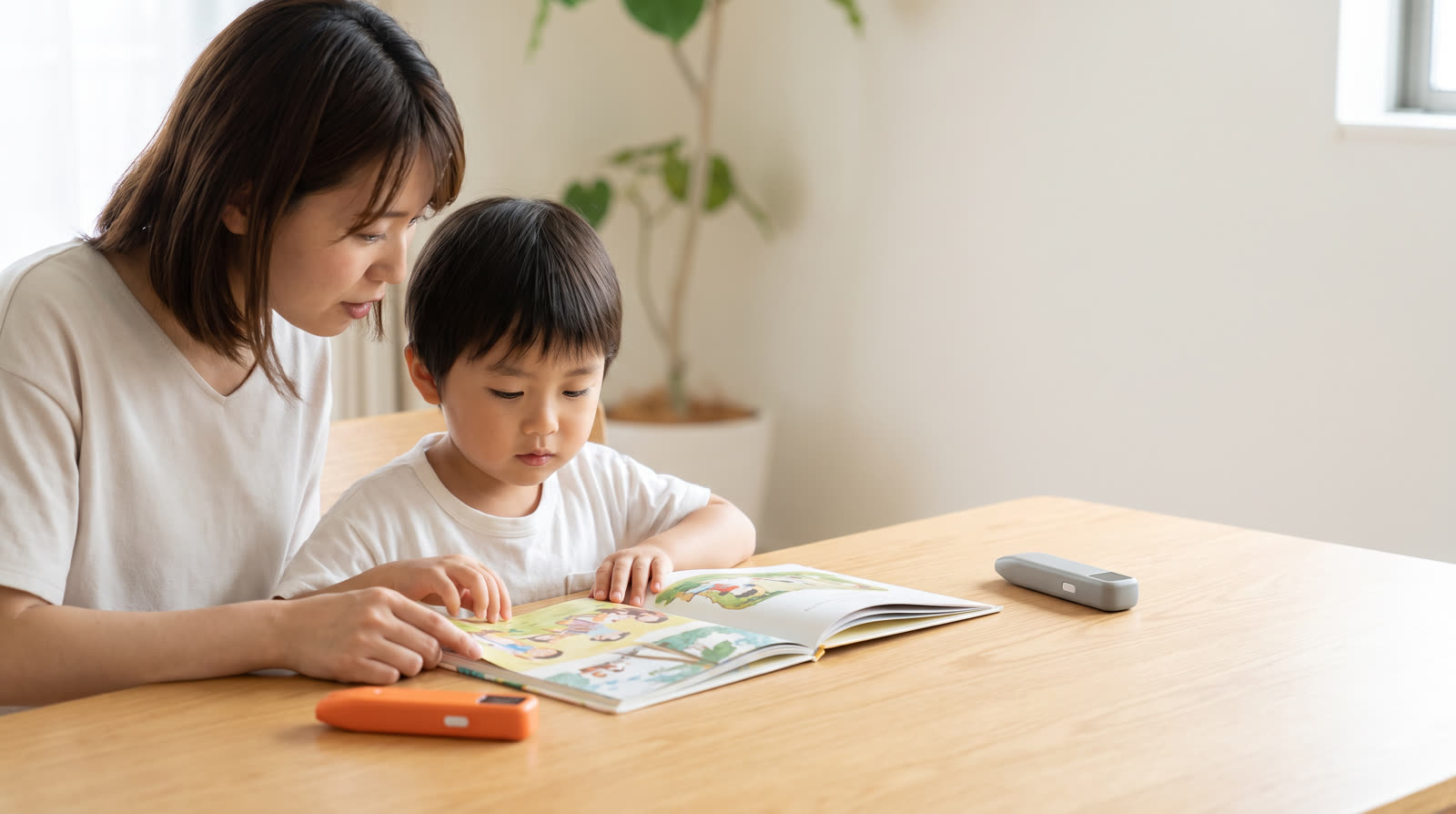
While independent usability is a primary design goal, early childhood developmental frameworks established by organizations like the American Academy of Pediatrics (AAP) stress that co-engagement between adults and children amplifies learning outcomes. Brand-specific reading pens facilitate shared reading experiences where parents and toddlers sit together, pointing at illustrations and discussing stories triggered by audio playback. Universal scanning pens function as individual utilitarian tools (akin to digital dictionaries), isolating the user in a mechanical search-and-translate loop that discourages social, dialogic reading. B2B marketers and educational distributors should position brand-specific reading pens not as electronic babysitters, but as catalysts for meaningful adult-child interaction and guided language acquisition.
Avoiding Over-Digitization and Preserving Screen-Free Play
In modern educational procurement, resistance to screen fatigue is a dominant market driver among parents and institutional buyers. Universal scanning pens, by incorporating digital screens, battery management menus, and firmware update prompts, blur the line between educational toys and consumer electronics. Brand-specific reading pens maintain a strict physical-digital hybrid model where the book remains a tangible, paper-based object of tactile exploration, and the pen acts merely as an invisible acoustic amplifier. This distinction is critical for B2B brands positioning products in premium developmental toy markets. Sourcing strategies must emphasize that maintaining screen-free tactile interaction preserves cognitive attention spans and supports healthy sensory integration in young children.
4. Sourcing, Quality Assurance, and B2B Procurement Strategy
Evaluating Factory Manufacturing Capabilities for OID vs. OCR Devices
For B2B buyers, importers, and brand owners, understanding the manufacturing differences between OID reading pens and OCR scanning pens is essential for supply chain risk management. OID pen production requires precision optical sensor calibration, specialized OID printing inks (carbon-based invisible dot matrices), and synchronized audio file compilation. Factory partners must demonstrate robust software-hardware integration capabilities to ensure that printed book codes match the firmware flashed onto the pen MCUs. OCR scanning pens require complex software stacks, machine learning inference chips for character recognition, and touch-panel assembly lines. Sourcing OID reading pens typically involves lower electronic component cost volatility and higher reliability in harsh toddler usage environments, making them a more stable product line for long-term wholesale distribution.
Compliance, Regulatory Standards, and Safety Documentation
Children's electronic educational devices are subject to stringent international regulatory frameworks. Procurement professionals must ensure that factory partners provide verifiable compliance documentation for relevant standards, such as ASTM F963 (United States toy safety), EN71 Parts 1, 2, and 3 (European Union mechanical, flammability, and toxic element migration standards), FCC Part 15 (electromagnetic compatibility), and RoHS/WEEE directives governing hazardous substances and electronic waste. Furthermore, battery safety compliance (UN38.3 transport certification and IEC 62133 cell safety standards) is mandatory for rechargeable lithium-ion powered pens. Buyers should never rely on verbal manufacturer assurances; formal third-party laboratory test reports must be audited during the sample review and pre-production inspection (PPI) phases.
Establishing Quality Control Protocols for Pre-Shipment Inspection
A comprehensive quality assurance (QA) protocol for brand-specific reading pens must encompass multiple verification checkpoints: (1) Optical Recognition Accuracy: testing sample books across various lighting conditions and page curvatures to ensure zero read failure; (2) Acoustic Fidelity: verifying speaker output clarity, volume capping (ensuring maximum decibel limits comply with children's hearing protection guidelines, typically under 85 dB), and audio synchronization; (3) Mechanical Drop Resistance: subjecting packaged sample units to standardized drop tests; (4) Battery and Charging Safety: monitoring thermal stability during charge cycles. Implementing these rigorous protocols during factory audits safeguards brand reputation and minimizes return rates across retail and institutional channels.
Frequently Asked Questions
Why are universal scanning pens unsuitable for toddlers aged 2-4?
Universal scanning pens require literate reading skills, steady linear hand-tracking across printed text lines, and navigation of complex micro-screen menus. Toddlers lack the fine motor control, directional tracking, and literacy required for OCR scanning, making brand-specific OID reading pens with point-and-tap picture interaction the correct developmental choice.
How does optical dot-code (OID) technology enable independent use by young children?
OID technology embeds invisible coordinate patterns into picture book illustrations. When a toddler taps an image with the pen tip, the optical sensor instantly reads the coordinate and plays the corresponding audio file. This requires only gross motor tapping skills rather than precise reading or scanning movements.
What safety and regulatory standards must B2B buyers verify for children's reading pens?
Buyers must verify compliance with ASTM F963 (US toy safety), EN71 (EU toy safety including chemical migration limits), FCC electromagnetic compatibility, RoHS hazardous substance restrictions, and IEC 62133 battery safety standards, backed by certified third-party laboratory test reports.
How should educational distributors evaluate the audio quality and hearing safety of reading pens?
Distributors should audit factory specifications to ensure speaker output is capped below 85 decibels in compliance with children's acoustic safety guidelines, preventing hearing damage during close-ear listening or high-volume playback.
What are the key supply chain risks when sourcing brand-specific reading pens?
Key risks include misalignment between printed book OID dot matrices and pen firmware audio files, inconsistent optical sensor calibration across manufacturing batches, and failure to meet strict international toy chemical and electrical safety regulations.
Conclusion
In summary, the distinction between brand-specific reading pens and universal scanning pens represents a fundamental divergence in target user demography, mechanical design philosophy, and educational objective. For toddlers aged two to four, independent usability depends on frictionless, screen-free, point-and-tap interaction that accommodates developing fine motor skills and pre-literate sensory exploration. Brand-specific reading pens, powered by optical dot-code technology and integrated with tactile picture books, provide an intuitive, safe, and pedagogically sound environment for autonomous early childhood learning. Universal scanning pens, engineered for OCR text-processing and literate student use, introduce insurmountable operational and cognitive barriers for young children. For B2B procurement professionals, toy distributors, and educational publishers, curating inventory with OID reading pens ensures alignment with developmental best practices, safety compliance standards, and market demand for screen-free educational tools.
Continue your research
Related reading pen buyer guides
Use these related guides to compare the next product, content, sourcing or channel decision in your project.
- Product ComparisonReading Pen vs. Tablet Learning App: Evaluating Independent Use by Toddlers for B2B Retail and Education SourcingRead this guide
- Product ComparisonWhat Is the Difference Between a Brand-Specific Reading Pen and a Universal Scanning Pen in Terms of Learning Value?Read this guide
- Product ComparisonRechargeable vs. Battery-Powered Reading Pens for Toddlers: Evaluating Independent Usability and Sourcing ConsiderationsRead this guide
Sources used for further reading
Continue with ReadGlo
See product specifications and request model-specific documentation.
ReadGlo project support
Connect with Our B2B Sourcing Team
Ready to discuss your educational toy distribution or custom publishing project? Contact our engineering and export team for sample evaluations and compliance documentation.