Contents
Introduction
In the fast-evolving global educational toy, children's publishing, and school supply markets, B2B procurement directors, educational publishers, and retail brand owners frequently evaluate two distinct hardware categories for literacy enhancement: brand-specific optical OID (Optical Identification) reading pens and universal OCR (Optical Character Recognition) scanning pens. While both hardware devices assist children in interacting with printed text and audio feedback, their underlying hardware technologies, user interaction models, and cognitive developmental impacts are fundamentally different. Brand-specific reading pens are meticulously integrated with proprietary physical books printed with invisible micro-dot coordinates, encouraging screen-free tactile exploration, phonemic awareness, and dialogic parent-child reading for toddlers and preschoolers. In contrast, universal scanning pens function primarily as translation and text-to-speech tools engineered for older, independent students tackling dense printed text across varied media. This comprehensive B2B guide examines the pedagogical distinctions, operational workflows, safety considerations, and evaluation criteria for educational publishers and distributors sourcing these tools. According to the American Academy of Pediatrics (AAP), early literacy is deeply rooted in interactive, shared reading experiences that engage young children socially, emotionally, and cognitively. Understanding how hardware design aligns with these developmental milestones ensures that B2B procurement decisions support high-quality educational outcomes without compromising child safety or cognitive well-being. Furthermore, aligning with Google's Creating Helpful Content standards, this analysis prioritizes authentic expertise, structural clarity, and user-centric depth over generic aggregation.
1. Technological Foundations and Hardware Interaction Mechanics
Optical Identification (OID) Architecture in Brand-Specific Reading Pens
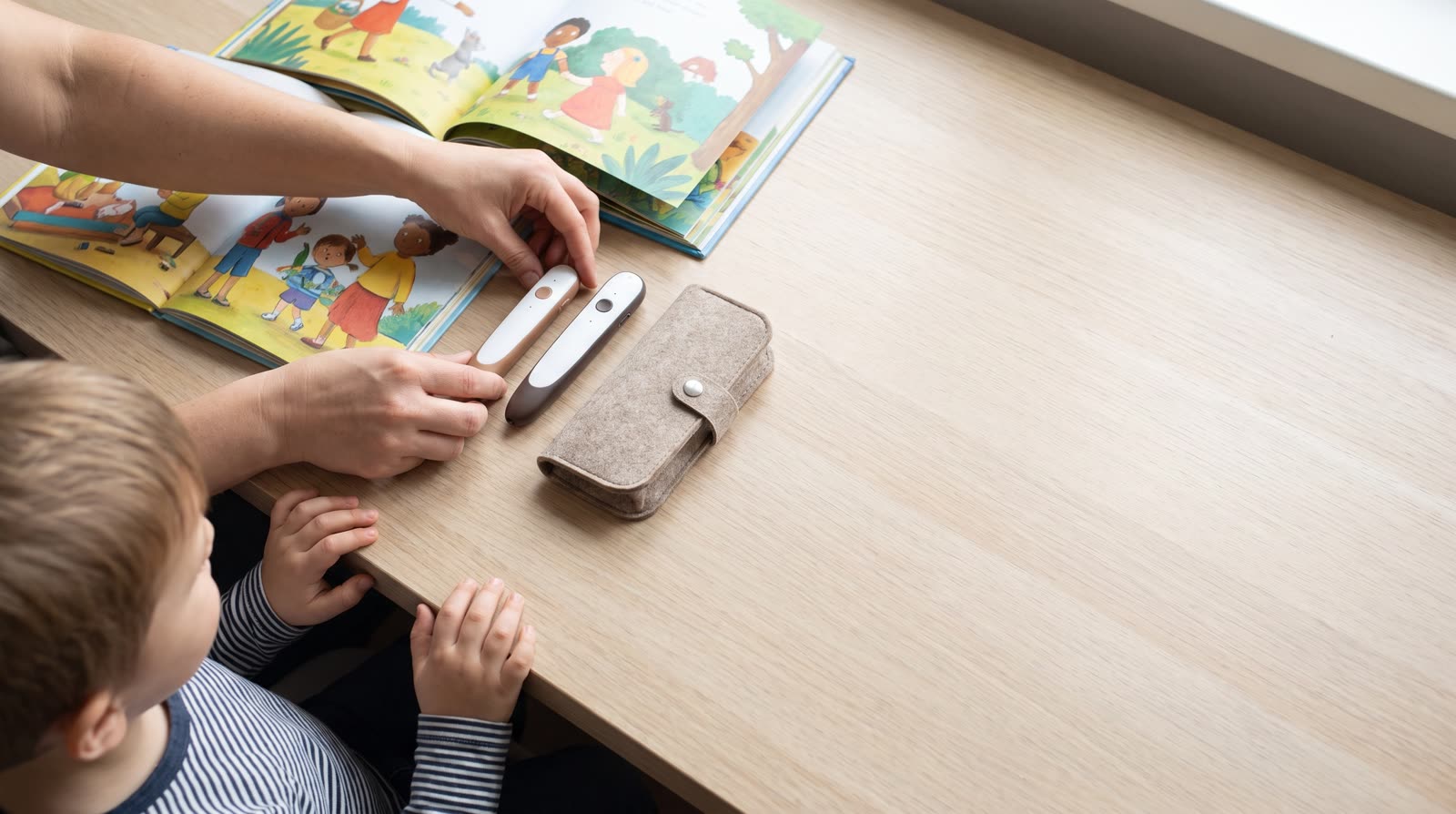
Brand-specific reading pens operate through high-resolution optical CMOS sensors located at the tip of the stylus. These sensors scan invisible micro-dot grids printed alongside traditional CMYK artwork and text in specially compiled interactive storybooks. When a child taps a word, illustration, or interactive hotspot, the pen instantly decodes the coordinate data, maps it to an internal or external memory index, and plays back corresponding audio files—such as native pronunciations, sound effects, character dialogue, or sing-along melodies. This interaction model is physical, immediate, and intuitive. For young children, the absence of digital screens or complex menu structures ensures that the focal point remains entirely on the tactile printed book. Sourcing managers and educational publishers value this closed-loop architecture because it tightly couples visual literacy with auditory reinforcement, creating a seamless multisensory learning experience. Furthermore, because the OID dot pattern is embedded into the paper during offset printing, manufacturing quality control requires rigorous calibration between printing presses and optical decoding thresholds to ensure zero latency and error-free audio triggering. Publishers must ensure that paper stock opacity, ink density, and dot dispersion meet strict specifications to prevent misreads.
Optical Character Recognition (OCR) and Screen-Based Engines in Universal Scanning Pens
Universal scanning pens, conversely, utilize linear scanning OCR engines coupled with digital OLED or LCD screens and text-to-speech (TTS) synthesis. Designed to operate across any standard printed book, newspaper, or magazine without requiring proprietary dot-codes, these devices capture lines of text as the user drags the pen tip across the page. The internal processor performs real-time character recognition, translates words or phrases into target languages, and reads the text aloud through integrated speakers or Bluetooth headphones. While exceptionally powerful for older students, language learners, and adults tackling foreign-language texts, the mechanical scanning motion and screen reliance introduce significant cognitive overhead. For preschoolers and early readers, this operation can disrupt natural reading flow and shift attention away from storytelling comprehension toward device manipulation. Sourcing teams evaluating universal pens must assess processor speed, OCR recognition accuracy rates across varied typography, memory footprint, and battery consumption associated with active screen illumination.
2. Pedagogical Impact on Early Literacy, Phonics, and Cognitive Development
Supporting Phonemic Awareness and Dialogic Reading in Early Learners (Ages 2–7)
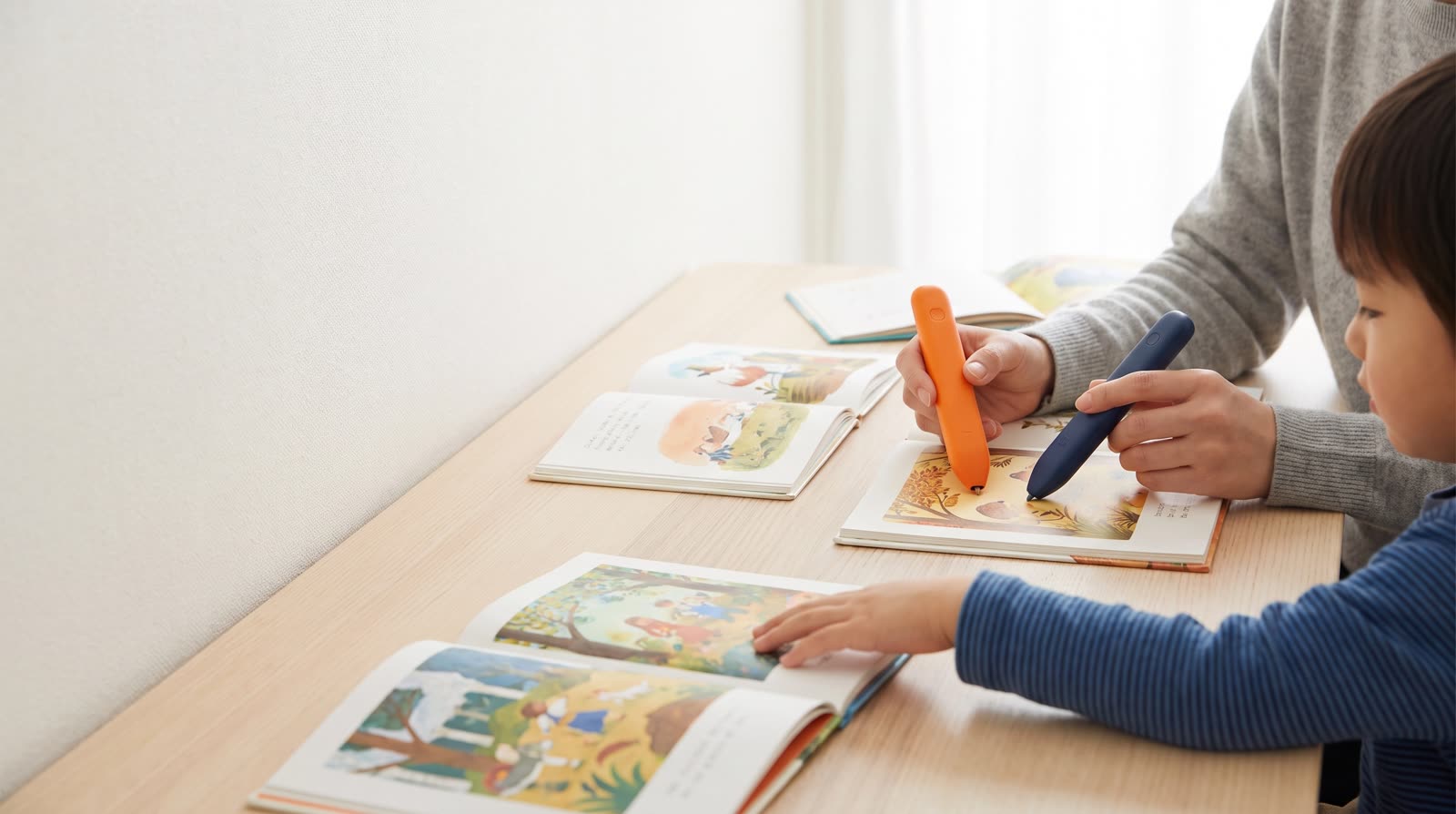
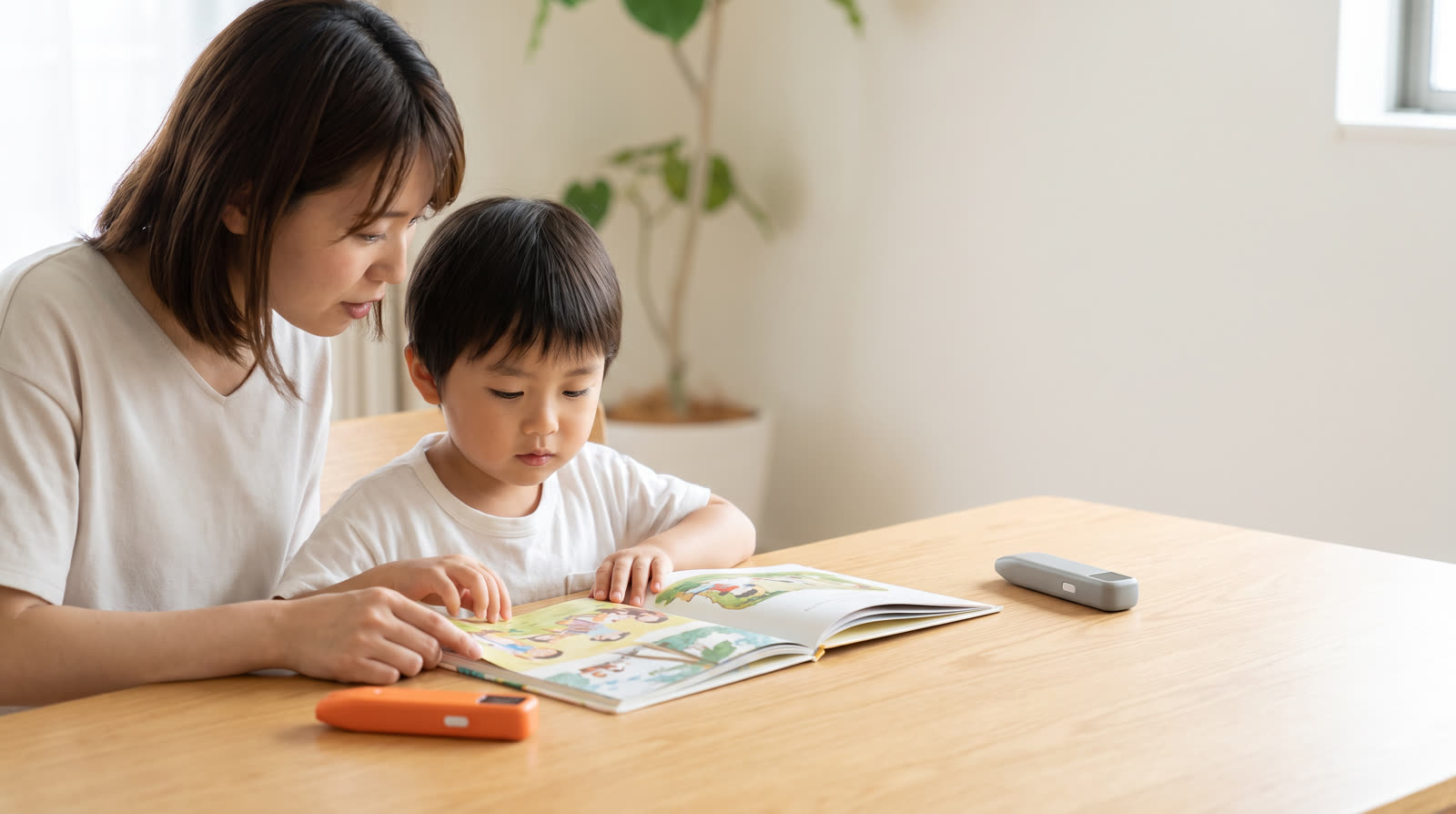
For toddlers and early elementary students, learning value is defined by how effectively a tool supports phonemic awareness, vocabulary acquisition, and narrative comprehension. Brand-specific reading pens excel in this age bracket because their content libraries are professionally authored and sequenced to match child development stages. Tapping an illustration of a bear does not merely translate a word; it elicits a playful roar, a descriptive sentence, or a vocabulary question that encourages the child to repeat and engage. As highlighted in guidelines by Reading Rockets and pediatric literacy research, young children learn best through active social engagement and adult scaffolding around physical books. Brand-specific pens act as interactive catalysts during shared reading sessions, empowering parents, educators, and speech-language specialists to guide children through rich verbal exchanges, sound blending exercises, and contextual storytelling without digital distractions. This adult-child co-engagement fosters emotional bonding and linguistic competence that screen-based media frequently undermines.
Fostering Independent Decoding and Translation Support for Older Students (Ages 9+)
In contrast, universal scanning pens serve a completely different educational tier. Their primary learning value lies in fostering independent decoding, vocabulary lookup, and secondary-language translation for school-aged children and adolescents who have already mastered basic reading mechanics. When students encounter unfamiliar vocabulary in science textbooks, historical literature, or foreign language homework, scanning the text provides instant definitions and pronunciation guides without breaking study momentum. However, providing a universal scanner to a 4-year-old pre-reader yields minimal learning value, as pre-readers cannot yet formulate search intent, interpret dictionary definitions, or benefit from linear text scanning. B2B buyers must therefore evaluate their target end-user demographic with absolute precision to match hardware capabilities with appropriate pedagogical milestones, ensuring commercial offerings align with actual classroom and home study needs.
3. Screen-Free Ergonomics, Child Safety, and Regulatory Compliance
The Developmental Benefits of Screen-Free Tactile Environments
A defining advantage of brand-specific reading pens in early childhood education is their screen-free design. By eliminating digital screens from the primary learning tool, children remain fully immersed in physical book pages, tactile manipulation, and imaginative play. This approach minimizes visual fatigue, reduces exposure to blue light, and aligns with pediatric recommendations regarding balanced digital media consumption. B2B educational distributors packaging these pens with interactive picture books can position them as safe, screen-free learning companions that foster healthy, undistracted reading habits from an early age. Educators note that tactile page-turning combined with audio feedback reinforces motor skills and spatial awareness in ways that glass-screen tablets cannot replicate. Furthermore, removing screens prevents young children from drifting into passive video streaming or addictive digital gaming.
Enforcing Rigorous Safety Standards, Battery Protocols, and Material Compliance
Whether sourcing brand-specific reading pens or universal scanning pens, B2B buyers must enforce strict safety and compliance protocols. Children's hardware products are subject to rigorous international toy and electronic safety standards, including EN71, ASTM F963, and RoHS directives. According to safety guidance issued by the Consumer Product Safety Commission (CPSC), products intended for children require rigorous evaluation of small parts, non-toxic food-grade plastics, and secure battery compartments. Procurement teams should review factory compliance documentation, inspect sample units for structural integrity, and verify that rechargeable lithium-ion batteries incorporate over-charge, over-discharge, and short-circuit protection circuits. If physical damage, abnormal heat, swelling, or unusual odors are detected during sample testing, handling must cease immediately and manufacturers must be consulted through formal quality channels.
ReadGlo project support
Request Custom Catalog & Evaluation Samples
Explore ReadGlo's certified OEM/ODM audio reading pen solutions and interactive book collections tailored for global educational publishers and distributors.
4. Commercial Ecosystems, Publisher Partnerships, and B2B Procurement Workflows
Evaluating Content Ecosystems and Publisher Business Models
When establishing a B2B procurement strategy, buyers must weigh the commercial viability and ecosystem lock-in of each hardware type. Brand-specific reading pens operate within a closed ecosystem: the hardware relies on proprietary audio compilation files (such as encrypted .BNK or .DAT packages) matched precisely to specific book ISBNs and OID dot grids. For educational publishers, this establishes a robust recurring revenue model where initial hardware distribution drives ongoing sales of interactive book series and supplemental audio card packs. Conversely, universal scanning pens offer open utility across third-party books but offer publishers zero opportunity to monetize proprietary content libraries. Sourcing directors must analyze whether their business model relies on proprietary publishing or open hardware retail, ensuring long-term profitability and partnership sustainability.
Step-by-Step Buyer Evaluation and Pre-Shipment Quality Assurance Workflow
To ensure successful market deployment, procurement teams and educational distributors should execute a structured evaluation workflow: (1) Define target end-user age brackets and educational objectives; (2) Request physical golden samples for audio latency testing, tactile grip ergonomic assessment, and acoustic distortion analysis; (3) Review factory quality control (QC) reports, drop-test metrics, and electrical safety certificates; (4) Verify software compilation toolchains for audio file generation and book-code printing tolerances; and (5) Establish rigorous pre-shipment inspection (PSI) criteria covering barcode readability, speaker decibel limits, and packaging drop tests. By formalizing these checkpoints with manufacturing partners, brands ensure long-term product reliability and customer satisfaction.
5. Global Market Trends and Future Outlook in Educational Hardware Procurement
Omnichannel Distribution and Localization Strategies for Educational Publishers
As international trade and educational publishing continue to intersect, B2B distributors face shifting market demands across North America, Europe, Asia, and emerging economies. Brand-specific reading pen systems require careful localization of audio assets, including multiple language voice-over recordings, culturally adaptable illustrations, and regional compliance certifications. Publishers adopting OEM/ODM partnerships must collaborate closely with manufacturing facilities to streamline firmware updates, multilingual audio pack downloads, and modular packaging designs. This omnichannel strategy enables school suppliers and retail brands to scale their product offerings effectively while maintaining strict pedagogical integrity.
Balancing Technological Innovation with Sustainable Manufacturing Practices
Modern educational procurement increasingly prioritizes environmental sustainability alongside learning value. Manufacturers of interactive reading pens and universal scanners are shifting toward eco-friendly packaging, biodegradable plastics, energy-efficient microcontrollers, and rechargeable battery systems with extended lifecycle ratings. B2B buyers should request environmental impact disclosures and verify that manufacturing partners comply with ISO 14001 environmental management standards. By integrating sustainable sourcing practices with high-performance educational technology, brands can meet growing consumer expectations for responsible manufacturing without sacrificing product durability or learning efficacy.
Frequently Asked Questions
What is the core difference in educational target audience between brand-specific reading pens and universal scanning pens?
Brand-specific OID reading pens are engineered specifically for toddlers, preschoolers, and early elementary students (ages 2 to 7) to foster pre-literacy, phonics, and storytelling through tactile book interaction. Universal scanning pens are designed for older school-aged children, teens, and adults (ages 9+) who possess independent reading skills and require text translation, dictionary lookups, and study assistance.
Can a brand-specific reading pen be used with books from competing publishing brands?
Generally, no. Brand-specific reading pens depend on proprietary invisible OID micro-dot codes printed on specific book pages that correspond to encrypted audio database files loaded onto the pen's internal storage. Each publishing brand utilizes unique code grids and audio formatting, requiring books sourced from or licensed by the same manufacturer.
How do universal scanning pens process printed text without requiring special book codes?
Universal scanning pens incorporate high-speed Optical Character Recognition (OCR) technology paired with a miniature optical line scanner. When dragged across a standard printed line of text, the pen captures the image, translates it into digital characters via OCR algorithms, and processes the output through built-in text-to-speech engines or translation dictionaries.
What safety and regulatory standards must B2B buyers verify when sourcing children's reading pens?
B2B buyers must verify compliance with international children's product safety standards such as EN71, ASTM F963, and CPSC guidelines. Procurement audits should confirm non-toxic food-grade ABS plastics, secure screw-locked battery compartments, and certified electrical charging protection circuits.
How do brand-specific reading pens support publishers in building recurring revenue models?
By tying hardware distribution to proprietary interactive book series, flashcards, and downloadable audio packages, publishers create a closed content ecosystem where initial pen adoption drives continuous long-term purchases of companion educational titles and audio updates.
Conclusion
In summary, selecting between a brand-specific reading pen and a universal scanning pen depends entirely on the target demographic's developmental stage, learning environment, and commercial publishing strategy. Brand-specific reading pens deliver exceptional learning value for early childhood literacy by combining screen-free tactile interaction with immersive audio-visual storytelling supported by adult scaffolding. Universal scanning pens function as robust productivity tools for older, independent students navigating dense academic texts. By conducting rigorous sample evaluations, adhering to compliance standards from authorities like the CPSC and AAP guidelines, and aligning hardware capabilities with publisher content ecosystems, B2B buyers can successfully deliver high-value educational products to global markets.
Continue your research
Related reading pen buyer guides
Use these related guides to compare the next product, content, sourcing or channel decision in your project.
- Product ComparisonBrand-Specific Reading Pen vs. Universal Scanning Pen: Evaluating Long-Term Costs for B2B Educational BuyersRead this guide
- Product ComparisonBrand-Specific Reading Pens vs. Universal Scanning Pens for Toddlers: Evaluating Independent Usability for B2B ProcurementRead this guide
- Product ComparisonBrand-Specific Reading Pens vs. Universal Scanning Pens: Evaluating Content Compatibility for B2B Educational PublishingRead this guide
Continue with ReadGlo
See product specifications and request model-specific documentation.
ReadGlo project support
Connect with Our B2B Procurement Team
Ready to discuss your publishing requirements, sample evaluations, or custom firmware development? Send your project specifications today.