
Contents
Introduction
When evaluating screen-free audio and interactive educational tools for children, B2B buyers, educational publishers, toy brand distributors, and institutional procurement teams frequently weigh phonics reading pen sets against standalone audio players. Both device categories operate entirely without digital screens, protecting young learners from visual fatigue, digital distraction, and blue light exposure during formative developmental stages. However, they diverge fundamentally in mechanical architecture, tactile-auditory synchronization, pedagogical interactivity, and deployment environments. This comprehensive guide examines how phonics reading pens and audio players compare under strict screen-free operational conditions, providing structural evaluation criteria for procurement professionals, curriculum developers, and retail partners seeking to align product portfolios with early childhood development best practices and global safety standards.
Core Technological and Architectural Differences in Screen-Free Operation
Optical Sensor Mechanics vs. Speaker-Driven Audio Streaming Architecture
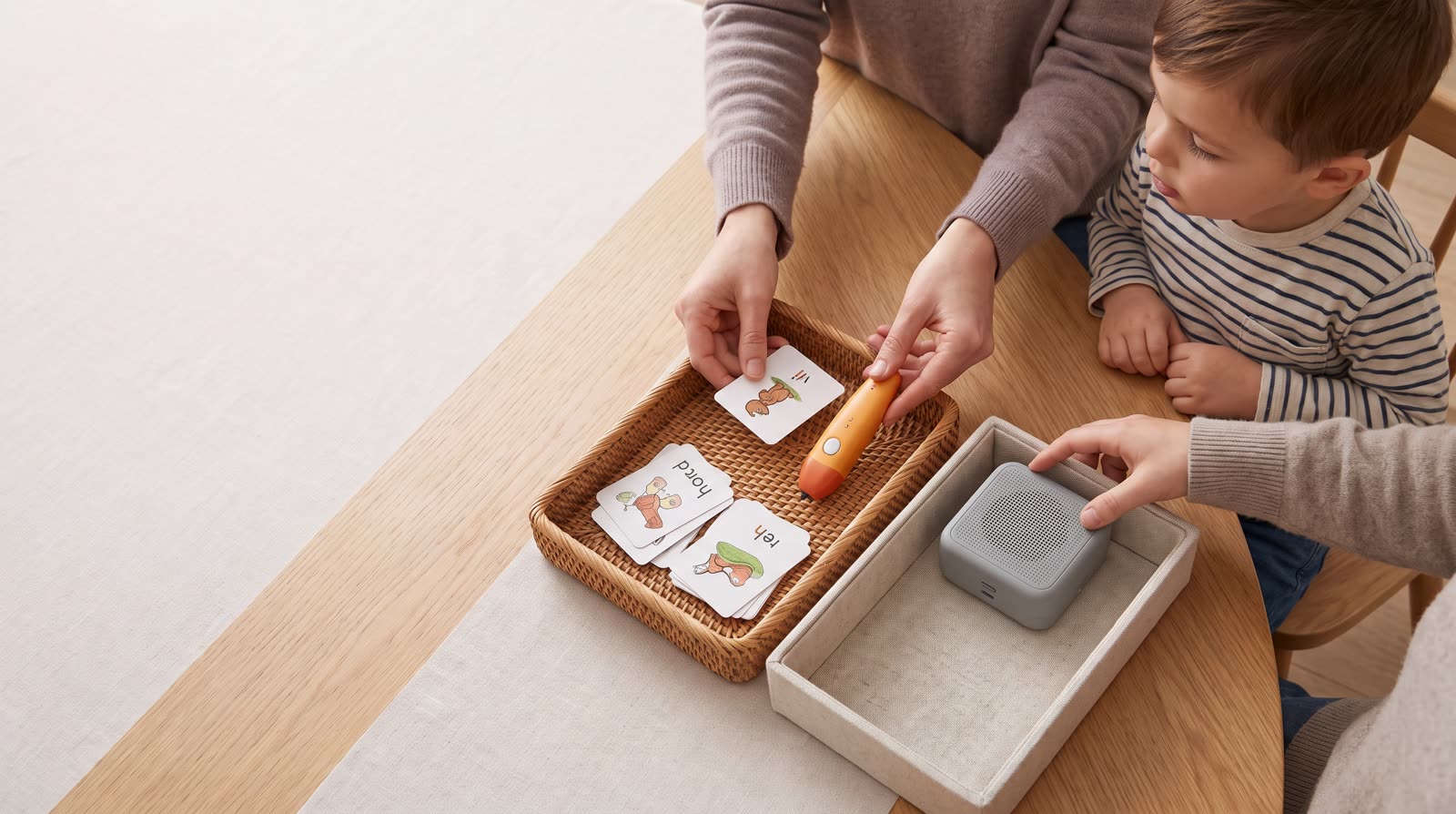
Phonics reading pens rely on an embedded high-speed optical sensor—typically an infrared or CMOS camera module—located precisely at the tip of the stylus. This sensor reads micro-dot OID (Optical Identification) codes printed directly alongside physical text, phonemes, and illustrations on specialized paper stock. When a child touches the pen tip to a specific word, letter, or graphical element, the internal microcontroller unit (MCU) decodes the coordinate data within milliseconds and triggers corresponding audio files stored in internal flash memory or an expandable TF card. In contrast, children's audio players—whether cassette-based, CD-based, or RFID/NFC figurine-based—operate on linear or categorical audio playback principles. They stream pre-recorded audio tracks sequentially or via category selection buttons without establishing a direct physical-to-text spatial correspondence. Understanding this distinction is critical for B2B specification reviews, as optical decoding requires specialized offset printing partnerships and OID encoding software, whereas audio players require robust audio compression codecs, high-capacity storage, and durable speaker chamber designs. Furthermore, optical reading pens necessitate precise calibration between ink dot densities and sensor focal lengths, whereas audio players emphasize acoustic resonance, amplifier efficiency, and mechanical robustness against repeated impacts.
Active Point-and-Click Interactivity vs. Passive and Semi-Passive Auditory Reception
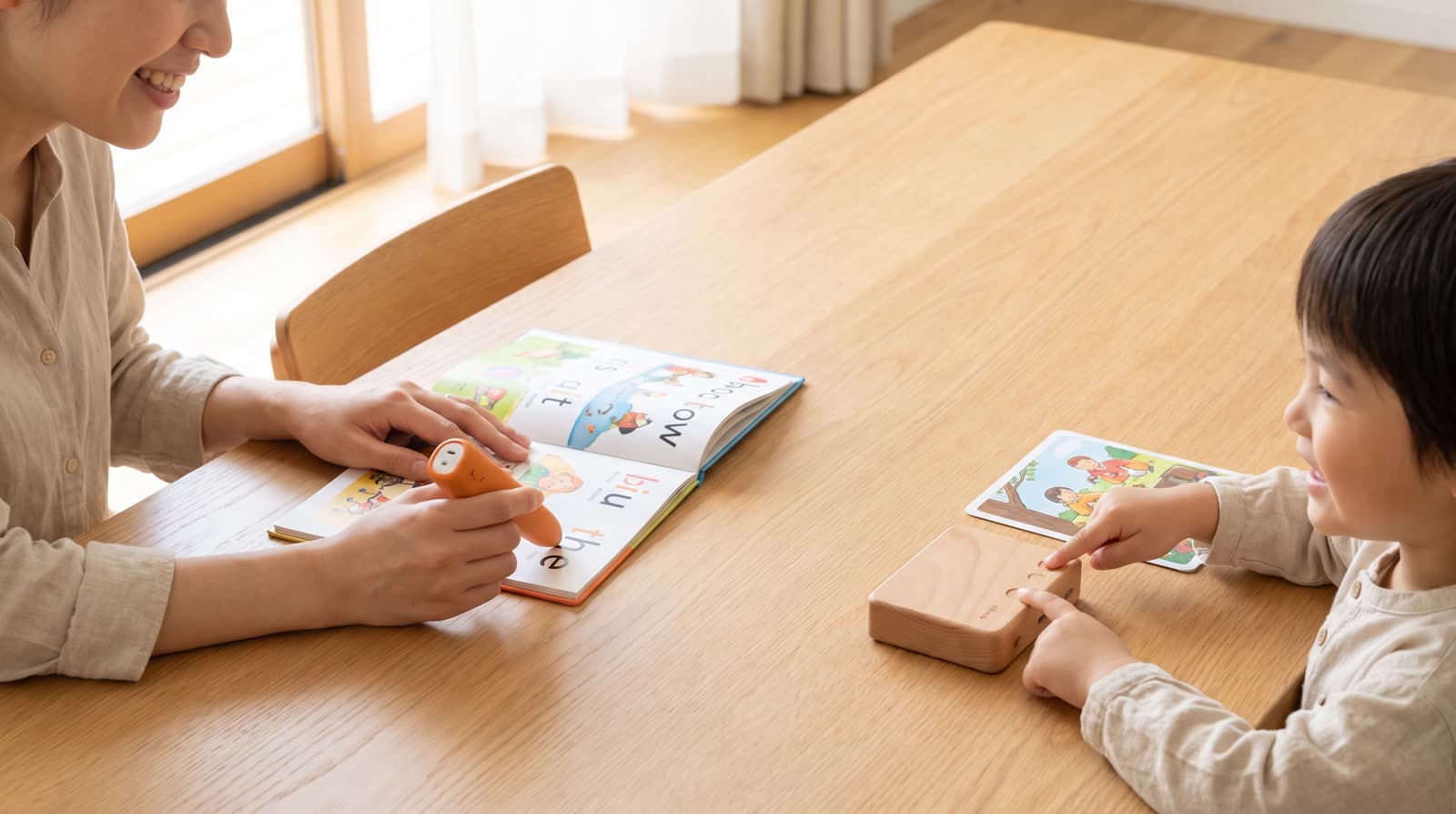
The primary operational difference in screen-free use lies in user agency and physical engagement mechanics. Phonics reading pens demand active, intentional participation: the child must physically manipulate the stylus, align the tip with specific letters or phonemes, and exert deliberate pressure to trigger sound output. This creates an immediate multisensory feedback loop connecting tactile motion, visual symbol recognition, and auditory phonics reproduction. Audio players, while also operating entirely without screens, generally foster passive or semi-passive listening. Once a story card, figurine, or playlist is activated, the child listens as audio unfolds temporally without requiring continuous micro-movements linked to printed letters. For publishers and toy brands designing early literacy interventions, this mechanical divergence dictates how content must be structured—modular phonetic fragments and interactive dialogs versus continuous narrative audio streams. Active engagement with a reading pen trains fine motor skills and sustained concentration, whereas audio players encourage auditory attention span and language immersion during rest or independent play.
Hardware Durability, Power Management, and Component Sourcing
From a manufacturing and hardware sourcing perspective, both device types present unique engineering challenges under screen-free deployment. Phonics reading pens require rigorous optical tip durability to withstand repeated dropping and surface friction, precision lens alignment, and stable battery management to ensure consistent voltage for the CMOS sensor. Audio players require robust mechanical switches, volume-limiting circuitry to protect children's hearing (complying with standards such as EN 71-1 or equivalent acoustic limits), and impact-resistant outer casings. When conducting specification reviews, B2B procurement teams must assess supplier component quality, battery safety certifications (such as IEC 62133 or UL standards), and housing material toxicity (ensuring compliance with RoHS, REACH, and CPSIA limits for phthalates and heavy metals). Supply chain audits must verify that plastic injection molds, speaker diaphragms, and charging circuits meet international quality benchmarks before scaling production volumes.
Pedagogical Alignment with Early Literacy and Phonics Acquisition
Multisensory Integration, Grapheme-Phoneme Correspondence, and Print Awareness
Early childhood literacy frameworks emphasize print awareness—the fundamental understanding that printed text carries meaning and that individual letters correspond to distinct speech sounds (phonemes). Phonics reading pen sets excel in reinforcing print awareness because every tap reinforces the direct spatial link between grapheme and phoneme. According to guidelines from organizations like the American Academy of Pediatrics (AAP) on early literacy, interactive tools that encourage joint attention, physical book handling, and active cognitive engagement support language development and phonological awareness more effectively than purely passive media. Audio players support listening comprehension, vocabulary expansion, and narrative understanding through storytelling, songs, and dialogue, but they do not inherently teach letter-sound correspondence or decoding skills unless paired concurrently with physical books in a structured curriculum. Combining visual book pages with audio feedback creates a powerful dual-coding mechanism that enhances memory retention and language acquisition in bilingual and monolingual learners alike.
Scaffolding Independent Learning, Adult Guidance, and Developmental Adaptability
Both device types offer valuable screen-free autonomy, but they serve different stages of independent learning and cognitive development. Phonics reading pens provide immediate, corrective auditory feedback when a child taps a difficult word or pronunciation prompt, allowing emergent readers to practice autonomously without adult intervention. However, as noted by education specialists and developmental guidelines, technology should complement rather than replace adult engagement. Educators, parents, and caregivers must guide children in connecting pen-based phonics practice to broader linguistic contexts and communicative storytelling. Audio players likewise foster independence by allowing children to select and listen to stories, language lessons, or relaxation tracks during quiet time or bedtime routines, though they rely heavily on pre-selected playlist curation by adults or educators rather than spontaneous word-by-word exploration. Structuring deployment around both tools allows educators to balance focused phonics instruction with immersive listening experiences.
Addressing Diverse Learning Needs Without Clinical Overreach
When deploying screen-free educational devices in special education or diverse learning environments, publishers and educators must maintain rigorous professional boundaries. Neither phonics reading pens nor audio players constitute medical diagnostic instruments or therapeutic treatments for speech delays, dyslexia, or learning difficulties. As emphasized by authoritative bodies such as the International Dyslexia Association and Reading Rockets, assistive and interactive reading tools serve as supportive scaffolds that encourage engagement and multisensory practice. When children exhibit persistent reading difficulties or developmental delays, educators and parents should consult qualified educational psychologists, speech-language pathologists, or pediatric specialists rather than relying solely on consumer electronic devices. B2B marketers and educational distributors must ensure promotional materials accurately reflect these supportive boundaries without making unsubstantiated clinical guarantees.
ReadGlo project support
Request Sample Kit
Evaluate ReadGlo's advanced OID phonics reading pens and interactive book samples for your publishing line.
Procurement, Quality Control, and Manufacturing Workflows for B2B Buyers
Specification Review, Printing Partnerships, and OID Dot Code Quality Control
For B2B buyers sourcing phonics reading pen sets, manufacturing quality control extends far beyond the hardware enclosure. The integration of OID (Optical Identification) dot codes into offset printing requires strict calibration between the printing press, specialized ink formulations, and the pen's optical sensor. Any misalignment, ink smudging, or low-resolution dot patterns can result in reading errors, leading to high return rates and customer dissatisfaction. During sample evaluation and pre-production inspections, quality assurance teams must verify optical decoding accuracy across various paper stocks, lamination finishes, and ambient lighting conditions. Audio players, conversely, present different manufacturing workflows, focusing primarily on acoustic chamber design, speaker durability, drop-resistance housing, and secure firmware flashing for audio files. Importers must establish rigorous testing protocols for both categories, verifying that sample batches meet all agreed-upon acoustic, optical, and mechanical tolerances before authorizing mass production.
Content Management, Firmware Compilation, and Localization Strategies
Content scalability is a major operational factor for publishers, brand owners, and toy distributors. Phonics reading pen sets require specialized audio file compilation (.bn, .dat, or encrypted MP3 formats mapped to specific book coordinate ranges). Updating or expanding a product line with new multilingual books requires careful firmware management and data formatting. Audio players often utilize simpler file directory structures or cloud-synced management apps (where applicable, while retaining offline modes). When reviewing supplier catalogs, procurement teams must assess software development kits (SDKs), audio encoding tools provided by the manufacturer, and the ease of localizing voice prompts into target export markets without compromising data security or digital rights management (DRM) for proprietary publishing content. Ensuring that firmware supports secure over-the-air (OTA) updates or simple USB data transfer is essential for long-term product viability in international markets.
Pre-Shipment Inspection (PSI) and Supply Chain Risk Mitigation
To ensure seamless commercial deployment, B2B buyers must establish structured pre-shipment inspection (PSI) protocols aligned with ISO 2859-1 (AQL sampling standards). For phonics reading pens, PSI checklists should include optical sensor responsiveness across multiple test books, battery charge retention tests, drop-test durability evaluations, and acoustic output clarity. For audio players, inspection protocols must verify volume limit compliance, button tactile fatigue testing, charging port mechanical endurance, and drop-resistance. Establishing clear contractual specifications regarding defect rates, warranty replacements, and compliance documentation protects importers against supply chain disruptions and ensures consistent product quality across retail and institutional channels.
Safety, Compliance, and Ergonomic Standards in Screen-Free Devices
Hardware Safety, Toy Regulations, and Battery Compliance Standards
Because both phonics reading pens and audio players are targeted at young children, strict adherence to international toy and electronic safety standards is mandatory. Buyers must verify compliance with ASTM F963, EN71 (Parts 1, 2, and 3), and relevant battery safety regulations (such as UL standards for lithium-ion cells or IEC 62133). According to safety guidelines from the Consumer Product Safety Commission (CPSC), children's electronic products must feature secure, tool-accessible battery compartments if using replaceable cells, or robust internal thermal management for rechargeable units. B2B importers should request comprehensive third-party test reports from accredited laboratories before confirming bulk orders. Ensuring compliance with electromagnetic compatibility (EMC) and radio frequency (RF) regulations, if Bluetooth or Wi-Fi is included, is equally vital for legal market entry.
Product Care, Troubleshooting, and Proper Maintenance Protocols
Clear user guidance and troubleshooting protocols are essential for reducing field failure claims and ensuring long-term product reliability. Neither phonics reading pens nor audio players should ever be disassembled by end-users, retail customers, or unqualified technicians. External maintenance should be restricted to wiping enclosures with a dry or slightly damp microfiber cloth without chemical solvents or abrasive cleaners. If a device exhibits signs of moisture ingress, physical damage, abnormal heating, battery swelling, or smoke, users must immediately cease operation, disconnect any charging cables, and contact the manufacturer or authorized service channels. Procurement contracts should clearly outline warranty terms, replacement part availability, and defect RMA procedures to support end-user satisfaction and brand reputation.
Evaluating Guidelines from Authoritative Content Standards
To maintain high E-E-A-T standards in product marketing and educational documentation, manufacturers and distributors should align their content with recognized authorities. For example, ensuring that educational claims are transparent and supported by child development principles aligns with Google's quality guidelines on creating helpful, people-first content, as outlined in Google Search Central Guidance. By anchoring product documentation in verifiable pedagogical frameworks and official safety standards, B2B brands build lasting trust with educators, retailers, and institutional buyers across global markets.
Frequently Asked Questions
Can an audio player replace a phonics reading pen for early reading instruction?
While audio players are excellent for listening comprehension, storytelling, and vocabulary building, they do not provide direct letter-sound correspondence or tactile print awareness. Phonics reading pens physically link printed letters to audio output, making them better suited for early decoding and phonics instruction.
What should B2B buyers check when evaluating OID dot code printing for reading pens?
Procurement teams should request physical sample books from suppliers to test optical sensor recognition speed across different lighting conditions, paper reflectivity, and lamination types. Ensuring precise alignment between offset printing and OID coding is vital to prevent misreads.
Are both product categories completely free of blue light and screen fatigue?
Yes. Neither phonics reading pens nor traditional audio players utilize LCD, LED, or OLED screens. They operate entirely through mechanical interaction, physical books, audio speakers, and optical sensors, eliminating digital eye strain.
How should distributors handle firmware and audio file updates for multilingual markets?
Distributors should partner with manufacturers that provide robust audio compilation software, clear file directory standards, and dedicated technical support for localization. Ensuring secure data encryption for custom book files is also important for proprietary publishing content.
What safety certifications are required for exporting these devices to major global markets?
Exporters must ensure compliance with regional toy and electronic safety directives, such as CE/EN71 in Europe, ASTM F963 and CPSIA in the United States, and relevant battery safety standards (IEC 62133 / UL) certified by accredited laboratories.
How do these devices support children with diverse learning needs?
Both devices serve as supportive tactile and auditory scaffolding tools that encourage engagement. However, they do not diagnose or treat learning difficulties. Educators and parents should consult qualified specialists or educational psychologists for formal assessments and interventions.
What are the recommended maintenance procedures for screen-free educational devices?
Users should clean enclosures with a dry or slightly damp microfiber cloth. Devices should never be disassembled. If moisture, abnormal heating, swelling, or smoke occurs, users must immediately stop use, disconnect power, and contact authorized service channels.
Conclusion
In summary, while both phonics reading pen sets and children's audio players successfully deliver screen-free entertainment and educational value, they fulfill distinct functional roles within a product portfolio. Phonics reading pens provide active, point-and-click multisensory engagement that directly supports phonics acquisition, print awareness, and early reading independence. Audio players offer passive or semi-passive auditory immersion ideal for storytelling, music, and language exposure. For B2B publishers, toy brands, and educational distributors, understanding these technical, pedagogical, and manufacturing differences ensures optimal product selection, robust quality control, and successful market positioning in the growing screen-free educational technology sector.
Continue your research
Related reading pen buyer guides
Use these related guides to compare the next product, content, sourcing or channel decision in your project.
- Product ComparisonPhonics Reading Pen Set vs. Kids Audio Player for Kids: A Comprehensive Long-Term Cost Analysis for B2B BuyersRead this guide
- Product ComparisonContent Compatibility Analysis: Reading Pens versus Tablet Learning Apps in Early Childhood EducationRead this guide
- Product ComparisonPhonics Reading Pen Sets vs. Kids' Audio Players: Evaluating Content Compatibility for B2B Sourcing and Educational PublishingRead this guide
Continue with ReadGlo
See product specifications and request model-specific documentation.
ReadGlo project support
Send Your Requirements
Partner with ReadGlo for reliable OEM/ODM manufacturing of certified screen-free educational audio devices.