Contents
Introduction
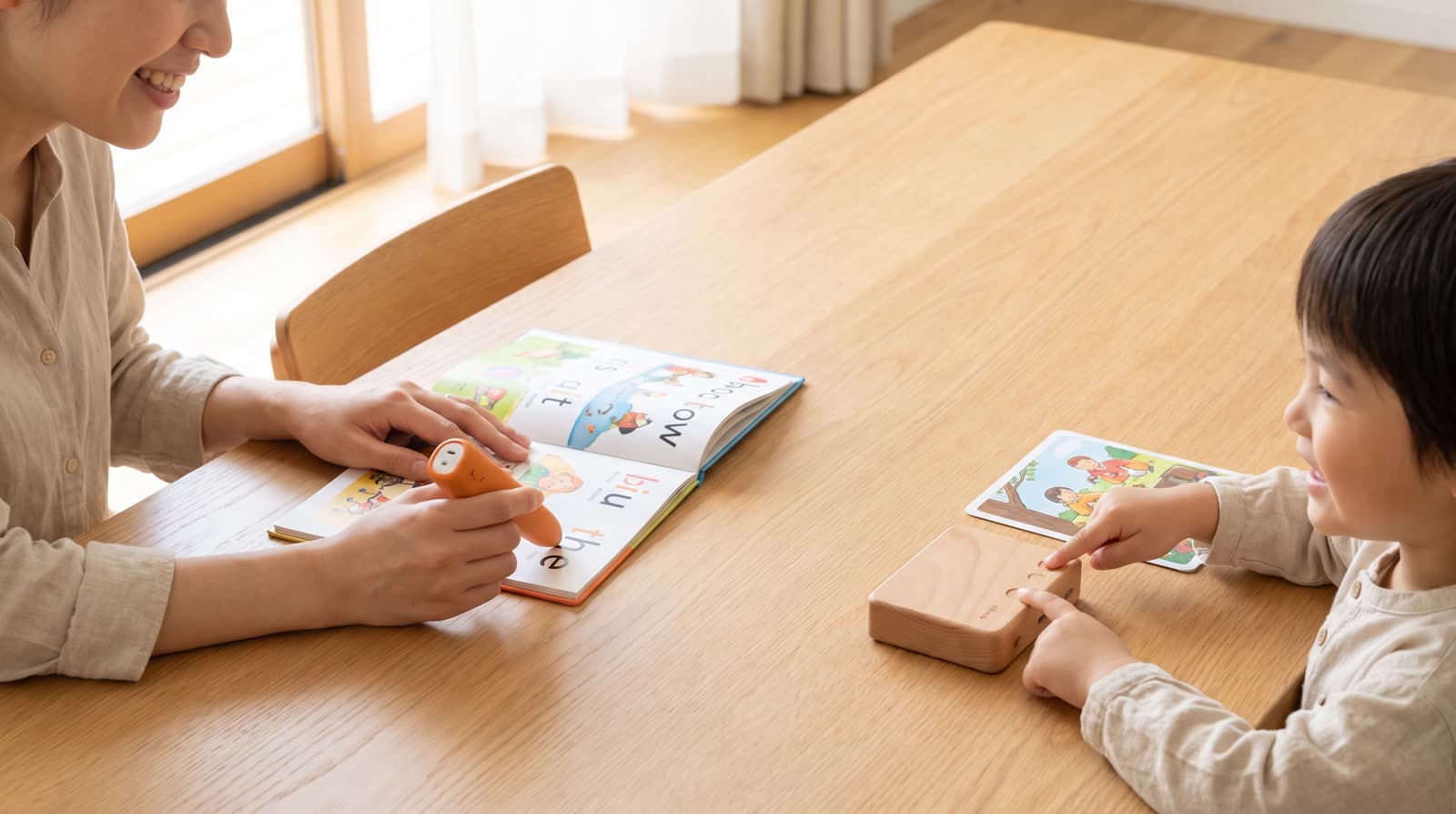
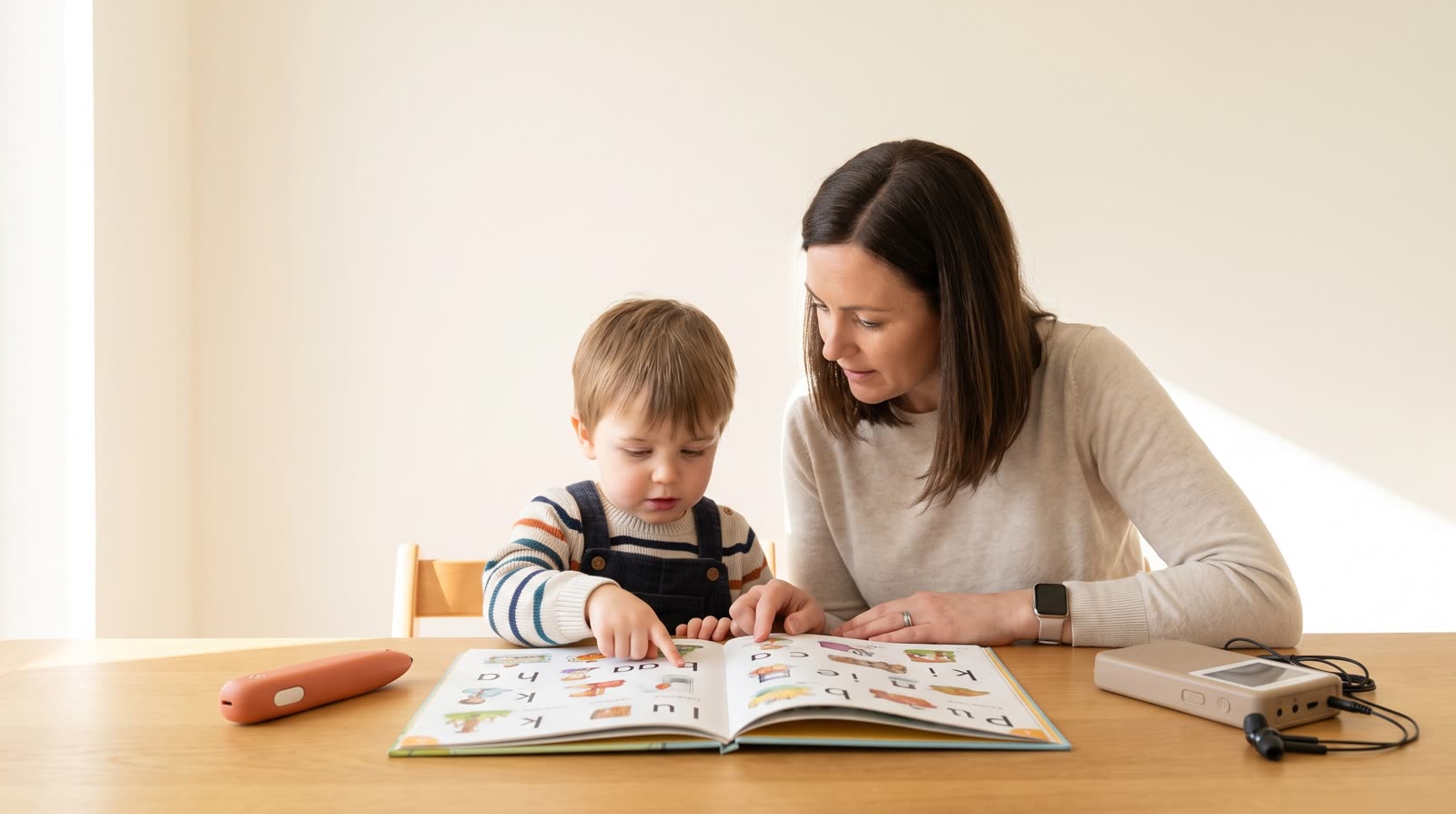
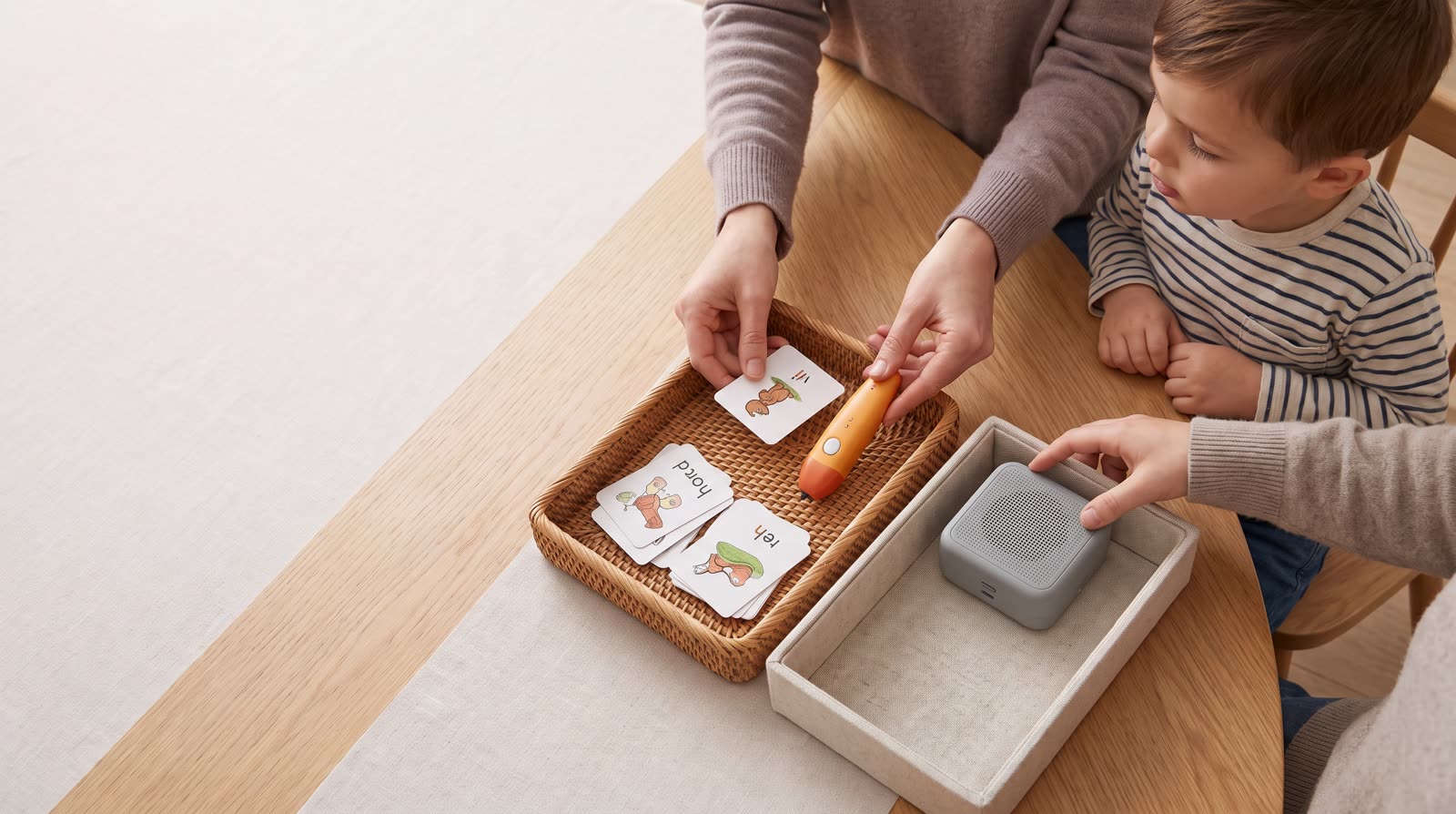
When educational distributors, school suppliers, and toy brand owners evaluate screen-free interactive learning devices, two dominant categories emerge: optical phonics reading pen sets paired with dot-coded books, and dedicated kids audio players utilizing physical figures, smart cards, or embedded playlists. While both categories cater to early childhood literacy without digital screens, their long-term economic models differ significantly. Sourcing decisions cannot rely solely on unit manufacturing cost (FOB price); importers must analyze total cost of ownership (TCO), covering media scalability, consumables, reverse logistics, firmware maintenance, and inventory holding expenses. This analysis provides educational procurement professionals and B2B brand builders with a structured framework to assess the long-term cost dynamics of phonics reading pens versus kids audio players.
1. Initial Hardware Capital Expenditure (CAPEX) and Component Cost Structures
Optical Phonics Reading Pen Hardware Architecture
A phonics reading pen relies on an optical CMOS image sensor embedded in the tip, a high-speed micro-controller unit (MCU), internal flash memory (ranging from 8GB to 32GB), a speaker, and a rechargeable lithium-ion battery. The primary hardware manufacturing cost driver is the optical recognition module and precision lens alignment, which must accurately read invisible OID (Object Identifier) dot codes printed beneath visual graphics. For B2B buyers, initial hardware tooling and mold amortization are relatively straightforward, but silicon component pricing and flash memory market fluctuations directly impact unit costs at scale.
Dedicated Kids Audio Player Hardware Architecture
Kids audio players—ranging from NFC/RFID figurine-based story pods to button-driven smart audio boxes—incorporate wireless RFID/NFC transceivers, larger acoustic chambers, dynamic drivers, Wi-Fi/Bluetooth modules (in connected variants), and microprocessors. Because audio players require larger physical enclosures and robust external speakers to fill a room with sound, their bill of materials (BOM) for casing, injection molding, and acoustic tuning typically exceeds that of slim handheld reading pens. However, audio players eliminate the need for precision optical sensor calibration during assembly.
Comparative Initial Sourcing Impact
At baseline manufacturing levels, phonics reading pens generally offer a lower FOB price point per unit compared to complex multi-speaker audio players. For distributors targeting high-volume retail or institutional adoption where hardware unit count dictates initial market penetration, reading pens present a lower barrier to entry. Nonetheless, buyers must evaluate whether the lower hardware cost offsets downstream media production and accessory maintenance expenses.
2. Consumables, Media Scalability, and Publishing Cost Dynamics
Media Scaling for Phonics Reading Pens: OID-Encoded Print
The economic model of phonics reading pens is inextricably linked to printed book publishing. Every new title or curriculum expansion requires specialized OID dot-code generation, dual-pass printing (combining standard CMYK process inks with invisible or carbon-based infrared-absorbent dot patterns), and physical warehousing of heavy paper goods. While digital audio files (.DAT or .MP3 format) can be downloaded for free via USB or Wi-Fi, the physical books represent ongoing shipping, freight, and inventory holding costs. For publishers and school suppliers, expanding a library requires sustained investment in print runs and paper quality control.
Media Scaling for Kids Audio Players: Figurines, Cards, and Digital Sync
Kids audio players rely on physical accessories—such as plastic NFC figurines, collectible cards, or magnetic tokens—or cloud-based subscription models to deliver new content. Manufacturing custom plastic figurines involves high initial injection mold tooling costs (often thousands of dollars per character design) and strict safety compliance testing for small parts under international toy standards (such as ASTM F963 or EN71). Alternatively, subscription-based audio platforms shift costs to software licensing and server hosting, creating ongoing digital overhead for brand owners.
Long-Term Marginal Cost per Title Added
When expanding product lines over a 3-to-5-year product lifecycle, phonics reading pens offer predictable marginal publishing costs tied to paper printing and software encoding. Audio players, by contrast, require continuous physical accessory manufacturing or digital app maintenance, making inventory forecasting for figurines and cards significantly more complex and capital-intensive.
3. Power Efficiency, Battery Lifecycles, and Maintenance Costs
Energy Consumption and Battery Aging in Handheld Pens
Phonics reading pens operate on low power, activating the optical sensor only when the tip makes contact with paper or when audio playback is triggered. Consequently, a single charge can support hours of active reading. However, over multi-year lifecycles, integrated lithium-ion polymer batteries degrade. B2B buyers must assess whether batteries are user-replaceable or factory-sealed, as battery degradation is a primary driver of end-user warranty returns and post-sale support overhead.
Power Demands and Thermal Management in Audio Players
Audio players draw continuous power to drive internal amplifiers and speakers, often necessitating larger battery capacities or frequent recharging docks. Connected audio players with active Wi-Fi modules also consume standby power, leading to shorter daily runtimes per charge. From a maintenance perspective, audio players experience greater mechanical wear on external volume knobs, mechanical switches, and charging ports.
Warranty and Reverse Logistics Implications
For educational institutions and retail distributors, warranty claim rates directly impact net profitability. Phonics reading pens feature fewer moving external parts, reducing mechanical failure risks, but optical tip sensitivity requires careful handling. Audio players face higher risks of drop damage to internal speakers and connectors, necessitating robust drop-testing during pre-shipment quality assurance.
ReadGlo project support
Get a Quote
Ready to expand your product catalog with high-quality phonics reading pen sets and interactive book solutions? Contact our B2B team today for customized catalog quotes and sample evaluations.
4. Operational Logistics, Freight Efficiency, and Storage Overhead
Dimensional Weight and International Shipping Economics
International freight costs heavily influence long-term B2B procurement viability. Phonics reading pens are compact, lightweight, and shipped in streamlined packaging, allowing high unit density per master carton. Although paired books add volumetric weight, the books themselves serve as core educational value. Conversely, kids audio players—due to their bulky acoustic enclosures, rigid protective plastics, and accessory figures—consume significantly more container volume, increasing ocean freight and warehousing storage costs per unit.
SKU Complexity and Inventory Management
Managing inventory for interactive reading programs involves coordinating pen firmware versions with localized book editions. For audio players, managing disparate figurine SKUs, regional power adapters, and firmware updates across multiple language markets introduces administrative overhead. Importers must carefully balance SKU breadth with minimum order quantity (MOQ) requirements from contract manufacturers.
Quality Assurance and Compliance Verification
Both product categories demand rigorous adherence to international toy safety and electronics regulations, including CE, RoHS, FCC, and EN71/ASTM F963 standards. Procurement teams must establish strict pre-shipment inspection (PSI) protocols covering acoustic safety (decibel limits for children's ears), battery safety, and heavy metal limits in inks and plastics.
5. Strategic Decision Framework for Importers and Educational Buyers
When to Prioritize Phonics Reading Pen Sets
Sourcing phonics reading pens is optimal for language-learning publishers, school textbook suppliers, and literacy-focused brands aiming for direct, tactile book engagement. The long-term cost structure favors businesses capable of scaling print publishing and leveraging low shipping volumes for hardware.
When to Prioritize Kids Audio Players
Investing in audio players suits toy brands and entertainment-driven distributors focusing on independent storytelling, bedtime listening, and character-based collectibles. The higher initial hardware and accessory mold investment is justified when targeting premium retail channels with high perceived gift value.
Structured Procurement Evaluation Checklist
B2B buyers should evaluate potential manufacturing partners against four criteria: (1) transparency in component sourcing and battery certifications; (2) flexibility in custom OID code encoding and audio file management; (3) robustness of quality control protocols; and (4) scalability of long-term accessory and book supply chains.
Frequently Asked Questions
Which product category offers a lower total cost of ownership for school tenders?
Phonics reading pen sets generally offer a lower total cost of ownership for school tenders due to lower initial hardware manufacturing costs, high shipping carton density, and direct alignment with existing textbook publishing formats.
How do ongoing media expansion costs compare between reading pens and audio players?
Reading pen media expansion involves OID dot-code printing and paper book production, whereas audio players require manufacturing physical NFC figurines/cards or maintaining digital subscription server infrastructure.
What are the primary maintenance risks for B2B distributors importing these devices?
Primary maintenance risks include lithium-ion battery degradation over time, optical sensor calibration issues in reading pens, and speaker or charging port mechanical wear in audio players.
How should buyers verify safety and regulatory compliance before placing bulk orders?
Buyers should demand third-party laboratory test reports for EN71, ASTM F963, CE, RoHS, and FCC standards, and conduct independent pre-shipment inspections covering acoustic decibel limits and battery safety.
Conclusion
Evaluating the long-term cost difference between phonics reading pen sets and kids audio players requires a holistic view encompassing hardware manufacturing, media scalability, logistics, and maintenance. While kids audio players deliver engaging, character-driven storytelling experiences with higher retail gift appeal, phonics reading pens provide a cost-effective, highly scalable solution tailored for intensive reading practice and school curriculum integration. Educational publishers, toy brand owners, and B2B distributors must align their procurement strategies with their core target market, distribution channels, and long-term catalog expansion capabilities.
Continue your research
Related reading pen buyer guides
Use these related guides to compare the next product, content, sourcing or channel decision in your project.
- Product ComparisonPhonics Reading Pen Sets vs. Kids' Audio Players: Evaluating Content Compatibility for B2B Sourcing and Educational PublishingRead this guide
- Product ComparisonWhat Is the Difference Between a Phonics Reading Pen Set and an Audio Player for Kids in Terms of Screen-Free Use?Read this guide
- Product ComparisonWhat Is the Difference Between a Phonics Reading Pen Set and an Audio Player for Kids in Terms of Learning Value?Read this guide
Continue with ReadGlo
See product specifications and request model-specific documentation.
ReadGlo project support
Send Your Requirements
Partner with ReadGlo for reliable manufacturing, strict quality control, and professional OEM/ODM support tailored to your educational brand's exact specifications.