Contents
Introduction
When international distributors, educational publishers, and toy brand owners evaluate early literacy hardware for wholesale catalogs, content compatibility stands out as the single most critical factor determining long-term market adoption and curriculum integration. Specifically, B2B buyers frequently weigh the structural and technical differences between dedicated phonics reading pen sets and standalone audio players for children. While both device categories serve the overarching objective of promoting auditory learning and language development without relying on glowing screens, their architectural foundations for handling content diverge significantly. Phonics reading pen sets operate on tightly bound, optically encoded print-digital ecosystems where physical page coordinates, invisible OID (optical identification) dot codes, and audio resource packets must align perfectly down to the micron. Conversely, standalone audio players—ranging from screen-free speaker boxes to figurine-based audio hubs—rely on linear or playlist-based audio streaming, NFC card tapping, or bulk MP3/WAV storage tied to external speakers or headphones without spatial print synchronization. For B2B procurement teams, educational institutions, and content creators at companies like ReadGlo, understanding these compatibility distinctions is essential during specification reviews, sample evaluations, and pre-production data audits. This comprehensive guide provides a rigorous, practical analysis of content compatibility between phonics reading pen sets and kids' audio players, offering actionable evaluation frameworks for wholesale buyers, publishers, and educators seeking scalable, high-integrity educational products.
Core Architectural Foundations of Content Compatibility
Optical Dot-Code Mapping in Phonics Reading Pens
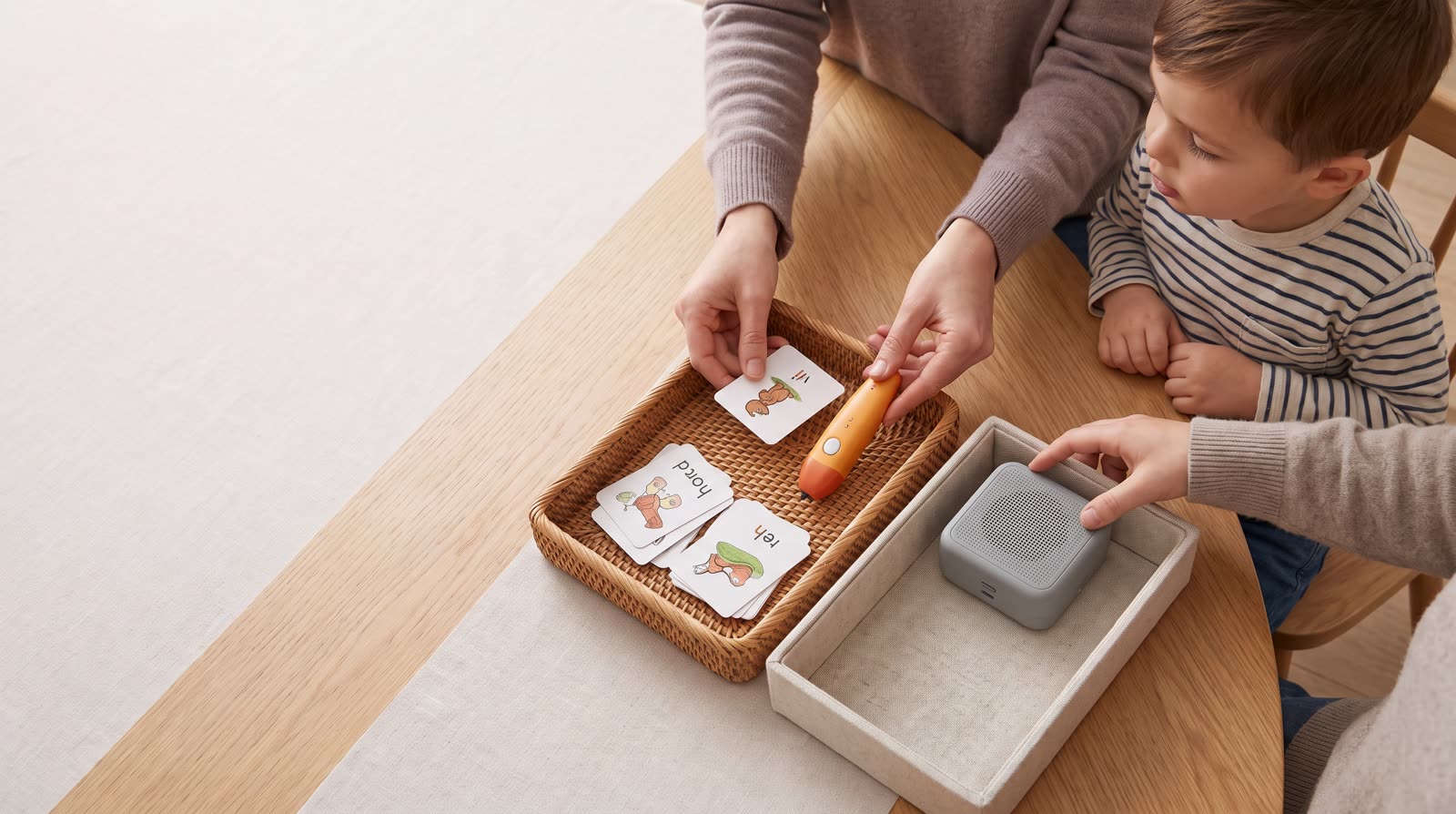
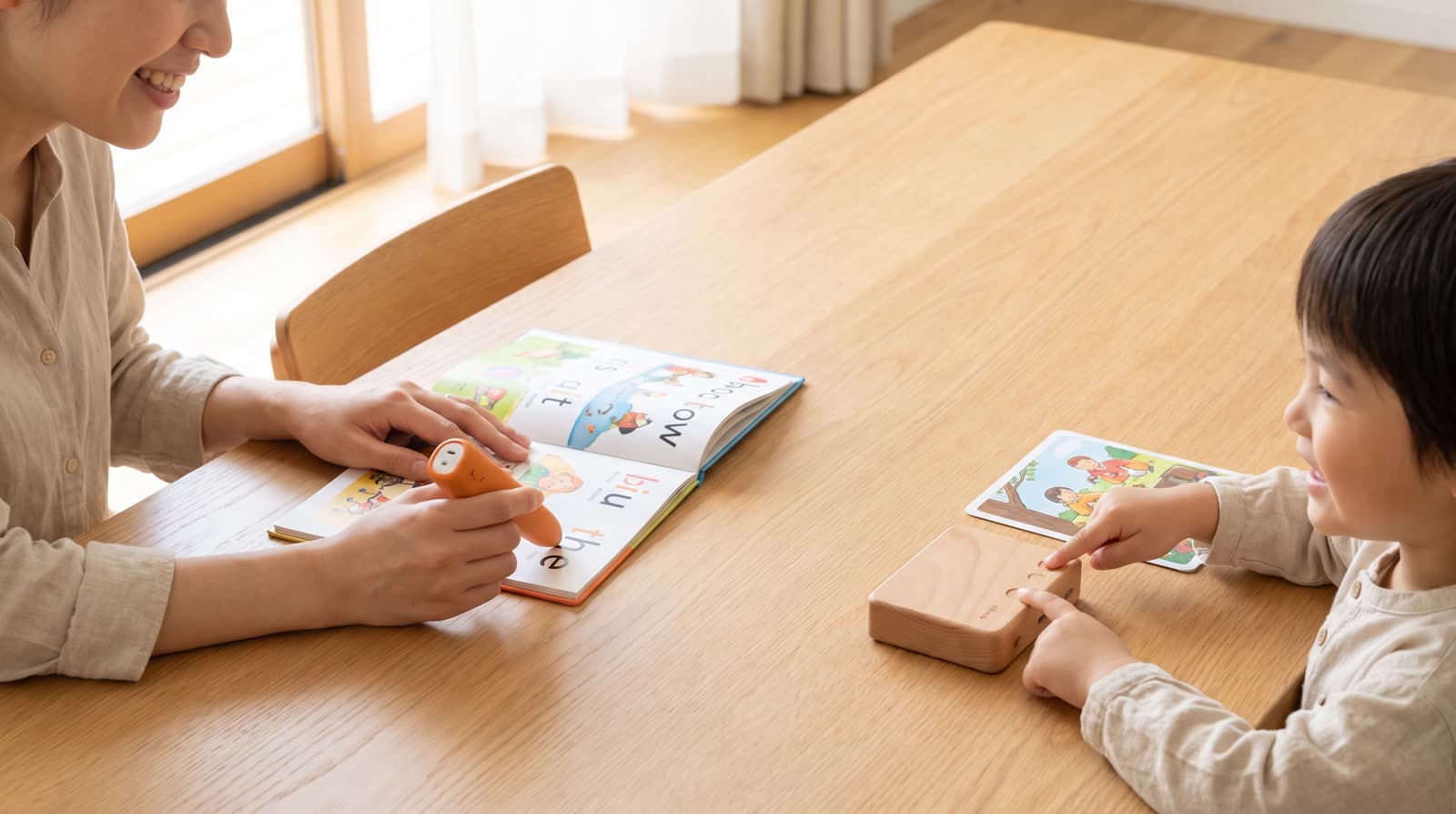
Phonics reading pens rely on advanced optical recognition technology, wherein an integrated infrared or optical CMOS sensor embedded in the pen tip scans micro-dot patterns printed alongside or beneath visible book graphics and text. This architecture establishes a rigorous one-to-one or one-to-many coordinate mapping between physical print media and digital audio files (.OID or customized binary audio formats). For B2B buyers and publishers, this means that content compatibility is inherently closed-loop or semi-closed-loop. A reading pen cannot simply play any audio file placed on its internal storage; the audio packets must correspond precisely to the specific OID coordinate grid generated during the prepress layout phase. Publishers must coordinate closely with manufacturers during specification confirmation to ensure that book layout files, dot-code generation software algorithms, and pen firmware decoding tables are fully synchronized. Any mismatch in dot density, coordinate offset, or audio container formatting will result in decoding failures, silent output, or incorrect audio playback. This level of granular synchronization makes phonics reading pens exceptionally powerful for structured literacy, letter-sound correspondence, and interactive vocabulary building, but it also imposes strict requirements on digital asset management and prepress verification workflows. Furthermore, publishers must ensure that printing presses are calibrated to handle specialized infrared-absorbent inks or multi-pass dot overlay printing without distorting underlying CMYK graphics.
Linear and Playlist-Based Audio Architectures in Kids' Audio Players
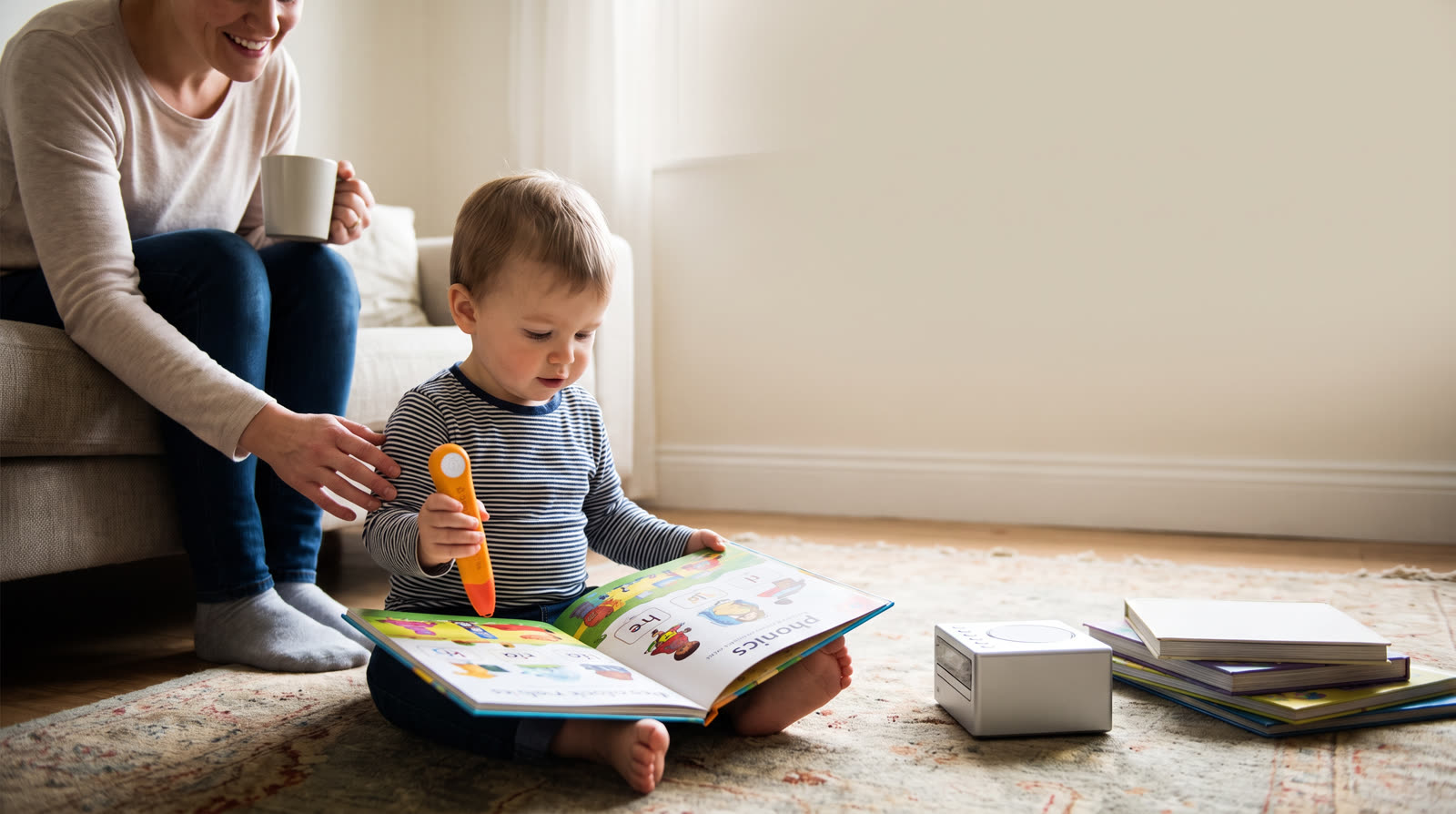
In contrast, standalone kids' audio players—such as speaker boxes, storytelling machines, and NFC/RFID figurine hubs—operate on file-based or stream-based content architectures. Content compatibility in audio players is typically agnostic to visual print coordinates. Audio files are stored as standard compressed formats (.mp3, .aac, .wav) within structured folder directories, or streamed via encrypted tokens linked to physical RFID cards, magnetic tapes, or plastic character figurines. When a child places a character figurine on top of an audio box or presses a physical playlist button, the device triggers a predefined audio sequence or playlist index. For publishers and toy manufacturers, this architecture offers high content flexibility and lower technical barriers for repurposing existing audio libraries, such as nursery rhymes, audiobooks, or broadcast stories, across multiple product lines without requiring specialized prepress printing. However, audio players lack spatial interactivity; a child cannot point at a specific word in a sentence to hear its individual phoneme sound or localized pronunciation. Procurement teams must weigh whether their target educational market requires fine-grained, word-level interactive decoding or broad, continuous auditory immersion.
Content Sourcing, Licensing, and File Management for B2B Procurement
Managing Proprietary Audio Compilers and OID Encodings
During the sample review and vendor qualification stage, wholesale buyers must examine how manufacturers handle content compilation. Phonics reading pen ecosystems require specialized software compilers provided by the pen firmware vendor or developed in-house to convert WAV or MP3 audio clips into proprietary device-readable indexes. Procurement teams should establish a rigorous pre-shipment data check protocol to verify that audio file naming conventions, sample rates (typically 16-bit, 8kHz to 16kHz mono for optimal memory efficiency), and index mapping tables comply with the hardware specifications. Failing to standardize these parameters can lead to corrupted audio indexes when scaling production runs across multiple factory shifts or partner printing houses. Furthermore, publishers must secure clear licensing rights not only for the underlying audio recordings and story texts but also for the underlying OID dot-code printing patents and compiler toolchains, avoiding potential intellectual property conflicts during international distribution and retail expansion.
Interoperability Limits and Open vs. Closed Content Ecosystems
Another critical consideration during procurement is ecosystem openness. Many consumer-grade audio players allow end-users or parents to drag and drop custom MP3 files onto an SD card or internal memory via USB, offering high user-level content compatibility and flexibility. However, this open model can introduce quality control challenges, accidental file deletion, or exposure to unvetted, copyright-infringing media. Conversely, professional phonics reading pen sets typically enforce a secure, structured content management structure where new book packs must be downloaded through official publisher portals or proprietary desktop update utilities. This controlled environment ensures that children experience seamless, error-free interactive reading without risking system firmware corruption or mismatched audio packets. B2B buyers partnering with educational institutions must evaluate whether their end-users require open-file convenience or locked-down educational integrity and curriculum compliance.
ReadGlo project support
Request a B2B Catalog & Sample Kit
Explore ReadGlo's certified range of phonics reading pen sets, interactive talking books, and custom OEM/ODM educational hardware solutions tailored for global distributors and publishers.
Multisensory Learning Dynamics and Early Literacy Pedagogies
Aligning Device Capabilities with Structured Phonics Curricula
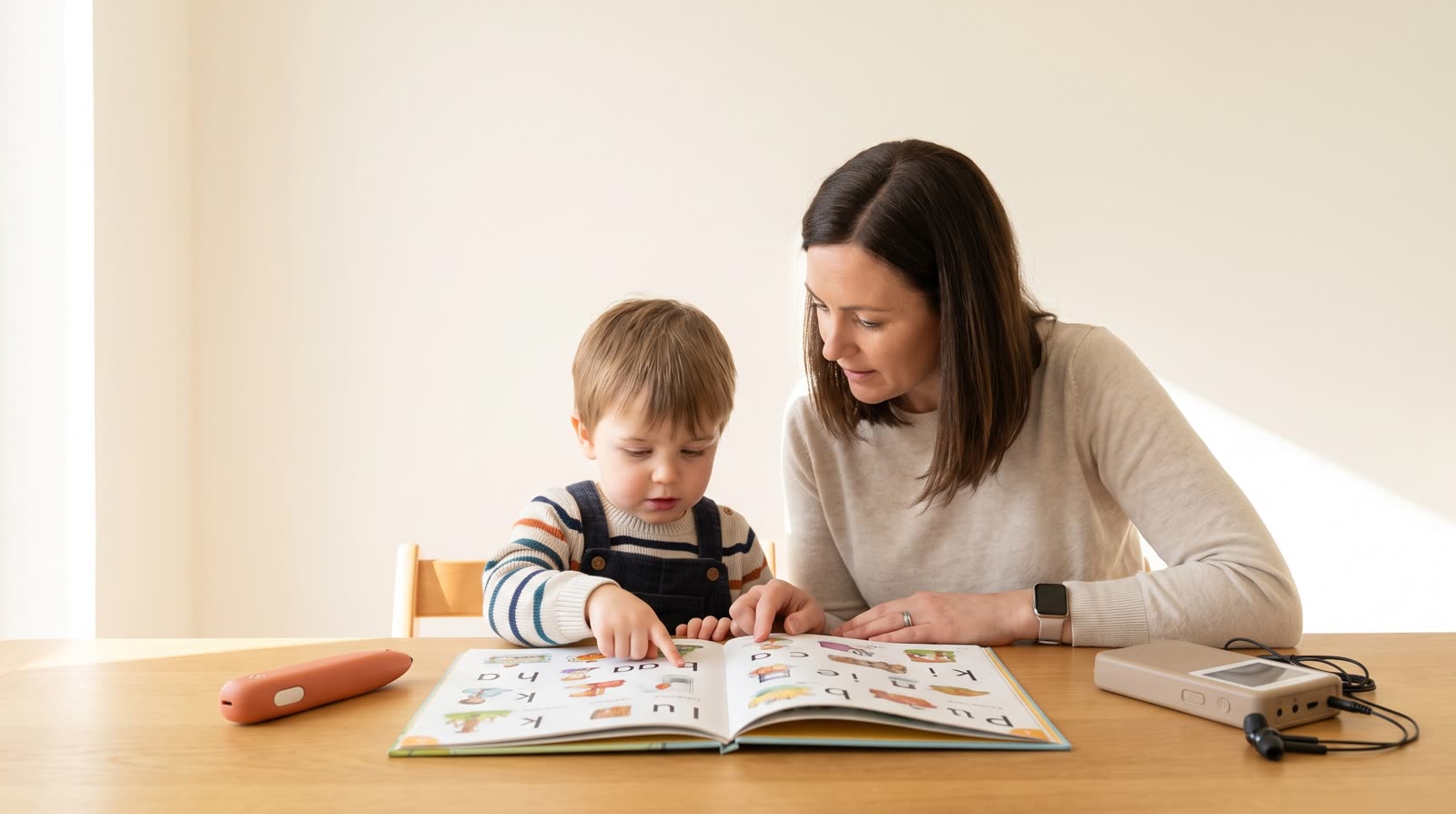
Early childhood education research emphasizes that systematic phonics instruction—connecting graphemes (letters) to phonemes (sounds)—is most effective when children engage in multisensory, active manipulation of text [1]. Phonics reading pens excel in this pedagogical context because the physical act of tapping a letter or word reinforces tactile-auditory integration. As children trace lines or tap specific phonetic components, the immediate auditory feedback reinforces decoding skills without creating screen fatigue. According to guidelines from the American Academy of Pediatrics (AAP) on early childhood development and early literacy, interactive print materials that encourage active parental engagement and guided reading significantly outperform passive media consumption [2]. Procurement professionals working with schools and preschool chains should verify that sample book sets accompanying reading pens adhere to recognized developmental progressions, supporting phonemic awareness, blending, and vocabulary acquisition. Manufacturers should provide pedagogical mapping documents to assist B2B buyers in demonstrating curriculum alignment to school board purchasers.
Auditory Immersion and Storytelling via Kids' Audio Players
Audio players, while less suited for granular phonics decoding, provide exceptional value in narrative comprehension, listening vocabulary expansion, and emotional engagement. By listening to professionally narrated stories, songs, and conversational dialogues without visual distractions, children develop strong listening comprehension skills and imaginative visualization. For B2B buyers assembling comprehensive early learning bundles, combining a phonics reading pen set for active literacy practice with a curated audio player for story immersion creates a balanced, high-value product offering. When evaluating these options with educational consultants or curriculum specialists, buyers should clearly define whether the intended learning outcome is foundational decoding (favoring reading pens) or broad linguistic immersion and storytelling (favoring audio players).
Operational Workflows for Quality Assurance and Sample Evaluation
Step-by-Step Functional Verification and Sample Audit Protocols
To ensure flawless product performance upon delivery, B2B buyers must implement a standardized sample evaluation workflow. When receiving initial engineering or pilot production samples of reading pen sets, quality assurance teams should execute the following steps: (1) Verify print resolution and OID dot density using microscopic inspection tools to ensure dot clarity meets manufacturer thresholds (typically 600 DPI or higher for reliable optical tracking); (2) Test audio playback latency, ensuring that sound output triggers within milliseconds of tip contact; (3) Check memory allocation and audio compression integrity to prevent distortion or clipping; (4) Validate USB data transfer speeds and firmware update stability. For audio players, evaluation protocols should focus on speaker distortion levels at maximum volume, RFID/NFC recognition reliability across figurines, and battery management efficiency. Establishing these rigorous checks during sample review prevents costly rework during mass production and safeguards brand reputation.
When to Escalate Technical and Compliance Inquiries to Manufacturers
Procurement managers and product developers must recognize the threshold for escalating complex technical challenges to manufacturing partners or regulatory bodies. If sample testing reveals intermittent optical scanning errors, inconsistent OID dot decoding on specific paper stocks or matte finishes, or firmware crashes during bulk content synchronization, immediate escalation to the factory engineering team is required. Furthermore, safety and compliance regarding electronic components must never be compromised. For children's electronic devices and interactive books, buyers must verify compliance with safety standards such as CPSC children's product regulations in the United States or equivalent international toy and electrical safety directives [3]. If any device exhibits battery heating, abnormal charging behavior, or structural housing defects during pre-shipment inspections, halt the batch immediately, quarantine the units, and request a comprehensive root-cause analysis from the manufacturer.
Frequently Asked Questions
Can a phonics reading pen play standard MP3 audio files without special OID encoding?
No. Phonics reading pens require audio files to be compiled into proprietary binary or indexed container formats tied directly to the optical dot-code (OID) coordinate grid printed on the book pages. Standard MP3 files lack spatial coordinate mapping and cannot be decoded by the pen's optical sensor unless pre-compiled using the manufacturer's specific software toolchain.
How do kids' audio players handle content updates compared to reading pen sets?
Kids' audio players typically handle content updates via micro-SD card swapping, USB file transfers into designated folders, or cloud-synced RFID/NFC card updates. In contrast, reading pen sets require both updating the pen's internal audio library file and ensuring that the physical companion books feature the exact matching OID dot-code edition.
What print specifications are required for books compatible with OID reading pens?
Books compatible with OID reading pens require specialized offset or digital printing using invisible OID dot patterns (often printed with carbon-free infrared absorbent inks or specialized screening) overlaid on CMYK graphics. Printers must maintain precise dot registration and avoid heavy matte varnishes or coatings that scatter infrared light and impede optical sensor tracking.
Are kids' audio players suitable for systematic phonics instruction?
While audio players are excellent for developing listening comprehension, storytelling, and vocabulary through auditory immersion, they are generally less suited for systematic phonics decoding because they lack tactile, letter-level interactive pointing capabilities. Phonics reading pens provide direct grapheme-to-phoneme interaction required for early reading practice.
What safety and compliance certifications should B2B buyers verify for electronic children's products?
B2B buyers should verify that both reading pens and audio players comply with major international toy and electronic safety regulations, including CPSC children's product safety rules in the US, EN71 toy safety directives in Europe, FCC/CE electromagnetic compatibility standards, and RoHS hazardous substance restrictions [3].
Conclusion
In summary, choosing between a phonics reading pen set and a kids' audio player for B2B catalog expansion depends heavily on the intended educational application and content compatibility requirements. Phonics reading pens offer unparalleled spatial interactivity, granular grapheme-to-phoneme decoding, and structured literacy support through tightly bound OID print-digital ecosystems. Conversely, kids' audio players deliver flexible, screen-free auditory immersion, storytelling, and broad playlist management without print coordinate constraints. By implementing rigorous sample testing protocols, verifying OID printing precision, ensuring strict safety compliance, and aligning product offerings with established early literacy guidelines, international distributors and educational publishers can curate high-performing, commercially successful product lines that meet the rigorous demands of modern educators and families worldwide.
Continue your research
Related reading pen buyer guides
Use these related guides to compare the next product, content, sourcing or channel decision in your project.
- Product ComparisonPhonics Reading Pen Set vs. Kids Audio Player for Kids: A Comprehensive Long-Term Cost Analysis for B2B BuyersRead this guide
- Product ComparisonPhonics Reading Pens vs. Audio Players for Kids: Evaluating Independent Toddler Usability for B2B Buyers and EducatorsRead this guide
- Product ComparisonWhat Is the Difference Between a Phonics Reading Pen Set and an Audio Player for Kids in Terms of Learning Value?Read this guide
Continue with ReadGlo
See product specifications and request model-specific documentation.
ReadGlo project support
Contact Our Sourcing Specialists
Ready to discuss your next educational publishing project or wholesale catalog expansion? Connect with ReadGlo's engineering and export team today to review custom specifications and sample availability.