
Contents
Introduction
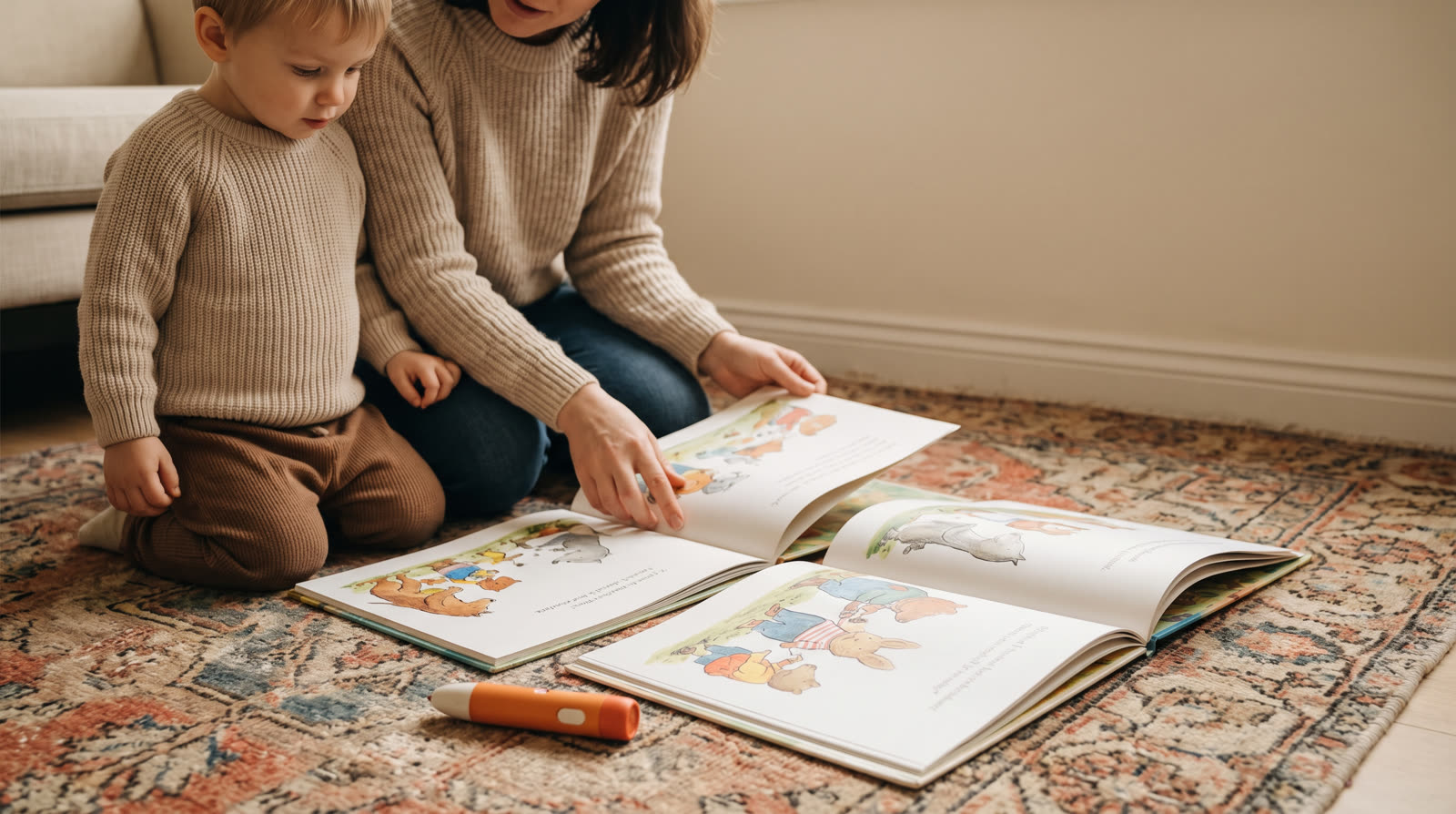
The core difference between a talking picture book and an ordinary picture book in a screen-free environment lies in how auditory reinforcement is integrated into physical paper interaction. While an ordinary picture book relies solely on static visual text and illustrations requiring adult or independent reading, a talking picture book embeds invisible optical dot-matrix codes across the page. When paired with an audio reading pen, these books deliver high-fidelity narration, phonics pronunciation, and environmental sound effects entirely offline, without emitting blue light, relying on digital interfaces, or requiring internet connectivity. According to guidelines from the American Academy of Pediatrics (AAP) and reading development frameworks from Reading Rockets, maintaining tactile, screen-free engagement while supporting phonological awareness is essential for early childhood cognitive development and sustained attention span.
Tactile Engagement and Physical Interaction Mechanics in Screen-Free Design
Optical Dot-Code Printing and Paper-Based Audio Activation
Talking picture books utilize specialized dual-pass printing technology where subtle, microscopic optical dot codes are layered beneath or alongside traditional offset illustrations and text. These dot patterns are imperceptible to the naked eye but are instantly decoded by an optical sensor located in the tip of a companion reading pen. Unlike tablets or digital screens that project light directly into a child's eyes, talking picture books preserve the tactile, physical properties of traditional bound paper. Children interact with the medium by pointing the pen directly at illustrations or characters, activating pre-compiled audio files stored on internal memory or removable micro-SD cards without any wireless transmission or screen interface.
Eliminating Blue Light and Digital Interruption Risks
A primary advantage of talking picture books over screen-based learning devices is the total absence of backlit displays, pop-up notifications, and algorithmic distractions. Screen-free interactive tools encourage uninterrupted focus on physical pages, tactile turning, and spatial awareness. B2B manufacturers and educational publishers adhere to stringent material and optical safety standards to ensure that paper finishes, soy-based inks, and matte laminations reduce glare, protecting young eyes during extended reading sessions while fostering a calm, focused learning environment.
Cognitive Processing and Auditory-Visual Integration
Dual-Coding Theory and Phonological Awareness Without Screens
Cognitive frameworks such as Paivio's Dual-Coding Theory emphasize that children process information more effectively when visual and auditory stimuli are presented concurrently without cognitive overload. In talking picture books, pointing to an illustrated object while hearing its exact auditory label reinforces semantic mapping directly on the printed page. This immediate multisensory linkage supports phonological awareness, vocabulary acquisition, and letter-sound correspondence. Educators and clinical specialists emphasize that this audio support acts as a scaffold rather than a replacement for adult guidance, fostering independent exploration while reinforcing correct pronunciation.
Sustained Attention and Sensory Regulation
Research highlighted by organizations such as the Centers for Disease Control and Prevention (CDC) and early childhood education experts indicates that excessive digital media consumption can disrupt attention regulation in toddlers. Screen-free interactive book sets promote sustained attention by grounding interaction in physical reality. Children control the pace of storytelling, repeating words or audio clips as needed without the rapid, erratic scene changes characteristic of digital video apps. This self-paced interaction supports executive function development and reduces sensory fatigue.
ReadGlo project support
Request B2B Sample Kit
Explore our certified screen-free talking picture book collections and optical reading pen solutions for your wholesale or publishing catalog.
B2B Sourcing, Manufacturing Specifications, and Quality Assurance
Material Standards, Printing Precision, and Book Code Compatibility
For B2B buyers, sourcing talking picture books requires rigorous alignment between printing contractors and pen firmware developers. Dot-matrix coding must maintain high contrast and error-free recognition rates across various paper stocks, binding types, and matte or gloss protective coatings. Quality assurance protocols during sample review involve testing dot readability across different lighting conditions, verifying audio file allocation, and ensuring that book codes match the firmware embedded in the reading pen to prevent synchronization errors.
Factory Verification Protocols: Sample Review and Pre-Shipment Checks
Professional B2B procurement workflows mandate structured verification stages, including initial engineering sample reviews, pre-production specification confirmation, functional drop and wear testing, and pre-shipment data checks. Buyers must verify that book bindings withstand repeated physical handling, that audio compression formats maintain vocal clarity without distortion, and that all manufacturing batches comply with international toy and book safety directives (such as ASTM F963 and EN71) without relying on unverified performance guarantees.
Parental Co-Reading, Safety Guidelines, and Regulatory Compliance
Adult Mediation and Developmental Support
While talking picture books and reading pens facilitate independent play, educational authorities including Reading Rockets and the International Dyslexia Association (IDA) stress that adult-child co-reading remains vital. Parents and educators should engage children in open-ended questioning, discussion of storylines, and emotional connection that automated audio cannot replicate. The reading pen serves as an auxiliary tool to reinforce correct phonics and vocabulary, but adult mediation ensures comprehensive language comprehension and social-emotional growth.
Product Safety, External Inspection Protocols, and CPSC Compliance
In alignment with Consumer Product Safety Commission (CPSC) guidelines, electronic reading accessories and interactive books must undergo strict external safety evaluations. Caregivers and institutional buyers should perform low-risk external inspections only—checking for secure battery compartments, intact housing, and clean charging ports without attempting internal disassembly. If electronic components exhibit dampness, structural damage, abnormal heat, battery swelling, fluid leakage, or smoke, users must immediately discontinue use, disconnect charging cables, and contact the manufacturer or qualified service channels for assessment.
Frequently Asked Questions
Do talking picture books require internet connectivity or screens during daily use?
No. Talking picture books operate entirely offline. The interaction relies on invisible optical dot-code printing on paper and pre-loaded audio files stored on the companion reading pen's internal memory or micro-SD card, requiring no Wi-Fi, Bluetooth, or digital screens.
How do manufacturers ensure the safety and readability of dot-matrix printed books?
Manufacturers utilize specialized dual-pass offset printing with non-toxic, soy-based inks and protective matte laminations. Quality assurance protocols include optical recognition testing under various lighting conditions, durability checks on paper stock, and adherence to international toy and book safety standards.
What recommendations do educational and pediatric organizations offer regarding screen-free interactive tools?
Organizations such as the American Academy of Pediatrics (AAP) and Reading Rockets emphasize prioritizing screen-free tactile media for young children to support sustained attention, tactile exploration, and healthy cognitive development, recommending tools that supplement rather than replace adult co-reading.
Conclusion
In summary, talking picture books bridge the gap between traditional tactile reading and multi-sensory auditory support while maintaining a strictly screen-free environment. By eliminating digital screens and blue light hazards, they protect young eyes and foster focused, self-paced learning. For B2B buyers and educational publishers, partnering with certified manufacturers who enforce rigorous sample reviews, precise dot-matrix printing standards, and strict CPSC compliance ensures the delivery of safe, high-quality interactive book programs.
Continue your research
Related reading pen buyer guides
Use these related guides to compare the next product, content, sourcing or channel decision in your project.
- Product ComparisonComparing Learning Value: Talking Picture Books Versus Ordinary Picture Books in Early Childhood EducationRead this guide
- Retail StrategyWhat Should a Buyer Verify Before Accepting Exclusive Distribution for a Talking-Pen Programme?Read this guide
- Product ComparisonWhat is the Difference Between a Talking Picture Book and an Ordinary Picture Book in Terms of Content Compatibility?Read this guide
Sources used for further reading
- American Academy of Pediatrics (AAP) - Media and Young Minds Guidelines
- Reading Rockets - Print-Rich Environments and Early Literacy Research
- Centers for Disease Control and Prevention (CDC) - Child Development Milestones
- Consumer Product Safety Commission (CPSC) - Electronic Toy and Book Safety Standards
Continue with ReadGlo
See product specifications and request model-specific documentation.
ReadGlo project support
Contact Our Sourcing Team
Connect with our manufacturing specialists to discuss custom publishing specifications, safety compliance documentation, and bulk order pricing.