Contents
Introduction
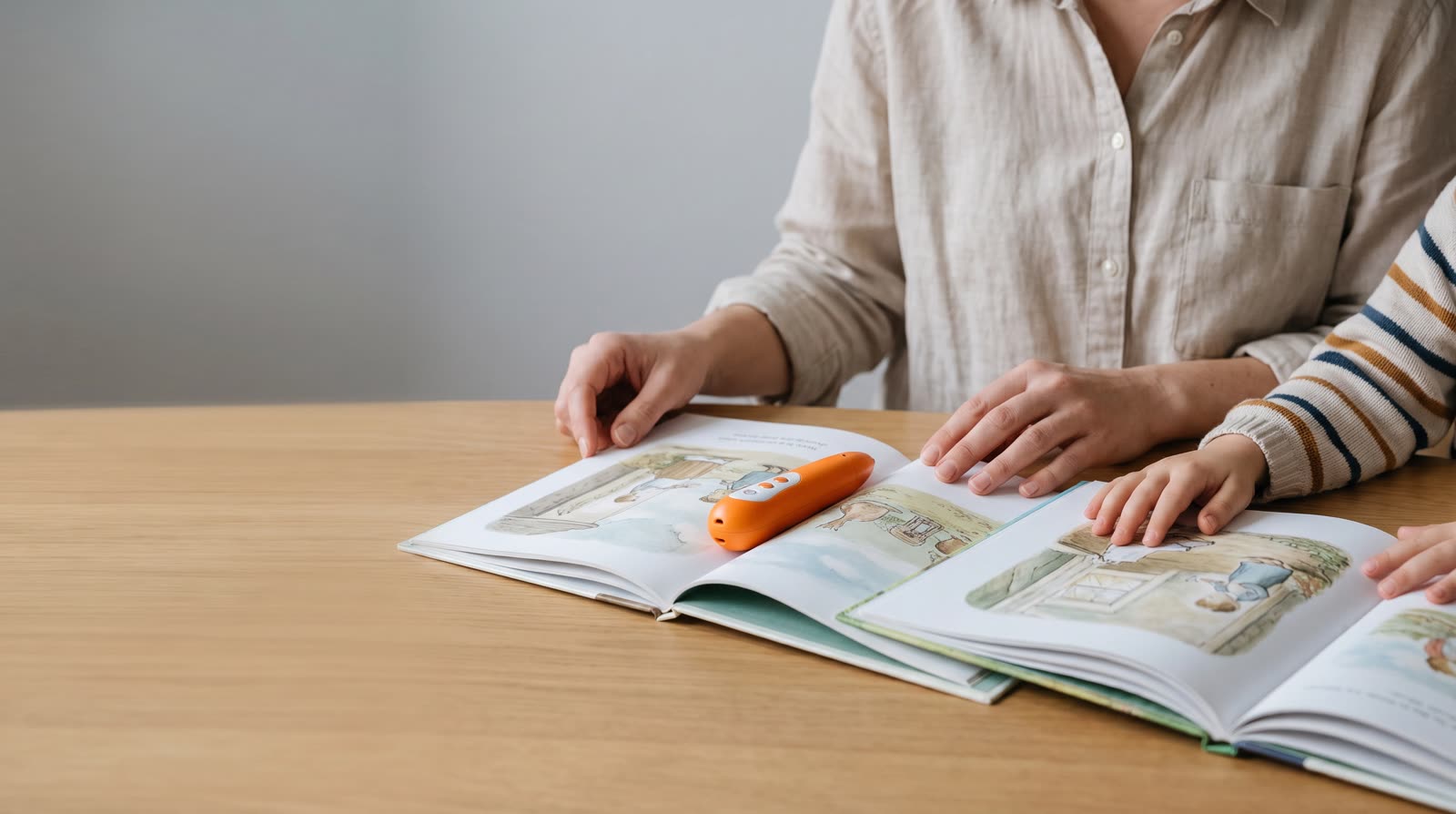
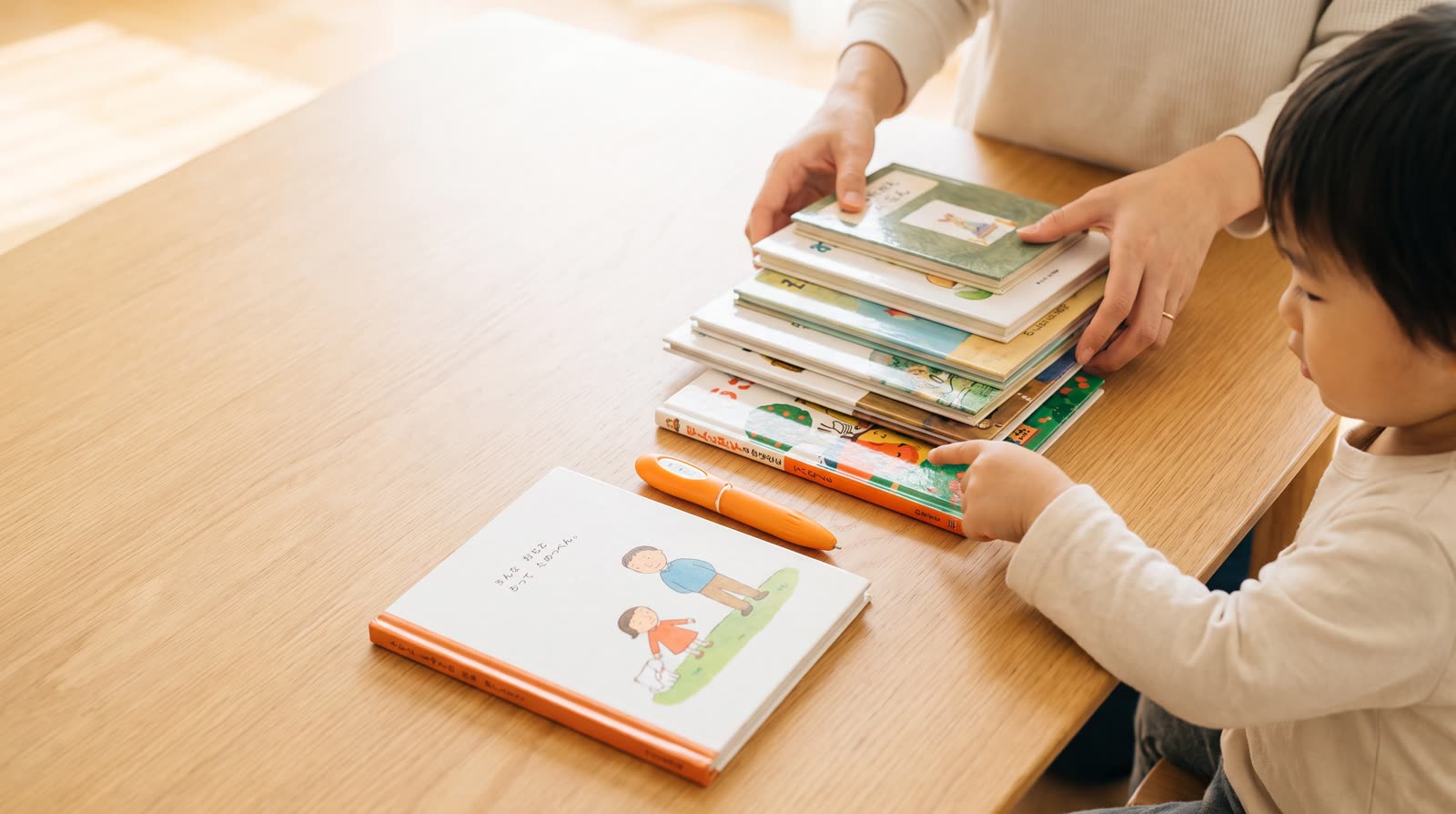
In contemporary early childhood education, wholesale publishing markets, and global distribution networks, educators, literacy specialists, and B2B buyers frequently evaluate the distinct pedagogical merits of talking picture books—integrated with optical dot-code technology and activated via a specialized reading pen—alongside traditional ordinary picture books. A direct, prudent appraisal reveals that neither format holds an absolute monopoly on educational superiority; rather, they serve fundamentally different developmental, cognitive, and communicative functions. Talking picture books provide structured auditory scaffolding, autonomous phonics modeling, and multi-sensory reinforcement, making them exceptionally effective for self-paced vocabulary acquisition, phonetic decoding, and bilingual immersion. Conversely, ordinary picture books anchor deep imaginative interpretation, tactile page-turning dexterity, and rich dialogic reading mediated by adults. Establishing appropriate application boundaries requires recognizing that interactive audio tools enhance independent engagement and multi-sensory association, while print books remain foundational for shared narrative comprehension, critical inference, and focused attention. Neither format operates in isolation from adult mediation, nor should interactive media be viewed as a substitute for professional early childhood education, qualified instruction, or clinical developmental guidance.
Core Pedagogical Mechanisms and Multi-Sensory Integration
Auditory Scaffolding and Phonics Immersion in Talking Books
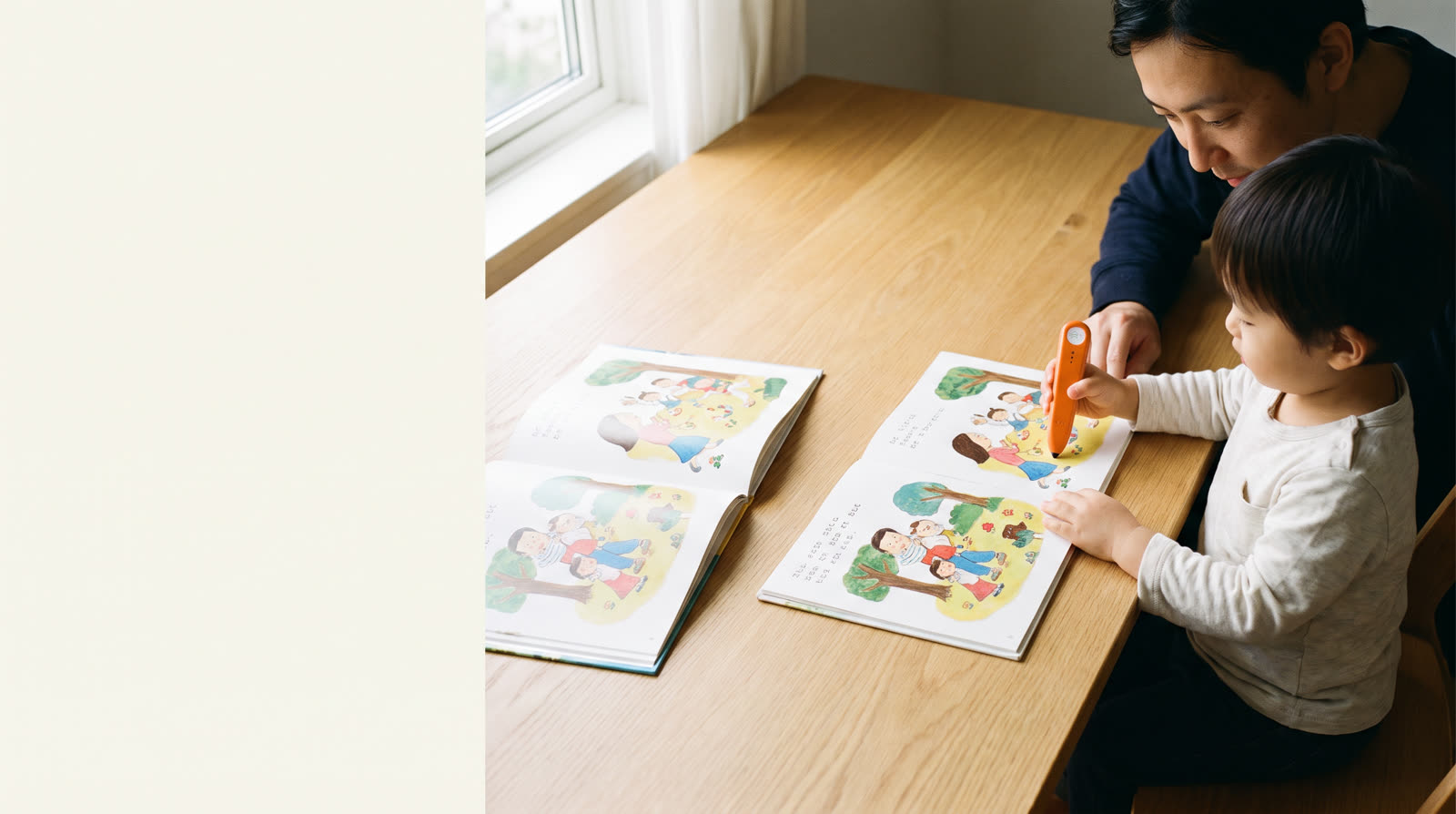
Talking picture books leverage specialized offset and digital printing techniques where invisible optical identification (OID) dot patterns are embedded beneath visible CMYK illustrations, text blocks, and interactive hotspots. When a young reader touches the page with a compatible optical reading pen, the embedded optical sensor instantly decodes the coordinate data and plays back pre-recorded native pronunciation, sound effects, phonetic breakdowns, or musical cues. From a pedagogical standpoint, this creates a closed-loop multi-sensory feedback mechanism that bridges visual symbols with auditory phonemes instantly. According to research frameworks supported by organizations like the American Academy of Pediatrics (AAP) on early literacy development, multi-sensory reinforcement can accelerate letter-sound correspondence and phonemic awareness when used intentionally alongside guided adult support. In a B2B publishing context, publishers and distributors must evaluate how well the audio synchronization supports phonetic blending without overwhelming the child's working memory or causing cognitive fatigue. Furthermore, manufacturers must maintain high printing registration tolerances to ensure flawless optical code recognition across varied paper stocks, matte coatings, and binding types, ensuring that every touch-point yields reliable auditory feedback for the young learner.
Visual Semiotics and Imaginative Space in Ordinary Picture Books
Ordinary picture books rely entirely on visual semiotics, expressive typography, and tactile interaction without electronic augmentation. The absence of automated audio places the entire burden of interpretation, pacing, and vocal inflection on the reader or the mediating adult. This unmediated space fosters deep imaginative engagement, allowing young learners to project their own voices, pacing, and emotional nuance onto characters and story arcs. From a cognitive development perspective, ordinary picture books encourage sustained visual attention and inferential reasoning, as children must construct meaning solely from static imagery and textual cues without relying on pre-recorded sound effects or external prompts. For wholesale buyers, libraries, and educational institutions, stocking ordinary picture books remains essential for maintaining a balanced library ecosystem that values quiet contemplation, artistic appreciation, and unprompted cognitive synthesis alongside digital interactivity. Educators often note that static illustrations allow children to linger on specific visual details, noticing subtle background elements that might be bypassed in fast-paced audio environments.
Educator and Parent Evaluation Criteria for B2B Curriculum Procurement
When educational distributors, school administrators, and retail buyers assess curriculum offerings, establishing systematic evaluation criteria is vital. B2B buyers should review sample books for narrative coherence, illustration quality, developmental appropriateness, typographic legibility, and pedagogical alignment. When evaluating talking picture books, buyers must additionally examine audio file compression quality, speaker fidelity, battery safety, and the seamless integration of audio touch-points that do not clutter the artistic layout. Workflow procedures during sample review typically involve inspecting pre-production physical dummies, verifying optical recognition reliability across various lighting conditions, and ensuring that audio content aligns with established educational standards. When questions arise regarding developmental suitability for children with specific learning differences or language acquisition profiles, educators should consult qualified specialists rather than relying solely on publisher promotional claims or marketing summaries.
Cognitive Load, Attention Span, and Engagement Dynamics
Independent Engagement and Self-Paced Learning in Toddlers
A primary advantage of talking picture books in modern home and classroom environments is their capacity to foster independent engagement. Toddlers and preschoolers can interact with the material autonomously, repeatedly tapping words or illustrations to hear pronunciation without requiring constant adult intervention. This self-paced reinforcement supports independent learning habits, builds self-efficacy in early readers, and accommodates different learning speeds within a diverse group setting. However, educational psychologists note that excessive auditory stimulation or overly complex interactive prompts can induce cognitive overload if not carefully balanced with quiet reading time. B2B publishers must design interactive elements with intuitive feedback loops that respect the child's natural attention span, ensuring that technology serves the narrative rather than distracting from it. Furthermore, manufacturers must provide clear user guidelines advising adults on how to supervise and pace interactive sessions to prevent sensory fatigue in younger children.
Dialogic Reading and Adult-Child Interaction in Traditional Books
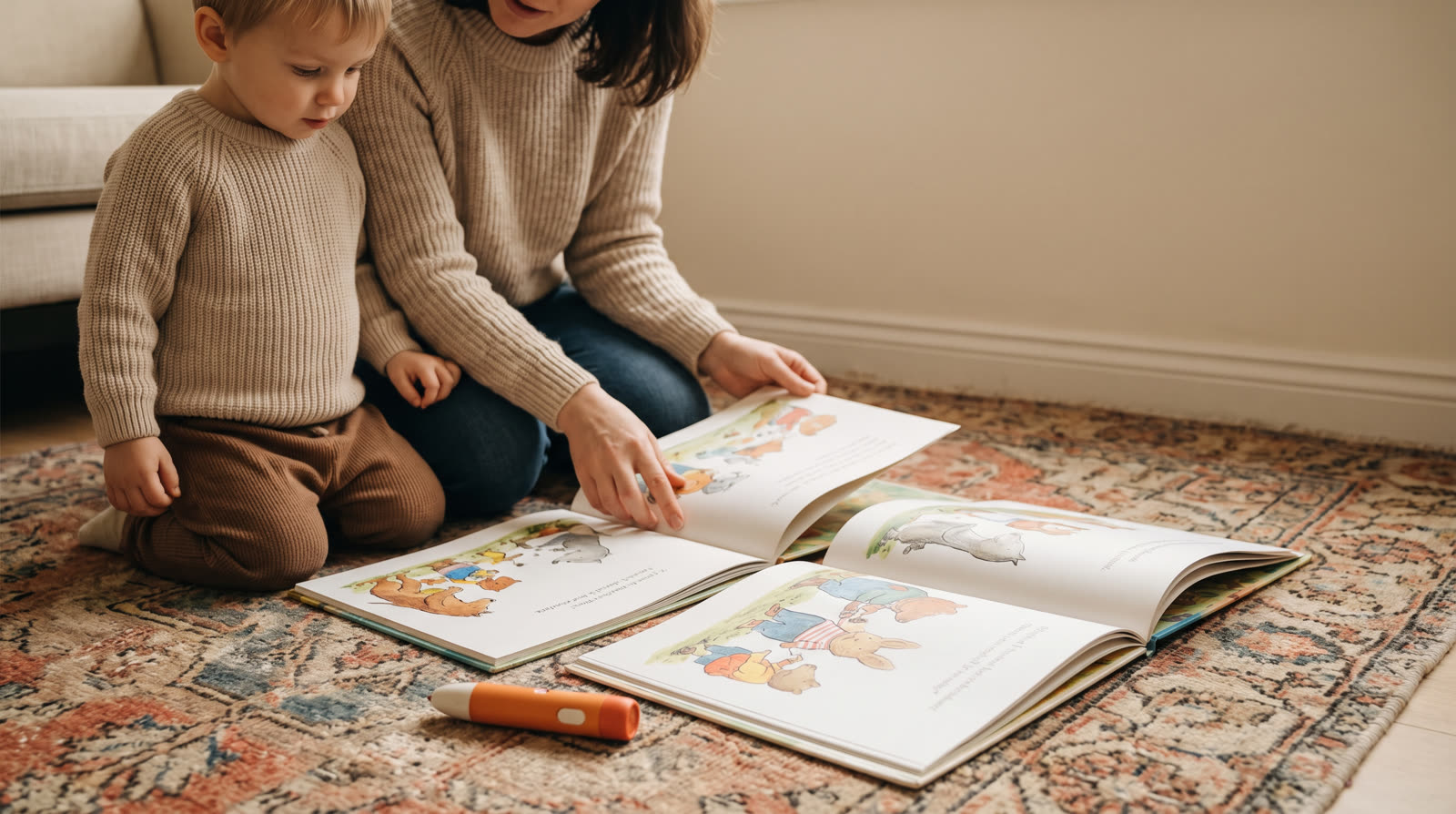
Ordinary picture books excel as catalysts for dialogic reading—an interactive shared-reading practice where adults prompt children with open-ended questions, predictions, and discussions about the story. Because ordinary books lack built-in audio narration, the adult must supply the voice, pacing, and emotional tone, which naturally encourages dynamic conversational turn-taking between child and caregiver. This social scaffolding is widely recognized by literacy experts as a powerful predictor of later reading comprehension, vocabulary expansion, and expressive language skills. Publishers and educational developers designing hybrid or traditional book lines must consider how physical layout and margin space can accommodate adult prompts, discussion questions, and guided reading notes to support educators and parents in facilitating meaningful literary dialogues.
Balancing Screen-Free Interactive Audio with Calibrated Cognitive Stimulation
In an era dominated by backlit digital screens, smartphones, and tablets, both talking picture books and ordinary picture books offer entirely screen-free reading experiences that protect young eyes and nervous systems from overstimulation. Talking books provide auditory interactivity without visual blue-light exposure, striking an effective balance between high-tech engagement and low-tech sensory calm. Nevertheless, educators recommend establishing structured daily routines that alternate between independent interactive reading and quiet, unassisted print exploration. B2B partners sourcing products for international markets should emphasize this screen-free advantage when marketing to safety-conscious parents and progressive educational institutions seeking healthy alternatives to screen-based digital learning.
ReadGlo project support
Get a Product Catalog & Sample Kit
Explore ReadGlo's premium collection of talking picture books, optical reading pens, and customizable educational sets designed for global B2B distributors and educational partners.
Language Acquisition, Vocabulary Expansion, and Emergent Literacy
Multilingual Exposure and Pronunciation Modeling via Optical Code Audio
For bilingual families, international schools, and language-learning programs, talking picture books offer distinctive advantages in accurate pronunciation modeling. Children can tap identical illustrations to hear native-speaker audio in multiple languages (e.g., English, Mandarin, Spanish, French, German), facilitating natural secondary language acquisition through contextual visual association. This immediate auditory feedback helps children map unfamiliar phonemes to visual objects without translation bottlenecks. Wholesale buyers and educational distributors targeting multilingual markets should verify that audio firmware supports multi-language data compression, robust storage capacity, and easy switching mechanisms across book series. Moreover, publishers must ensure that audio recordings feature professional voice actors with standard accents and appropriate emotional cadence to support authentic language acquisition.
Narrative Comprehension and Syntactic Complexity in Print
While talking books excel at isolated vocabulary and phonetic decoding, ordinary picture books often feature expansive narrative structures, poetic meter, and complex syntactic patterns that challenge children to infer meaning from broader context and illustrations. The absence of automated audio prompts forces the young reader to rely on cognitive deduction, contextual clues, and linguistic memory. Educators frequently combine both formats in a progressive curriculum: using talking books for initial phonics, vocabulary acquisition, and independent practice, and transitioning to ordinary picture books for advanced narrative comprehension, critical thinking, and literary appreciation. This dual approach ensures that children develop both mechanical decoding skills and deep analytical comprehension.
Professional Guidelines and Recommendations from Early Childhood Literacy Authorities
When assessing literacy tools, publishers and educators align their practices with guidelines from recognized authorities such as Reading Rockets, the International Dyslexia Association, and the American Academy of Pediatrics. These organizations consistently emphasize that electronic learning tools should supplement, never replace, responsive human interaction and rich print environments. For children exhibiting early reading difficulties, speech delays, or language processing challenges, adults should avoid self-diagnosis and instead consult qualified reading specialists, speech-language pathologists, or educational psychologists. Manufacturers and B2B suppliers must maintain transparent product labeling regarding intended developmental stages, avoiding exaggerated claims of guaranteed academic outcomes or miraculous learning transformations.
Manufacturing, Quality Assurance, and B2B Procurement Standards
Optical Dot Code Precision and Paper Print Calibration
The manufacturing integrity of talking picture books requires rigorous technical precision. Unlike ordinary books printed with standard CMYK processes, talking books require specialized OID (Optical Identification) dot-pattern printing overlaid precisely on top of artwork. Printers must maintain strict color calibration, registration accuracy, and dot density tolerances to prevent recognition errors by the reading pen. B2B procurement professionals must conduct thorough pre-shipment inspections (PSI) and sample evaluations, checking optical scan accuracy across various batches, paper weights, and atmospheric conditions. Establishing clear quality control benchmarks ensures low defect rates, consistent reading pen responsiveness, and long-term customer satisfaction across retail and educational distribution channels.
Material Safety, Durability, and Product Stewardship (CPSC Compliance)
Children's educational products must adhere to stringent international safety standards, including CPSC (Consumer Product Safety Commission) regulations for children's products and electronic safety directives. Both talking books and ordinary books must use non-toxic, eco-friendly soy-based inks, rounded corner cutting, and tear-resistant board book construction where applicable. For electronic components associated with reading pens, suppliers must ensure battery compartment security, overcharge protection, thermal stability, and compliance with small parts choking hazard standards. B2B buyers must request certified test reports (e.g., ASTM F963, EN71, RoHS) prior to finalizing volume orders and entering long-term distribution agreements.
Practical Workflow for Sample Evaluation and Factory Specification Reviews
A professional B2B procurement workflow begins with comprehensive specification review, followed by physical sample requests, functional stress testing, and packaging verification. Procurement managers should evaluate sample binding durability, paper thickness (GSM), cover lamination, and audio file clarity. When reviewing talking book samples, testing must include verifying optical code readability across 100% of active touch areas, testing battery longevity under normal operating conditions, and confirming acoustic speaker performance. If any manufacturing discrepancies arise during sample evaluation, buyers should immediately escalate the findings to factory quality assurance teams for corrective action before mass production commences.
Frequently Asked Questions
What is the main difference in learning value between talking picture books and ordinary picture books?
Talking picture books provide immediate auditory feedback and phonics scaffolding through embedded optical codes, making them ideal for independent vocabulary building and pronunciation practice. Ordinary picture books rely on visual and textual interpretation, fostering deep imaginative thinking, sustained visual attention, and rich dialogic reading with adults.
Can talking picture books replace traditional ordinary picture books in early childhood education?
No. Educational authorities and developmental experts emphasize that interactive audio books and traditional print books serve complementary roles. While talking books support independent decoding and multi-sensory engagement, ordinary picture books remain vital for shared adult-child reading, narrative complexity, and unprompted artistic appreciation.
Are talking picture books suitable for children with early reading difficulties or speech delays?
Talking books can assist with repetitive phonics exposure and self-paced listening. However, they do not diagnose or treat reading difficulties. For children exhibiting persistent learning challenges, parents and educators should consult qualified speech-language pathologists or reading specialists and ensure active adult mediation.
What safety and quality standards should B2B buyers look for when sourcing talking books and reading pens?
B2B buyers should verify compliance with international safety standards such as CPSC regulations, ASTM F963, and EN71. Key checks include non-toxic soy inks, robust board book binding, secure battery compartments, and precise optical dot-code printing to ensure high scanning reliability and durability.
How should wholesale buyers evaluate sample batches of talking picture books?
Buyers should follow a structured evaluation workflow: review pre-production technical specifications, test optical code responsiveness across all interactive zones, check paper weight (GSM) and lamination durability, verify audio file clarity, and ensure complete compliance documentation before confirming volume orders.
Conclusion
In summary, the comprehensive comparison between talking picture books and ordinary picture books highlights two powerful, highly complementary instruments in early childhood education. Talking picture books excel in delivering multi-sensory auditory scaffolding, independent phonics practice, and multilingual exposure, while ordinary picture books remain irreplaceable for fostering deep imaginative focus, tactile dexterity, and rich dialogic interaction with mediating adults. For B2B publishers, distributors, libraries, and educational institutions, curating a balanced inventory that integrates both formats ensures a holistic, robust approach to early literacy development. ReadGlo remains steadfastly committed to upholding the highest standards of manufacturing precision, material safety, rigorous quality assurance, and pedagogical integrity across all interactive publishing and reading pen solutions.
Continue your research
Related reading pen buyer guides
Use these related guides to compare the next product, content, sourcing or channel decision in your project.
- Product ComparisonWhat is the Difference Between a Talking Picture Book and an Ordinary Picture Book in Terms of Content Compatibility?Read this guide
- Product ComparisonWhat is the Difference Between a Talking Picture Book and an Ordinary Picture Book in Terms of Long-Term Cost?Read this guide
- Product ComparisonWhat is the Difference Between a Talking Picture Book and an Ordinary Picture Book in Terms of Screen-Free Use?Read this guide
Continue with ReadGlo
See product specifications and request model-specific documentation.
ReadGlo project support
Send Your B2B Requirements
Partner with ReadGlo for reliable OEM/ODM manufacturing, certified safety compliance, and tailored publishing solutions. Connect with our export team today to discuss your project specifications.