
Contents
Introduction
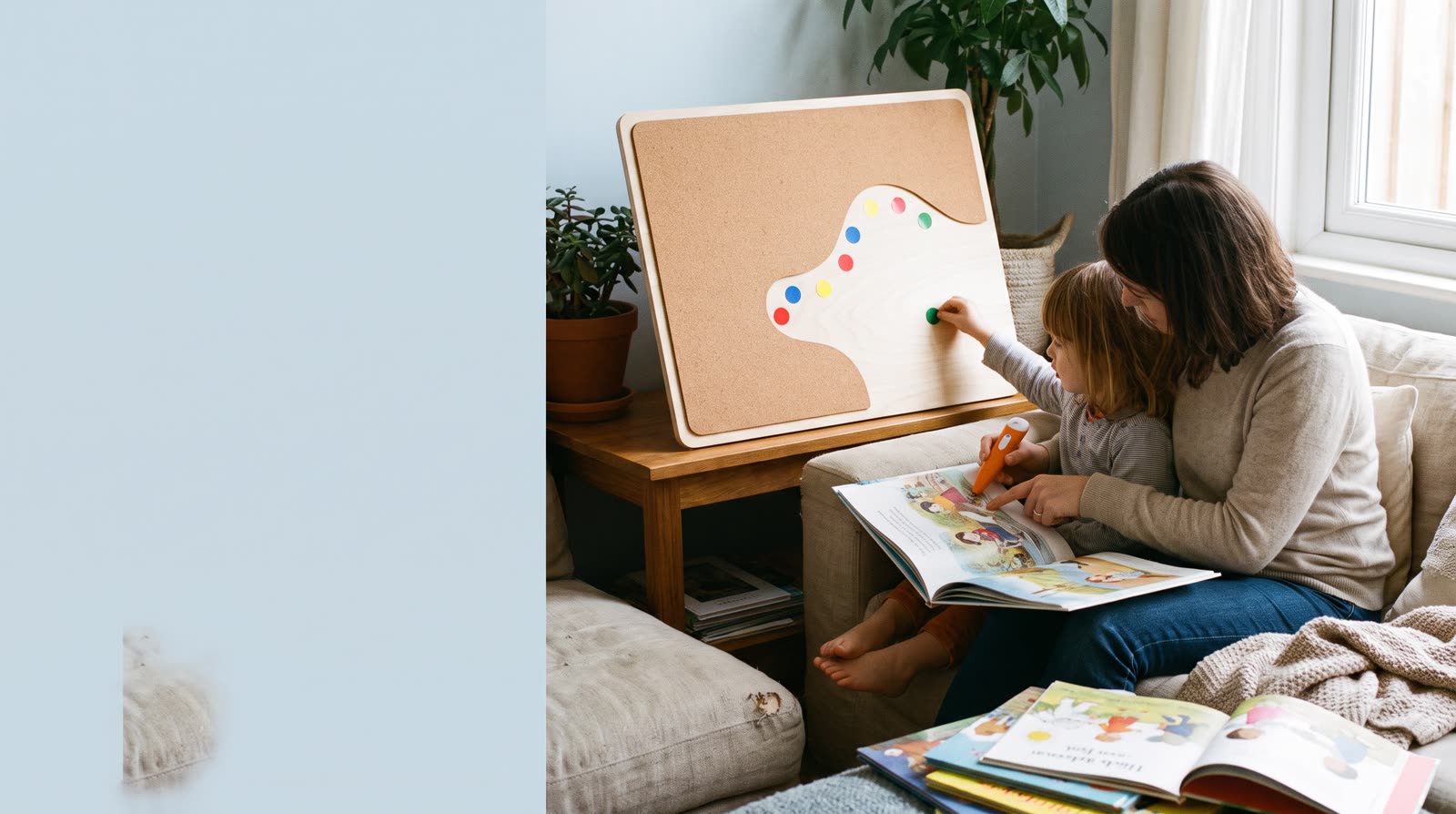
Parent-child shared reading is widely recognized as one of the most powerful catalysts for early childhood language acquisition, cognitive development, and emotional bonding. However, simply reading text aloud from a page can sometimes devolve into a passive listening exercise where young children absorb words without fully processing their meaning or internalizing narrative structures. To bridge this gap, educators, child development specialists, and literacy advocates increasingly emphasize the strategic use of guided questions. When combined with modern educational tools such as optical audio reading pens and interactive picture books, guided questions transform traditional storytelling into an active, bilateral dialogue. This comprehensive guide explores pedagogical frameworks, practical implementation strategies, and B2B considerations for publishers, distributors, and educational institutions seeking to foster meaningful literacy experiences through structured questioning and audio-visual synergy.
The Pedagogical Foundation of Guided Questions in Interactive Literacy
Moving Beyond Passive Audio Playback to Active Comprehension
Traditional audiobooks and standard electronic reading devices often provide passive entertainment, where children listen to pre-recorded narrations without engaging their own cognitive faculties. While listening improves auditory discrimination, true literacy development requires active mental engagement, inferential reasoning, and vocabulary deployment. Guided questions serve as cognitive anchors that prompt young readers to pause, analyze illustrations, predict plot twists, and connect story themes to their lived experiences. By integrating structured prompts directly into picture book layouts and synchronizing them with optical identification (OID) audio pens, publishers create an interactive environment where children are not merely consumers of sound, but active participants in narrative construction. This active participation strengthens neural pathways associated with language processing, reading fluency, and critical thinking.
The Role of Scaffolding in Early Childhood Language Development
Scaffolding, a concept rooted in Vygotskian educational theory, refers to the temporary support provided by an adult or knowledgeable guide during the learning process, which is gradually tapered as the child gains independence. In the context of parent-child reading, guided questions act as scaffolding tools that bridge the gap between what a child can understand alone and what they can achieve with supportive dialogue. Open-ended prompts such as 'What do you think happens next?' or 'Why do you think the character feels sad?' encourage children to formulate hypotheses, articulate complex thoughts, and expand their expressive vocabulary. When parents and educators utilize structured questioning frameworks alongside interactive picture books, they establish a predictable yet stimulating routine that supports diverse learning paces and cognitive development stages.
Integrating Talking Pen Technology with Open-Ended Prompting
Modern reading pens equipped with optical sensors and high-fidelity speakers offer a unique medium for supporting interactive reading. Instead of replacing human interaction, well-designed interactive audio tools enhance it by providing supplemental prompts, sound effects, character dialogue, and guided questions when touched to specific book zones. For instance, tapping an icon next to an illustration might trigger a reflective question recorded in a warm, encouraging tone. This audio cue prompts the adult reader or the child to pause and discuss the concept further. For publishing houses and educational distributors, designing books that seamlessly incorporate OID codes for guided questions ensures that technology serves as a bridge to deeper human dialogue rather than an isolated distraction.
Designing and Sourcing Interactive Picture Books with Built-in Prompts
Editorial and Layout Strategies for Print-Digital Synergy
Creating effective interactive picture books requires careful coordination between authors, illustrators, instructional designers, and technical production teams. The layout must balance visual artistic appeal with functional touch targets for OID reading pens. Guided questions should be strategically placed on page margins or designated interactive icons without cluttering the primary narrative illustrations. Editorial teams must craft questions that are developmentally appropriate, graduated in complexity from literal comprehension to critical evaluation, and culturally adaptable for international B2B markets. Furthermore, clear visual signifiers—such as distinctive question mark icons or audio symbol tags—help young readers and parents instantly identify interactive prompt zones on every spread.
Optical Identification (OID) Code Integration for Audio-Visual Cueing
The technical backbone of interactive reading pens relies on OID dot patterns printed invisibly beneath the CMYK color layers of the book page. Sourcing partners and printing manufacturers must maintain rigorous color calibration and high-resolution printing standards to ensure optical sensors can instantly and accurately decode the micro-dots. When designing guided question features, audio files associated with each OID code must be professionally recorded, compressed for optimal memory storage, and indexed without latency. B2B buyers evaluating talking pen solutions must verify sensor responsiveness, battery life, memory capacity, and firmware stability to guarantee a reliable end-user experience across diverse retail and educational environments.
B2B Procurement and Specification Checklist for Publishers and Distributors
For publishers, distributors, and educational institutions procuring interactive reading pen kits and custom picture book series, establishing a comprehensive specification checklist is essential. Key parameters include paper stock weight (to prevent bleed-through and ensure tactile durability), non-toxic soy-based inks, rounded book corners for child safety, and strict compliance with international toy and book safety regulations such as ASTM F963 and EN71. On the hardware side, procurement teams should specify ergonomic pen shapes suitable for small hands, durable ABS plastic casing, rechargeable lithium polymer batteries with overcharge protection, and standardized USB-C charging ports. Aligning production specifications with recognized quality assurance protocols safeguards brand reputation and ensures long-term market acceptance.
Practical Frameworks for Parents and Educators Using Guided Questions
Pre-Reading Prediction and Curiosity Ignition Techniques
Effective interactive reading begins before the first page of the story text is read aloud. Pre-reading guided questions focus on examining the cover illustration, book title, and back-cover blurb to activate prior knowledge and build anticipation. Parents and teachers can ask questions such as 'Looking at the cover, what kind of adventure do you think our main character is embarking on?' or 'Have you ever felt the way this character looks?' Using a talking pen to play introductory theme music or character greetings can further heighten engagement. This anticipatory scaffolding prepares the child's cognitive framework, making subsequent comprehension and vocabulary retention significantly more effective.
During-Reading Dialogue: Dialogic Reading Strategies with Audio Pens
During the reading process, dialogue should remain fluid and responsive to the child's reactions. Dialogic reading techniques—such as CROWD prompts (Completion, Recall, Open-ended, Wh-, and Distancing questions)—provide a structured approach to interactive storytelling. When encountering key plot developments, adults can use audio pen prompts or manual questions to invite children to describe what is happening in the pictures, explain why a character made a specific choice, or relate the story events to their own daily lives. If a child hesitates, the audio pen can provide subtle hints or alternate phrasings, empowering the child to participate confidently without feeling tested or pressured.
Post-Reading Reflection, Retelling, and Connection to Real-World Contexts
The learning journey does not end when the final page is turned. Post-reading guided questions consolidate comprehension by encouraging children to summarize the narrative arc, discuss moral lessons, and express personal opinions about the book. Questions like 'If you could rewrite the ending of the story, what would you change?' or 'How can we use what we learned today in our classroom or home?' foster higher-order thinking skills. Interactive picture books often feature dedicated review activities or mini-games accessible via OID touch zones at the back of the book, allowing children to reinforce vocabulary and narrative sequencing independently or in guided group settings.
ReadGlo project support
Request a B2B Product Catalog
Explore ReadGlo's premium collection of interactive picture books, OEM/ODM talking pens, and comprehensive early literacy solutions tailored for global publishers and distributors.
Hardware, Safety, and Quality Standards for Audio-Enabled Reading Tools
Ensuring Child-Safe Materials and Ergonomic Design
Children's educational hardware and interactive books must adhere to the highest standards of physical and chemical safety. According to guidelines from the Consumer Product Safety Commission (CPSC), products intended for children must be free from harmful heavy metals, phthalates, and sharp edges. Sourcing partners must ensure that plastic components are molded from food-grade or certified non-toxic ABS resins, and that coatings meet stringent migration limits. Ergonomic design is equally critical; reading pens should feature comfortable grip contours, balanced weight distribution, and impact-resistant casings capable of withstanding accidental drops in home or classroom environments.
Battery Safety, Charging Protocols, and Maintenance Guidelines
Electronic learning aids powered by rechargeable lithium-ion or lithium-polymer batteries require strict adherence to electrical safety protocols. Manufacturers and distributors must provide clear, accessible documentation regarding proper charging voltages, compatible adapters, and temperature limits. Users and caregivers should be instructed to perform routine external inspections of the device casing and charging port. In accordance with safety recommendations, devices must never be disassembled by untrained users. If any signs of swelling, abnormal heating, fluid leakage, strange odors, or physical damage are detected, operation and charging must cease immediately, and the device should be unplugged and referred to authorized service channels.
Evaluating Audio Fidelity, Optical Sensor Accuracy, and Durability
The overall user experience of an interactive reading system depends heavily on hardware performance metrics. Audio output must be crystal clear, free from distortion at maximum volume, and calibrated to protect young ears through volume-limiting technology. The optical CMOS sensor embedded in the reading pen tip must maintain high scanning frequency and robust error correction to read OID dot patterns reliably even when pages are slightly worn or illuminated under varying indoor lighting conditions. B2B buyers must conduct thorough sample testing and quality control inspections across multiple production batches to maintain uncompromised standards.
Collaborative Ecosystems: Supporting Educators, Retailers, and Families
Empowering Teachers and Classroom Facilitators with Structured Question Sets
In early childhood education settings, teachers require structured, standards-aligned instructional resources to maximize the impact of interactive reading tools. Publishers developing companion picture book series should provide comprehensive teacher guidebooks containing lesson plans, vocabulary extension lists, and leveled guided question prompts aligned with early literacy curricula. These resources enable educators to integrate talking pens seamlessly into literacy centers, small-group guided reading sessions, and individualized learning stations, catering effectively to diverse student needs and learning modalities.
Retailer Enablement and Parent Education Resources for B2B Partners
For B2B distributors and retail partners, successful commercialization relies on educating consumers about the profound developmental benefits of guided questioning and interactive reading technology. Providing point-of-purchase display materials, instructional demo videos, and digital parent guides helps demystify how to use reading pens effectively at home. Retailers who offer educational workshops or digital webinars on interactive storytelling build stronger brand loyalty, empower parents to foster rich literacy environments, and drive sustainable long-term demand for premium educational book-and-pen sets.
Future Outlook: AI-Enhanced Literacy Tools and Ethical Considerations
As educational technology evolves, the integration of artificial intelligence and speech recognition into early literacy tools presents exciting new frontiers. Future iterations of interactive reading systems may offer adaptive guided questioning that dynamically adjusts prompt complexity based on a child's verbal responses and reading progress. However, developers and publishers must navigate these advancements with a steadfast commitment to data privacy, ethical design, and the preservation of authentic human interaction. Technology should always serve to amplify—never replace—the warm, responsive relationship between children and their adult caregivers.
Frequently Asked Questions
At what age can children begin using interactive reading pens and guided questions?
Children can begin interacting with audio-enabled picture books and guided questions around 2 to 3 years of age, primarily through adult-led shared reading and simple touch exploration. As children grow into preschool and early elementary years (ages 4-7), open-ended guided questions become increasingly effective for fostering independent comprehension, vocabulary expansion, and critical thinking.
Do talking pens and interactive books replace the need for parents or teachers during reading time?
No. Talking pens and interactive audio features are designed to complement and enhance adult guidance, not replace it. Educational research consistently shows that the highest gains in early literacy occur when adults actively participate in dialogue, ask open-ended questions, and connect story themes to the child's everyday experiences.
How do optical identification (OID) codes work in interactive picture books?
OID technology utilizes microscopic dot patterns printed invisibly beneath the color illustrations on each book page. When the optical sensor tip of the reading pen touches a designated zone, it instantly decodes the dot pattern, identifies the exact audio file or guided question associated with that coordinate, and plays it through the built-in speaker.
What safety precautions should be observed when using rechargeable educational electronics?
Caregivers should use certified USB chargers, avoid leaving devices plugged in unattended for extended periods, and inspect the casing and charging port regularly. Devices should never be disassembled. If any signs of overheating, swelling, unusual odors, or physical damage occur, discontinue use immediately, unplug the device, and contact the manufacturer or authorized service channels.
How can publishers and B2B distributors evaluate the quality of custom interactive book sets?
B2B buyers should evaluate sample batches for paper durability, non-toxic ink compliance (such as ASTM F963 and EN71), OID scanning accuracy under varied lighting conditions, audio clarity and volume safety, and battery management certifications. Partnering with experienced manufacturing providers ensures consistent product quality and regulatory compliance across global markets.
Conclusion
Incorporating guided questions into parent-child and classroom shared reading transforms traditional storytelling into a dynamic, intellectually stimulating dialogue. By pairing structured pedagogical frameworks with advanced tools like optical audio reading pens and interactive picture books, parents, educators, and publishers can cultivate a lifelong love of reading and critical thinking in young children. As the early literacy landscape continues to evolve, maintaining a human-centered approach focused on active engagement, safety, and collaborative support remains the cornerstone of meaningful educational success.
Continue your research
Related reading pen buyer guides
Use these related guides to compare the next product, content, sourcing or channel decision in your project.
- Early LearningBuilding Daily Reading Habits with a 10-Minute Routine: Comprehensive Strategies for Early Literacy and Interactive Book ProgramsRead this guide
- Early LearningHow Can Parents Reduce Screen Time Using a 10-Minute Routine? A Comprehensive B2B Guide for Educational Publishers, Toy Distributors, and Retail BrandsRead this guide
- Early LearningHow Can Parents Build a Daily Reading Habit Using a Reward Chart?Read this guide
Continue with ReadGlo
See a DOT-code picture-book set designed for guided early-learning programs.
ReadGlo project support
Partner with ReadGlo Today
Ready to expand your educational product portfolio with state-of-the-art interactive reading tools? Send your specifications and partnership inquiries to our B2B team.